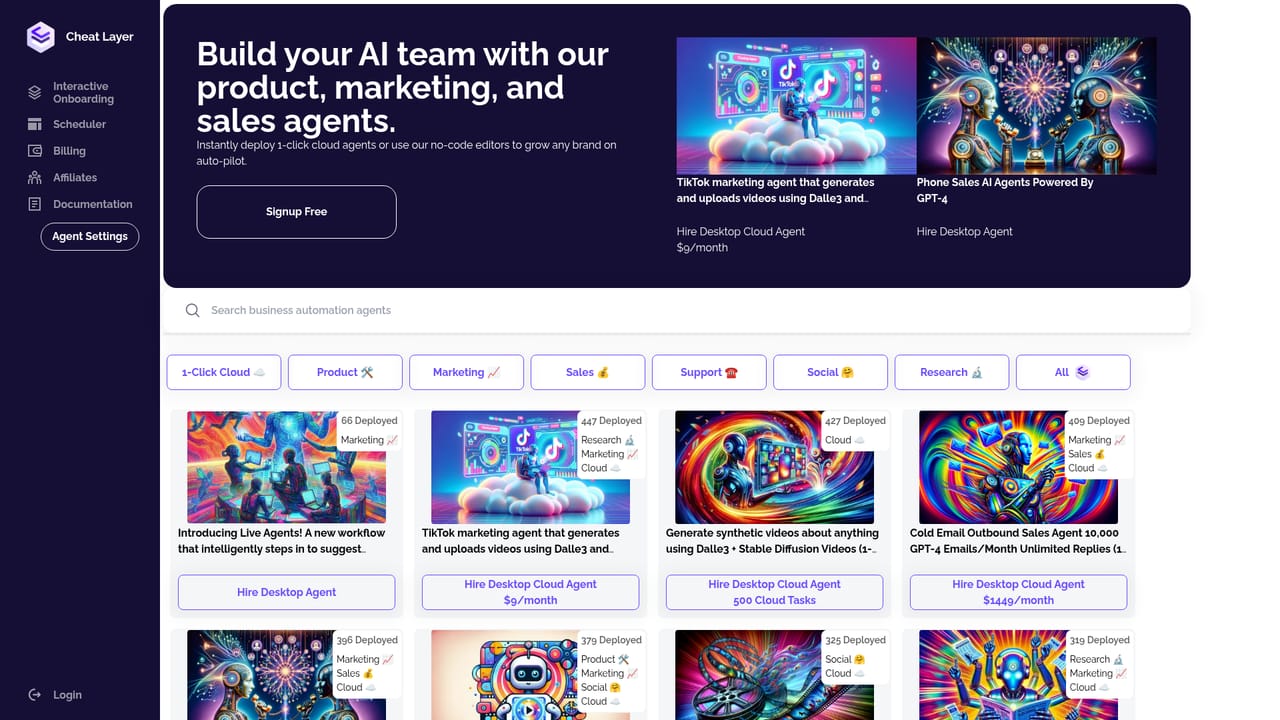
Cheatlayer turns plain language descriptions into working business automations using a custom trained GPT-3 model, and bundles cloud marketing agents that test copy, demographics and video styles automatically. It targets small teams that want automation built for them rather than assembled by hand.
Cheatlayer is a no code automation platform built around a custom trained GPT-3 model that acts as a personal software engineer. Instead of wiring together triggers, nodes and connectors by hand, a user describes the business problem in ordinary language and the system generates the automation that solves it. The company frames its mission around the difficult, one-off automation jobs that ordinary no code builders struggle with, and it deploys those automations from simple written instructions rather than visual flow editors.
The homepage shows two overlapping use cases. The first is general task automation: describing a repetitive business process and letting the model build the underlying workflow. The second is growth marketing. Cheatlayer advertises swarms of cloud marketing agents that run A/B tests across demographics, produce copywriting variants and test viral video styles, with the pitch that this approach earns 50 to 500 times better CPM than Google, Instagram or TikTok ads. That combination points to small teams and solo operators who need marketing experiments running continuously without hiring engineers or media buyers.
In practice the product is meant to be operated conversationally. A user signs up, states what needs to happen, and the model translates that intent into a working automation that runs in the cloud. The marketing agent angle means campaigns can be tested and iterated without constant manual setup, which is the part of the workflow most teams find slowest.
Among alternatives, Cheatlayer sits closer to an AI agent builder than to a classic visual automation suite. It is aimed at people who want to describe an outcome rather than assemble steps, and it leans heavily toward marketing and growth work rather than back office operations. Buyers should note that specific connector lists, pricing tiers and support channels are not detailed on the homepage, so those details need confirming before committing a team to the platform.