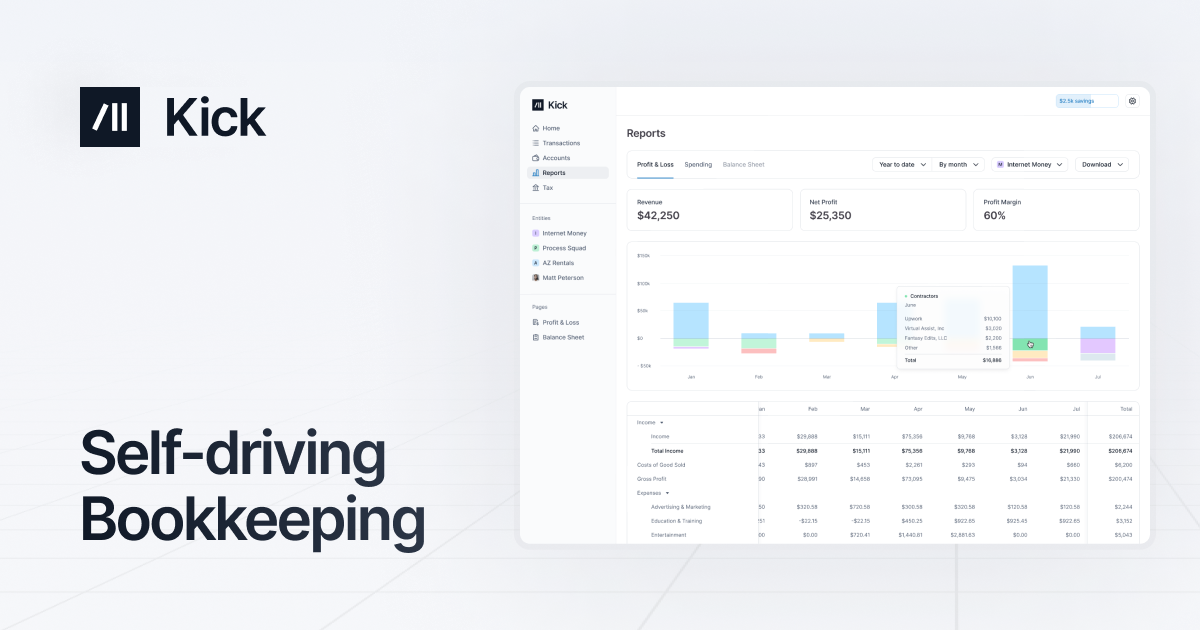
Kick is a bookkeeping platform built for entrepreneurs, freelancers, and the accountants who serve them. It positions itself as an agentic ledger: software that actively works through the mechanics of bookkeeping rather than just storing transactions for a human to sort later. Once connected, it pulls in business transactions and categorizes them in real time, with the categorization reviewed for accuracy before it lands in the books. The company states it has raised 20 million dollars and is used by more than 5,000 business owners and accountants.
The core workflow centers on reducing manual entry. Transactions are auto-sorted into categories such as meals, contractors, or consulting income, and the system flags commonly missed deductions like home office, vehicle, and travel expenses. Users can adjust and save custom rules, for example routing recurring vendor charges into a specific category automatically going forward, so the ledger becomes more tailored to a given business over time. On the reporting side, Kick generates revenue breakdowns by income line, monthly vendor spending comparisons, and dashboards for tracking balances across multiple businesses or accounts from one place.
For accountants and multi-entity operators, Kick produces a general ledger with journal entries designed to balance automatically, along with tax-ready Profit and Loss statements and balance sheets that can be shared directly with a CPA. It also handles intercompany transfers, receivables, and payables across linked entities, which is aimed at people running more than one business or holding several LLCs. This puts Kick in the same conversation as QuickBooks Online and other small-business accounting software, but with more emphasis on automated categorization and less manual reconciliation work expected from the user.
Kick fits solo founders, small business owners, and side-business operators who want their books maintained without hiring a full-time bookkeeper, as well as accounting firms managing bookkeeping for multiple clients or entities. It is less clearly suited to larger companies with complex compliance, inventory, or payroll needs that go beyond categorization, deduction tracking, and standard financial statements.