Typeface

Enterprise marketing AI that keeps agents on brand

Intermediate
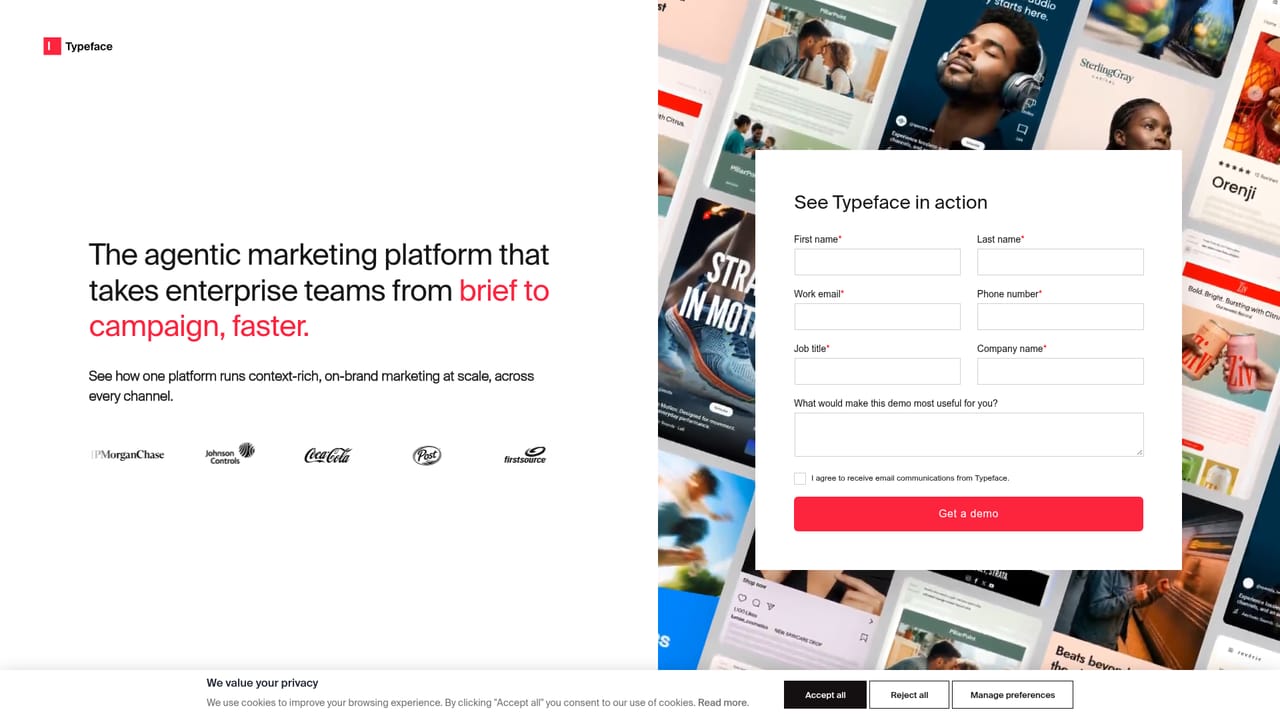
Screenshot of Typeface, Enterprise marketing AI that keeps agents on brand

What is Typeface?

Typeface is an enterprise marketing AI platform that pairs agentic workflows with a structured brand intelligence layer, so marketing and IT teams can produce on-brand campaigns at scale. It is sales-led, governed and aimed at large organizations rather than individual creators.

Typeface is an enterprise marketing AI platform built around agentic workflows. Its core premise is that AI content tools only become useful at scale when the model has access to structured brand context: guidelines, audience data, approved assets and past campaign learnings. That context layer is what Typeface calls Arc Graph, and it sits underneath the orchestration engine the company brands as Arc. Rather than asking a general model to guess at tone, teams give agents a governed store of brand intelligence they can act on and enforce. In practice, the platform targets marketing organizations that produce a high volume of campaign material across channels and need consistency without a review bottleneck every time. Brand and creative teams use it to generate on-brand copy and visuals; marketing operations teams use it to coordinate people, agents and connected systems inside repeatable workflows. Typeface also positions the stack for IT teams, which suggests governance and oversight are part of the pitch rather than an afterthought. A trust and safety layer and a dedicated security and governance section support that claim. The product is sold as an enterprise platform, and the homepage reads accordingly: demo requests, a product tour, and a client roster of large brands rather than self-serve signup and published price tiers. Buyers should expect a sales-led evaluation. Among alternatives, Typeface sits closer to a managed enterprise content operations layer than to a standalone writing assistant or image generator; the comparison is less about raw model quality and more about how much brand context and process the tool can hold. The honest limitation is transparency. The homepage describes capabilities in architectural terms (graph, fabric, agents, loop) without exposing concrete pricing, connector lists, or implementation timelines, so the practical due diligence happens in a demo and a security review. Teams that want to test a tool in an afternoon will find this heavier than needed. Teams that have already tried generic assistants and hit a wall on brand consistency are the audience this is built for.

How do you use Typeface?

  1. 1Request a demo
    Start by booking a walkthrough with the sales team. This is the entry point for evaluation and where pricing, packaging and deployment questions get answered.
    Typeface — Request a demo
  2. 2Take the product tour
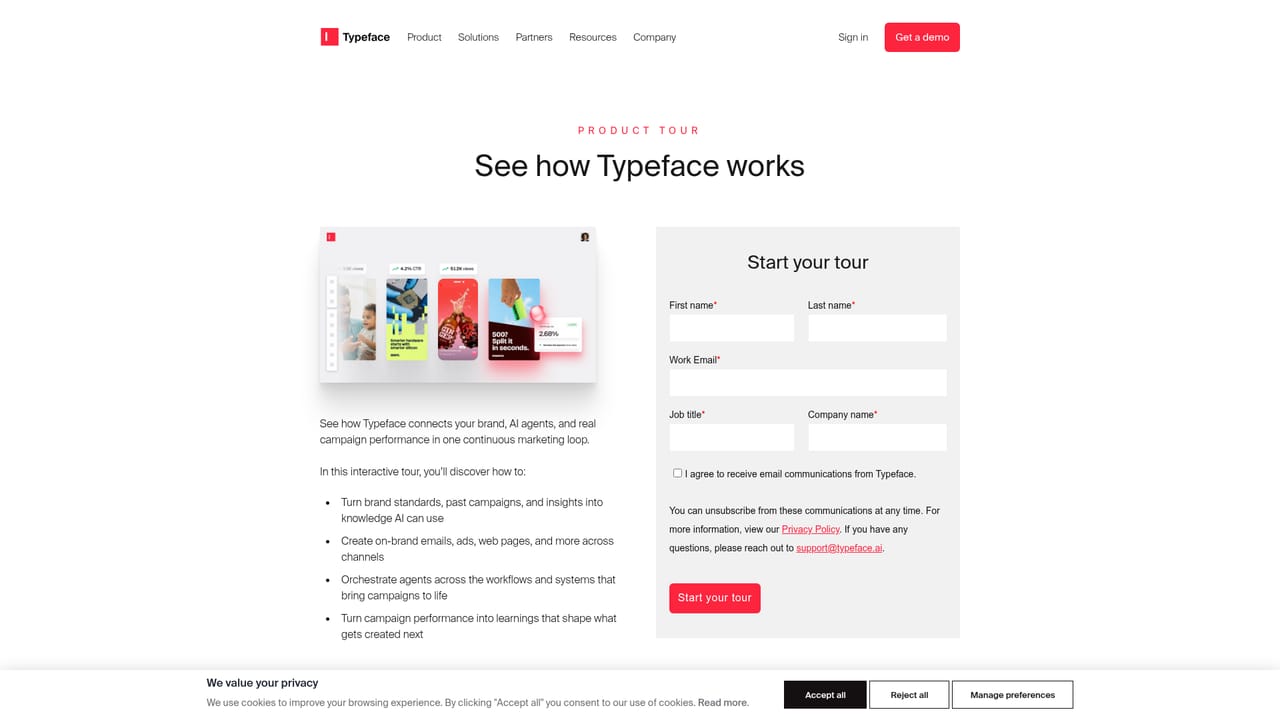
    Use the guided tour to see how the orchestration layer, brand context and agents fit together before committing to a deeper evaluation.
    Typeface — Take the product tour
  3. 3Understand the brand context layer
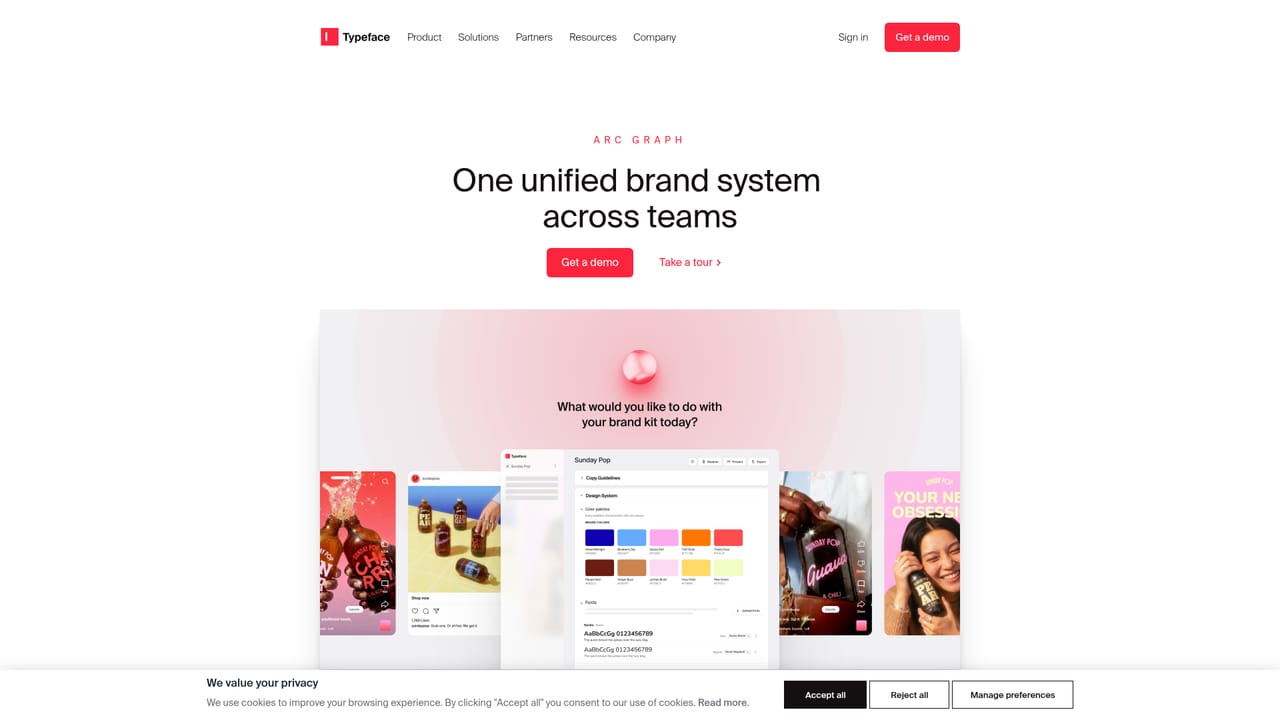
    Read the Arc Graph page to see how guidelines, audiences, assets and campaign learnings are structured for agents to enforce.
    Typeface — Understand the brand context layer
  4. 4Review the brand agent and safety model
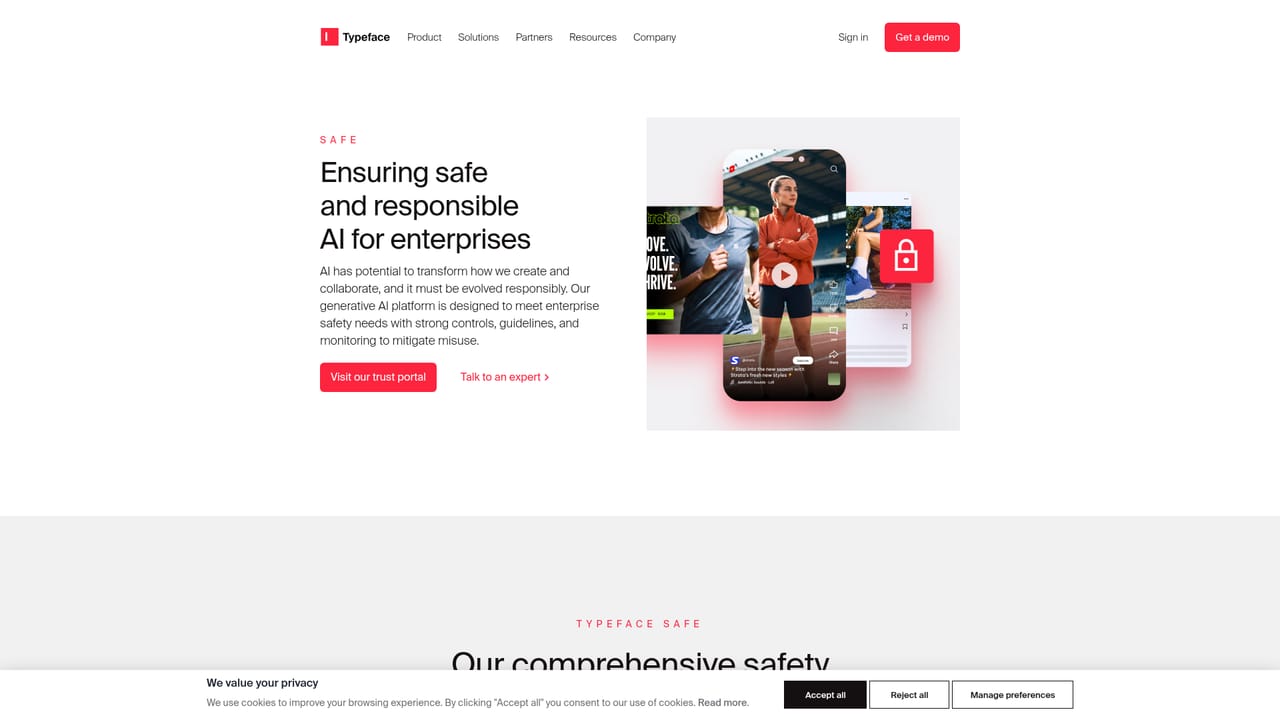
    Look at the brand agent and trust and safety pages to understand how guardrails are applied to generated output and what controls exist.
    Typeface — Review the brand agent and safety model
  5. 5Run a security and governance review
    Bring IT and legal into the process using the security and governance page, covering data handling and oversight before rollout.
  6. 6Scope a marketing pilot
    Define a first campaign or content stream with the marketing solutions team, then measure consistency and cycle time against current process.

Pros and cons

Pros

  • Brand context is stored as structured intelligence agents can act on, which addresses the consistency problem generic assistants struggle withAI
  • Covers both copy and creative work under one governance model instead of splitting brand and content across separate toolsAI
  • Explicit trust, safety, security and governance pages signal that enterprise review was considered in the product designAI
  • Positioned for cross-functional use by marketing, brand and creative, and IT teams rather than a single departmentAI
  • Backed by a public roster of large enterprise customers, which supports claims about operating at scaleAI

Cons

  • No published pricing or self-serve tier on the homepage, so cost and packaging only surface through a sales conversationAI
  • The architecture language (graph, fabric, agents, loop) stays abstract until a demo, making it hard to judge fit from the site aloneAI
  • Connector and integration details are not enumerated on the homepage, leaving system compatibility unverifiedAI
  • Heavy setup relative to a standalone writing tool, which makes it a poor choice for quick individual testingAI
  • No free tier or public trial path is described, so evaluating output quality requires engaging salesAI

How much does Typeface cost?

Features

The platform centers on an orchestration engine for coordinating people, agents and systems, built on top of a brand intelligence layer that holds guidelines, audience data, assets and campaign learnings. Around that sit brand agents, a trust and safety layer, and security and governance controls, aimed at producing context-rich, on-brand campaigns at scale.

Learn more

Frequently asked questions about Typeface

  • How do you use Typeface?
    The walkthrough on this page covers 6 steps: 1. Request a demo 2. Take the product tour 3. Understand the brand context layer 4. Review the brand agent and safety model 5. Run a security and governance review 6. Scope a marketing pilot.
  • What platforms does Typeface support?
    Typeface is available on Web App.
  • What are the limitations of Typeface?
    No published pricing or self-serve tier on the homepage, so cost and packaging only surface through a sales conversation. The architecture language (graph, fabric, agents, loop) stays abstract until a demo, making it hard to judge fit from the site alone. Connector and integration details are not enumerated on the homepage, leaving system compatibility unverified.

Status

StatusActive
Views0
Outbound clicks0
Added10/21/2026

Platforms

Web App

Pricing

Paid