Ada Health is an advice giver tool. Ada Health offers a clinician-optimized AI symptom assessment plus a doctor-written medical library of condition and symptom explainers and editorial health articles. It suits individuals seeking guided health information and partners embedding symptom triage into care services.
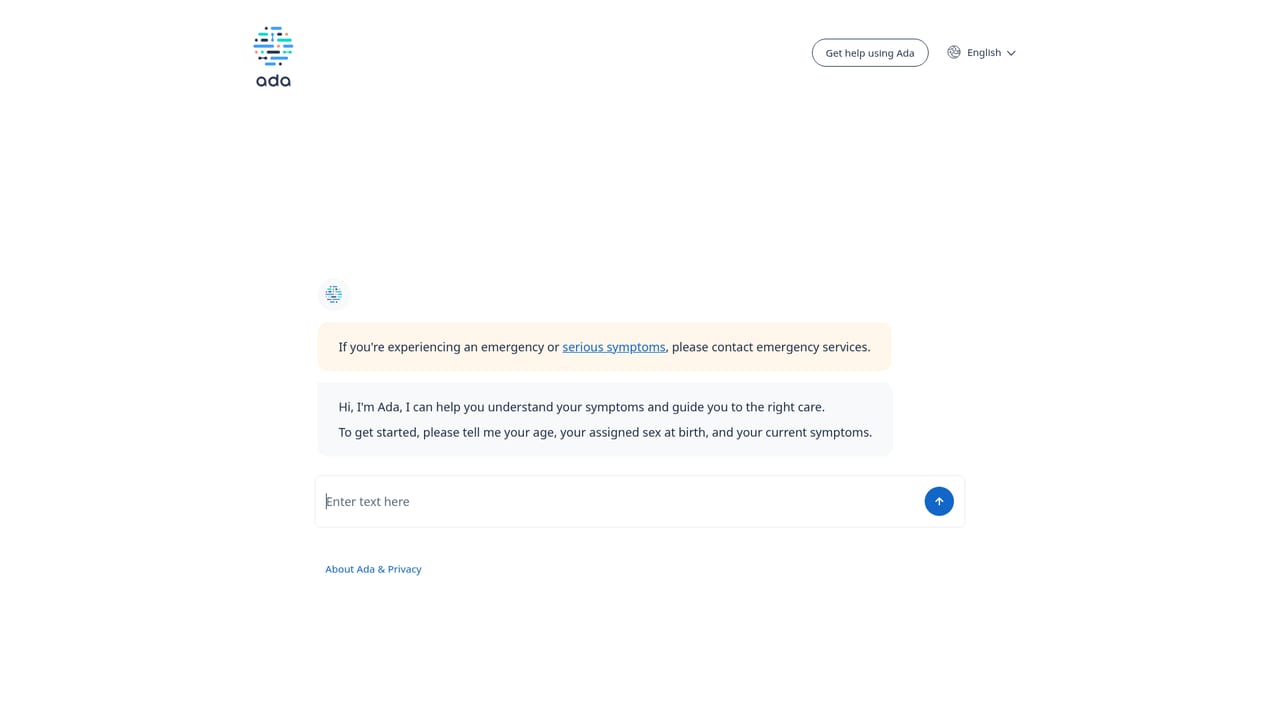
Ada Health combines an AI-driven symptom assessment with a medical library written and reviewed by clinicians. The core tool asks a structured series of questions about how a person feels, then produces a personalized snapshot of possible explanations and guidance on what to do next. The company positions the assessment as a way to help people make sense of symptoms before deciding whether to wait, self-manage, or seek care. It is aimed at individuals who want a fast, private second opinion at home, and at partner organizations that embed the same intake logic into their own care pathways.
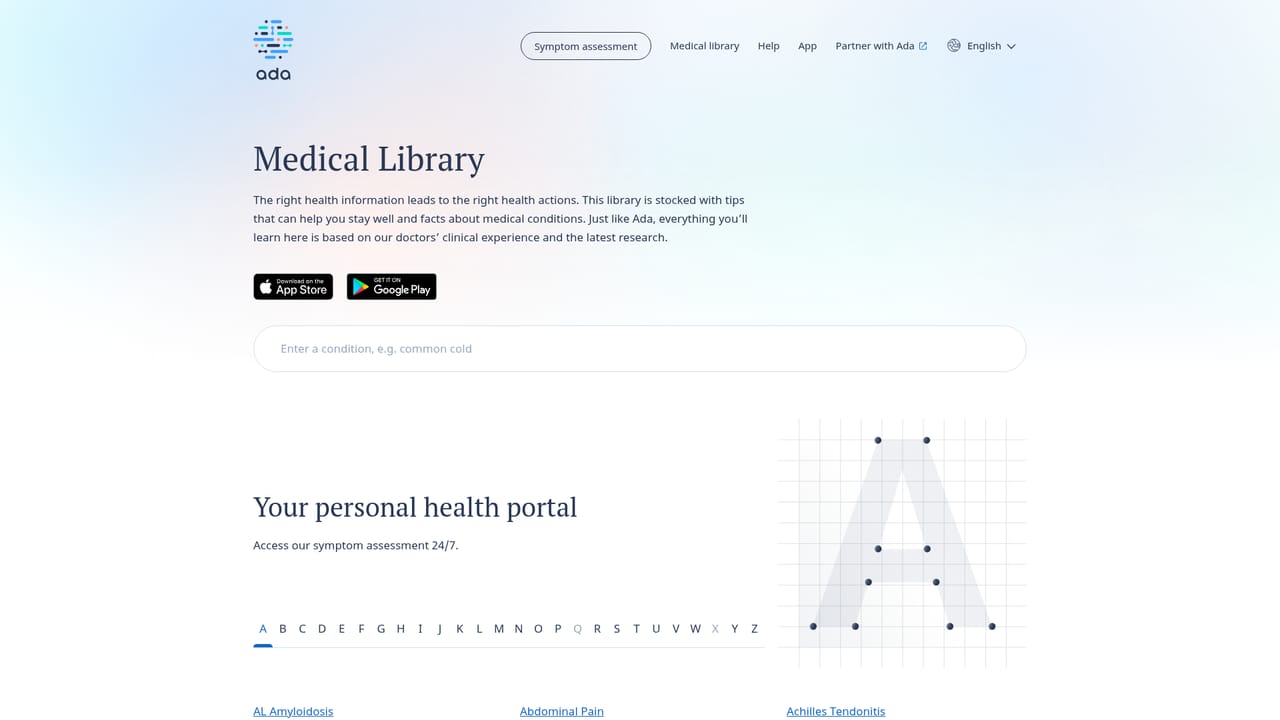
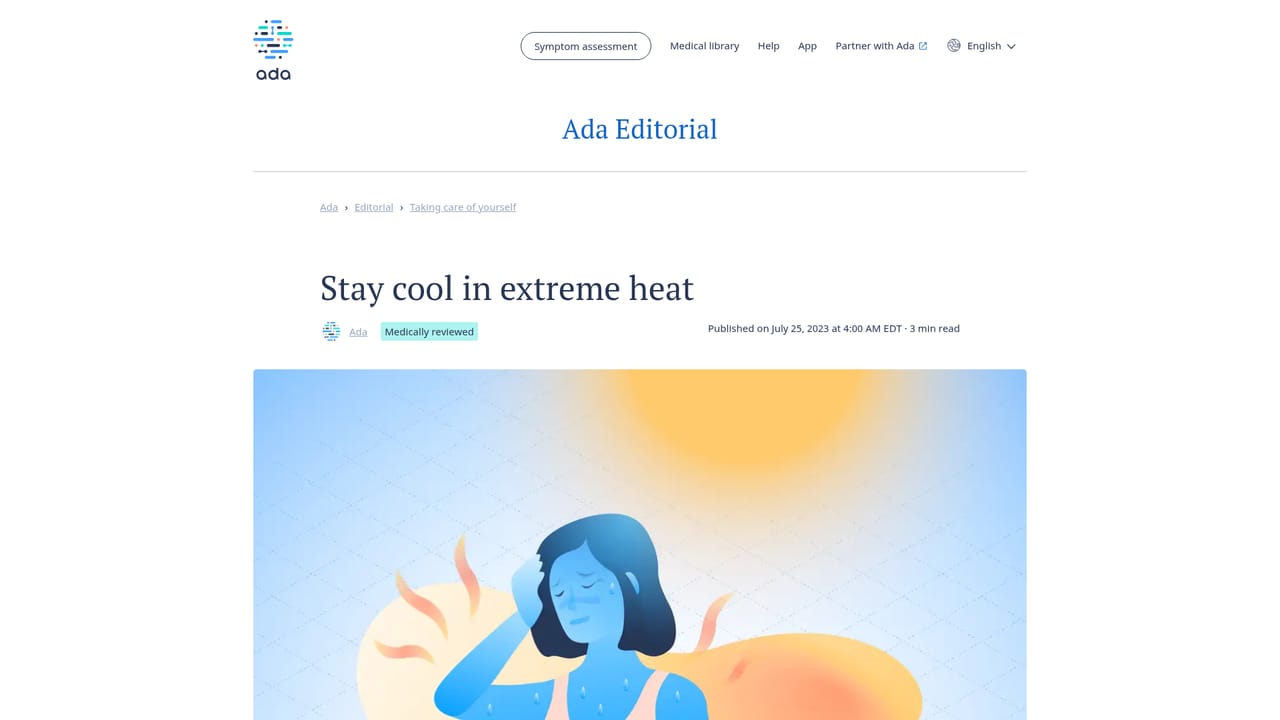
The day to day experience is conversational rather than search based. A user starts an assessment, answers questions about symptoms, duration and relevant history, and receives an output that ranks possible causes and suggests next steps. Alongside the assessment sits the Medical Library, a browsable collection of condition and symptom explainers produced by the company's doctors and grounded in current research. Editorial articles cover seasonal and everyday health topics such as heat safety, heart strain in hot weather and tick-borne disease prevention, so the site can serve as a general reference between assessments.
In practice Ada fits between a general search engine and a clinical appointment. It is more structured than reading random health pages, and it is explicitly not a diagnosis or a substitute for a clinician. Readers who want authoritative background material will find the library useful even without running an assessment, while the assessment itself suits people who prefer guided questioning over free-text search.
The wider business is enterprise oriented: the same symptom assessment technology is offered to health systems and partners as a way to improve access and triage. Pricing for consumer use is not stated on the homepage, and no integration or support details appear there, so buyers evaluating the enterprise side should request specifics directly. Compared with static symptom checkers, the clinician-optimized question flow is the main differentiator; compared with a full telehealth service, it stops short of connecting users to a live clinician.