AI Endurance is a football training tool. An AI coach for runners, cyclists and triathletes that trains a neural network on your own workout data and builds a plan that is re-optimized each time you train. Connects to major wearables and training platforms, pushes workouts back to your devices, and includes a conversational coach that can edit the plan.
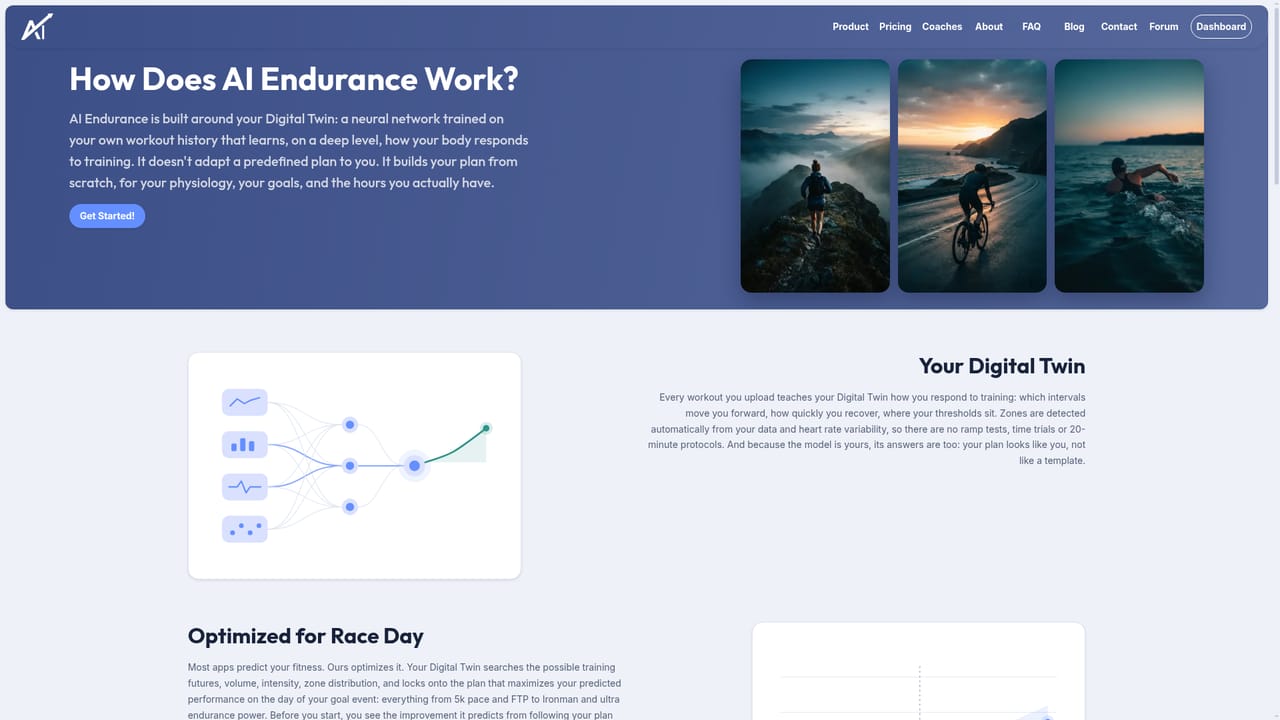
AI Endurance is an AI coaching platform for runners, cyclists and triathletes built around a central idea: a neural network trained on your own workout history can predict how you respond to training and then design the schedule that maximizes your race-day performance. The company calls this model your Digital Twin. Rather than handing out a template plan, the system computes a plan for your physiology and recomputes it each time new training data arrives.
The workflow moves through three phases. Connect pulls historical exercise data from a wearable or training platform so the model can learn how you respond, recover and adapt. Learn covers the cold-start case: athletes without enough history follow a short protocol of fitness tests that gives the model something to work with quickly. Train is where the optimized workouts get pushed back out to your devices, so the plan executes on the hardware and apps you already use. An AI coach sits alongside the plan, reads your workouts, recovery and goals, and can adjust the schedule inside the same conversation, whether that means moving a long ride or swapping an interval session.
The product targets competitive amateur and professional endurance athletes, especially people with limited training hours who want each session to count. It is not a beginner fitness app: the platform leans on physiological markers and published research, and assumes familiarity with structured training. Cyclists, triathletes and runners from 5K to 100-mile have used it. It competes with human coaching and with adaptive-plan tools, positioning itself on prediction and data depth rather than on convenience alone.
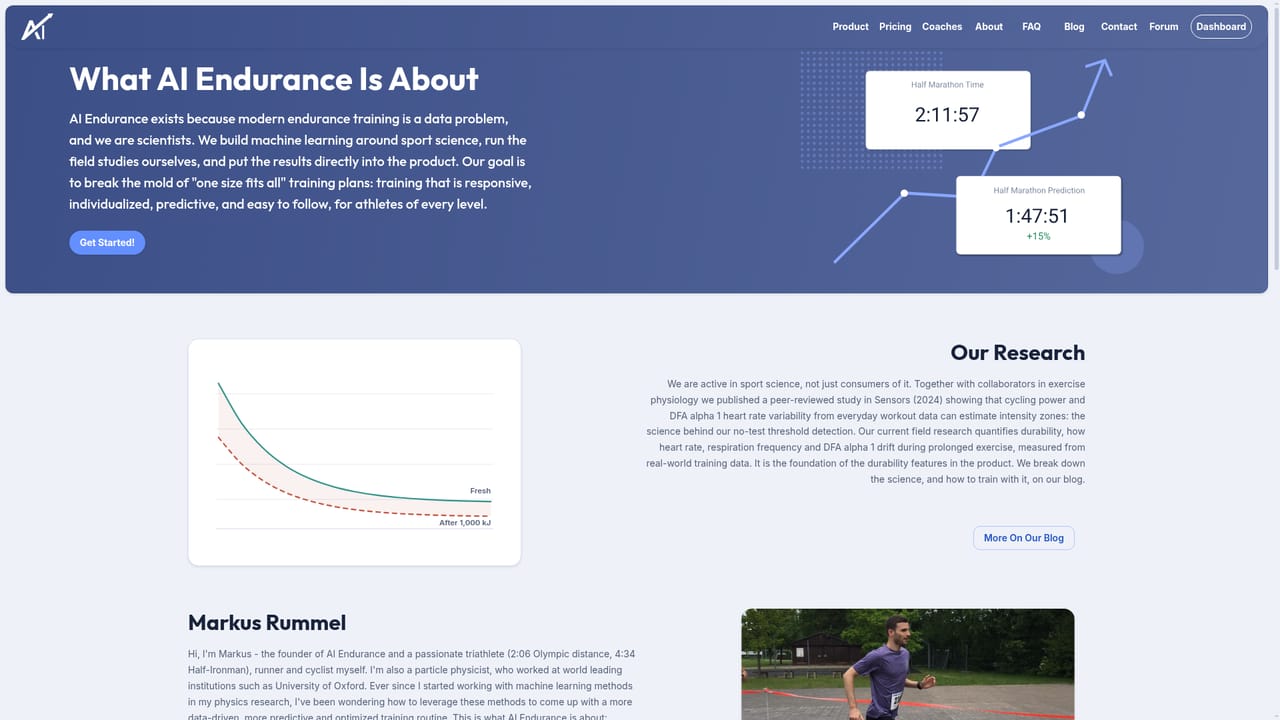
The site points to published science behind the approach, press coverage including The Globe and Mail, Trail Runner Magazine and Zwift Insider, and a research citation in a BMC HRV study. Mobile apps are available for iOS and Android, and a partner API plus MCP documentation exist for developers who want programmatic access.