Support
Business enquiries, API demos and custom enterprise pricing are handled through Barnard Media; the homepage lists no consumer support channel.
Photo-based AI identification for car parts, specs and OEM links
Own Car Part Identifier? Verify ownership to get a dofollow link

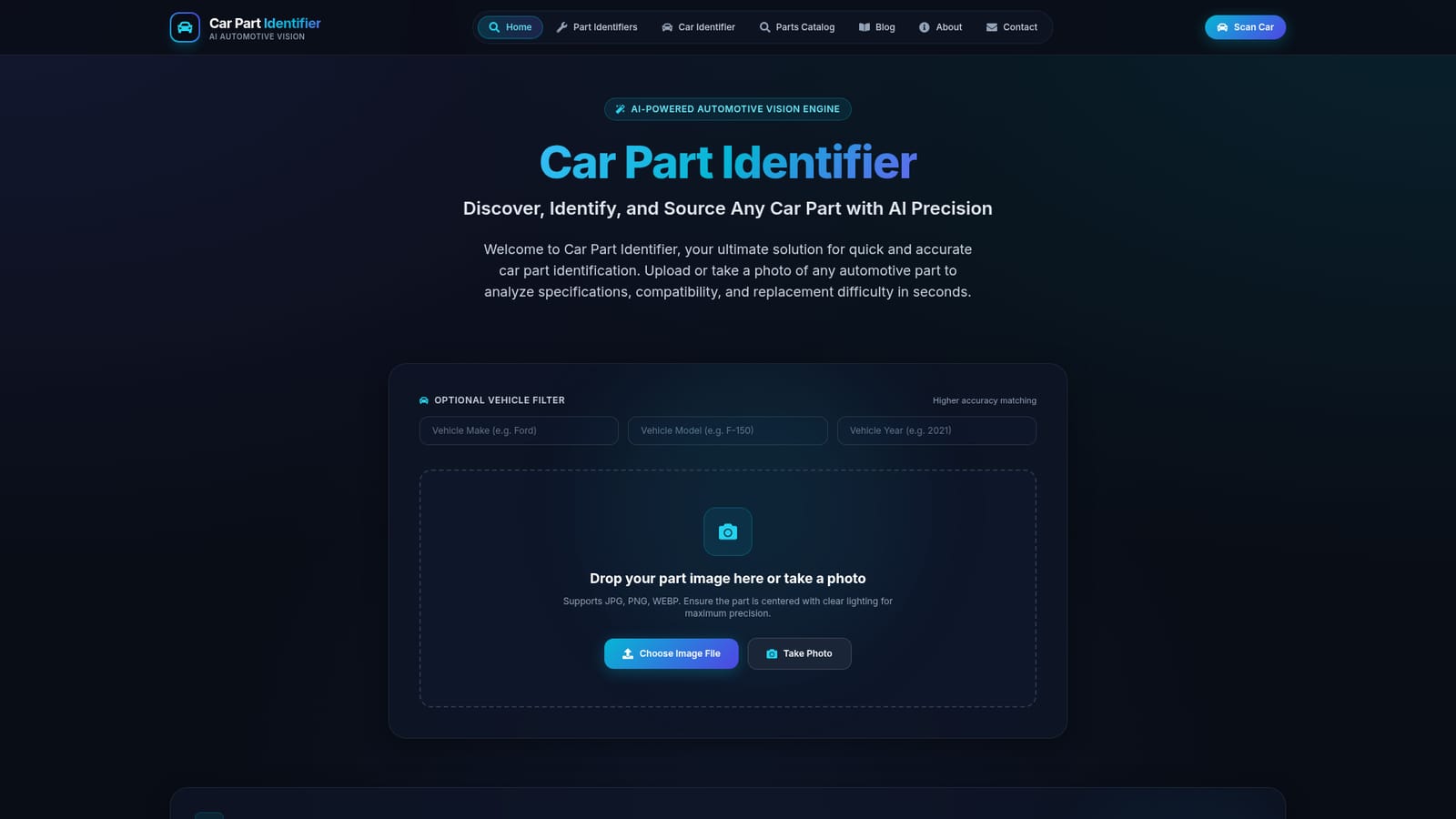
Car Part Identifier is an image analysis tool. AI tool that identifies automotive parts from a photo, returning compatibility, replacement difficulty and marketplace links, with optional vehicle filters and a separate whole-car scanner.
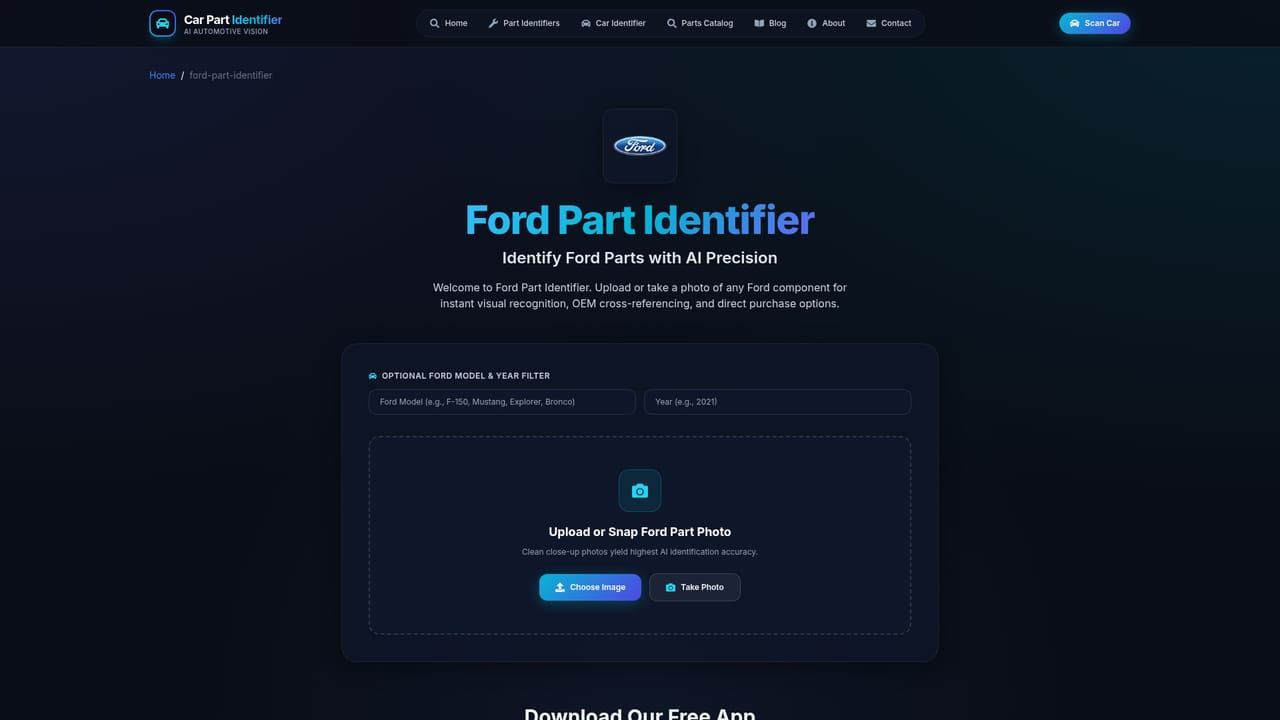
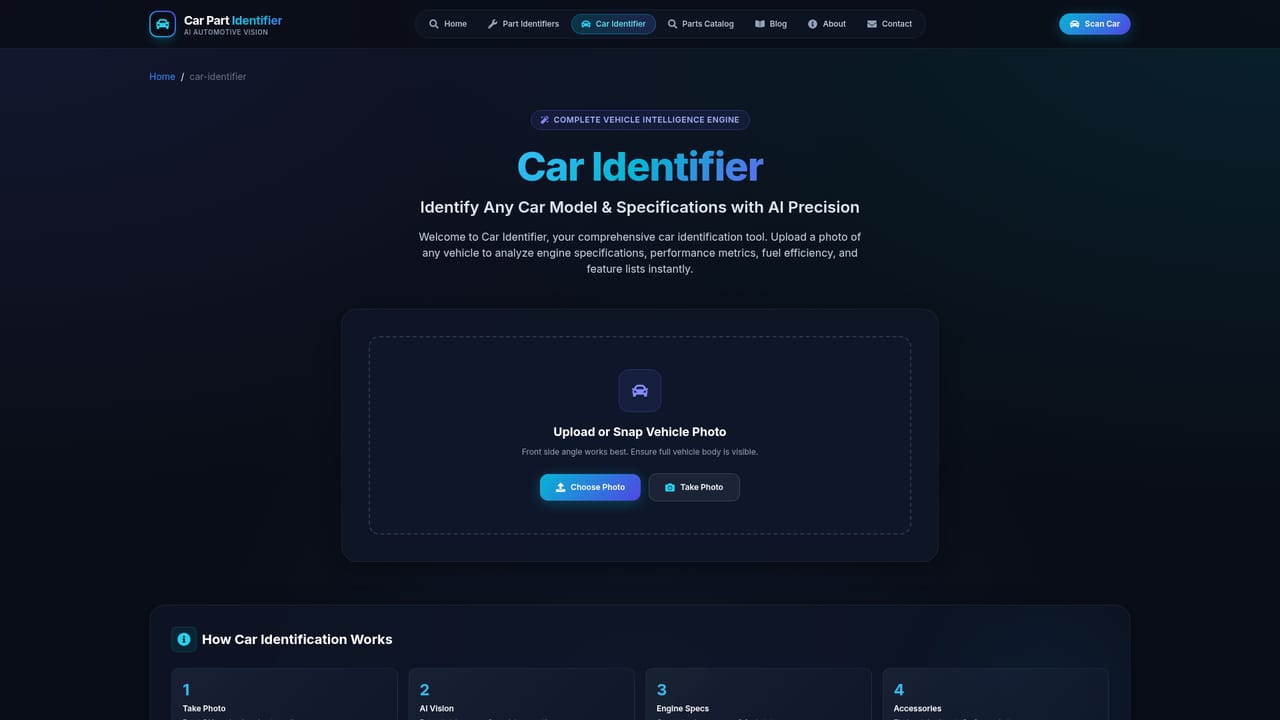
Car Part Identifier is a visual recognition tool built for people who need to know exactly what a component is before they buy or replace it. The workflow is deliberately short: upload an image of an isolated part or take a photo with a phone, optionally narrow the search with vehicle year, make and trim, and the system returns the part identity, compatibility notes, an estimated replacement difficulty and links toward replacement options. It is aimed at DIY mechanics, parts counter staff, mobile technicians and resellers who routinely handle unlabelled sensors, filter assemblies, electrical connectors and body trim. Practically, the tool behaves like a lookup engine rather than a repair manual. The neural vision model is trained on automotive components and cross-references compatibility across a long list of global automakers, with dedicated brand pages for Ford, Toyota, Nissan and Volkswagen. Results include a difficulty rating of Easy, Moderate or Difficult, which is useful for judging whether a job belongs in a home garage or a workshop. Marketplace links let you compare pricing and availability across online parts retailers, so a positive identification can turn into a purchase decision in the same session. A separate car scanner handles whole vehicles for trim, engine, fuel range and tyre specifications. Against alternatives, Car Part Identifier sits between generic image recognition apps and professional parts catalogues. It does not replace a VIN decoder or a manufacturer EPC for guaranteed fitment, but it is faster than manual catalogue digging when you only have a photograph. Photo quality matters a great deal, since blurry or cluttered shots will reduce accuracy. The service runs on mobile apps for iOS and Android as well as desktop browsers, and an enterprise white-label API is offered for dealerships, marketplaces and repair networks that want the recognition engine under their own branding.
Business enquiries, API demos and custom enterprise pricing are handled through Barnard Media; the homepage lists no consumer support channel.
The enterprise API supports REST endpoints and webhooks for connecting recognition to existing ERP systems, with custom domain and white-label branding options.
Photo based part recognition, optional year, make and trim filtering, compatibility matching across more than 20 automakers, an installation difficulty score, marketplace links for pricing and availability, a whole vehicle scanner for trim and engine specs, and a white-label REST API with webhook support for business deployments.
 AI Angels400+ customizable AI girlfriends for NSFW chat, voice calls, and roleplay
 Candy AIExperience the future of companionship with AI friends who chat, role-play, and connect with you on a human level.
 ourdream.aiA vast AI roleplay platform with millions of characters for chat, images, video and voiceAI Angels400+ customizable AI girlfriends for NSFW chat, voice calls, and roleplayCandy AIExperience the future of companionship with AI friends who chat, role-play, and connect with you on a human level.ourdream.aiA vast AI roleplay platform with millions of characters for chat, images, video and voice


