Support
Support runs through a contact form and a frequently asked questions page; onboarding and infrastructure integration are handled with the vendor during a demo and pilot rather than through self-service documentation.
Learn moreRadiology AI for chest X-ray and lung CT decision support

Rayscape is an image analysis tool. Radiology AI for clinical teams: chest X-ray analysis across 140+ findings, lung CT nodule detection and tracking, and a separate multi-organ oncology CT product. Built for hospitals, screening programs and emergency settings.
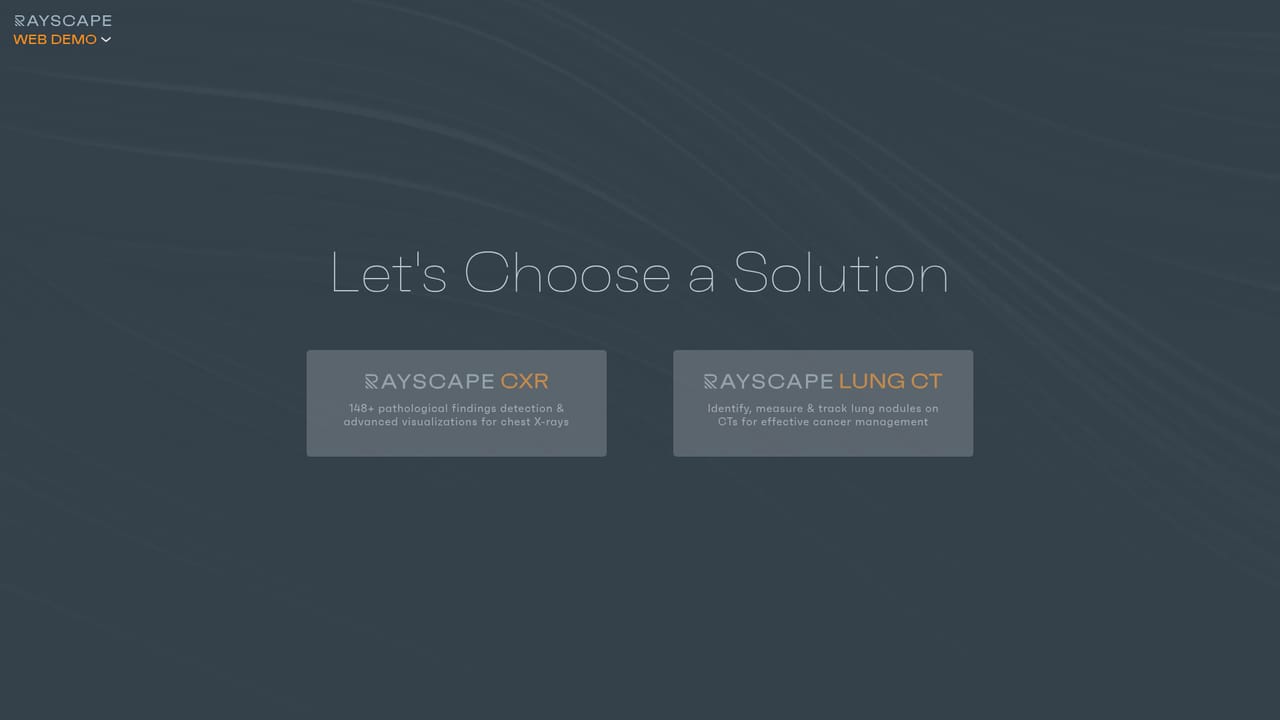
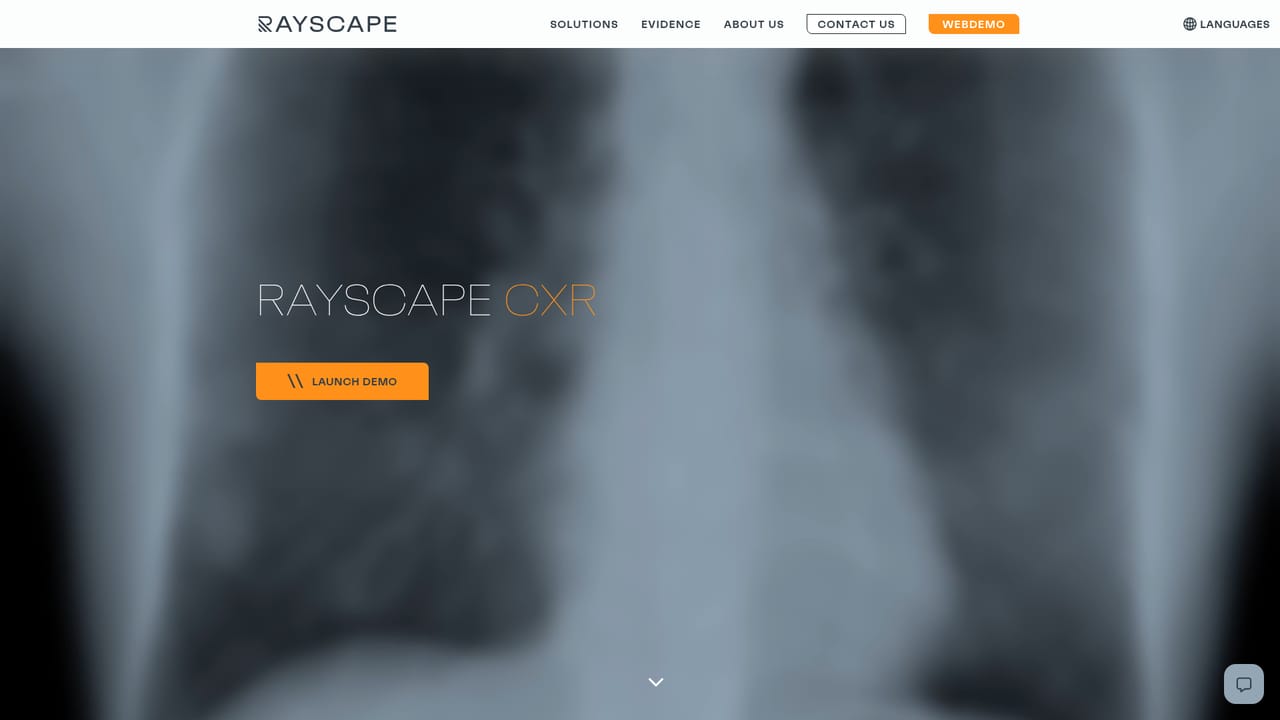
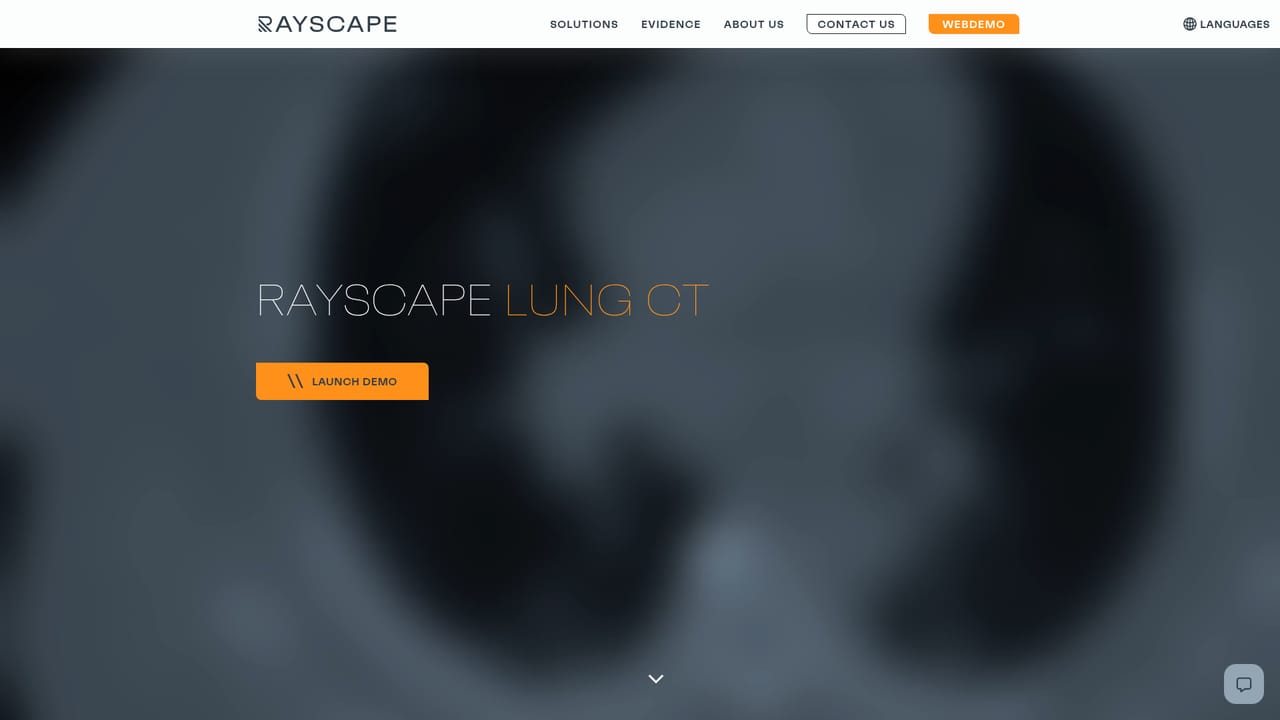
Rayscape is a radiology AI platform built around two core imaging products: chest X-ray analysis and lung CT. The chest X-ray module covers more than 140 findings with structured outputs and visual overlays, so a reading radiologist gets a highlighted region and a written impression rather than a raw probability score. The lung CT module focuses on nodule detection, measurement and tracking over time, which supports lung cancer screening programs and long term follow-up of oncological patients. The tool is aimed at clinical rather than consumer use. Hospital radiology departments, emergency and ICU settings, tuberculosis screening programs and oncology teams are the stated audiences, and the product is positioned as decision support that slots into an existing picture archiving and reporting workflow. Rayscape also offers a separate CT product, TAP CT, which reads chest, abdomen and pelvis oncology scans and surfaces findings across multiple organs inside one pass. In practice the platform does three jobs. It flags abnormalities and draws attention to suspicious areas, it produces quantitative measurements, and it prioritizes worklists so urgent cases surface first while structured reports are drafted automatically. The training base is described as over 104 million images collected internationally, and the vendor reports deployments with public and private clinics across more than 18 countries. Among radiology AI vendors, Rayscape is narrower than general purpose imaging suites: it concentrates on thoracic imaging (chest X-ray, lung CT, lung cancer screening, incidental findings and oncological tracking) rather than covering neuro, musculoskeletal or cardiac studies. That focus is useful for departments that mainly need chest triage and nodule management, but it means the platform is a complement to, not a replacement for, a broader diagnostic AI portfolio. There is a public demo for hands-on evaluation.
Support runs through a contact form and a frequently asked questions page; onboarding and infrastructure integration are handled with the vendor during a demo and pilot rather than through self-service documentation.
Learn moreChest X-ray analysis covering 140+ findings with visualizations and structured outputs; lung CT nodule detection, measurement and longitudinal tracking; TAP CT multi-organ oncology reads across chest, abdomen and pelvis; worklist prioritization by urgency; automated structured reporting; variants for emergency and ICU, tuberculosis screening, radiology departments, incidental findings, lung cancer screening and oncological tracking.
Learn more AI Angels400+ customizable AI girlfriends for NSFW chat, voice calls, and roleplay
 Candy AIExperience the future of companionship with AI friends who chat, role-play, and connect with you on a human level.
 ourdream.aiA vast AI roleplay platform with millions of characters for chat, images, video and voiceAI Angels400+ customizable AI girlfriends for NSFW chat, voice calls, and roleplayCandy AIExperience the future of companionship with AI friends who chat, role-play, and connect with you on a human level.ourdream.aiA vast AI roleplay platform with millions of characters for chat, images, video and voice