What these tools do
A code humanizer takes code that reads like it came from a machine, or from a developer who enjoyed being clever, and makes it read like a person wrote it for other people. In practice that means plainer names, shorter functions, comments that explain intent rather than restating the line, consistent formatting and fewer nested tricks. It is not the same job as fixing a bug: the logic should survive, only the presentation changes.
The audience is broad. Solo developers who lean on an AI assistant and want the output to pass their own review. Teams reviewing pull requests full of generated code. Analysts tidying SQL that an AI wrote against a warehouse schema. Students comparing their Python against something more idiomatic. Anyone who has opened old code and spent the first hour decoding it is the target reader too.
How to choose one
Start with the language. A tool that handles Python well may have nothing useful to say about Java or SQL. Test it on a real file in your stack rather than a toy snippet. For humanize code sql ai queries, check whether the tool understands query structure such as joins and subqueries, or only reformats keywords and indentation.
Next, decide what humanizing means to you. Some tools mostly rename and reformat. Others explain code in plain English so a reader can follow it without a rewrite. Both are legitimate, but they solve different problems, and a reviewer who expects rewritten functions will be disappointed by an explainer.
Check the blast radius. A tool that edits files in place needs version control behind it. A tool that explains code without changing it is safer to adopt on a legacy codebase. Also look at where it runs: inside the editor means less copy and paste, a separate web tool means no install. Pricing matters less than whether the tool preserves behaviour, so read the output before you trust it.
Notable tools
Jetbrains IDE Plugin
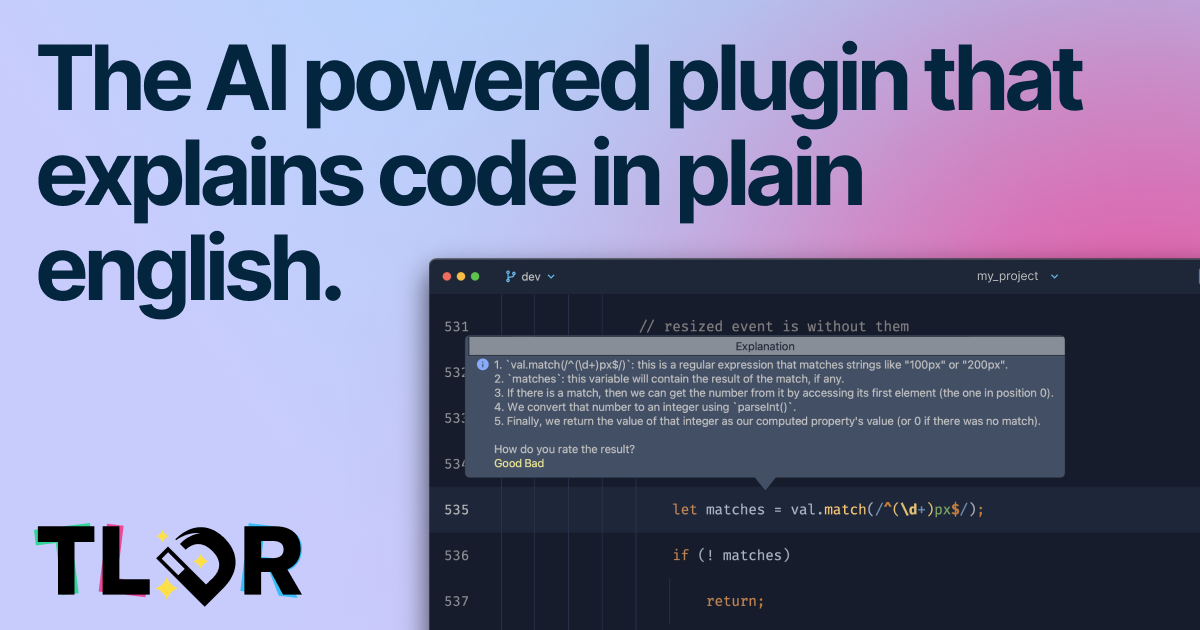
An AI plugin that explains code in plain English inside JetBrains IDEs. That makes it a good fit for the explain side of humanizing: open unfamiliar generated or legacy code, ask what it does, and use the answer to decide whether to rewrite it or leave it. It is freemium with a subscription tier, and it runs on Windows, macOS and Linux wherever the JetBrains IDE runs.
Common questions
What does humizer mean?
It is a spelling of humanizer that shows up in search boxes, not a separate product category. A humizer for code is a tool that makes code read as if a person wrote it: clearer names, simpler structure, comments that add information.
How do I humanize code without breaking it?
Keep the change set small and commit before you start. Run the tool on one function or one query at a time, run your tests, and compare behaviour rather than trusting the diff. If a tool explains code instead of rewriting it, you can get most of the readability benefit with none of the risk.
Can these tools humanize AI code and SQL?
Yes, that is the common case: output from an AI assistant tends to be verbose and unevenly commented. For SQL the realistic gain is formatting and naming, since a query optimizer cares about structure, not style. Read rewritten queries before they reach production.
Does a Python code humanizer work on Java too?
Not necessarily. Idiomatic Python (list comprehensions, short functions) and idiomatic Java (explicit types, class structure) are different targets, so check the tool's language coverage against your codebase before you rely on it.
When to look elsewhere
If the code is broken rather than ugly, this is the wrong page: Fix My Code covers tools that diagnose and repair defects. If the task is to turn code into readable prose for documentation, Pseudocode Generator is the closer fit.