Qingzhong API / 情种API

One base URL for OpenAI, Claude, Gemini and Grok, with keys, pricing and usage tracked.

Intermediate API
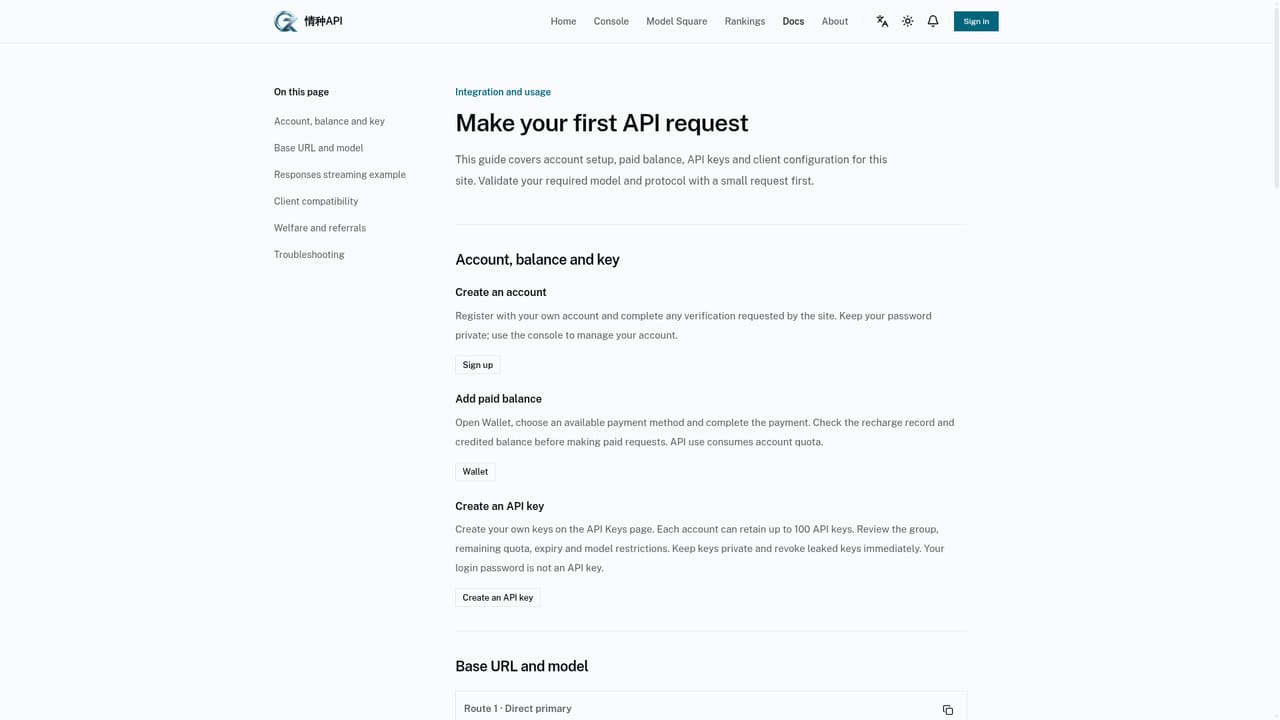
Screenshot of Qingzhong API / 情种API, One base URL for OpenAI, Claude, Gemini and Grok, with keys, pricing and usage tracked

What is Qingzhong API / 情种API?

Qingzhong API / 情种API is an analytics tool. Qingzhong API is a paid relay for developers that routes requests to OpenAI, Claude, Gemini and Grok style models through one base URL, while tracking API keys, wallet balance, pricing and per request usage in a single dashboard.

Qingzhong API (情种API) is a paid relay service that gives developers a single compatible endpoint for reaching multiple AI model families, including OpenAI, Claude, Gemini and Grok. Instead of integrating each provider's SDK separately, developers point their application at one base URL and route requests to a selected model, with request and response patterns following familiar formats such as /v1/responses and /v1/messages. The service is built for developers and small engineering teams who already work with AI APIs and want a managed layer for keys, billing and monitoring rather than a consumer facing AI assistant. Client configuration guidance is provided for tools such as Codex CLI, Claude Code and Cherry Studio, which suggests the typical user integrates the gateway into existing coding workflows or agent setups rather than building an integration from scratch. In practice, a new user creates an account, funds a wallet balance, and generates an API key that is separate from the account password. From there, the base URL (a primary address and a compatible backup address) is set in the client, a model is chosen from the live pricing page, and a test request is sent. Every call appears in usage records showing tokens, cost and timing, while the pricing page lists current rates and group multipliers so costs can be checked before committing. Public performance and quality pages add outside verification links for comparing models before picking a routing group. Qingzhong API positions itself as an independent relay rather than a one size fits all platform: it does not promise universal endpoint compatibility or a fixed service level, so developers are expected to confirm that a chosen model supports the endpoint they intend to call. This makes it a better fit for technically confident users comparing routing costs and model behavior across providers than for teams seeking a fully guaranteed, turnkey API management product.
How do you use Qingzhong API / 情种API?

  1. 1Create an account
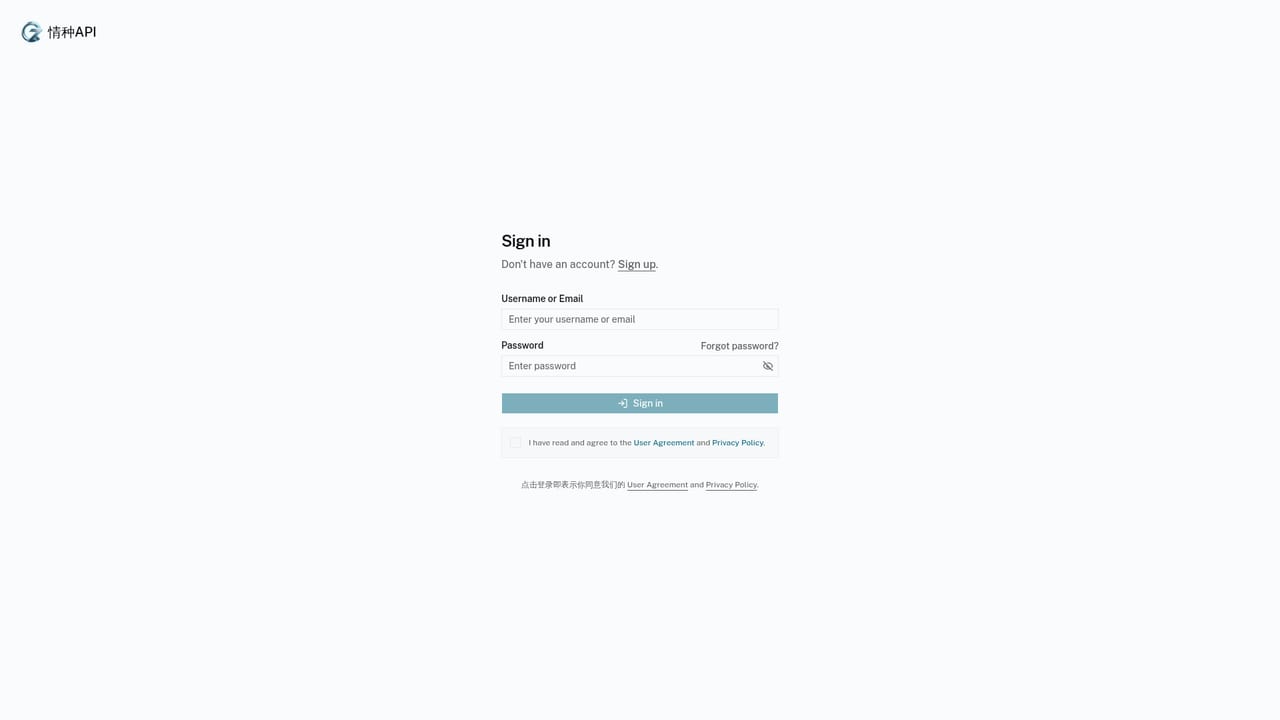
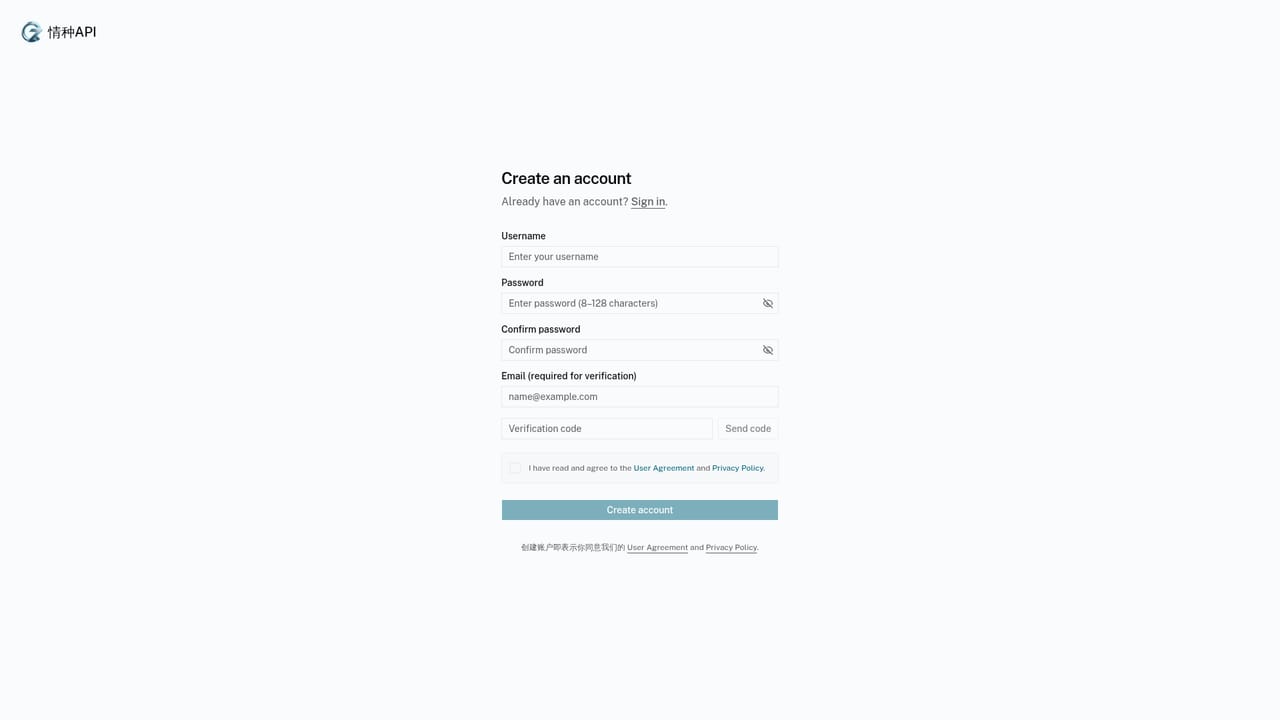
    Sign up for a Qingzhong API account before generating keys or adding balance.
    Qingzhong API / 情种API — Create an account
  2. 2Add balance to your wallet
    Fund the account wallet so paid requests can be billed against your balance.
  3. 3Create an API key
    Generate a dedicated API key from the dashboard; the account password is not used as a key.
  4. 4Check model pricing and pick a model
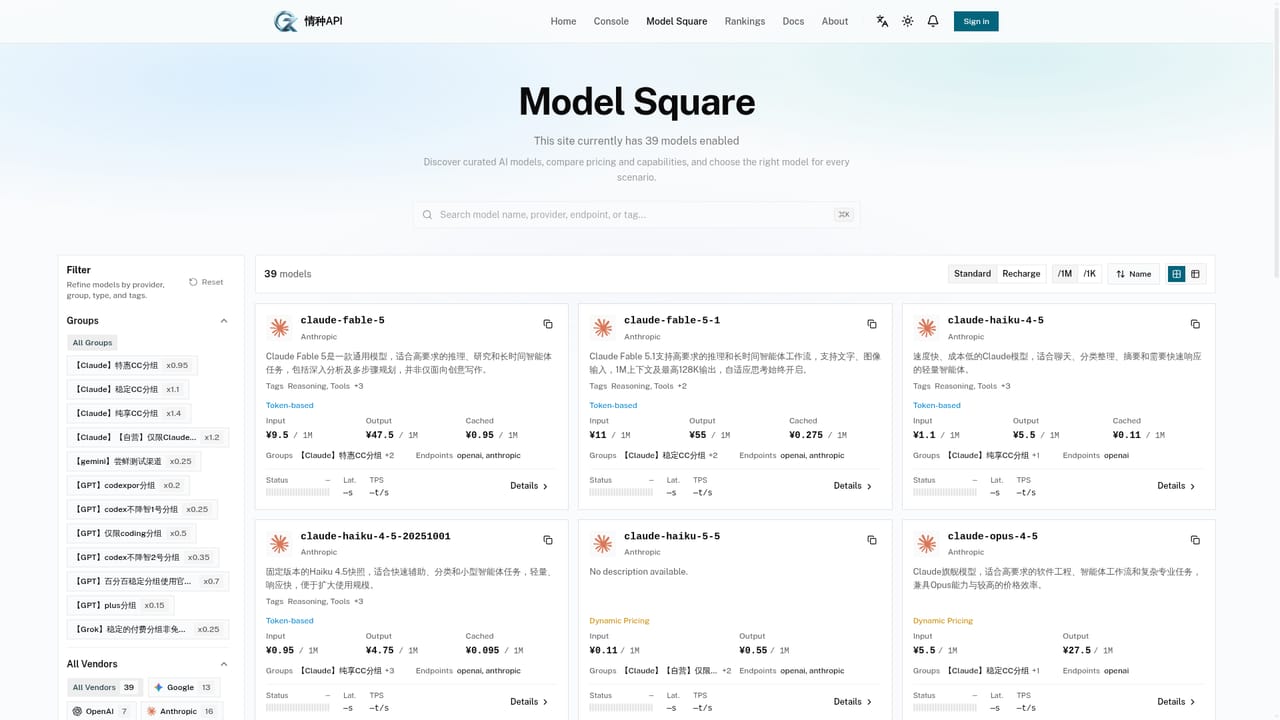
    Review current prices and group multipliers on the pricing page before selecting a model to call.
    Qingzhong API / 情种API — Check model pricing and pick a model
  5. 5Set the base URL and send a test request
    Point an SDK or client at the primary or backup base URL and follow the integration guide to send a first request.
    Qingzhong API / 情种API — Set the base URL and send a test request
  6. 6Monitor usage and open a ticket if needed
    Check tokens, cost and timing in usage records, and submit a support ticket with request IDs if a problem comes up.
    Qingzhong API / 情种API — Monitor usage and open a ticket if needed

Pros and cons

Pros

  • Single base URL routes requests across multiple model families including OpenAI, Claude, Gemini and GrokAI
  • Live pricing page shows current rates and group multipliers before a request is sentAI
  • Built in usage records track tokens, cost and timing for every callAI
  • Primary and backup routes let a client switch endpoints manually if one address has issuesAI
  • Public performance and quality pages offer outside verification links for comparing modelsAI

Cons

  • No universal compatibility is promised, so endpoint support must be checked per model before useAI
  • No fixed service level commitment is stated, which adds uncertainty for production reliability planningAI
  • Support runs through tickets only, with no live chat or phone contact mentioned on the homepageAI
  • Service is paid only with wallet funding required, and no free tier or trial is describedAI
  • Users must manually track pricing and multiplier changes on the price page rather than relying on fixed ratesAI

How much does Qingzhong API / 情种API cost?

Pricing

Qingzhong API is paid and billed from a wallet balance. Current model prices and group multipliers are listed on the pricing page and should be checked before sending requests, since rates and availability can change.

Learn more

Support

Support is handled through a ticket center. Users are asked to include request IDs, model names and timestamps, and to remove API keys and personal information before sharing details.

Learn more

Integrations

Requests are sent through a compatible base URL (primary and backup addresses) supporting formats like /v1/responses and /v1/messages, with client configuration guides covering tools such as Codex CLI, Claude Code and Cherry Studio.

Learn more

Features

The platform centralizes API key creation, wallet balance, live model pricing with group multipliers, per request usage records (tokens, cost, timing), and public performance and quality reports for comparing models before routing requests.

Frequently asked questions about Qingzhong API / 情种API

  • How much does Qingzhong API / 情种API cost?
    Qingzhong API is paid and billed from a wallet balance. Current model prices and group multipliers are listed on the pricing page and should be checked before sending requests, since rates and availability can change.
  • Does Qingzhong API / 情种API have an API?
    Yes, Qingzhong API / 情种API offers an API.
  • How do you use Qingzhong API / 情种API?
    The walkthrough on this page covers 6 steps: 1. Create an account 2. Add balance to your wallet 3. Create an API key 4. Check model pricing and pick a model 5. Set the base URL and send a test request 6. Monitor usage and open a ticket if needed.
  • What platforms does Qingzhong API / 情种API support?
    Qingzhong API / 情种API is available on Web App.
  • What does Qingzhong API / 情种API integrate with?
    Requests are sent through a compatible base URL (primary and backup addresses) supporting formats like /v1/responses and /v1/messages, with client configuration guides covering tools such as Codex CLI, Claude Code and Cherry Studio.
  • What are the limitations of Qingzhong API / 情种API?
    No universal compatibility is promised, so endpoint support must be checked per model before use. No fixed service level commitment is stated, which adds uncertainty for production reliability planning. Support runs through tickets only, with no live chat or phone contact mentioned on the homepage.

Status

StatusActive
Views0
Outbound clicks0
Added10/12/2026

Platforms

Web App

Pricing

Paid

Categories