RandomPokemon.games is a games tool. A free browser based random Pokémon generator with filters for type, generation, rarity and evolution stage, plus a height and weight matching page. Built for challenge runs, team drafts and quick picks rather than deep Pokédex analysis.
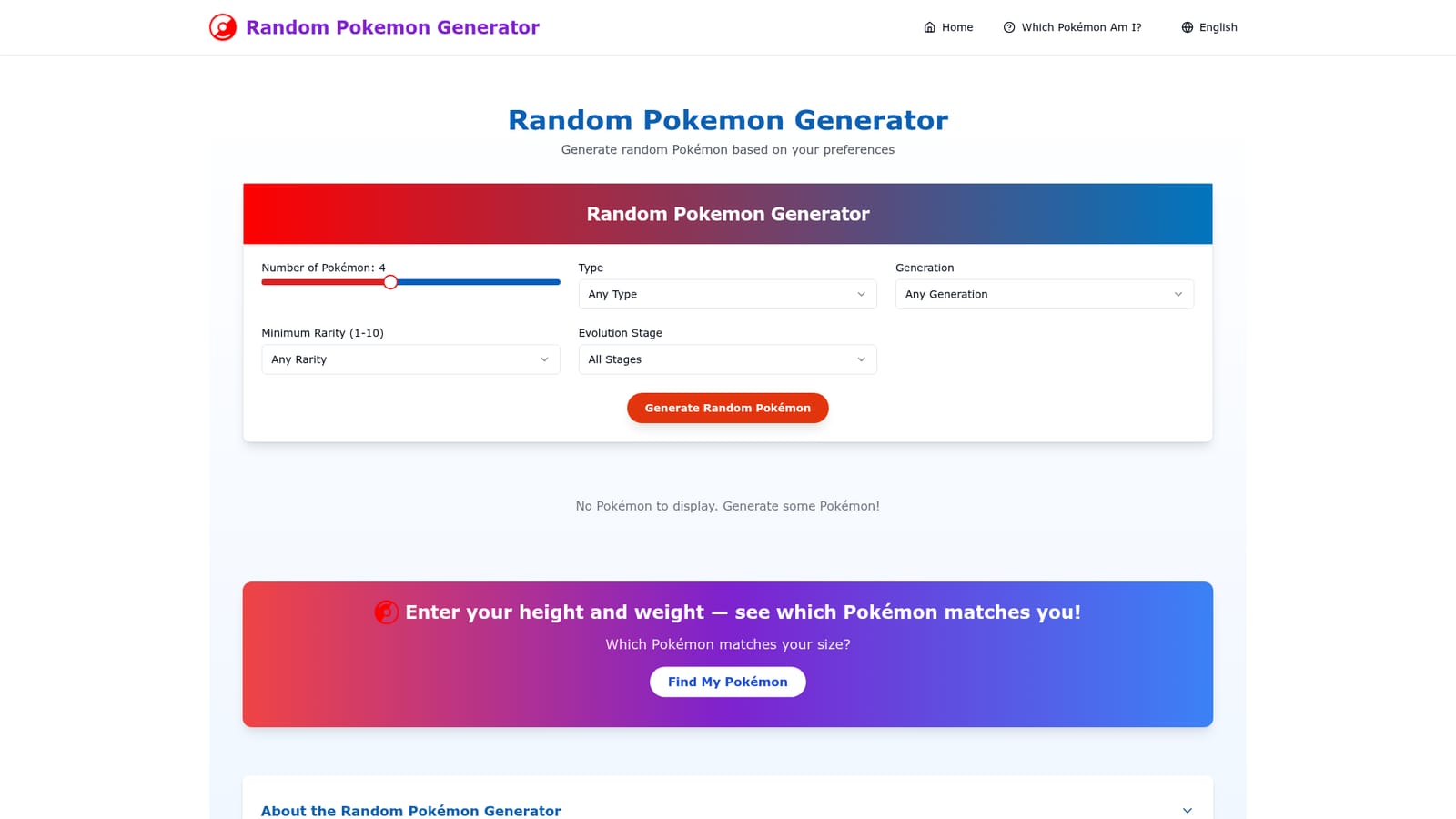
RandomPokemon.games is a browser tool that produces random Pokémon selections based on the criteria a user sets. The main generator sits on a single page and asks for four inputs: how many Pokémon to draw, a type filter, a generation filter, and a minimum rarity score on a 1 to 10 scale. An evolution stage filter is also present, letting the pool be limited to base forms, mid stage evolutions or fully evolved picks. Pressing the generate button returns a set of Pokémon matching those constraints, and the results area stays empty until a first draw is made.
The typical user is a player building a challenge run, a fan settling an argument over which creature to use, or a content creator who needs a quick lineup for a video or stream. Because type and generation filters map onto how the official games are structured, the tool fits naturally into Nuzlocke planning, monotype team building and draft style competitions where a random but legal pool matters. The rarity slider adds a second layer for anyone who wants to keep draws weighted toward rarer entries without removing common ones entirely.
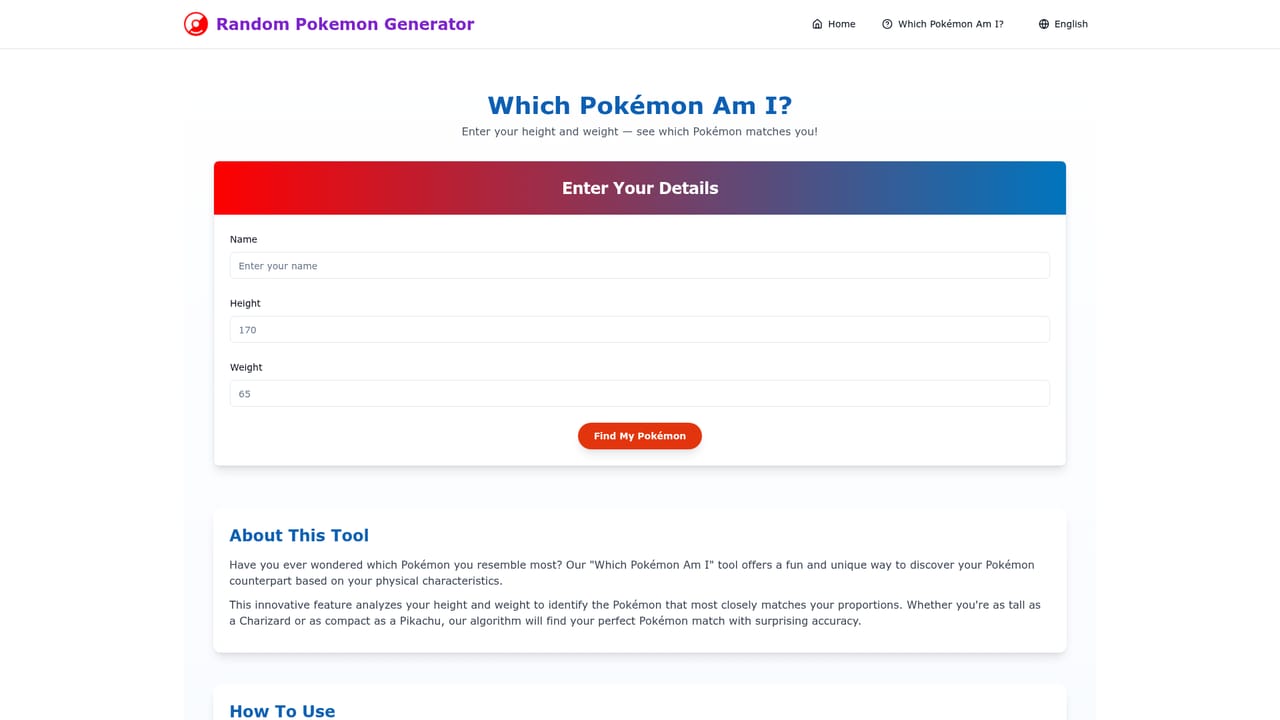
A separate page, linked from the homepage, takes a different angle: it asks for height and weight and reports which Pokémon corresponds to that body size. That is a novelty feature rather than a serious analytical tool, and it works as a shareable result for social posts or group chats. In practice the site does one narrow job, random selection with constraints, and does not attempt team analysis, stat lookup or move set advice. Anyone comparing it with a full Pokédex database or a competitive team builder should treat it as a fast picker rather than a reference source.
There is no account system, no saved history and no export path mentioned on the site, so each session is standalone. That keeps the tool frictionless for a quick draw but limits repeat use for projects that need a record of what was rolled. The interface is plain and the value sits entirely in the filter logic and the speed of getting a result.