Support
A support page and a separate trust center are both published, and the site lists an advisory engagement track for teams that need help with a specific AI question or challenge.
Learn moreApplied AI lab for enterprise agents, data and governance

Unframe AI is an AI project builder tool. Enterprise applied AI lab combining an agent orchestration platform, knowledge fabric, AI-native data store and reusable building blocks, delivered through managed projects, self-build support or advisory work across finance, retail, real estate, manufacturing and insurance.
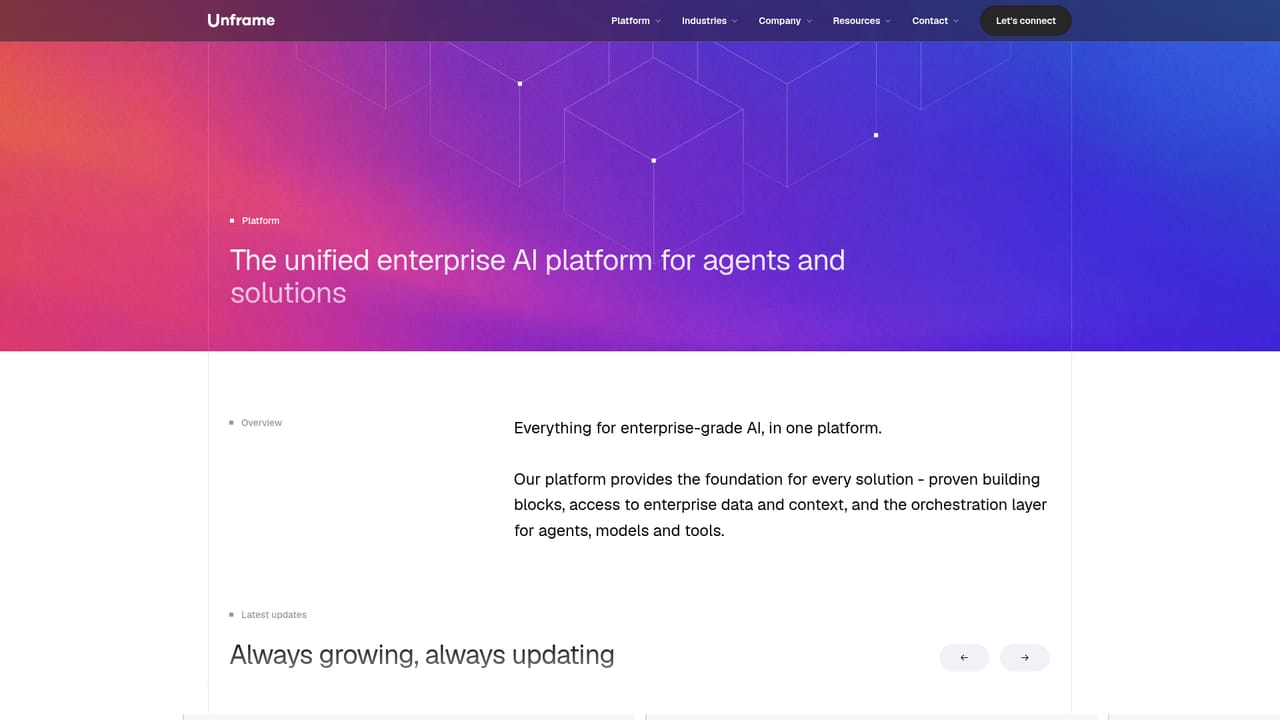
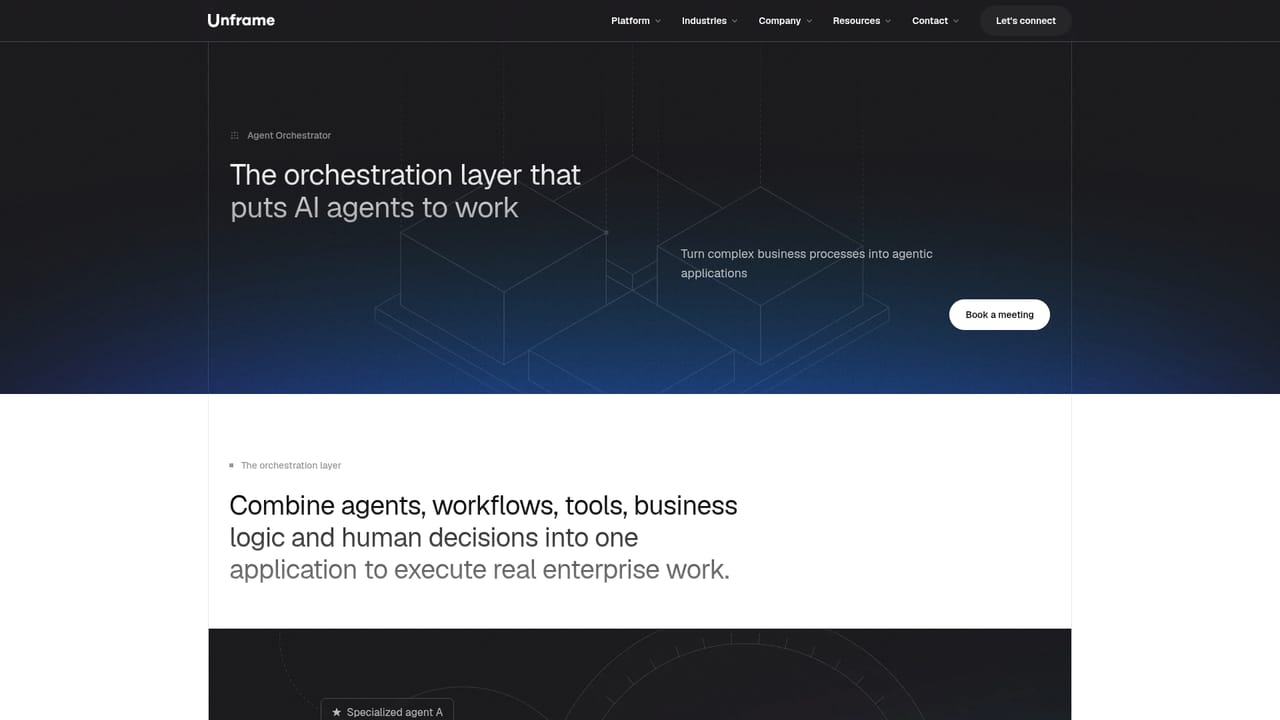
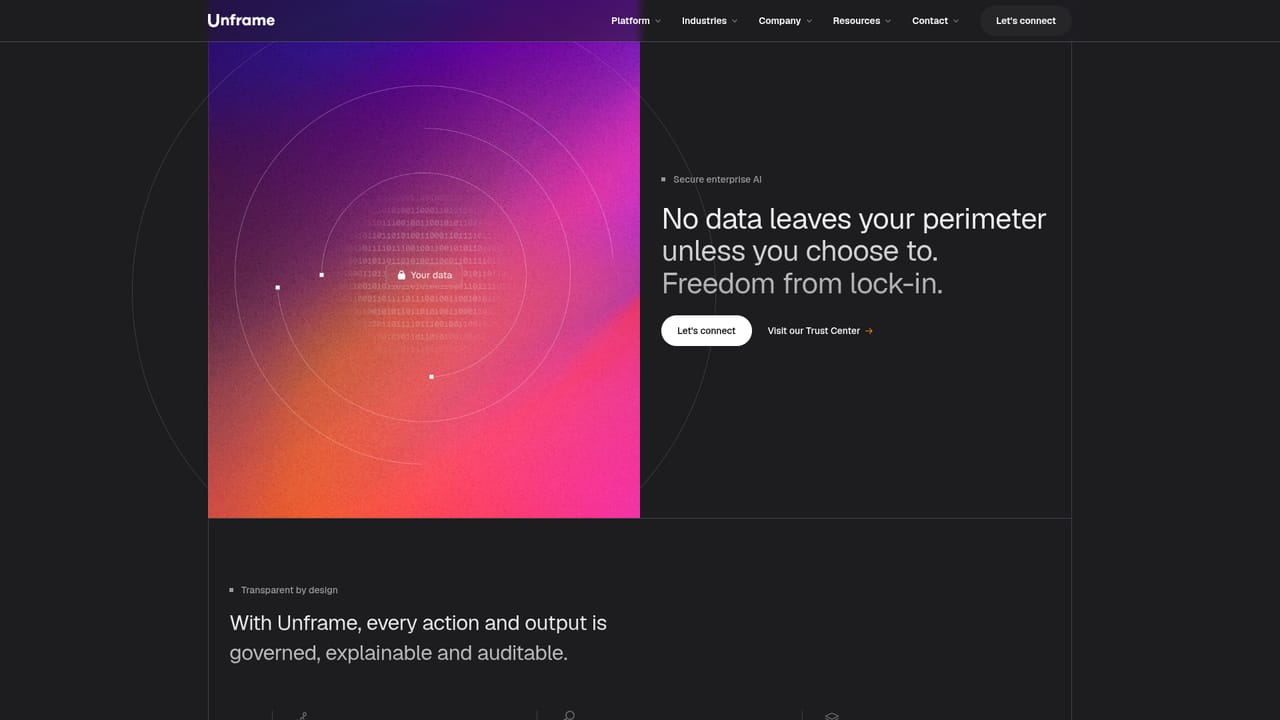
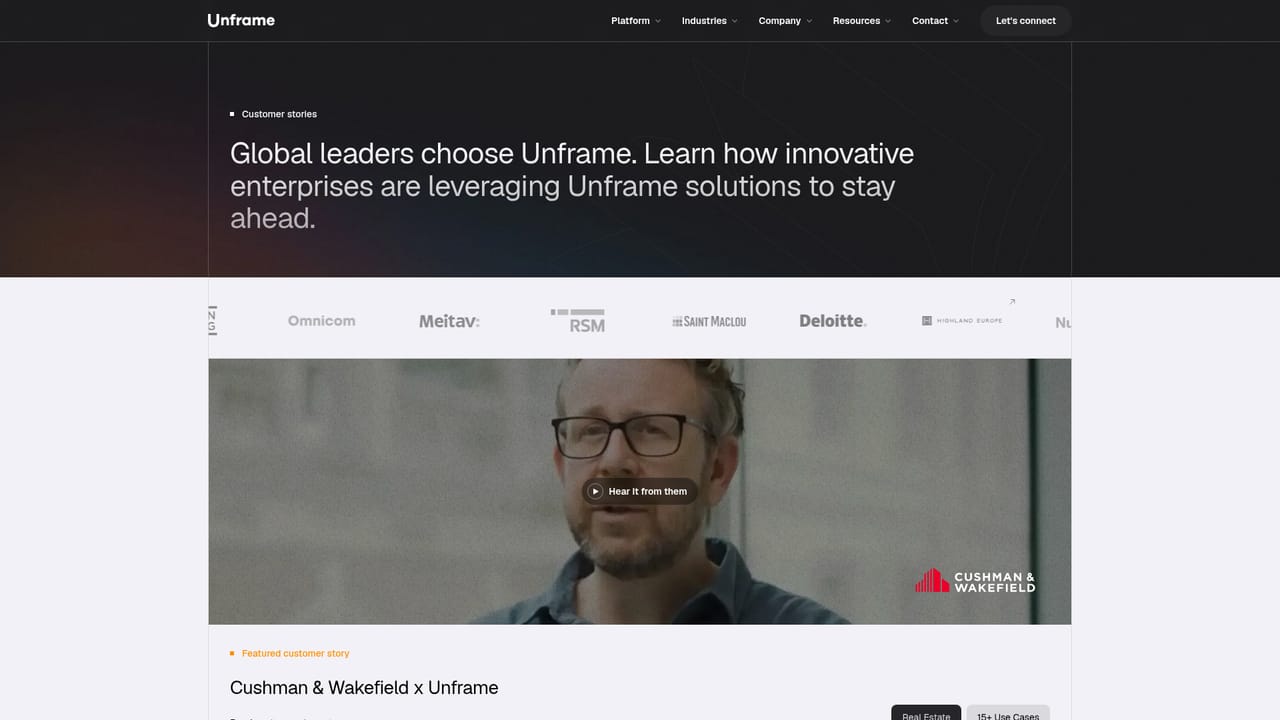
Unframe AI describes itself as an applied AI lab rather than a chat product. The company builds secure, governed, production-ready AI systems for enterprises and positions its platform as the layer that connects frontier model capabilities to measurable business outcomes. The pitch is aimed at organizations that have experimented with generic tools and now need something that survives contact with real data, compliance rules and internal workflows. The platform rests on four named components. Agent Orchestrator coordinates agents, models and tools. Knowledge Fabric supplies enterprise context so agents work from company knowledge rather than public guesswork. An AI Native Data Store holds the underlying data, and a set of Building Blocks gives teams reusable components to start from. On top of that foundation sit capability areas including agentic AI, data management and AI voice agents, plus vertical expertise in financial services, retail, real estate, manufacturing and insurance. Engagement is flexible in a way that suits large organizations with uneven internal AI maturity. Unframe offers managed delivery, where it owns the outcome from use case to production, a you-build model where the client's own engineers work on the platform with Unframe expertise on hand, and an advisory track for teams that want guidance on a specific challenge. Public customer stories include Cushman & Wakefield, which cites more than 15 projects in delivery, NZZ with an AI proofreading assistant for its newsroom, and Highland Europe using it for deal sourcing. Choosing it means buying a partner as much as a product. Teams that want a self-serve tool with transparent list pricing will find little here: costs, timelines and contracts run through sales conversations. Organizations with sensitive data, governance requirements and a roadmap of AI use cases are the intended audience.
A support page and a separate trust center are both published, and the site lists an advisory engagement track for teams that need help with a specific AI question or challenge.
Learn morePlatform components include an Agent Orchestrator for coordinating agents, models and tools, a Knowledge Fabric for enterprise context, an AI Native Data Store and reusable Building Blocks. Capability pages cover agentic AI, knowledge fabric, data management and AI voice agents, with industry playbooks for financial services, retail, real estate, manufacturing and insurance.
Learn more AI Angels400+ customizable AI girlfriends for NSFW chat, voice calls, and roleplay
 Candy AIExperience the future of companionship with AI friends who chat, role-play, and connect with you on a human level.
 ourdream.aiA vast AI roleplay platform with millions of characters for chat, images, video and voiceAI Angels400+ customizable AI girlfriends for NSFW chat, voice calls, and roleplayCandy AIExperience the future of companionship with AI friends who chat, role-play, and connect with you on a human level.ourdream.aiA vast AI roleplay platform with millions of characters for chat, images, video and voice


