AIBypass is an AI humanizer tool that rewrites AI drafts into clearer, more natural prose. An AI humanizer powered by StealthGPT that rewrites AI-assisted drafts into clearer, less formal prose. One free 150 word rewrite needs no account; paid tiers scale from 10,000 to 50,000 words monthly with TXT and DOCX uploads.
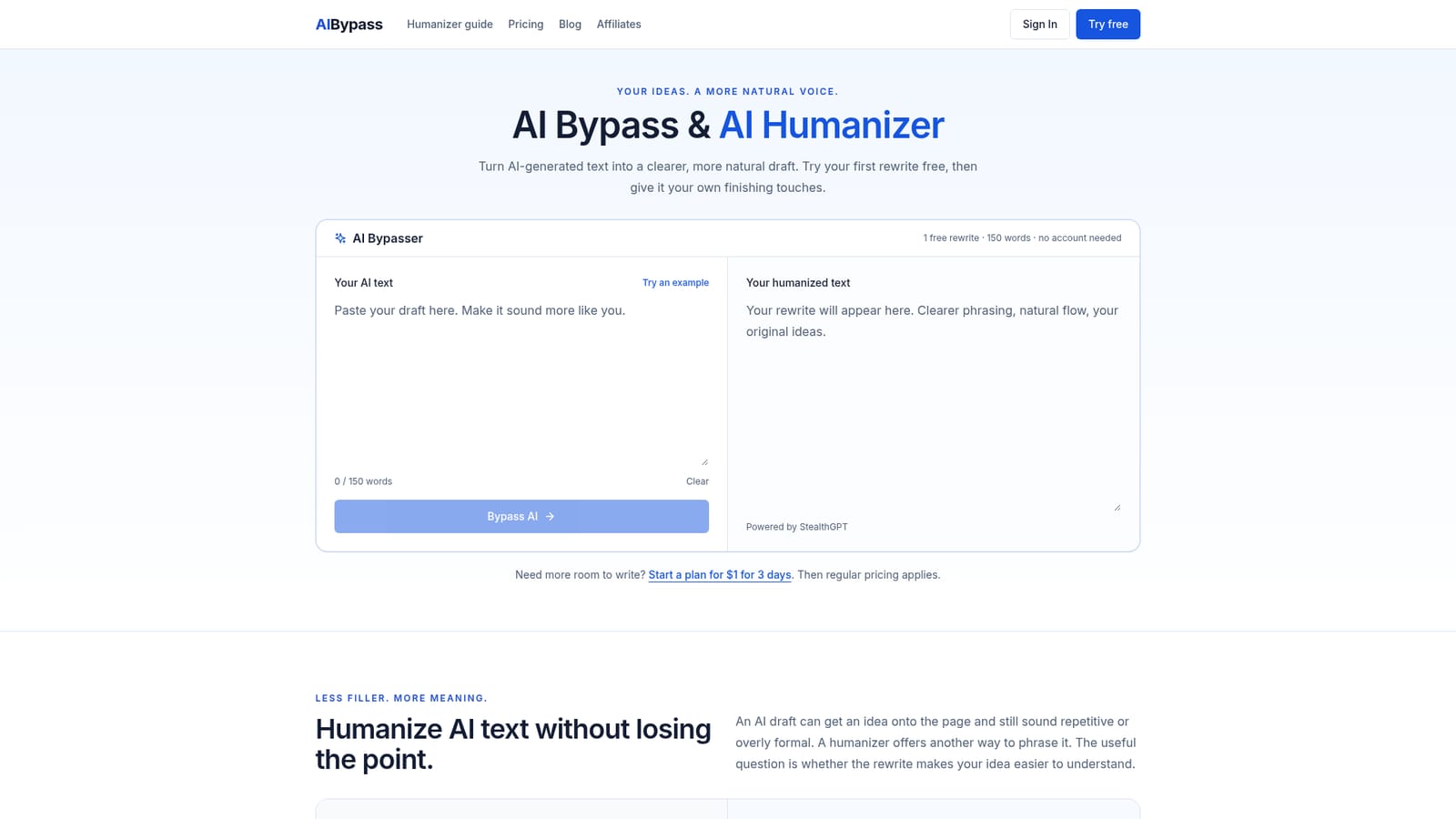
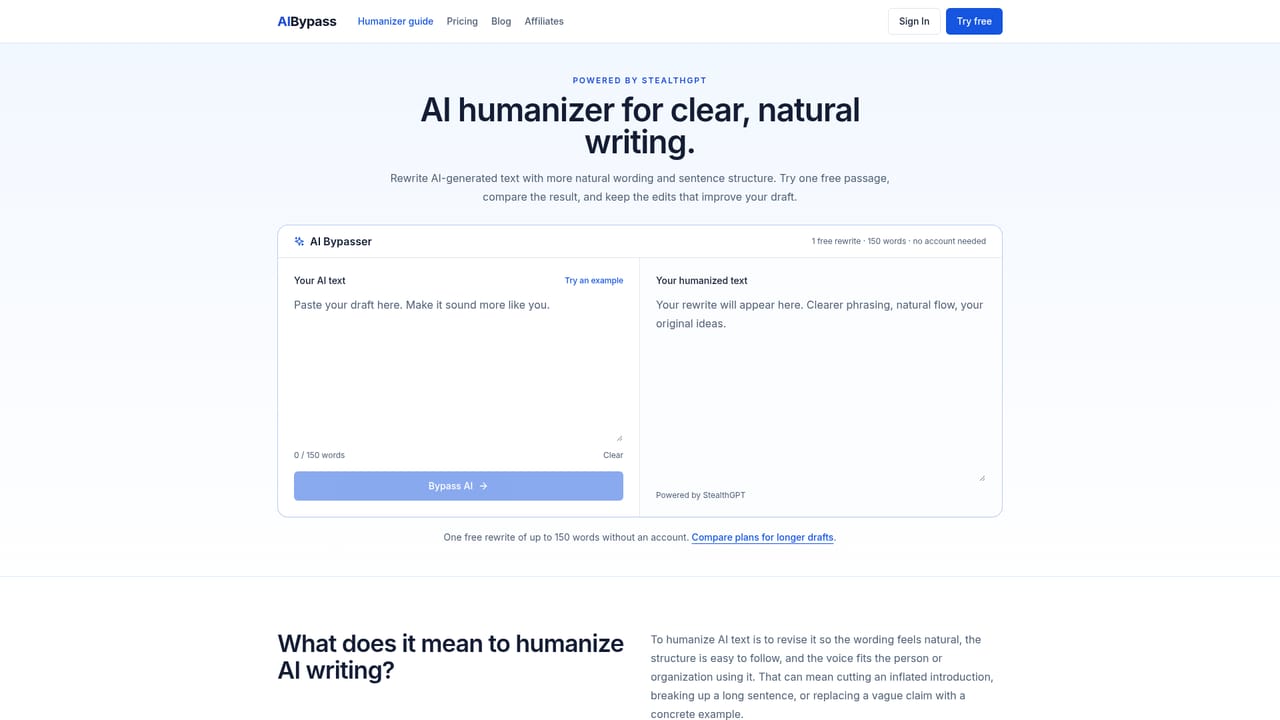
AIBypass is an AI humanizer built on StealthGPT that rewrites AI-generated or AI-assisted text by altering phrasing and sentence structure. The premise is modest and useful: a machine draft often carries an idea but arrives padded with throat clearing, stacked qualifiers and formal phrasing nobody uses in conversation. AIBypass returns an alternative version of the same passage that reads closer to ordinary writing, which the user then edits into a final draft.
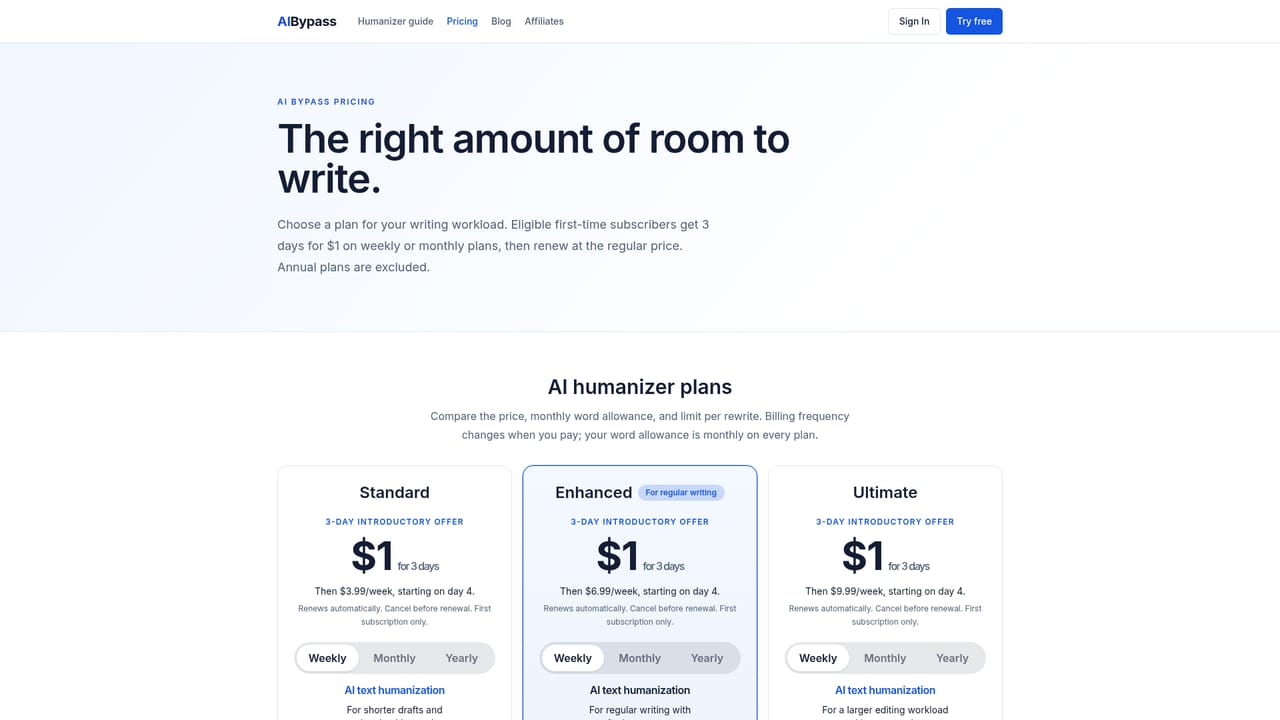
The free entry point requires no signup at all. A single rewrite of up to 150 words runs directly on the homepage, which makes it easy to judge output quality against something already written. Paid plans are tiered by volume: Standard covers 10,000 words a month with 500 words per rewrite, Enhanced covers 25,000 with 750, and Ultimate covers 50,000 with 1,000 per rewrite. Each tier accepts TXT and DOCX uploads. First-time subscribers can start any weekly or monthly plan for $1 across three days before the regular rate applies; annual billing is excluded from that offer.
The natural audience is people producing high volumes of editable prose: blog writers cleaning up first drafts, marketers tightening email and proposal copy, students and professionals reshaping working notes. The homepage is direct about where the tool should not be trusted. Rewrites can shift a detail, a qualification, a name, a number or a tone, so side by side comparison is part of the workflow rather than an optional extra.
AIBypass also declines to sell the undetectable angle that dominates this category. It states plainly that no tool can promise a detector-proof result, since scores vary across Turnitin, GPTZero, Originality.ai and Copyleaks and depend on model versions and text length. It describes itself as a rewriter, not a detector or plagiarism checker, and points users toward documenting sources and following disclosure rules. That positioning makes it a reasonable fit for writers who want cleaner drafts and are skeptical of bypass claims, and a weaker fit for anyone shopping specifically for a guaranteed detector score.