Free trial
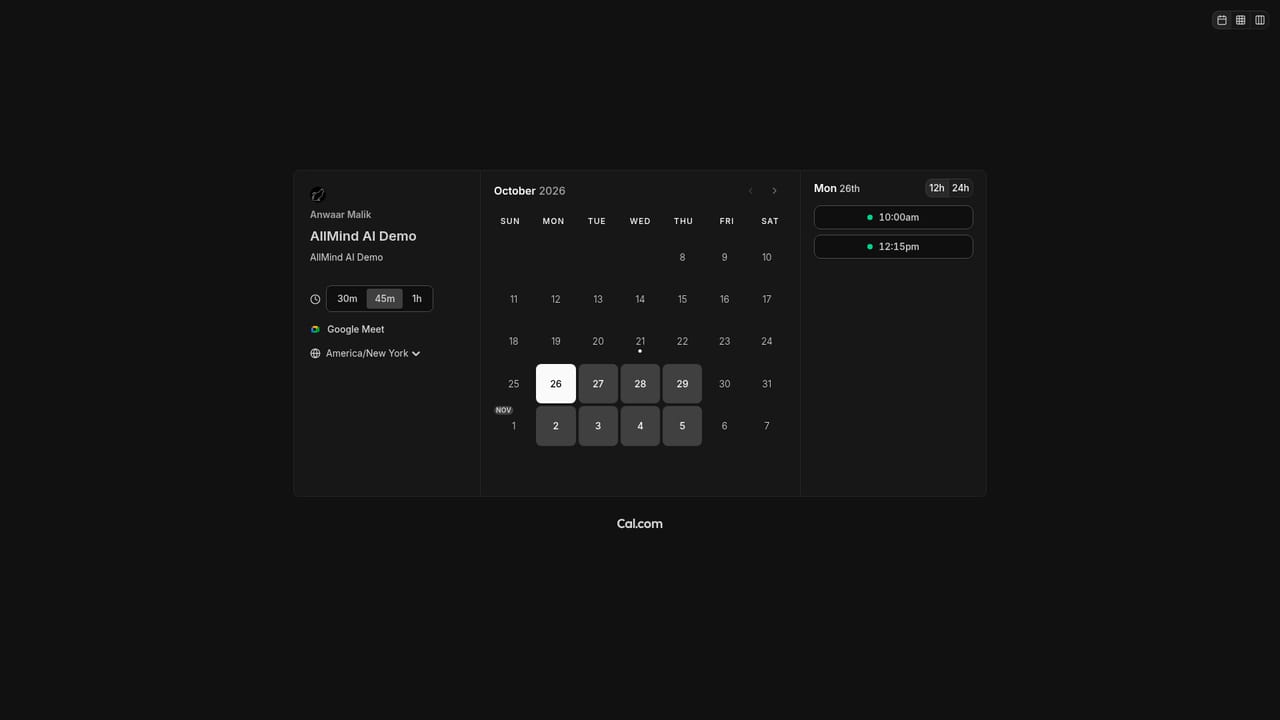
Access is request-based: the homepage offers a Request Trial action that leads to a demo page, where institutional teams can ask for evaluation access. No self-serve trial is described.
Learn moreAI equity research built on a connected financial ontology

AllMind AI is an AI search tool. An institutional equity research terminal that links 6,800+ licensed data sources and a firm's own files through a financial ontology, with planning agents that draft memos, models and earnings notes and trace every number back to its source document.
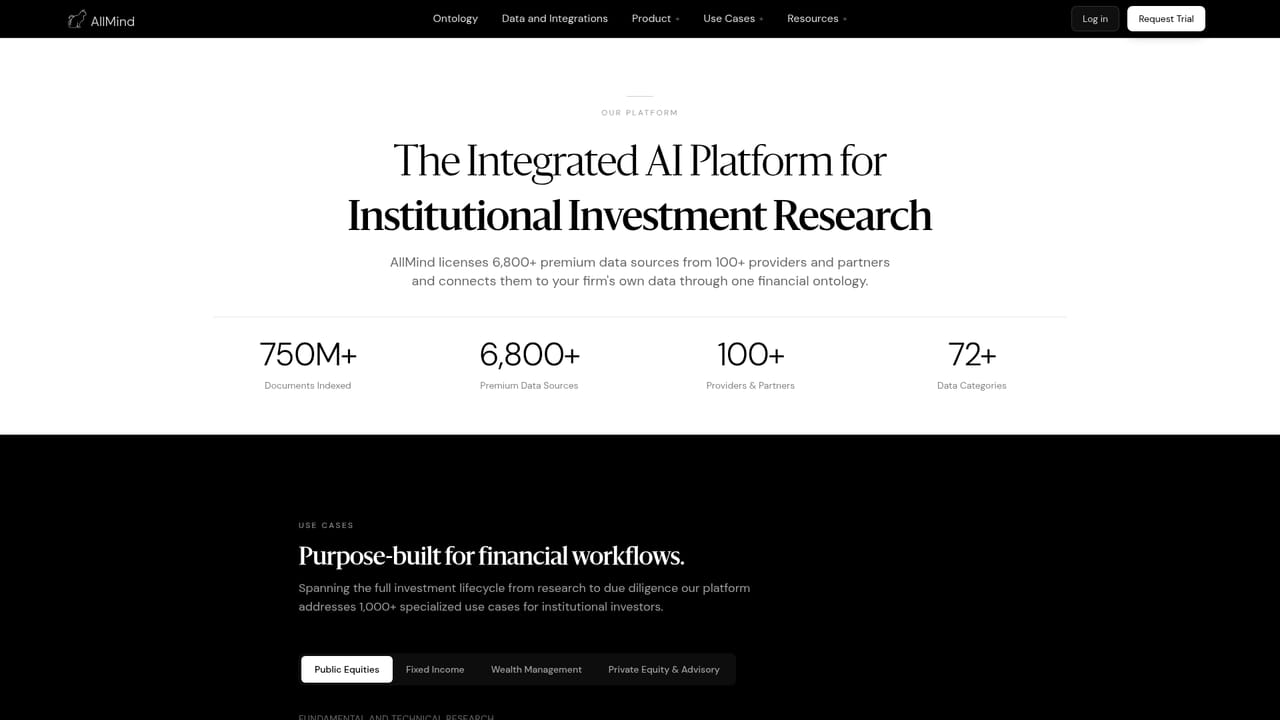
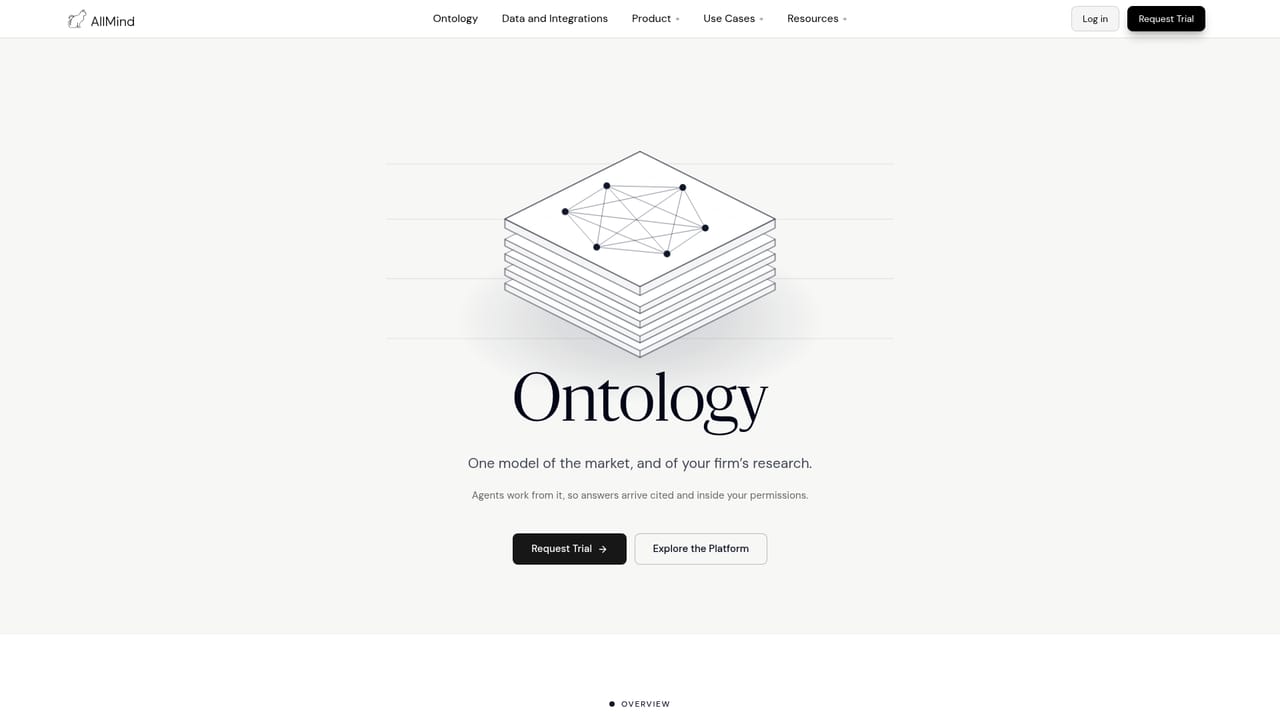
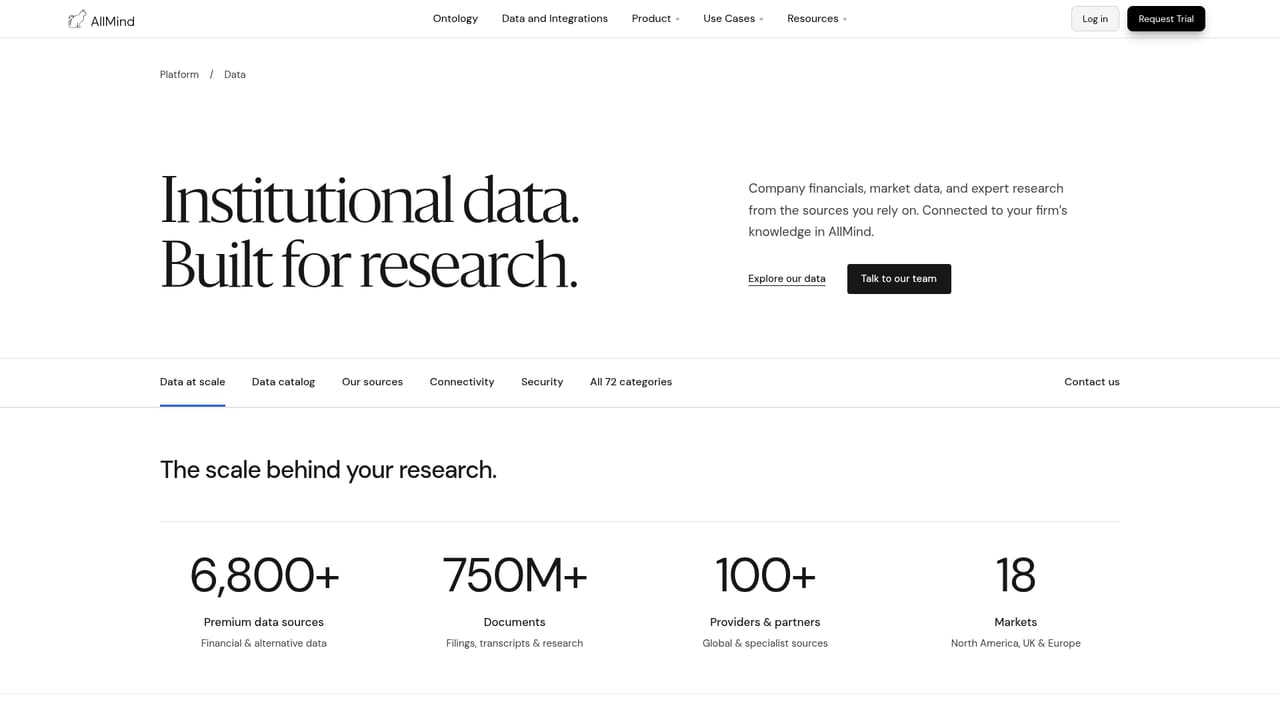
AllMind AI is an AI-native research terminal aimed at institutional equity teams: asset managers, hedge funds, sell-side research desks and investor relations groups. Its core premise is that a general model will read whatever you hand it but has no idea what to fetch next, so AllMind supplies the connective layer. A financial ontology maps relationships across trillions of data points, linking suppliers to margins, broker estimates to coverage, and footnotes to the numbers they move. On top of that sit 6,800+ premium data sources licensed from more than 100 providers, including SEC filings, SEDAR+, exchange and venue feeds, broker research, FactSet, S&P Capital IQ, LSEG, MSCI and Third Bridge, plus a firm's own memos, models and private data. In practice the tool works in two modes. Simple lookups resolve in a single query. Larger requests are planned first: the research engine writes a plan, routes each part to the right source and finance-tuned model, then agents execute. Agents draft memos, models, comparable tables and earnings notes in a firm's own format, and one can hold a watchlist overnight and report what moved and why. The platform states agents can run for seconds, minutes, hours or days, and that a single answer may weigh millions of documents. Governance separates it from generic chat assistants. Entitlements follow the person asking rather than the agent, every question and export is logged, and firm data is not used to train models. Chat, reports, grids and the data room live in one workspace with sources still attached months later, and unsourceable fields are flagged rather than left looking current. It is not a self-serve tool. Pricing is not published, access starts with a trial request, and the value depends on your data entitlements and on encoding your own screens, metrics and gates. Buyers comparing against Bloomberg, AlphaSense or general LLM subscriptions should weigh the curated dataset and audit trail against the commitment of a sales-led onboarding.
Access is request-based: the homepage offers a Request Trial action that leads to a demo page, where institutional teams can ask for evaluation access. No self-serve trial is described.
Learn moreSupport runs through a contact page and a published FAQ resource for prospective and existing clients. No service tiers or response time commitments are stated on the homepage.
Learn moreInternal firm systems and proprietary structured and unstructured data join the same ontology as the licensed sources, alongside broker research routed by entitlement. No third-party app marketplace or public API is described.
Learn moreA licensed data engine covering SEC, SEDAR+, 40+ exchange feeds, broker research, FactSet, S&P Capital IQ, LSEG, MSCI and Third Bridge; a financial ontology mapping relationships across sources; a research engine that plans complex requests; agents that draft memos, models, comp tables and earnings notes; watchlist monitoring; permissions, audit logging and a governed workspace.
Learn more AI Angels400+ customizable AI girlfriends for NSFW chat, voice calls, and roleplay
 Candy AIExperience the future of companionship with AI friends who chat, role-play, and connect with you on a human level.
 ourdream.aiA vast AI roleplay platform with millions of characters for chat, images, video and voiceAI Angels400+ customizable AI girlfriends for NSFW chat, voice calls, and roleplayCandy AIExperience the future of companionship with AI friends who chat, role-play, and connect with you on a human level.ourdream.aiA vast AI roleplay platform with millions of characters for chat, images, video and voice


