Alma by Olivares.AI is an analytics tool. Self-hosted, open-core governance plane that discovers AI agents, maps what they can read or write, and adds policy, spend tracking, a kill switch and audit evidence across Claude Code, Codex and other models.
Alma by Olivares.AI, presented on its site as Olivares AI, is a self-hosted control plane for organizations that run AI agents and need to know what those agents can reach. It gathers context, resources, sessions and identities in one place, with the deepest support for Claude Code and working support alongside Codex and Grok Build. Other models and providers can be added, and the project describes itself as vendor-neutral rather than tied to one AI vendor, identity provider or cloud.
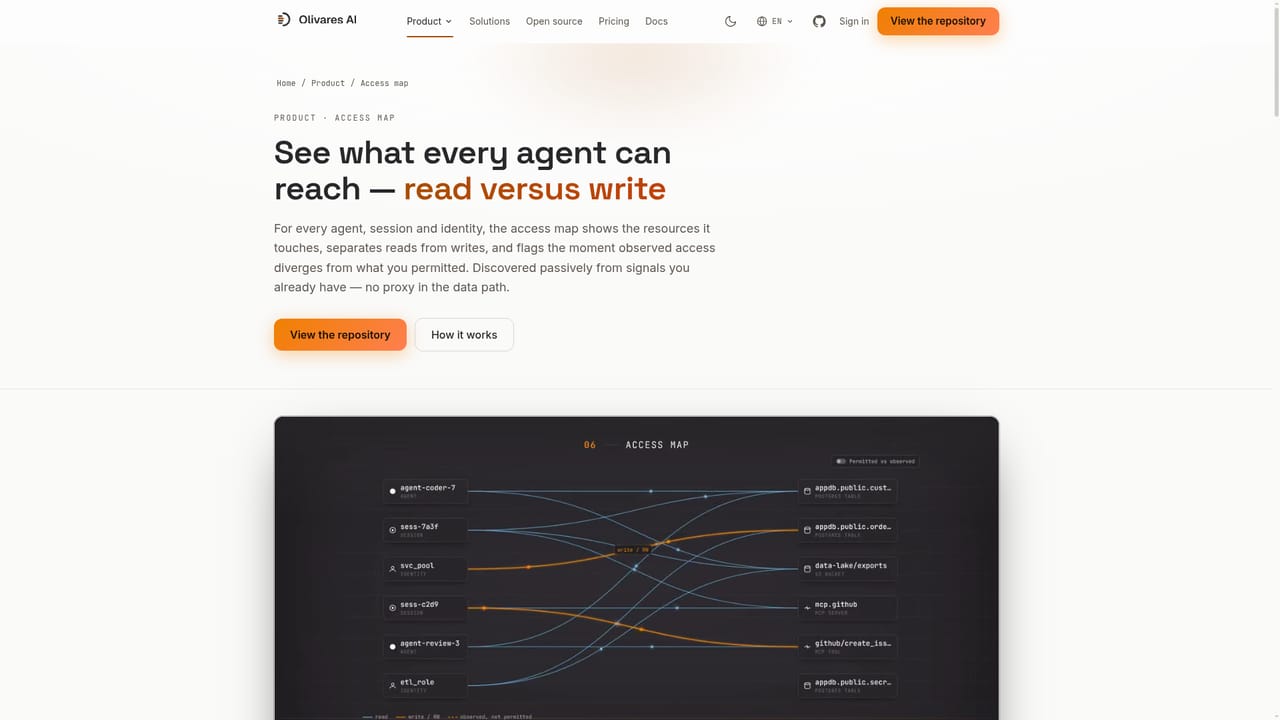
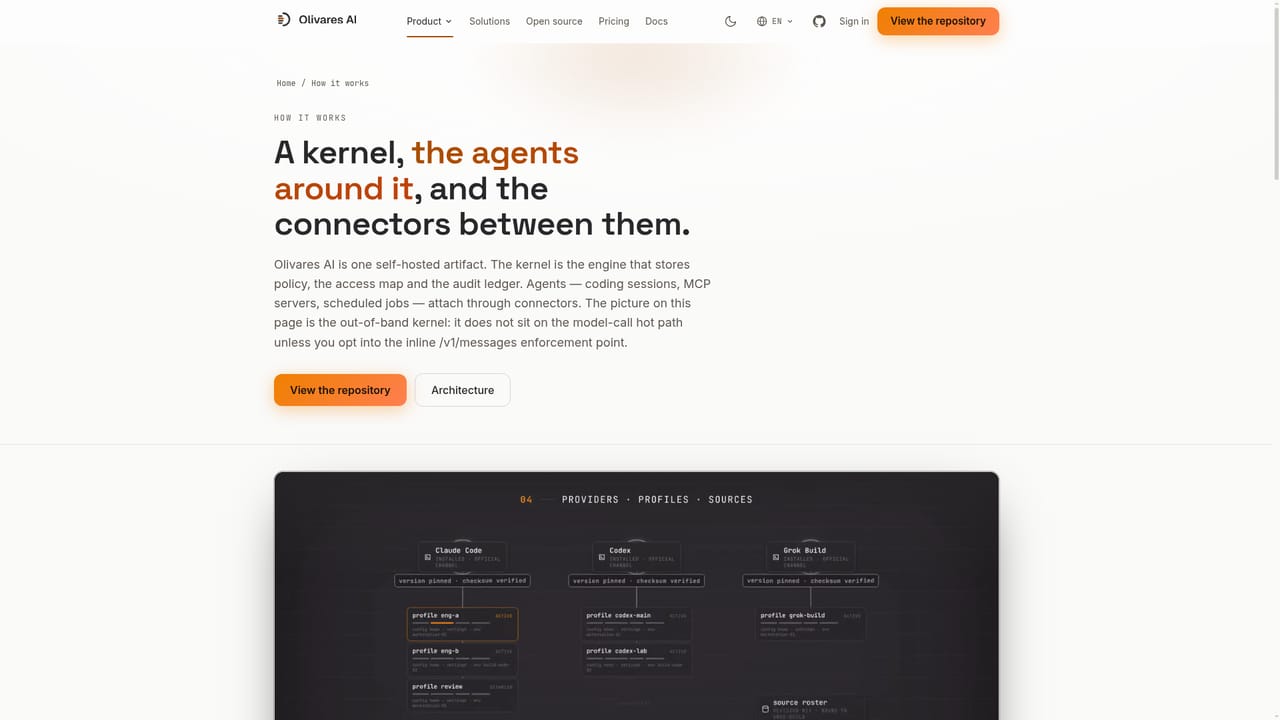
In practice it is deployed as a single container or binary on the buyer's own infrastructure, with no account, cloud dependency or mandatory call home. It passively discovers agents, sessions, MCP servers and models that already run, then builds an access graph showing what each agent is permitted to touch versus what it actually touches, split into read and read/write. From there administrators set policy, watch for least-privilege drift, attribute model spend against budgets, review recorded sessions and export audit evidence. A kill switch can stop activity across the estate, with dual-control recovery, and an inference proxy can enforce deny-closed gates inline.
The audience is platform, security and compliance teams, from a home server setup to a regulated enterprise. Compliance views map controls to frameworks such as the EU AI Act, NIST AI RMF, ISO 42001 and SOC 2, though the site states plainly that coverage is self-assessed and not a certification. It is also candid that parts of the live operations workflow, such as computed task progress, are not yet verified.
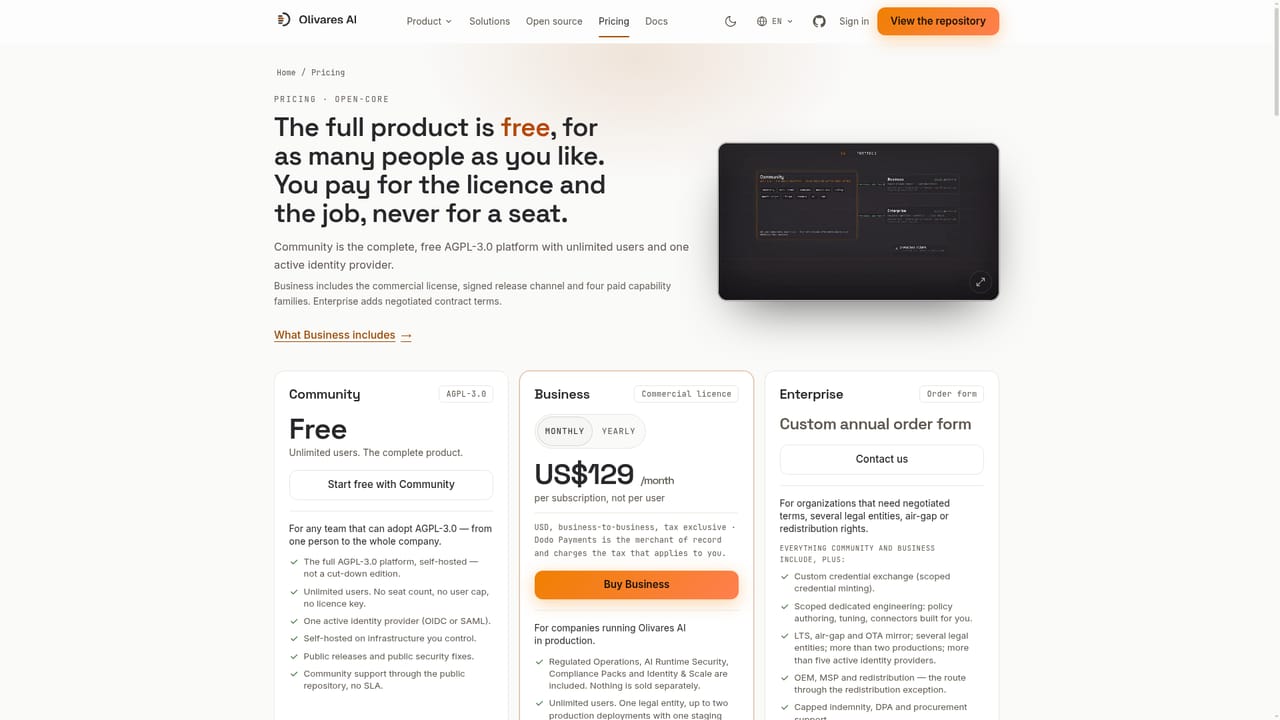
Among alternatives, it sits closer to AI governance and observability platforms than to agent frameworks or coding assistants, and it positions itself as complementing agents rather than competing with them. It is open-core under AGPL-3.0, with Community, Business and Enterprise tiers, so teams can inspect the code and self-host the core for free before deciding whether a commercial license makes sense.