Integrations
Native connectors cover Shopify, WooCommerce, Wix, Squarespace and Akeneo PIM. Google Sheets and Microsoft Excel enter the workflow as CSV imports rather than live syncs. No public API is documented on the site.
Learn moreBulk AI product descriptions engineered for ecommerce catalogs

Describely generates and enriches product descriptions, SEO metadata and attributes at catalog scale, with brand voice rules, store and PIM connectors, and grading for AI search visibility. Built for ecommerce marketers, catalog teams and agencies managing large SKU volumes.
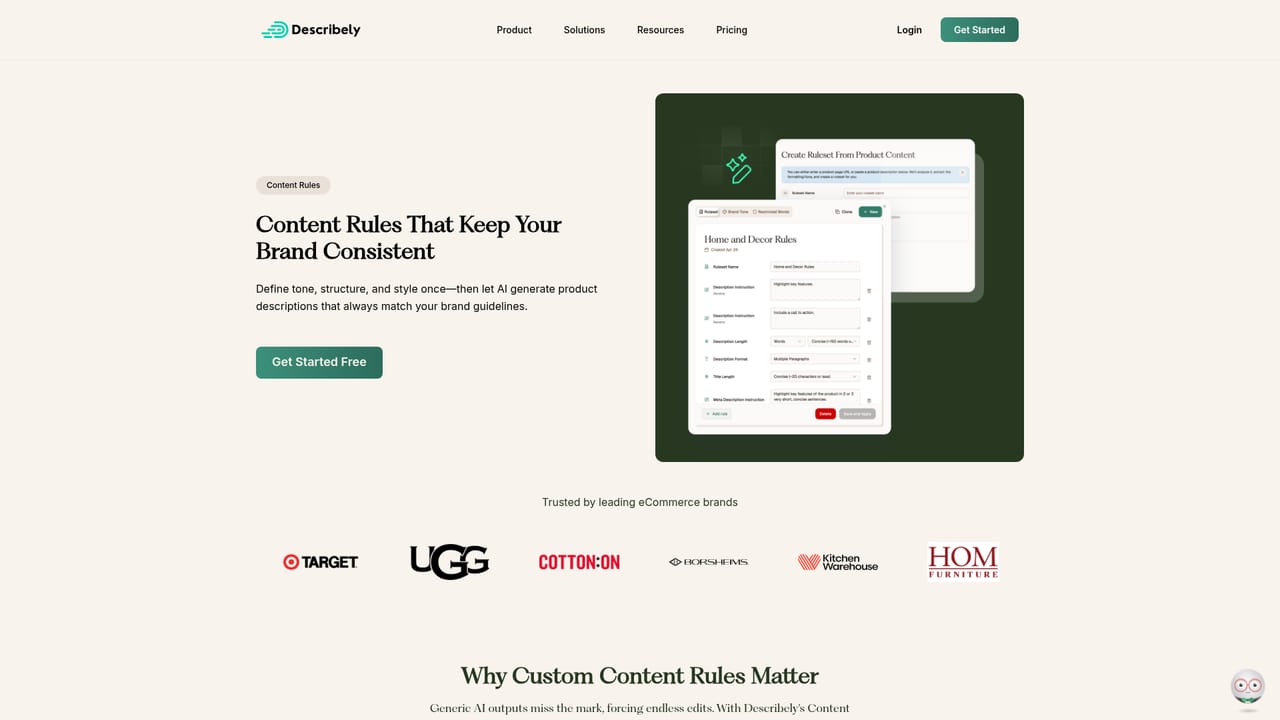
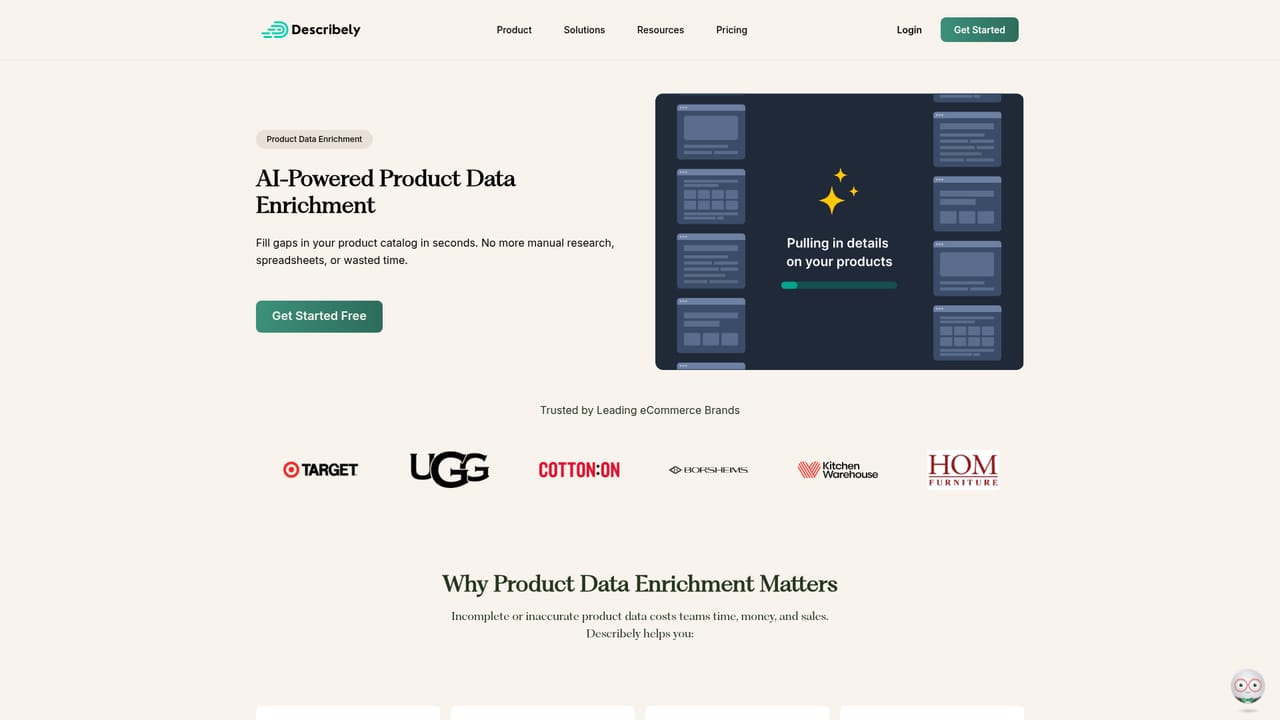
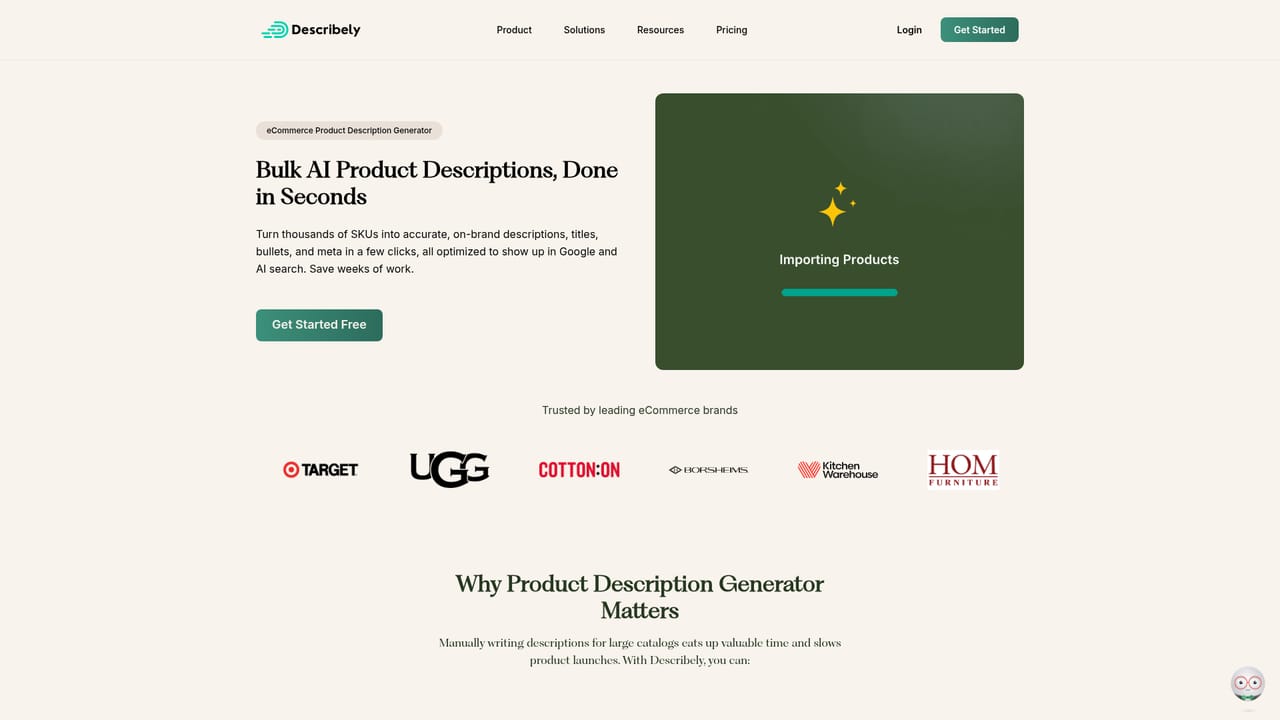
Describely is a content generation platform built specifically for ecommerce product catalogs. Rather than writing one listing at a time, it takes a catalog scale approach: it grades every SKU on how likely it is to surface in AI assistants and search engines, and how ready it is to convert, then generates the titles, descriptions, metadata and attributes needed to close the gap. The stated aim is visibility in both classic Google results and AI discovery surfaces such as ChatGPT and Gemini, which increasingly quote product content when shoppers ask for recommendations. In practice the workflow starts with product data. Describely can pull from a connected store, a PIM, or a CSV export from Google Sheets or Excel, so a merchandising team does not have to key in SKUs by hand. From there, content rules govern tone, structure and brand voice, which is what makes bulk output usable without a rewrite on every item. A separate enrichment feature fills missing attributes from sources the user designates, which matters for catalogs where manufacturer documentation is scattered or incomplete. Target Australia is cited as producing over 1000 descriptions a week at 98 percent accuracy on first generation, and agency users point to per client brand voice profiles as the reason bulk output stays on brand across accounts. The tool suits ecommerce marketers, catalog managers, merchandisers and agencies running multiple storefronts. Testimonials repeatedly mention batches of 50 to 100 plus products at a time, which is the scale where one by one AI writers stop being efficient. Compared with general purpose writing assistants, Describely is narrower: it assumes structured product data, store connectors and SEO metadata are the core problem rather than open ended copywriting. Teams wanting blog content or campaign copy will find it specialized; teams drowning in SKU level copy will find that focus is the point. One caveat worth flagging: the site leans on outcome claims and testimonials rather than published pricing or a detailed feature matrix, so buyers should verify plan limits and connector behavior directly before committing a large catalog.
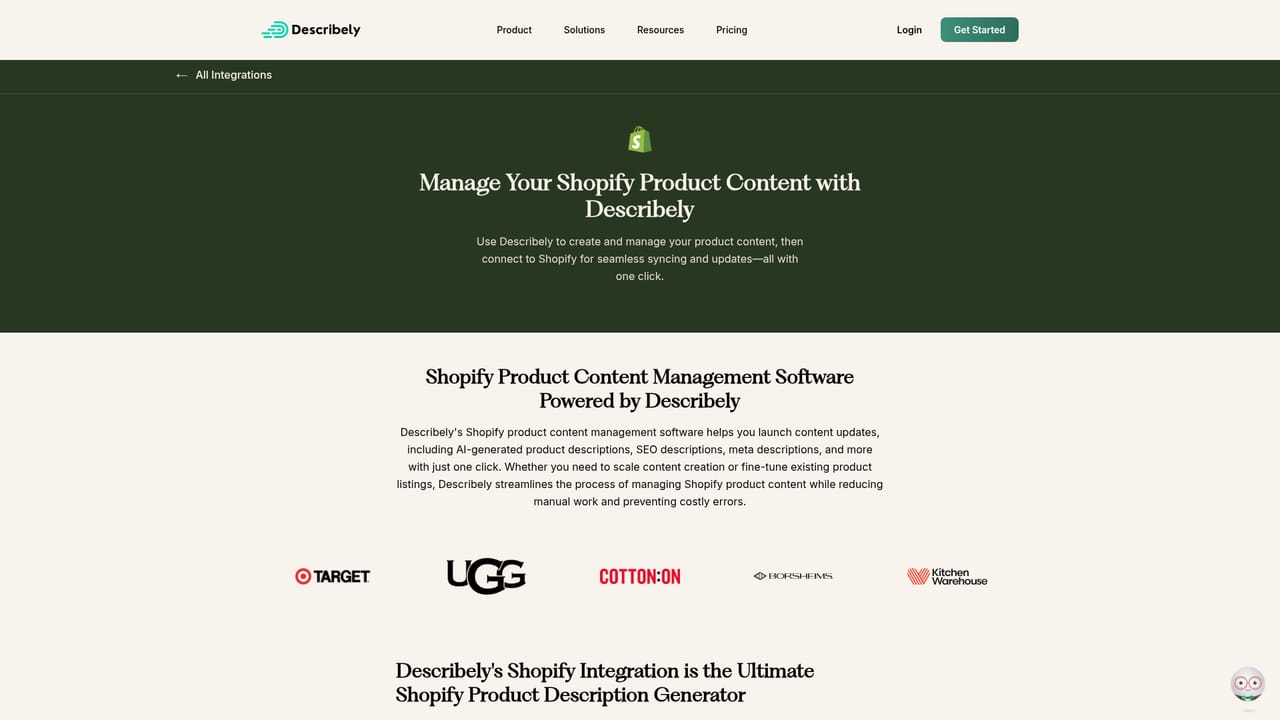
Native connectors cover Shopify, WooCommerce, Wix, Squarespace and Akeneo PIM. Google Sheets and Microsoft Excel enter the workflow as CSV imports rather than live syncs. No public API is documented on the site.
Learn moreCore features are a product description generator for bulk catalog output, product data enrichment that fills missing attributes from chosen sources, content rules for brand voice and structural consistency, and catalog grading for visibility in search and AI assistants. SEO titles, keywords, meta descriptions and attributes are generated alongside body copy, with connectors for major storefronts and PIMs.
Learn more AI Angels400+ customizable AI girlfriends for NSFW chat, voice calls, and roleplay
 Candy AIExperience the future of companionship with AI friends who chat, role-play, and connect with you on a human level.
 ourdream.aiA vast AI roleplay platform with millions of characters for chat, images, video and voiceAI Angels400+ customizable AI girlfriends for NSFW chat, voice calls, and roleplayCandy AIExperience the future of companionship with AI friends who chat, role-play, and connect with you on a human level.ourdream.aiA vast AI roleplay platform with millions of characters for chat, images, video and voice


