Free trial
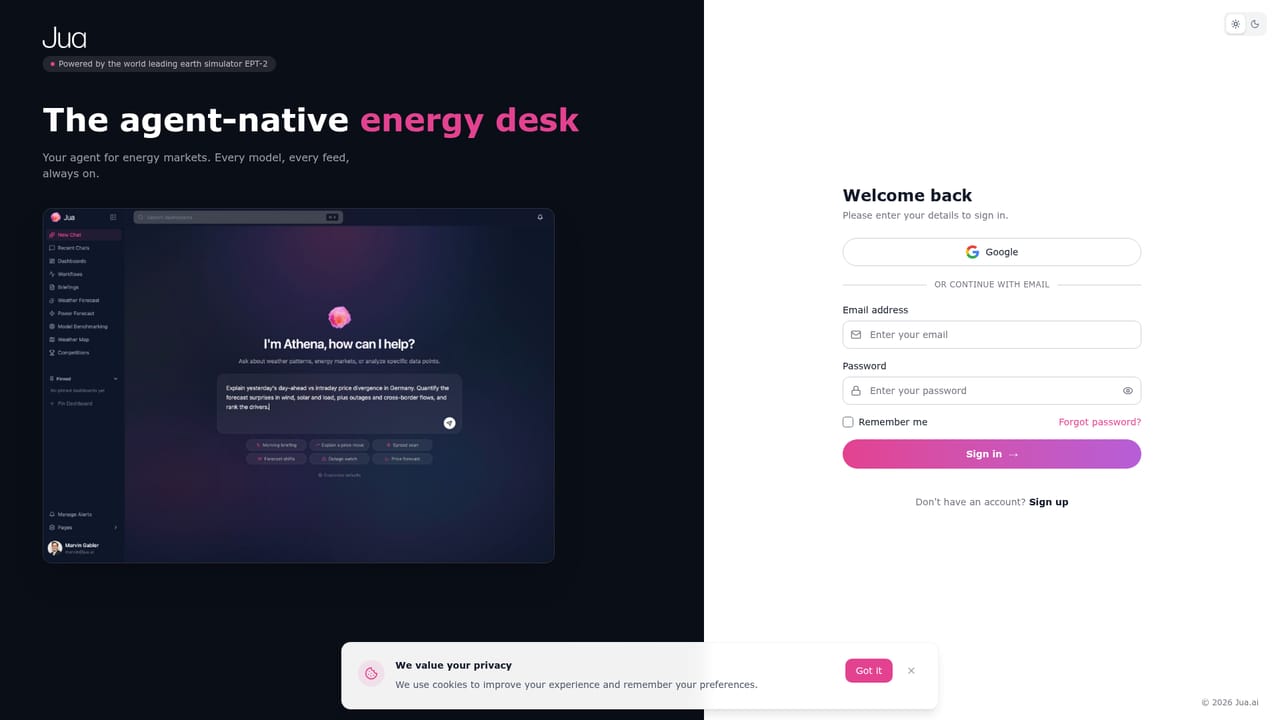
A direct trial of Athena is offered through its own web app, and demo bookings are available for teams that want the models tested against their own assets and positions. No trial length or scope is stated on the homepage.
Learn moreAI weather forecasting built for energy and trading desks

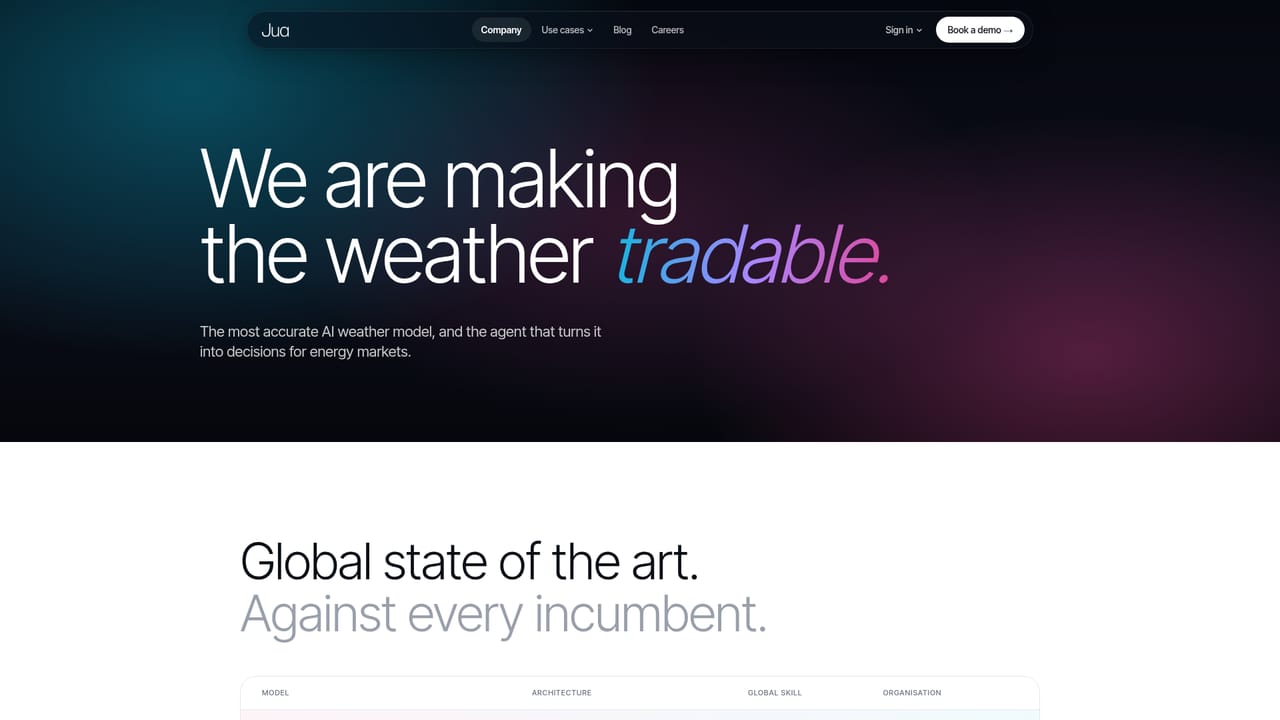
Jua builds EPT-2, an AI weather forecasting model that the company reports outperforms ECMWF, Google DeepMind and Microsoft benchmarks, plus Athena, an agent that turns forecasts into trading briefings and alerts. It targets energy traders, utilities, renewables operators and hedge funds, with API and Python SDK access.
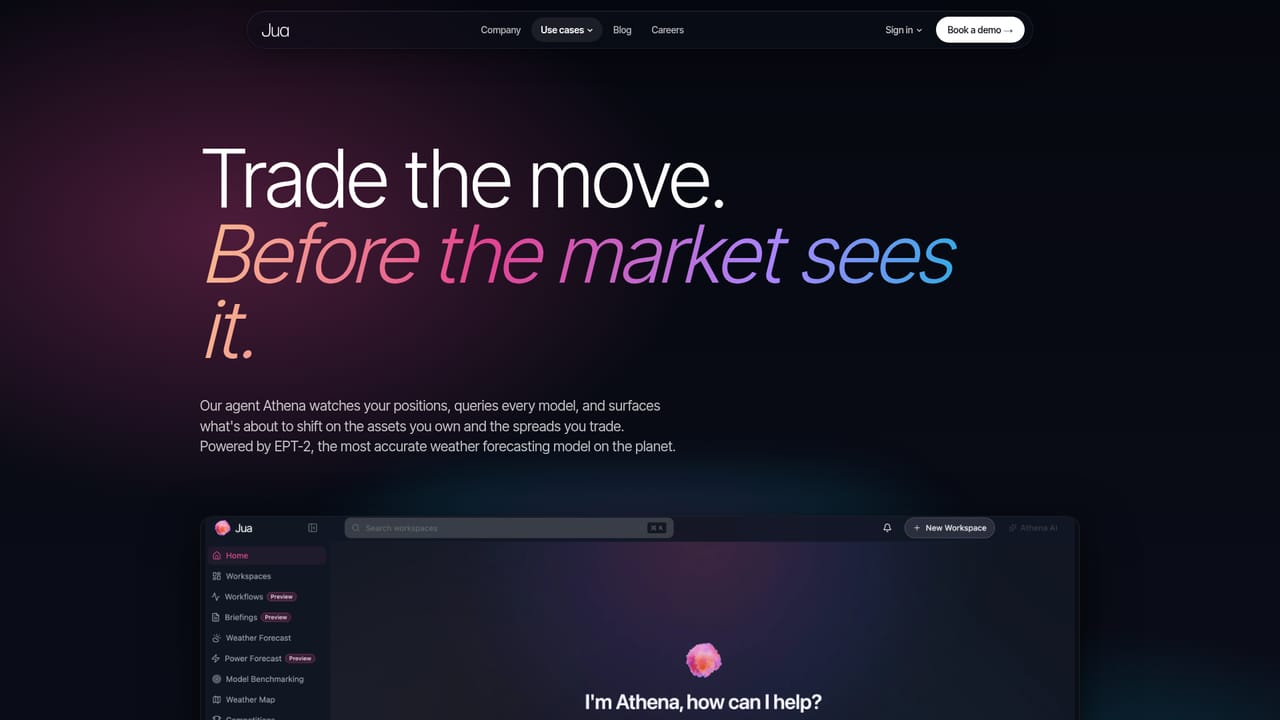
Jua is a Zurich research company that builds AI weather models and an agent layer on top of them, aimed squarely at the energy and finance markets where weather moves money. Its core product, EPT-2, is a family of global hourly forecasting models covering deterministic, ensemble, rapid-refresh and high-resolution variants. Models refresh up to 24 times a day, ensembles extend to 60 days, and wind and solar output is expressed in megawatts rather than abstract atmospheric variables. Jua reports that EPT-2 was validated against more than 10,000 ground stations without post-processing and beats ECMWF HRES on 10 m and 100 m wind, 2 m temperature and solar radiation across the full 0 to 240 hour range, with its ensemble variant outperforming the 50-member ECMWF ENS mean at nearly every lead time. The second half of the offering is Athena, an AI agent for energy markets. Athena reads EPT-2 together with the market's own models, prices and the user's positions, then surfaces briefings, alerts, backtests and power forecasts in a single workspace. The pitch is that a desk learns what is about to shift on its spreads before the wider market reprices. Hedge funds access the forecasts directly through an API and Python SDK, with decades of historical data available for backtesting. Jua is not a consumer weather app. It is built for the control room, the trading desk and the fund, and the company states it is in production at utilities, energy traders and hedge funds representing more than 100 GW, naming TotalEnergies, Shell, Enel, RWE, EDF and Vitol among its users. Teams comparing it to generic forecasting vendors should note the research pedigree (peer-reviewed work at NeurIPS and ICLR) and the narrow vertical focus, which means depth in power and weather markets rather than breadth across industries. Practically, onboarding runs through a demo booking or a direct trial of Athena, and the model documentation sits on a separate docs site for developers wiring forecasts into their own systems. Buyers should expect a sales-led engagement and should verify pricing, coverage and contract terms directly, since none of that is published on the homepage.
A direct trial of Athena is offered through its own web app, and demo bookings are available for teams that want the models tested against their own assets and positions. No trial length or scope is stated on the homepage.
Learn moreSupport runs through a contact form and demo booking with the Zurich team. No help centre, community channel or service level details are published on the homepage.
Learn moreForecasts are available through an API and Python SDK for hedge funds and technical teams, and Athena reads the market's own models and pricing feeds alongside EPT-2. The homepage lists no named third-party integrations.
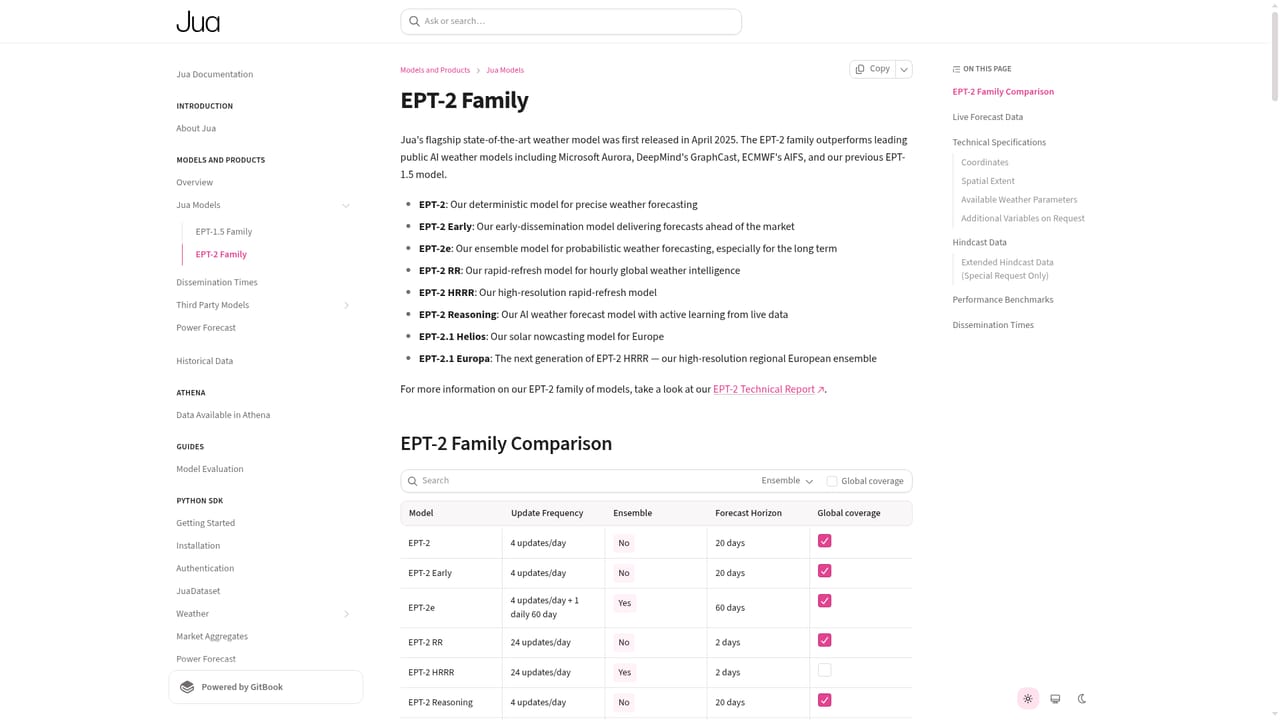
Learn moreEPT-2 covers deterministic, ensemble, rapid-refresh and high-resolution global hourly models, refreshed up to 24 times daily with ensembles out to 60 days and wind and solar power forecasts in MW. Athena adds an agent that reads forecasts alongside market prices and user positions, then produces briefings, alerts and backtests.
Learn more AI Angels400+ customizable AI girlfriends for NSFW chat, voice calls, and roleplay
 Candy AIExperience the future of companionship with AI friends who chat, role-play, and connect with you on a human level.
 ourdream.aiA vast AI roleplay platform with millions of characters for chat, images, video and voiceAI Angels400+ customizable AI girlfriends for NSFW chat, voice calls, and roleplayCandy AIExperience the future of companionship with AI friends who chat, role-play, and connect with you on a human level.ourdream.aiA vast AI roleplay platform with millions of characters for chat, images, video and voice


