Free trial
A 30-minute first lesson is free, with no account and no credit card needed to begin.
Learn moreReal-time AI voice tutor that plans lessons and tracks every mistake

Lingle is a language learning tool. Lingle runs live voice lessons with an AI tutor that plans each session, corrects mistakes mid-conversation, adapts difficulty in real time and remembers goals and errors across sessions. Vocabulary from lessons becomes spaced-repetition flashcards.
Lingle is an AI language tutoring tool built around live voice conversation rather than drills or flashcards. A session starts as a spoken call: the tutor listens, replies in the target language, and steers the exchange like a teacher sitting across the table. Behind the conversation sits a planned lesson with a warm-up, focused practice and a recap, so the time is structured instead of drifting into small talk. The tutor corrects errors as they happen, writing the correction, new vocabulary or grammar pattern onto a shared whiteboard so the learner can see the fix rather than just hear it. The product leans hard on memory and adaptation. It keeps track of stated goals, recurring slip-ups and passing details (a family trip, a hobby) and resurfaces them when they become relevant. Vocabulary encountered in lessons is converted into spaced-repetition flashcards automatically, which means review material builds itself from what was actually said. An algorithm plans each lesson and charts a proficiency path, with level movement shown qualitatively (B1 toward B2 in the site's own example). Learners can also ask for a mini-course on a specific topic, such as a particular tense, and the tutor writes a focused explanation with examples. Eight languages are supported at launch, including Japanese, Spanish, French and Korean, with more promised. Sessions run around the clock with no booking step, which suits people who study in odd hours or want to talk the moment motivation strikes. Lingle competes with human tutoring marketplaces and with app-based grammar courses. Its differentiator is the combination of spontaneous speech practice and structured pedagogy in one voice interface. The obvious trade-off is that everything happens through one channel: there are no human classmates, no teacher on the other end to read a room, and the experience depends on how forgiving the voice model is with accents and hesitation.
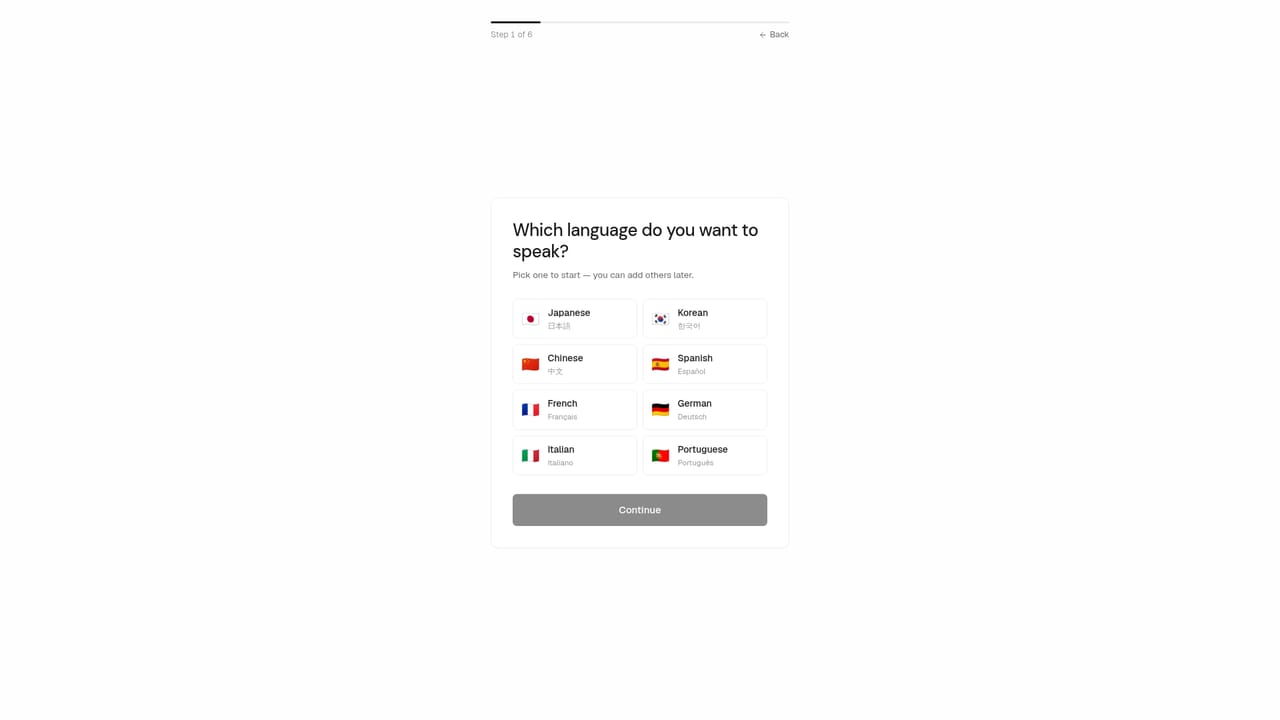
A 30-minute first lesson is free, with no account and no credit card needed to begin.
Learn moreThe homepage states only that the first 30-minute lesson is free and requires no credit card. No subscription tiers or ongoing prices are published there, so the cost of continued use cannot be confirmed from the source.
Learn moreLive voice tutoring with a planned lesson structure (warm-up, focused practice, recap), in-the-moment error correction, a shared whiteboard for new words and grammar, adaptive difficulty, persistent memory of goals and mistakes, on-demand mini-courses on requested topics, and automatic spaced-repetition flashcards built from lesson vocabulary.
 AI Angels400+ customizable AI girlfriends for NSFW chat, voice calls, and roleplay
 Candy AIExperience the future of companionship with AI friends who chat, role-play, and connect with you on a human level.
 ourdream.aiA vast AI roleplay platform with millions of characters for chat, images, video and voiceAI Angels400+ customizable AI girlfriends for NSFW chat, voice calls, and roleplayCandy AIExperience the future of companionship with AI friends who chat, role-play, and connect with you on a human level.ourdream.aiA vast AI roleplay platform with millions of characters for chat, images, video and voice


