Support
A FAQ page covers how the app works, privacy and data deletion, the issues it can help with, and its limits as a non-clinical tool.
Learn moreVoice-first AI support for everyday mental health
Own Lovon AI Therapy? Verify ownership to get a dofollow link

Lovon AI Therapy is a companion tool. Lovon is a voice-first AI mental health app for stress, anxiety, low mood and relationship issues. You speak out loud, and the AI reflects back and offers coping tools. The company states it is not a licensed therapist and is not for crisis care.
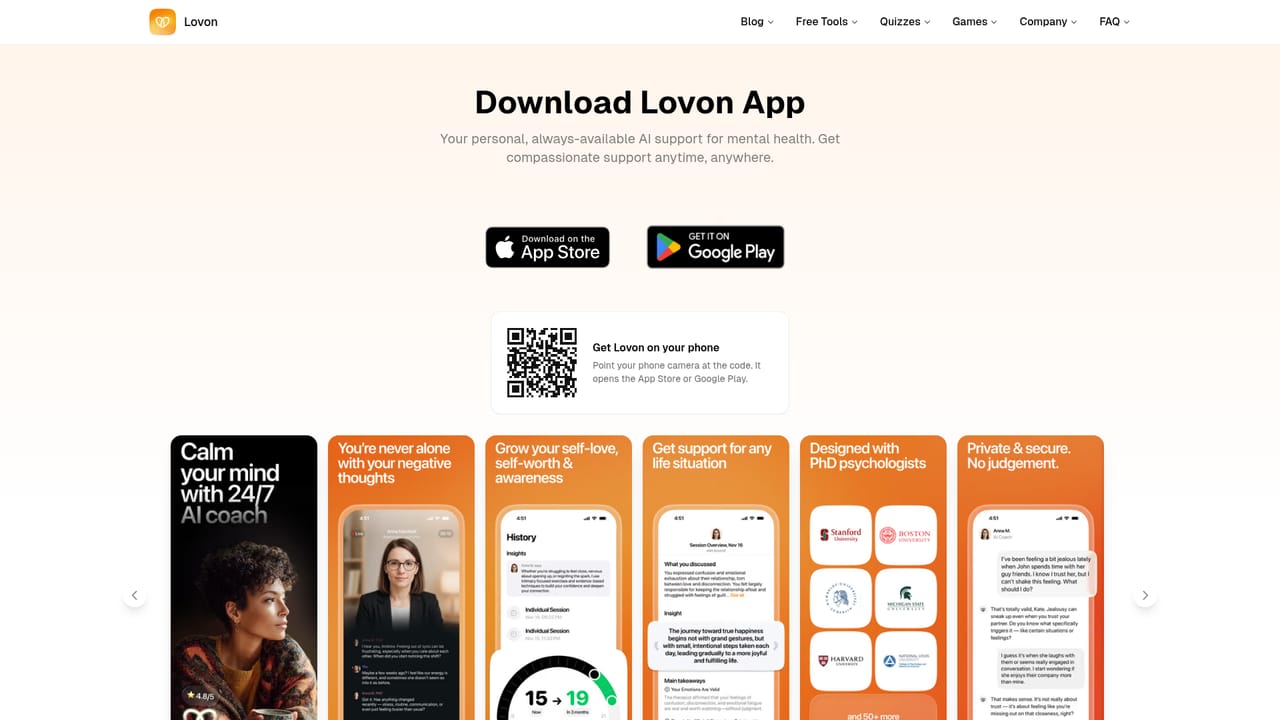
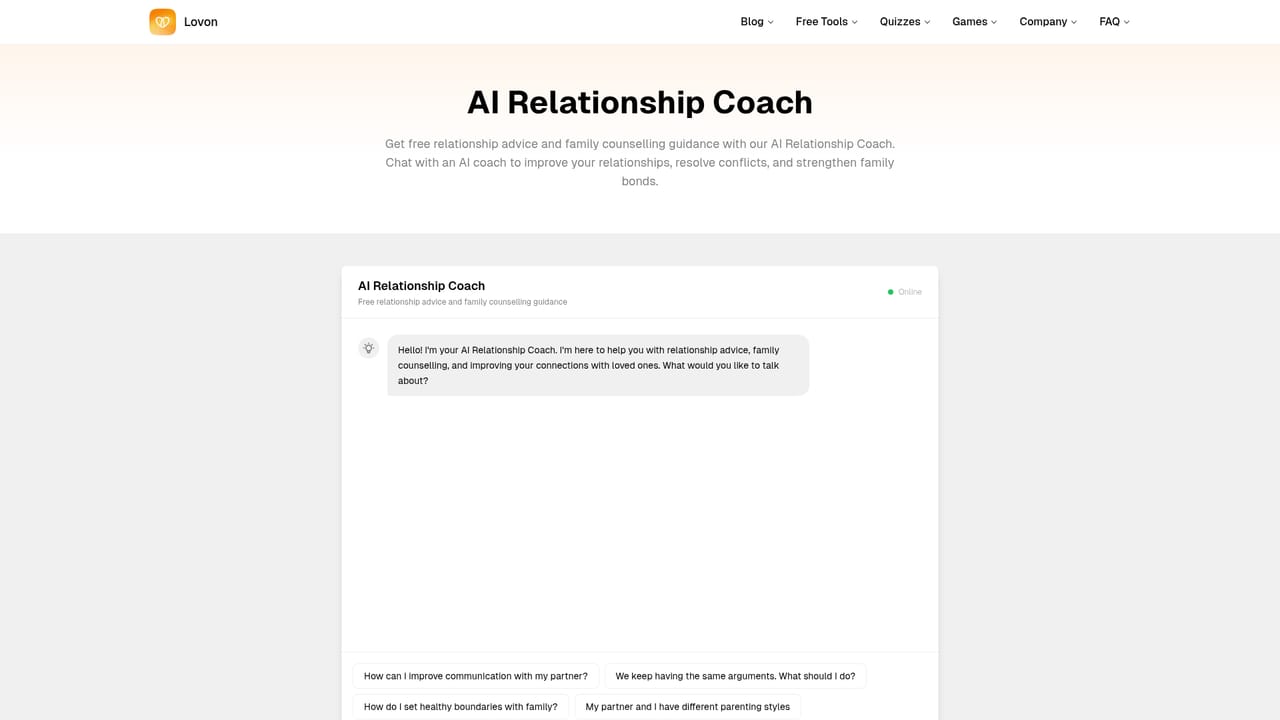
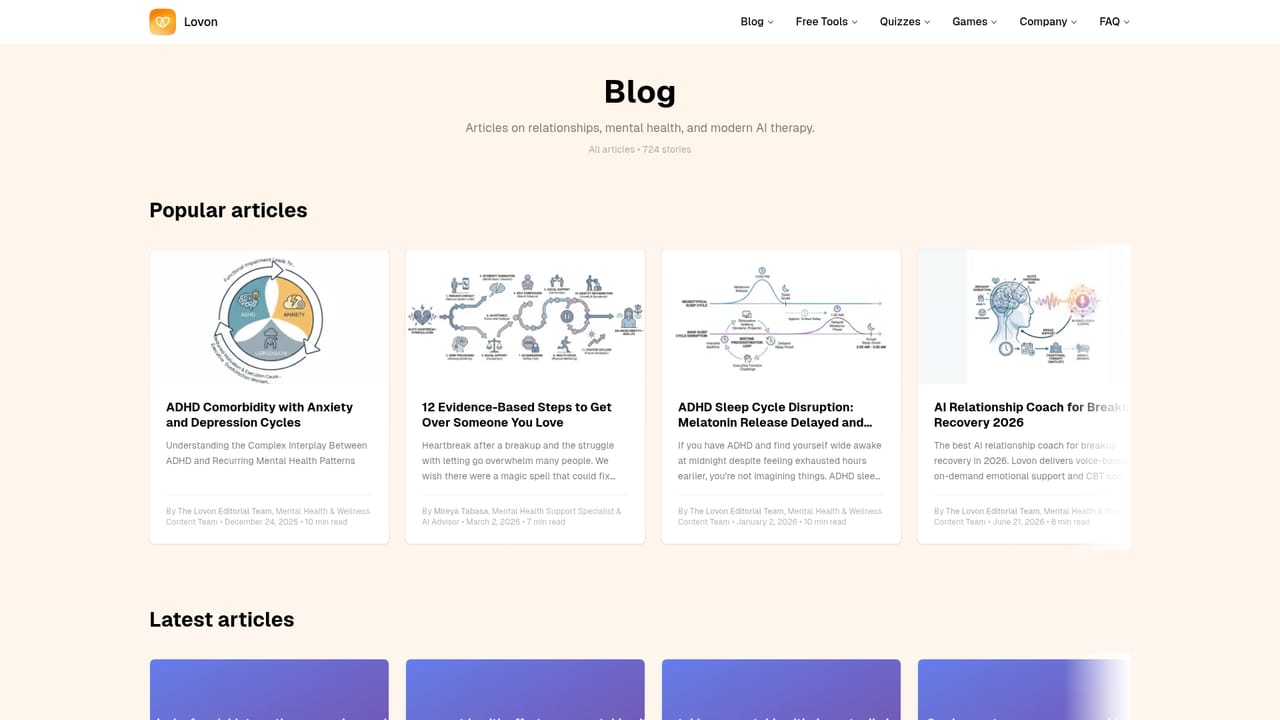
Lovon is a voice-first mental health support app. Instead of typing into a chat box, you start a call and speak out loud, the way you would with a person on the phone. The AI listens, reflects back what it hears, and offers questions, coping tools and guidance meant to help you name what you are feeling and decide what to do next. The team says sessions adapt over time to your communication style, topics and goals rather than returning one-size-fits-all replies. The product is aimed at adults dealing with ordinary but heavy struggles: stress, anxiety, overthinking, low mood, self-doubt, loneliness, burnout, relationship friction and difficult life decisions. It also publishes supporting material, including articles on isolation and depression and on gut health and mood, plus a free AI relationship coach tool. The app is available around the clock, which is the real draw: support at 3am or mid panic attack without waiting for an appointment. Lovon is careful about what it is not. The site states plainly that it is not a licensed therapist and does not replace human therapy, medical treatment or diagnosis, and that it is not built for crisis care or emergencies. Positioning it as a companion between or alongside professional sessions is the honest use case. The builder claims oversight from PhD psychologists and mental health professionals, end-to-end encryption in transit and at rest, and that personal conversations are never used to train public AI models. It is not ChatGPT with a therapy prompt, at least by the company's account; the comparison is made explicitly on the homepage. Against alternatives, Lovon competes on format more than content. Text-based AI companions are cheaper to build and easier to skim, but speaking aloud suits people who freeze when writing about their feelings, and it mimics the rhythm of real sessions. Buyers should weigh that against the obvious limits: an app cannot assess risk, and anyone in acute distress needs a human or emergency service. Social proof is thin on specifics, with a 4.4 App Store rating and 50K+ users cited but no clinical outcome data.
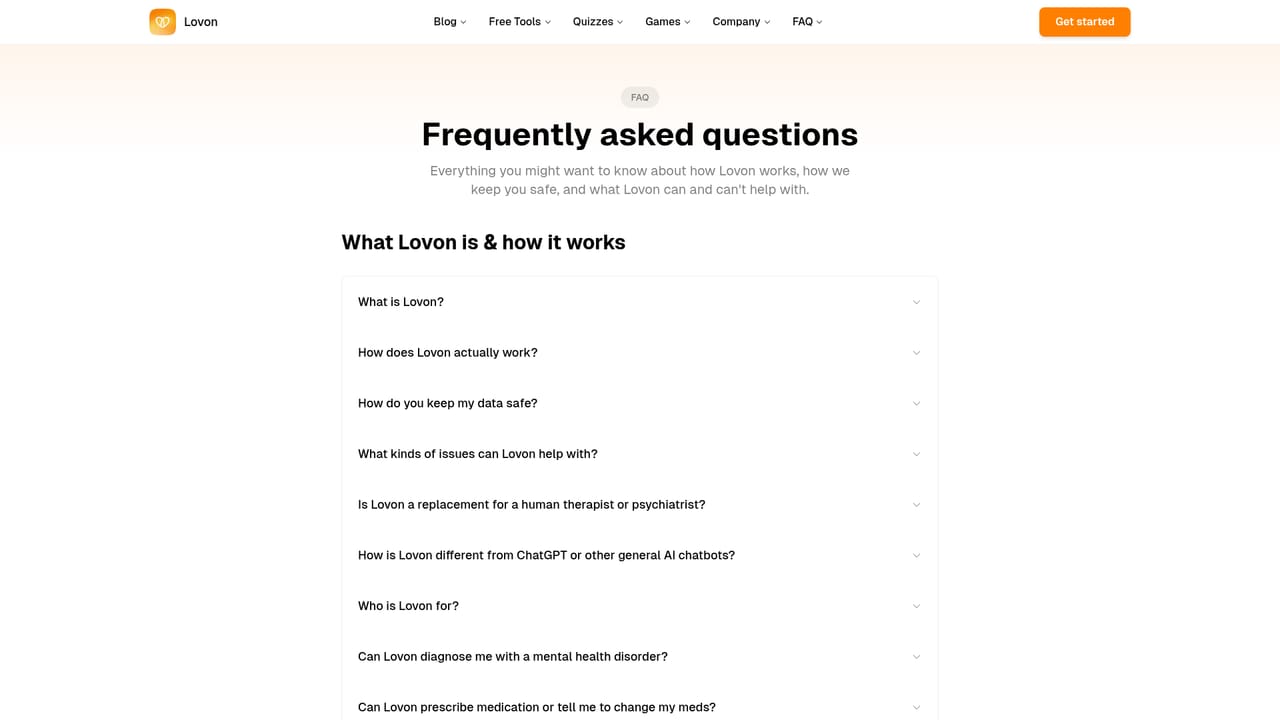
A FAQ page covers how the app works, privacy and data deletion, the issues it can help with, and its limits as a non-clinical tool.
Learn moreVoice-based sessions with an AI that listens, reflects and suggests coping tools. The company says sessions adapt to your style and goals over time, conversations are encrypted end to end, and the app runs 24/7. Extras include a free AI relationship coach and a blog with mental health articles.
Learn more AI Angels400+ customizable AI girlfriends for NSFW chat, voice calls, and roleplay
 Candy AIExperience the future of companionship with AI friends who chat, role-play, and connect with you on a human level.
 ourdream.aiA vast AI roleplay platform with millions of characters for chat, images, video and voiceAI Angels400+ customizable AI girlfriends for NSFW chat, voice calls, and roleplayCandy AIExperience the future of companionship with AI friends who chat, role-play, and connect with you on a human level.ourdream.aiA vast AI roleplay platform with millions of characters for chat, images, video and voice


