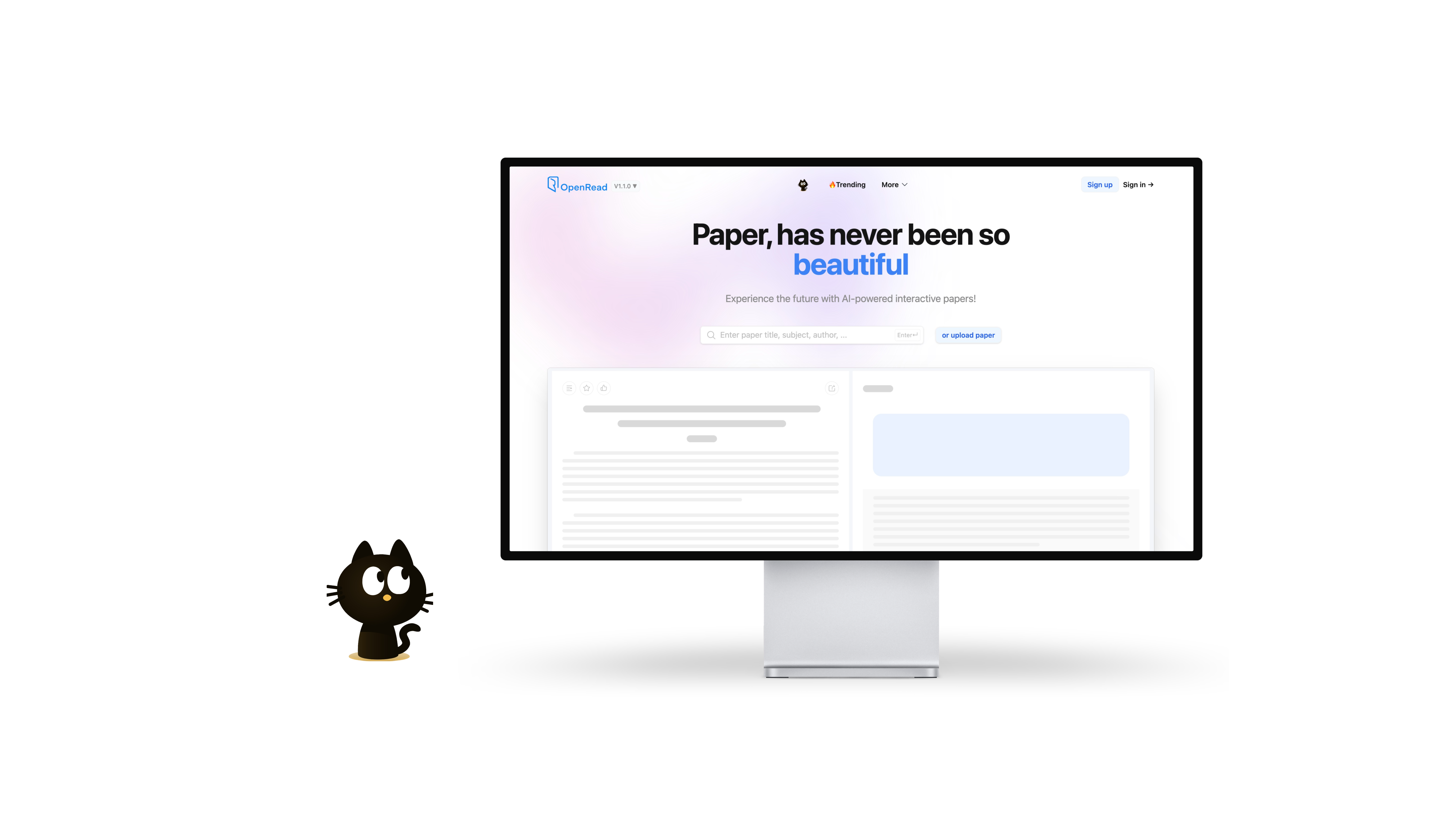
OpenRead is a research intelligence platform built around a corpus of more than 300 million academic papers, refreshed with new publications from over 20,000 journals every five minutes. Rather than requiring a researcher to manually search, download, and cross-reference papers, the platform layers AI on top of that corpus to summarize findings, answer questions about specific papers, and surface connections between related work.
The tool is aimed at anyone who needs to process large volumes of research quickly, not just academics. The homepage lists use cases spanning scientific discovery, market research, competitive intelligence, policy analysis, investment research, and product development, and the client logos shown include a long roster of universities such as Stanford, MIT, Harvard, Oxford, Cambridge, and ETH Zurich, suggesting the current user base skews toward students and academic researchers even as the platform pitches itself to industry analysts and other professional research users.
In practice, OpenRead organizes its functionality into a few core modules. Paper Compare, Paper Espresso, Paper Q&A, and a Related Paper Graph sit alongside built-in notes-taking, so a user can hold multiple papers side by side, spot contradictions between studies, and keep annotations in one workspace instead of juggling PDFs and a separate notes app. Search spans both indexed papers and the open web. A conversational layer called Oat acts as the platform's AI companion, letting users pick from multiple top-tier language models for different jobs — drafting summaries, answering questions, generating diagrams, editing images, or working through homework-style problems — with new models added as they become available. A separate Trending section surfaces widely read papers to help users track what is gaining attention in a given field.
OpenRead positions itself among AI-assisted literature review and research-summary tools. Its differentiator is breadth: a very large, frequently updated paper index combined with multi-model AI chat and cross-paper comparison in a single workspace, rather than a single-purpose summarizer or citation manager.