Integrations
The homepage names WordPress, Webflow and Shopify as CMS connections, plus NextJS, Nuxt and Svelte among supported frameworks.
Learn moreAn SEO growth platform that automates audits, content and link building.

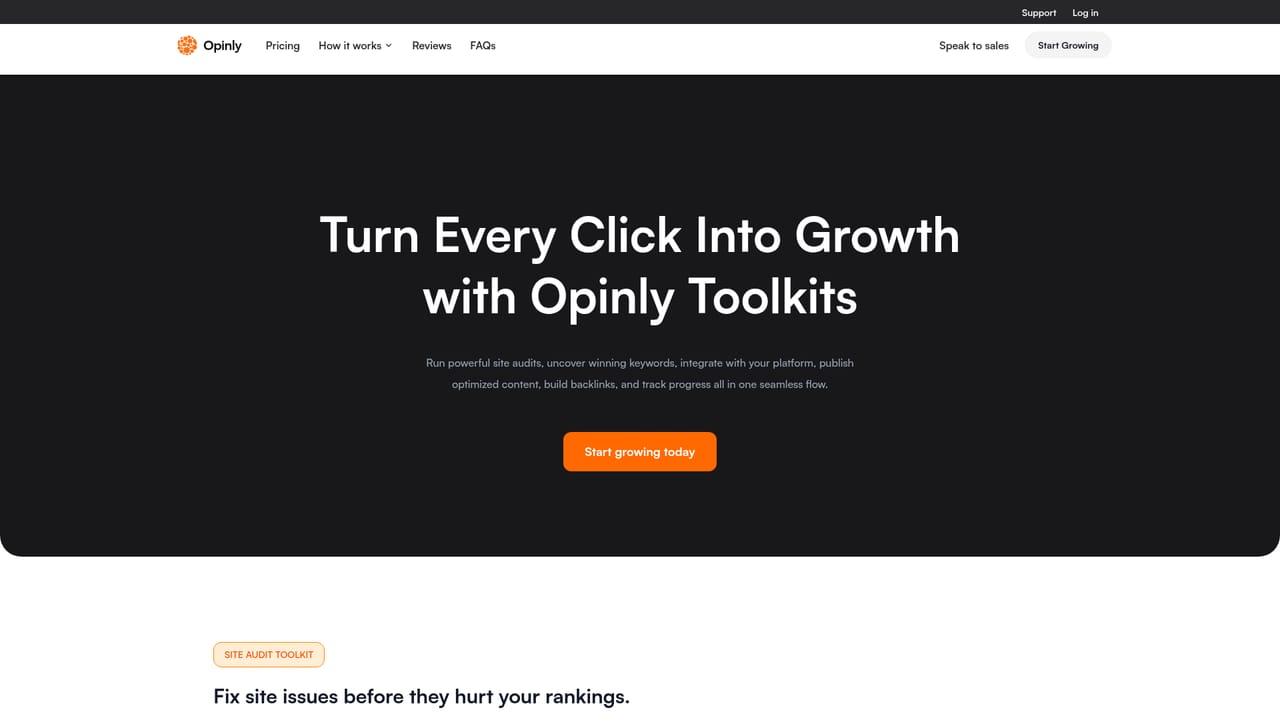
Opinly is a lead generation tool. Opinly bundles site audits, keyword tracking, AI content generation and scheduling, competitor analytics and an automated backlink exchange into one SEO platform, with the stated goal of growing both search rankings and visibility in AI assistants like ChatGPT.
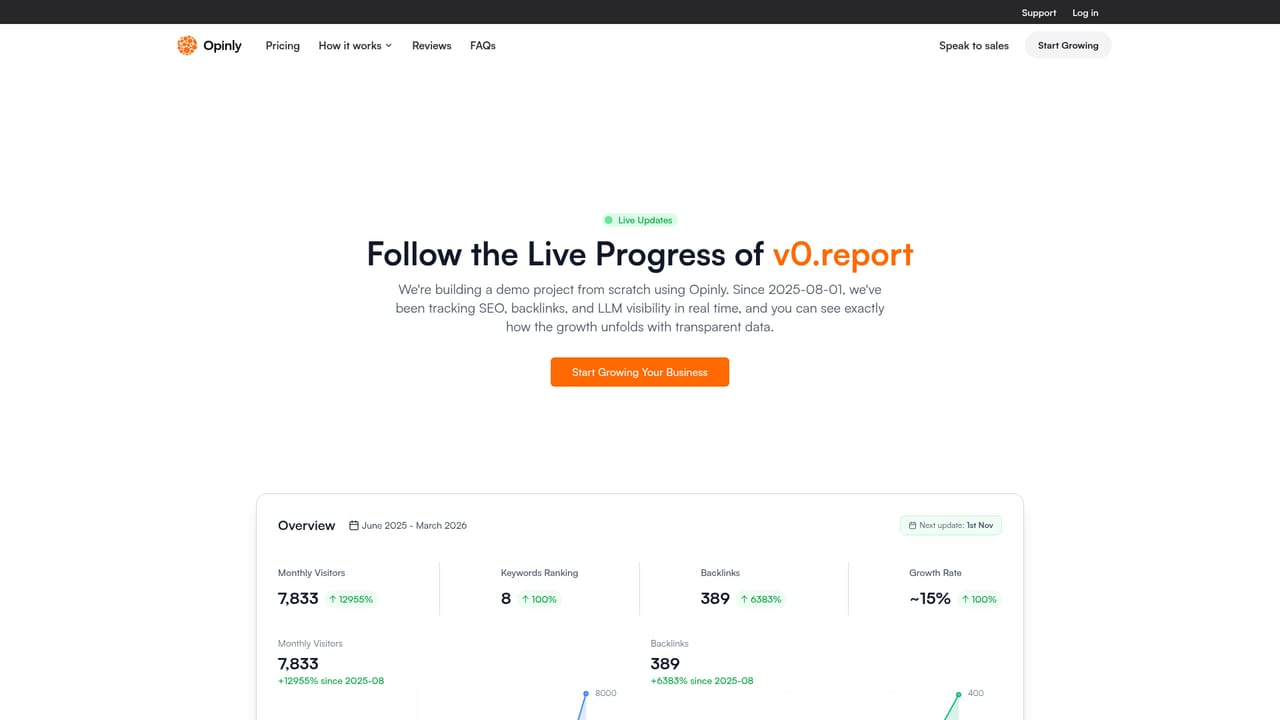
Opinly is an SEO automation platform aimed at site owners and marketing teams who want the routine parts of organic growth handled without a manual to do list. The pitch is straightforward: audit the site, find the keywords worth chasing, produce and schedule content, and build links, with the AI doing most of the operational work. The homepage frames the product around visibility in both classic search results and AI assistants such as ChatGPT, so it treats LLM answers as a second surface to compete on rather than a separate problem. The feature set spans six areas. Site Audit flags technical SEO problems and structural weaknesses that hold back organic visibility. Keywords Tracking covers discovery, monitoring and prioritisation, while Competitor Analytics benchmarks search performance against rivals. Content Generation & Scheduler writes SEO oriented drafts and queues them for publishing at chosen times. Backlink Exchange handles automated AI driven link placements, currently labelled as a beta. Platform Integration pushes work into CMS and framework setups such as WordPress, Webflow, Shopify, NextJS, Nuxt and Svelte, so a site does not need to be rebuilt around the tool. In practice the product suits small marketing teams, solo founders and agencies running several properties who want a single dashboard instead of a stack of separate rank trackers and content tools. The company publishes a live demo project called v0.report that it grows in public, showing keyword counts, backlinks and visitor figures, plus a public build page with more detail on how the automation runs. That transparency is unusual for the category and makes the claims checkable over time, though a demo built to showcase the product is not independent evidence. Opinly sits between traditional rank tracking suites, which report but do not act, and managed SEO services, which act but cost far more and move at human pace. The trade off is that automated content and automated link placement need oversight from someone who understands editorial standards and link risk. Marketers should treat it as a force multiplier for a strategy they still own.

The homepage names WordPress, Webflow and Shopify as CMS connections, plus NextJS, Nuxt and Svelte among supported frameworks.
Learn moreSix core modules: Site Audit for technical SEO issues, Keywords Tracking for discovery and monitoring, Competitor Analytics for benchmarking, Content Generation & Scheduler for AI drafts and timed publishing, Backlink Exchange for automated link placements (beta), and Platform Integration for pushing content into CMS and framework setups.
Learn more AI Angels400+ customizable AI girlfriends for NSFW chat, voice calls, and roleplay
 Candy AIExperience the future of companionship with AI friends who chat, role-play, and connect with you on a human level.
 ourdream.aiA vast AI roleplay platform with millions of characters for chat, images, video and voiceAI Angels400+ customizable AI girlfriends for NSFW chat, voice calls, and roleplayCandy AIExperience the future of companionship with AI friends who chat, role-play, and connect with you on a human level.ourdream.aiA vast AI roleplay platform with millions of characters for chat, images, video and voice


