Support
Support runs through a contact form and personalized demo walkthroughs. No public help centre or documentation is linked from the homepage.
Learn moreAI policy monitoring and briefings across 70+ countries

Parsagon monitors legislation and government publications across 70+ countries and generates source-cited policy briefings, with a Data API for piping intelligence into internal systems. Built for public affairs, government relations and advisory teams that need global coverage without per-country tools.
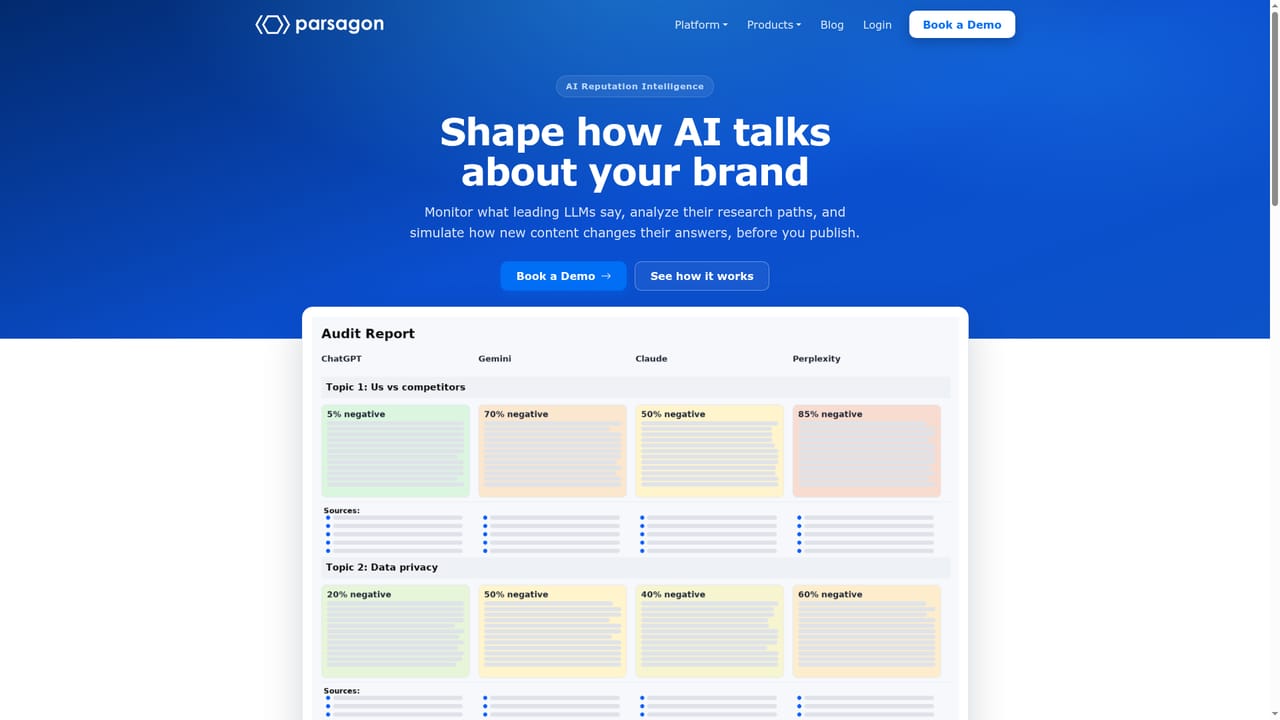
Parsagon is a policy intelligence platform that watches government communications across more than 70 countries and 170 jurisdictions, then turns what it finds into decision-ready analysis. The system monitors legislation, regulations and official publications around the clock, using semantic search rather than keyword matching to surface the developments that actually matter to a given team. Alerts arrive when something relevant changes, which removes the need to manually refresh government portals each morning. The second half of the product is analysis. Users can request tailored briefs, summaries and reports instead of compiling them by hand, and every claim in the output is traced back to its primary government source. That citation trail is the feature that separates Parsagon from general purpose chat assistants, which will happily summarize policy but rarely show where a statement came from. Automatic translation lets a single team cover jurisdictions it could not previously staff, and a Data API exposes the continuously updated dataset so engineering teams can pipe policy intelligence into their own dashboards or internal tools. The tool also includes a separate AI reputation module that examines what leading large language models say about an organization, analyzes the research paths behind those answers, and simulates how new content would shift them before publication. That is a distinct use case from policy monitoring, and buyers should treat it as a secondary offering rather than the core product. Parsagon is aimed at public affairs teams, government relations staff, consultancies, trade bodies, regulated companies and embassies. The customer logos on the site lean heavily toward lobbying and advisory firms plus a few large corporations, which reflects who the workflow is designed for. Alternatives in this space tend to be either news aggregators with shallow tagging or analyst services with slow turnaround. Parsagon positions itself between the two: automated monitoring at aggregator speed, with sourced output closer to what an analyst would produce. The site does not publish per seat pricing, so budget conversations start with a demo.
Support runs through a contact form and personalized demo walkthroughs. No public help centre or documentation is linked from the homepage.
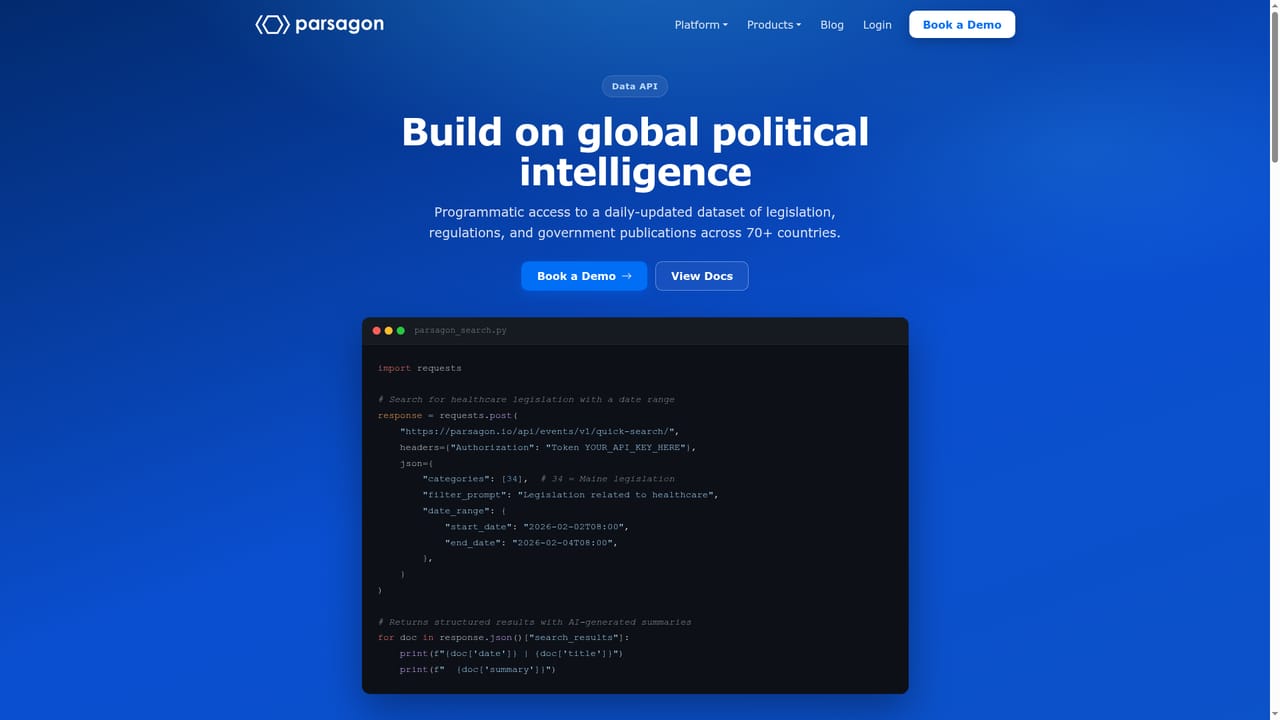
Learn moreA Data API provides programmatic access to the continuously updated dataset of legislation, regulations and government publications so teams can build it into their own systems. No named third party integrations are listed.
Learn more24/7 AI monitoring of legislation, regulations and government publications across 70+ countries and 170+ jurisdictions; semantic search that surfaces relevant developments instead of noisy keyword hits; on-demand briefs, summaries and reports with every claim traced to a primary source; automatic translation for cross-border coverage; and a Data API delivering the policy dataset as a feed. A separate module tracks AI reputation across leading LLMs.
Learn more AI Angels400+ customizable AI girlfriends for NSFW chat, voice calls, and roleplay
 Candy AIExperience the future of companionship with AI friends who chat, role-play, and connect with you on a human level.
 ourdream.aiA vast AI roleplay platform with millions of characters for chat, images, video and voiceAI Angels400+ customizable AI girlfriends for NSFW chat, voice calls, and roleplayCandy AIExperience the future of companionship with AI friends who chat, role-play, and connect with you on a human level.ourdream.aiA vast AI roleplay platform with millions of characters for chat, images, video and voice