Free trial
A 10-day free trial is offered with no credit card required; signup is handled through the registration page.
Learn morePodcast monitoring and transcript API for brands and data teams.

Podscan monitors over 5 million podcasts and 74 million episodes for brand, competitor, and market mentions, delivering alerts in about 10 minutes. It pairs a no-code monitoring dashboard with a REST API and MCP tools for AI agents, plus add-ons for listener engagement and bulk exports.
Podscan is a podcast intelligence platform that monitors more than 5 million podcasts and 74 million episodes for mentions of brands, competitors, people, and market themes. New episodes are transcribed and processed with AI, and alerts are typically delivered within 10 minutes of release. The core use case is brand monitoring: teams define watchlists, get notified when a name is spoken, and see the surrounding transcript passage, the sentiment, and the show's reach score so they can judge the importance of each hit. In practice, the product works in two modes. Non-technical marketing and PR teams use the web dashboard to build alert lists, search transcripts, and review a feed of recent mentions that labels each hit as positive, neutral, or negative and tags it by type (crisis alert, competitor mention, sponsor read, and so on). Developers and data teams use the REST API, which exposes 80+ endpoints, plus an MCP server with 100+ tools that lets AI agents such as Claude and ChatGPT query episodes, guests, sponsors, and sentiment. Bulk daily episode exports and weekly podcast catalog exports in JSON are available as an add-on for data pipelines. Additional modules cover partnership discovery (estimated demographics, audience matching, sponsor and guest filters), listener engagement data from real player sessions (completion rates, ad performance by placement, geographic breakdown, available for select shows), and AI-generated intelligence features like summaries and historical reports. The platform is aimed at brand and PR teams, marketing agencies, investment and research analysts, and developers building podcast-aware applications. It occupies a niche between social listening tools, which rarely index long-form audio, and raw podcast databases, which provide data but no monitoring layer. Enterprise pages suggest larger contracts are supported.
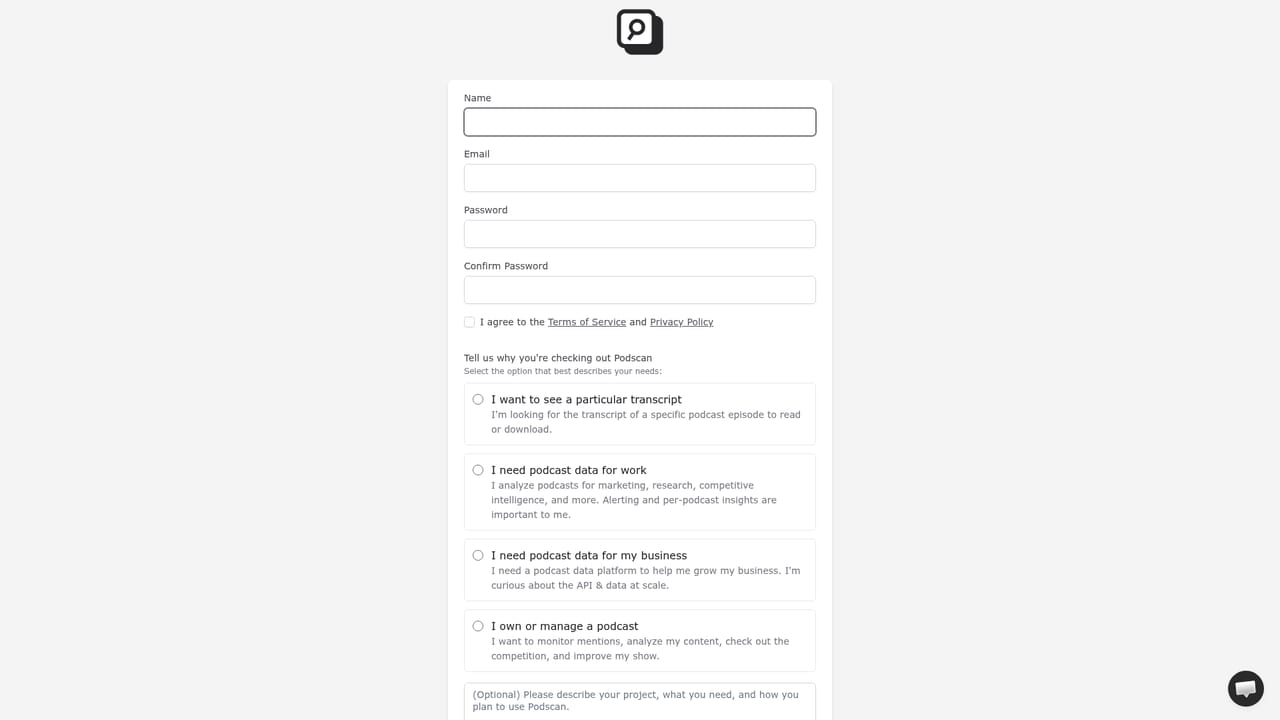
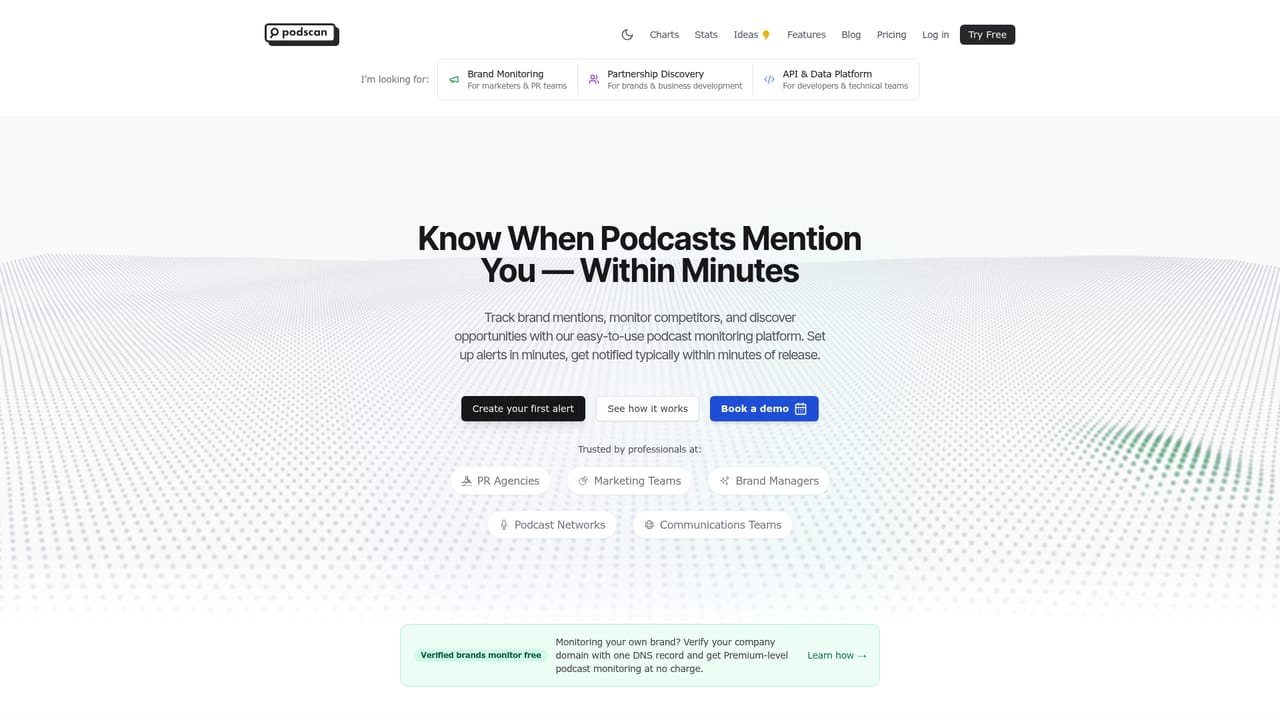
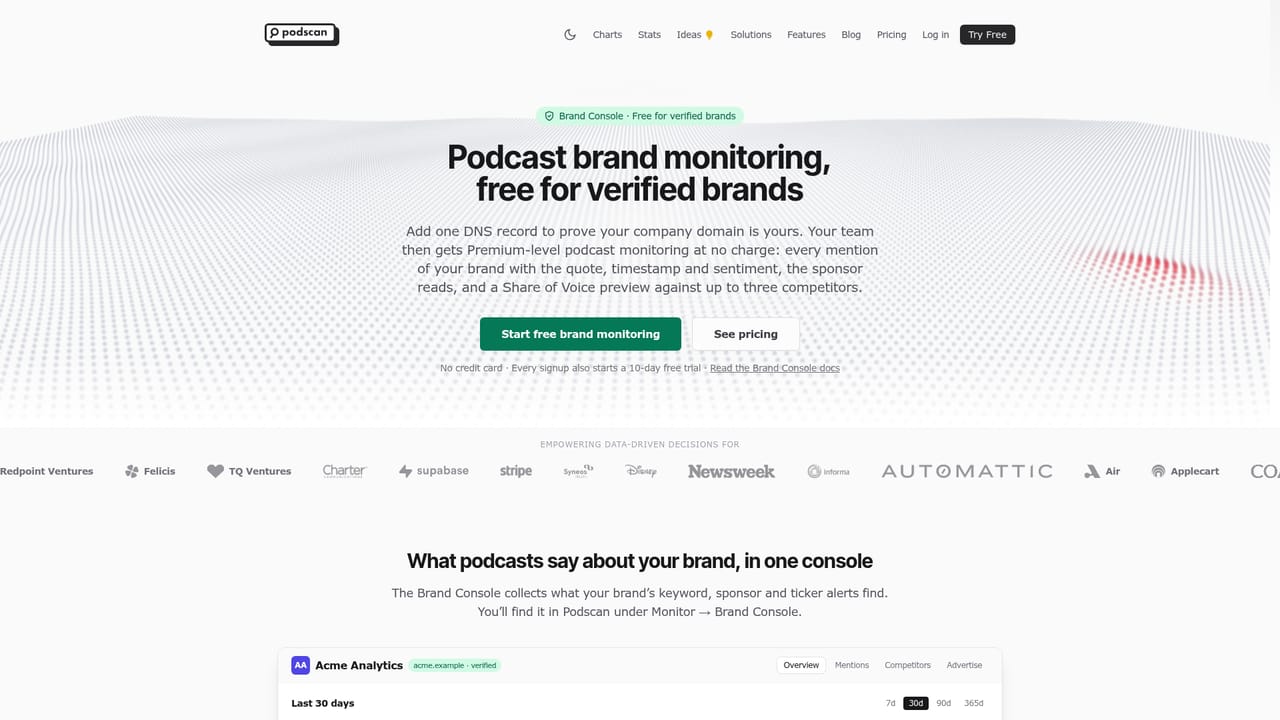
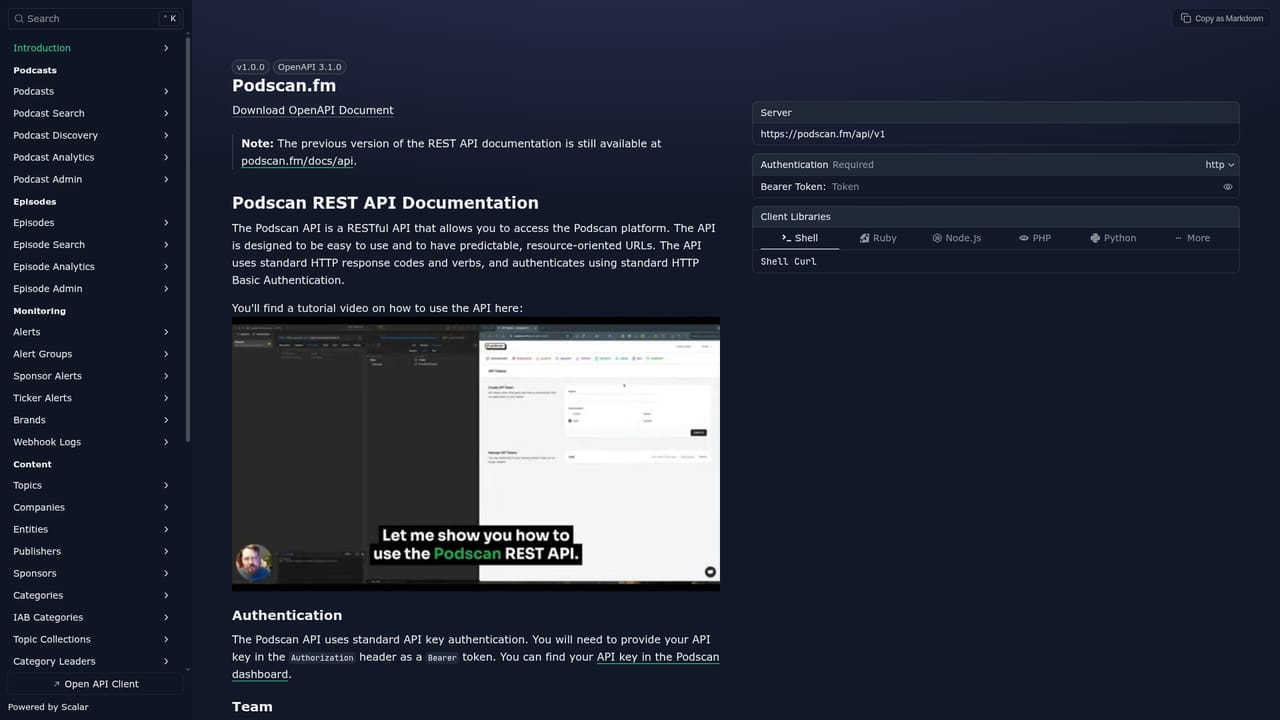
A 10-day free trial is offered with no credit card required; signup is handled through the registration page.
Learn morePricing is not stated on the homepage beyond a 10-day free trial with no credit card required. Data exports and listener engagement are described as add-ons available on any plan. Detailed tiers live on the pricing page.
Learn moreThe homepage links to API documentation and a platform walkthrough video, but does not describe support channels or SLAs.
Learn moreIntegrations center on the REST API, an MCP server compatible with Claude, ChatGPT, and other MCP clients, and bulk JSON exports for data pipelines. No native connectors to third-party marketing suites are listed on the homepage.
Learn moreCore features include real-time mention alerts, transcript search across 5M+ podcasts, sentiment and reach scoring, AI-assisted alert creation, a brand console, partnership discovery with estimated demographics, listener engagement metrics for select shows, bulk JSON exports, a full REST API with 80+ endpoints, and an MCP server with 100+ tools for AI agents.
Learn more AI Angels400+ customizable AI girlfriends for NSFW chat, voice calls, and roleplay
 Candy AIExperience the future of companionship with AI friends who chat, role-play, and connect with you on a human level.
 ourdream.aiA vast AI roleplay platform with millions of characters for chat, images, video and voiceAI Angels400+ customizable AI girlfriends for NSFW chat, voice calls, and roleplayCandy AIExperience the future of companionship with AI friends who chat, role-play, and connect with you on a human level.ourdream.aiA vast AI roleplay platform with millions of characters for chat, images, video and voice


