Random Pokemon Generator is a games tool. A free, sign-up-free shiny odds calculator and Pokemon randomizer covering every mainline game's boost methods, from the Shiny Charm to Masuda breeding, alongside team and Nuzlocke generators.
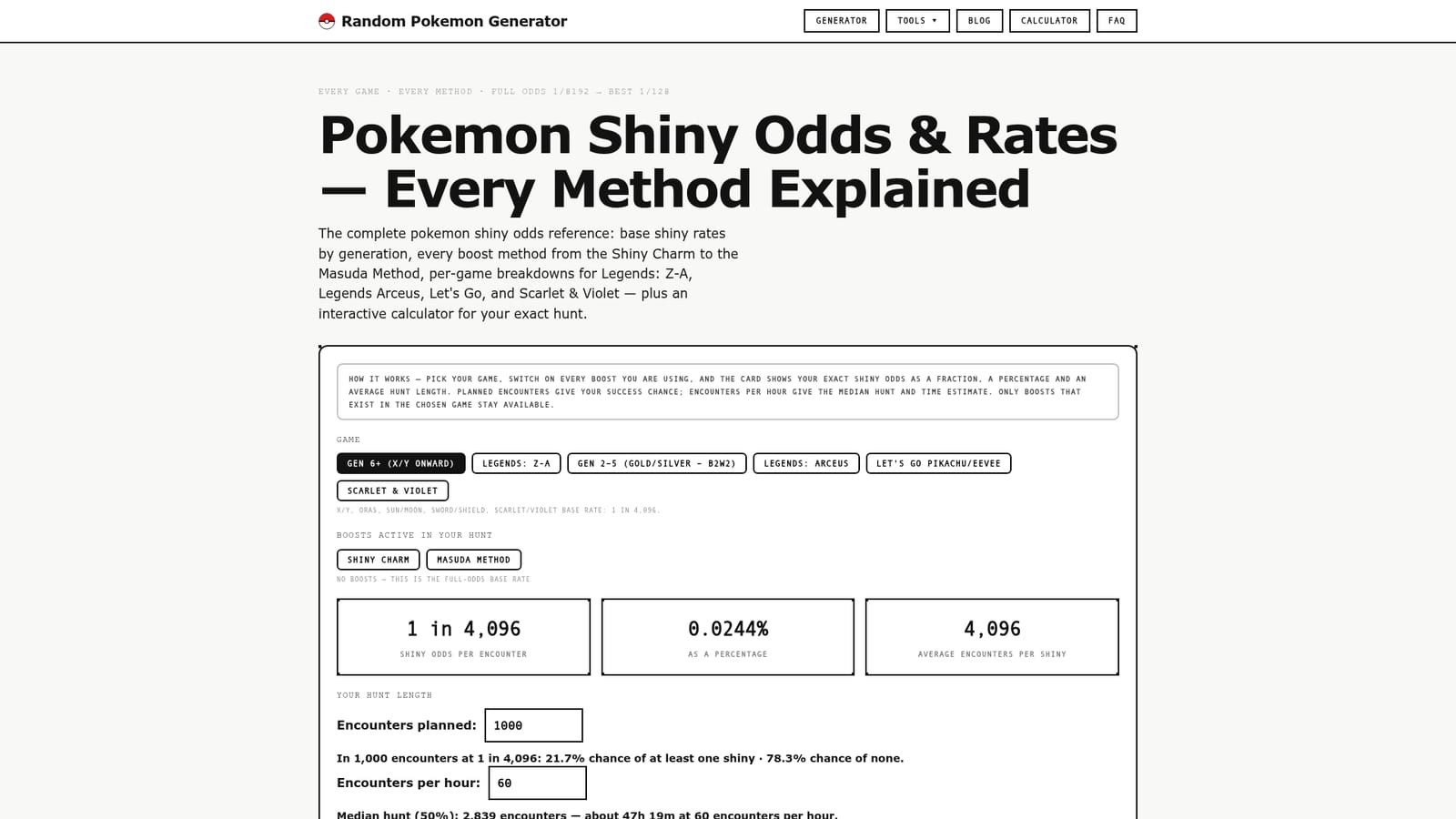
Random Pokemon Generator is a browser-based reference and toolkit built around Pokemon's shiny-hunting mechanics and team randomization. Its core shiny odds page lays out every base rate since Generation II, from the classic 1 in 8,192 chance through the modern 1 in 4,096 standard, and explains how boosts like the Shiny Charm, Masuda Method, mass outbreaks, catch combos and chaining stack on top of each other. An interactive calculator lets a player select their specific game and active boosts to see exact odds as a fraction and percentage, plus an estimated hunt length based on planned encounters or encounters per hour.
The site is aimed at Pokemon players who want hard numbers rather than guesswork before starting a shiny hunt, alongside trainers who want quick randomization tools for team building, Nuzlocke runs, or deciding what to catch next. It suits anyone from a casual player curious about their odds in Scarlet and Violet to a completionist tracking Legends: Arceus research stacking or BDSP Poke Radar chains.
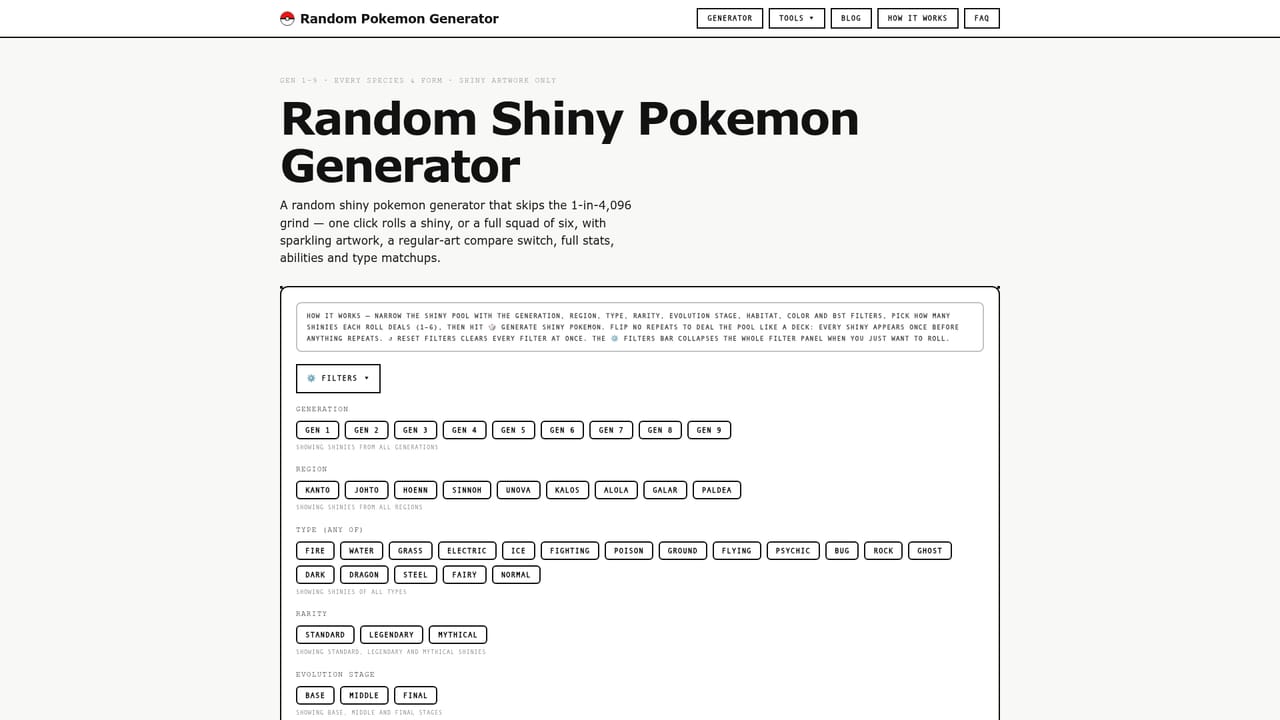
In practice, a visitor picks their game from a dropdown, toggles the boosts they are using (Shiny Charm, sandwiches, outbreaks, and so on), and reads off the resulting odds and average encounter count. From there, the linked Random Shiny Pokemon Generator, Random Pokemon Generator, Nuzlocke Team Builder, and Pokemon Team Picker tools let a trainer skip straight to generating squads or shiny-colored Pokemon without manual dice-rolling. Per-game breakdowns cover Legends: Z-A, Legends Arceus, Let's Go, Scarlet and Violet, Sword and Shield, BDSP, and Pokemon GO.
Compared with general random-team generators, this tool's differentiator is its depth on shiny probability mechanics: a dedicated calculator, a full boost-method table, and per-game explainer articles rather than a single generic odds number. It positions itself as a reference hub first and a generator second, with the FAQ section answering common probability questions directly.