Support
Support is reached through the contact page, where demo requests and sales conversations are handled by the company's fraud specialists. No public help centre or documentation portal is linked from the homepage.
Learn moreAI document and transaction fraud detection for regulated teams

Resistant AI detects fake, tampered and AI-generated documents in seconds and adds explainable AI models on top of existing transaction monitoring. Built for banks, lenders, payments providers, insurers and marketplaces handling KYB, loan underwriting, claims, AML, APP fraud and BNPL workflows.
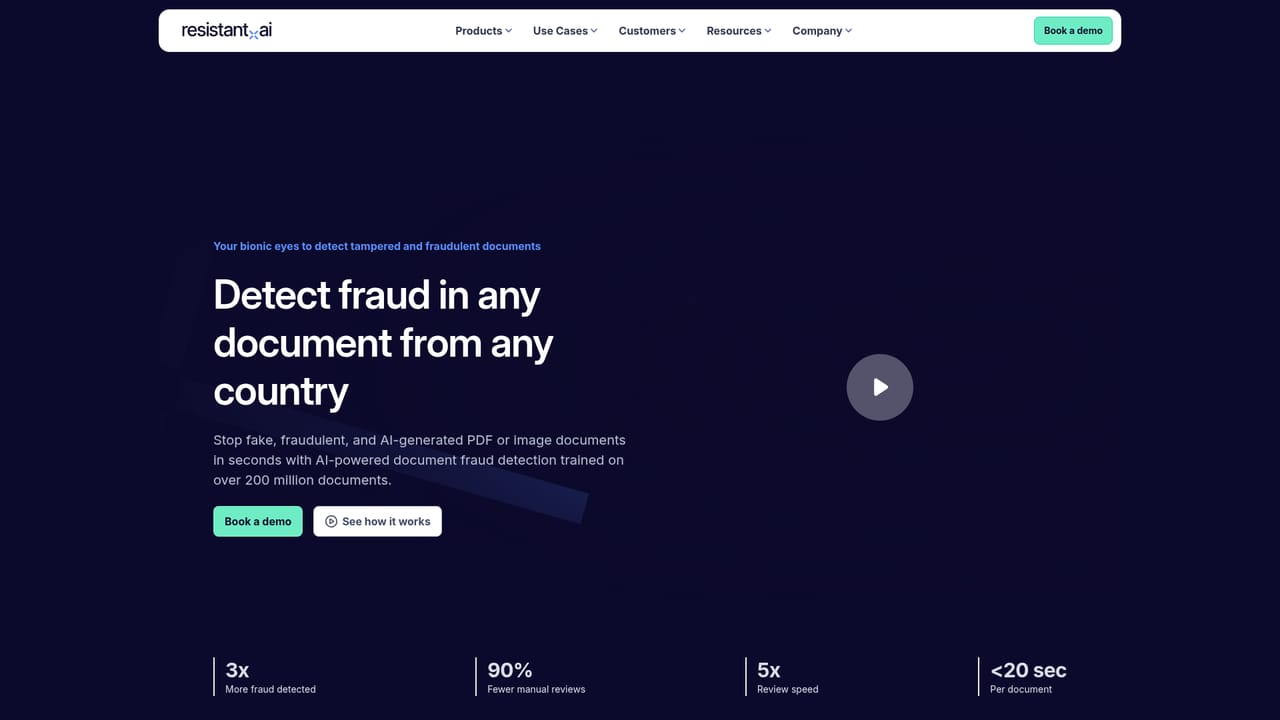
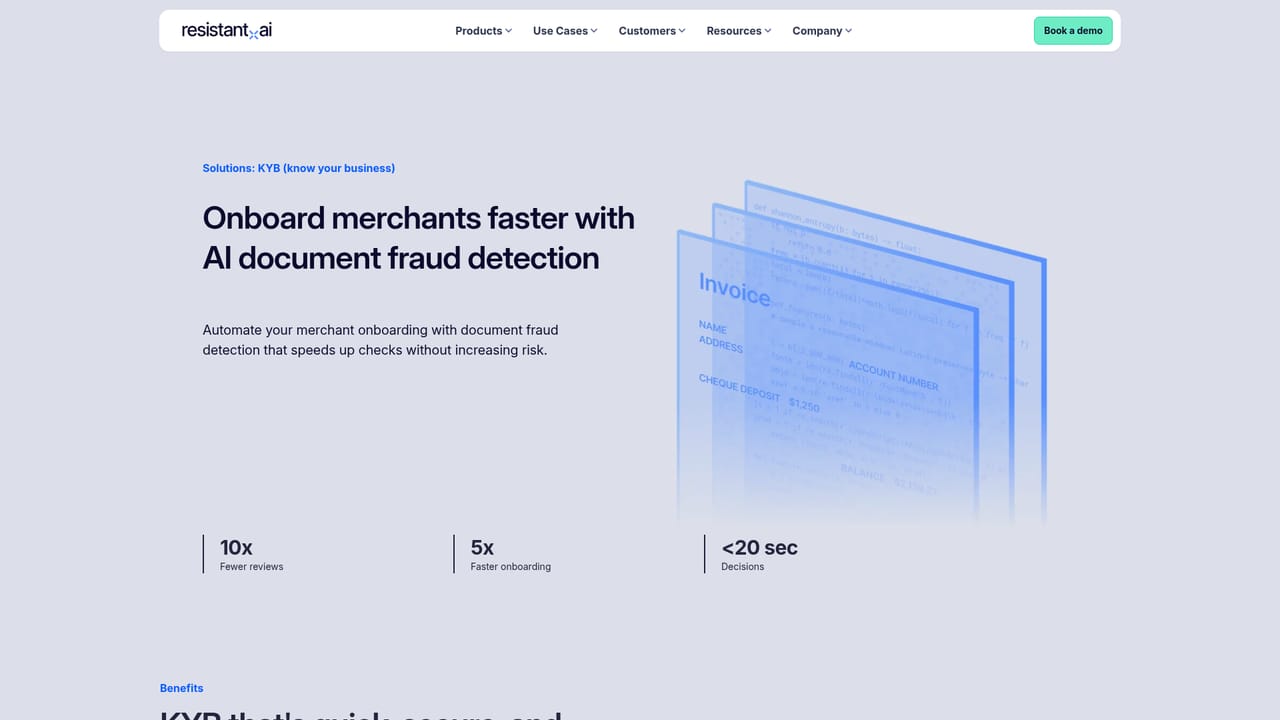
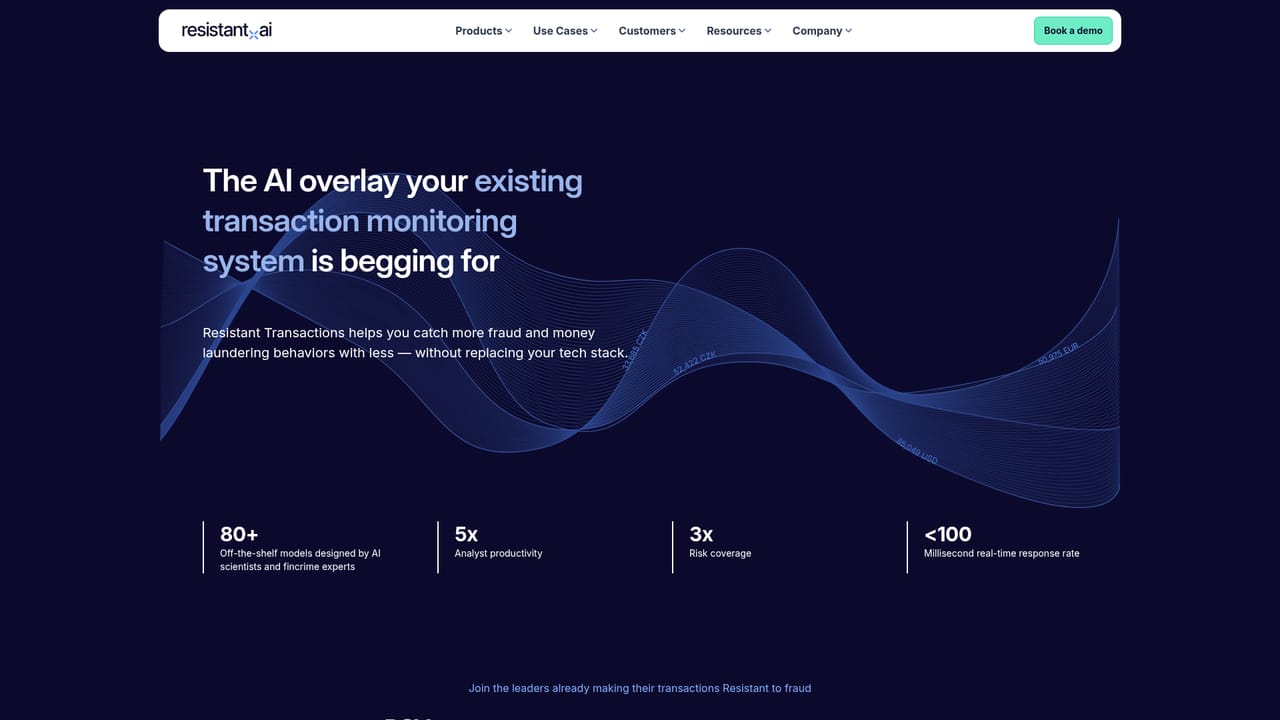
Resistant AI is a fraud and financial crime detection platform built for organizations that process documents and transactions at volume. Its core product, Resistant Documents, checks any document from any country for signs of forgery, tampering or AI generation. The company claims checks complete in under 20 seconds per document, with three times more fraud detected and more than 90 percent fewer manual reviews compared with conventional review processes. A second product line, Resistant Transactions, layers AI models on top of an existing rule-based transaction monitoring system rather than replacing it. The tool is aimed squarely at financial institutions and other regulated businesses: banks, lenders, payments providers, insurers, marketplaces, tenant and employment screening services, and identity verification vendors. The homepage names merchant onboarding (KYB), loan underwriting, insurance claims processing, AML, APP fraud and BNPL as the main use cases. The typical buyer is a fraud or compliance team that already has analysts reviewing uploaded statements, invoices and identity documents and wants to cut that queue without loosening risk controls. The company says more than 8,000 fraud and compliance analysts use the product, and client logos include Payoneer, Habito, Siemens, XTB, Raiffeisen Bank and Credit Agricole. In practice, the workflow centers on document intake. A document arrives through an onboarding or claims flow, the platform analyzes it for authenticity, and the result feeds a decision within seconds. The transactions product works differently: it ships more than 80 prebuilt models designed by AI and financial crime experts, described as fully explainable, and slots into the monitoring stack already in place. The broader pitch, called defense in depth, is to combine document, transaction, behavior and identity signals so patterns that look benign in isolation can be caught together. Alternatives include manual review teams, traditional KYC and identity verification vendors, and generic document forensics tools. Resistant AI differentiates on country-agnostic document coverage, speed, and the option to keep an existing transaction monitoring investment. Pricing is not published, and the path to a quote runs through a demo request on the contact page.

Support is reached through the contact page, where demo requests and sales conversations are handled by the company's fraud specialists. No public help centre or documentation portal is linked from the homepage.
Learn moreResistant Documents checks documents from any country for forgery, tampering and AI generation, with decisions in under 20 seconds per the vendor. Resistant Transactions adds more than 80 explainable models for AML, APP fraud and BNPL on top of existing monitoring systems. A defense-in-depth approach combines document, transaction, behavior and identity signals.
Learn more AI Angels400+ customizable AI girlfriends for NSFW chat, voice calls, and roleplay
 Candy AIExperience the future of companionship with AI friends who chat, role-play, and connect with you on a human level.
 ourdream.aiA vast AI roleplay platform with millions of characters for chat, images, video and voiceAI Angels400+ customizable AI girlfriends for NSFW chat, voice calls, and roleplayCandy AIExperience the future of companionship with AI friends who chat, role-play, and connect with you on a human level.ourdream.aiA vast AI roleplay platform with millions of characters for chat, images, video and voice


