Free trial
The homepage offers a start free trial option alongside a demo request, but does not state the trial length, limits or what is included.
Learn moreAI GTM orchestration that turns buying signals into scored pipeline

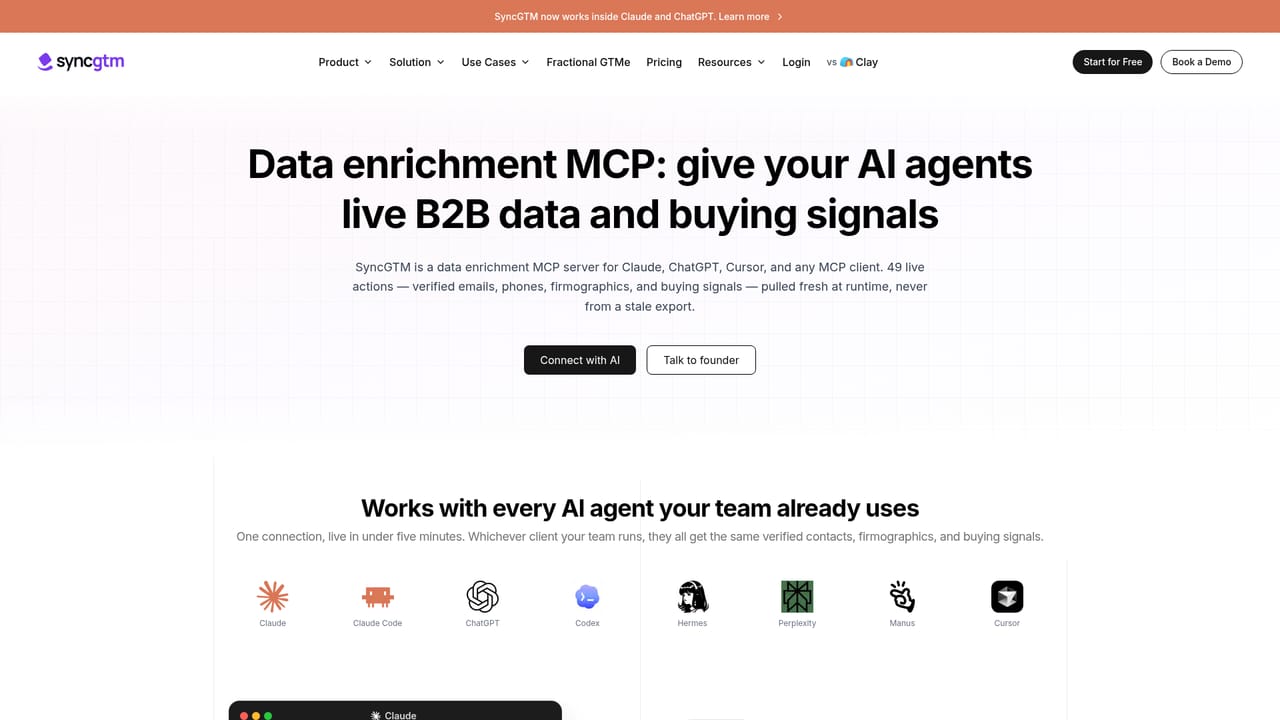
SyncGTM is a lead generation tool. SyncGTM combines B2B lead search, waterfall enrichment, ICP scoring, buying signal monitoring and AI-personalized outreach in one platform, accessible through a web app or an MCP server for Claude, ChatGPT and Cursor.
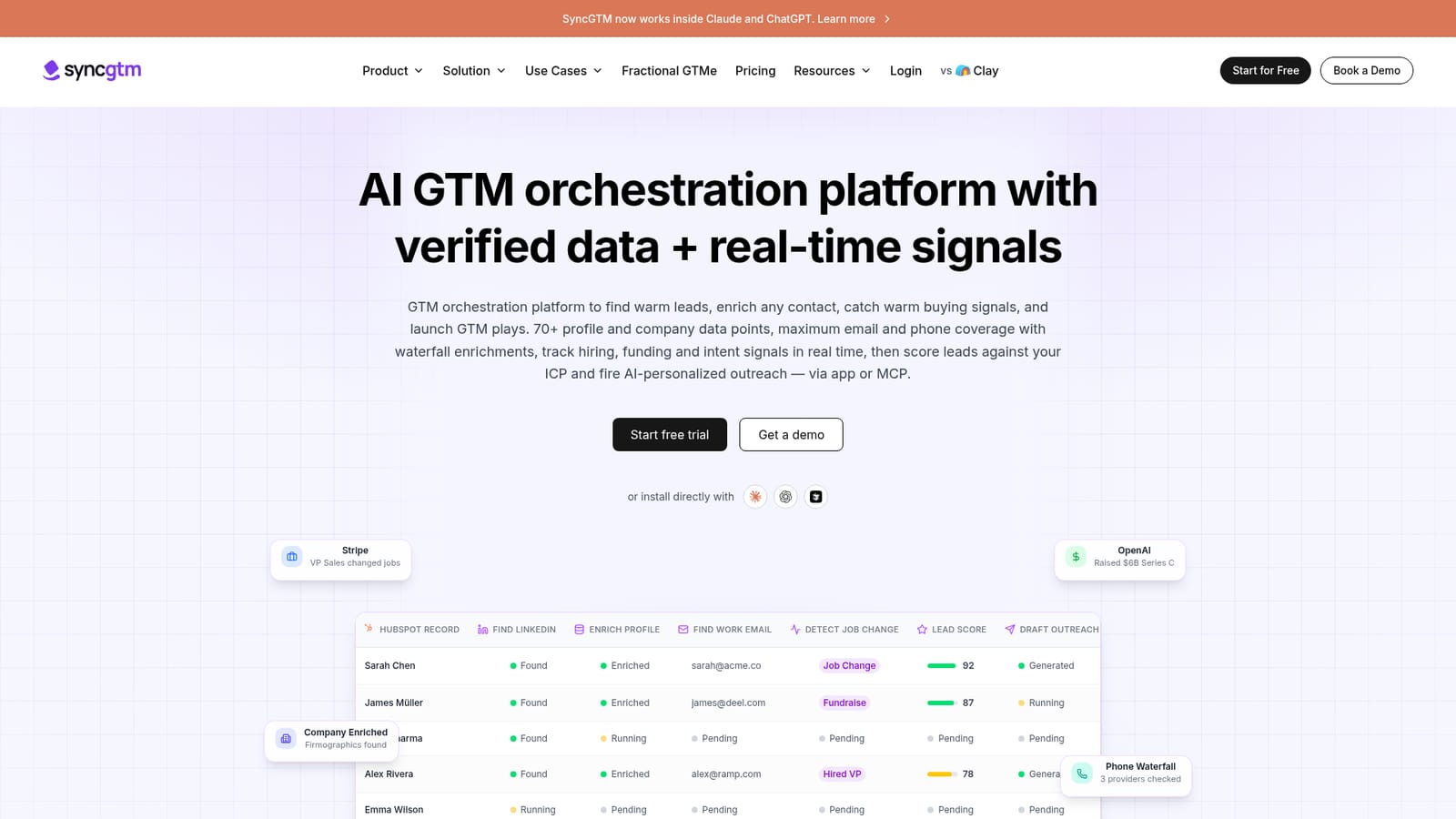
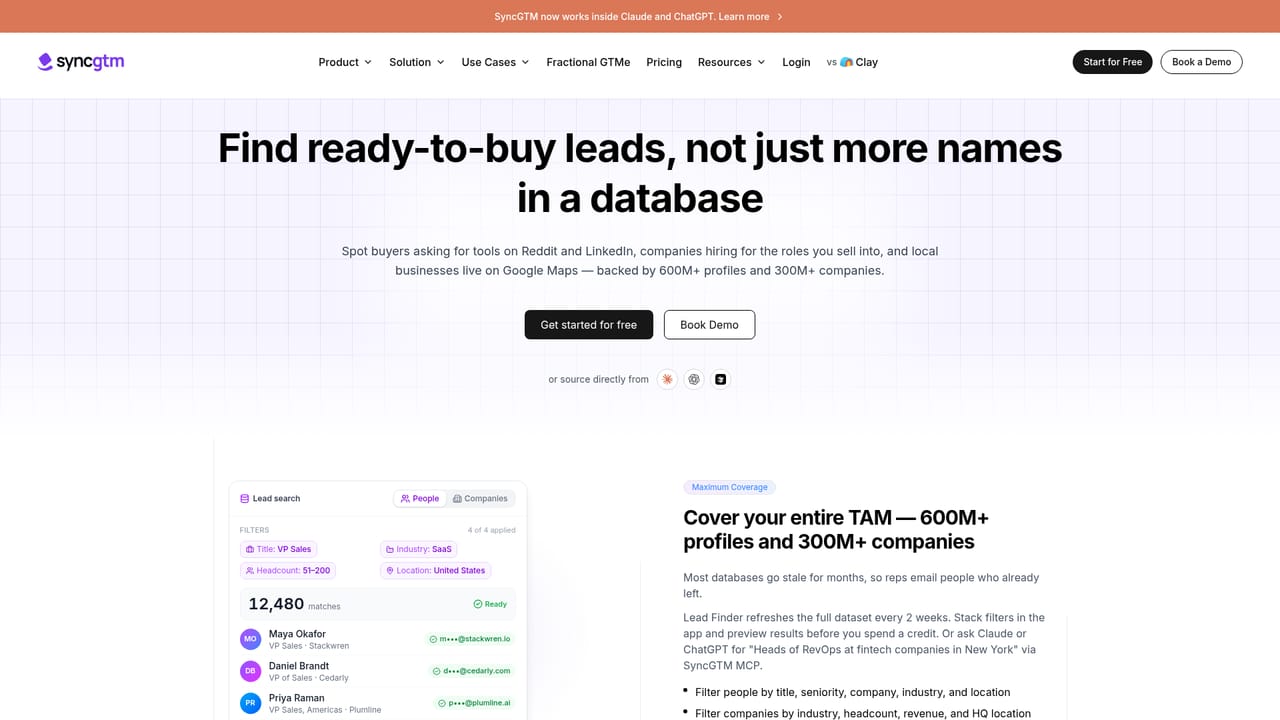
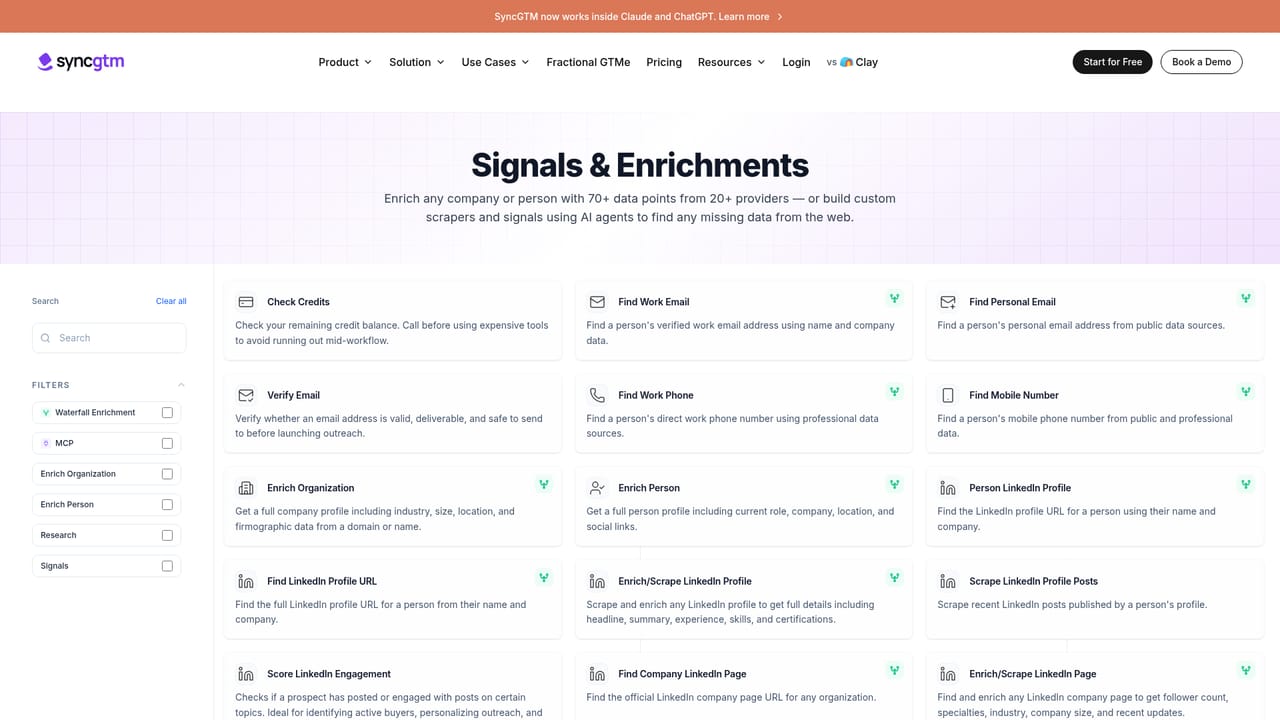
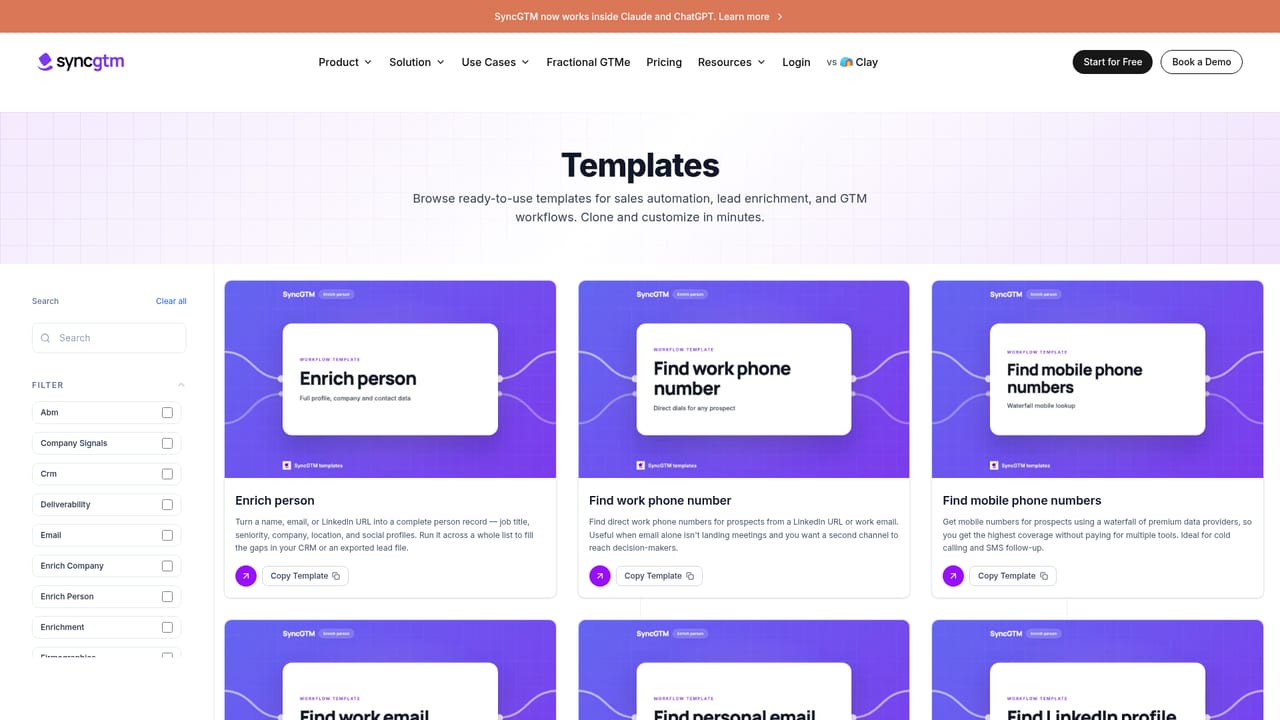
SyncGTM is a go-to-market orchestration platform built for B2B revenue teams. Rather than treating prospecting, enrichment, scoring and outreach as separate purchases, it runs them as one connected system. The pitch is consolidation: one workspace replaces a stack of enrichment subscriptions, signal trackers and sequencing tools, and the same data engine is reachable either through the web app or through an MCP server inside Claude, ChatGPT, Cursor and other compatible clients. The practical workflow starts with a list. Users search a database of 600M+ B2B profiles and 300M+ companies by title, seniority, industry, headcount and location, or import records from a CRM such as HubSpot, Attio or Salesforce, from CSV, webhooks, signups and conference lists. Contacts are then enriched through waterfall lookups that query multiple providers in sequence on a single request, which the company says lifts contact coverage by roughly 20 percent over a single provider. Lead scoring runs against a defined ICP, using 70+ profile and company data points plus AI research agents that brief each account. The signal layer is the differentiator. SyncGTM watches 7+ account-level signals (headcount growth, job openings, funding rounds, product launches, tech stack changes, website traffic shifts) and contact-level events such as job changes, promotions and LinkedIn engagement. When a signal fires, workflows enrich the record, re-score it and draft personalized first-touch outreach. Templates from GTM practitioners shorten setup, and results can be pushed into tools like HeyReach, Instantly or Slack. It suits SDRs, AEs, RevOps, ABM and GTM engineering teams at B2B SaaS companies that already run outbound and want fewer vendors. Teams that only need raw contact data, or that want a standalone sequencer, will find it heavier than necessary. Unlimited people and company search is limited to mid-tier plans and above, and pricing is not published on the homepage, so cost needs a sales conversation.
The homepage offers a start free trial option alongside a demo request, but does not state the trial length, limits or what is included.
Learn moreSetup documentation is available for the MCP server, covering the Claude app, ChatGPT and Cursor. The homepage does not describe support channels, SLAs or onboarding help.
Learn moreThe homepage names CRM connections such as HubSpot, Salesforce and Attio, outreach tools HeyReach and Instantly, plus Slack and an HTTP API. An MCP server links SyncGTM to Claude, Claude Code, ChatGPT, Cursor, Windsurf, Gemini, Codex and Cline.
Learn moreCore features include people and company search across 600M+ profiles and 300M+ companies, waterfall enrichment over 10+ providers on a single lookup, ICP-based lead scoring with AI research agents, account and contact signals (hiring, funding, tech stack changes, traffic, job changes, promotions), automated enrichment workflows, AI-drafted outreach, role-specific playbooks and an MCP server for Claude, ChatGPT and Cursor.
Learn more AI Angels400+ customizable AI girlfriends for NSFW chat, voice calls, and roleplay
 Candy AIExperience the future of companionship with AI friends who chat, role-play, and connect with you on a human level.
 ourdream.aiA vast AI roleplay platform with millions of characters for chat, images, video and voiceAI Angels400+ customizable AI girlfriends for NSFW chat, voice calls, and roleplayCandy AIExperience the future of companionship with AI friends who chat, role-play, and connect with you on a human level.ourdream.aiA vast AI roleplay platform with millions of characters for chat, images, video and voice


