Tapesearch

Search podcast transcripts and jump straight to the moment that matters

Beginner API
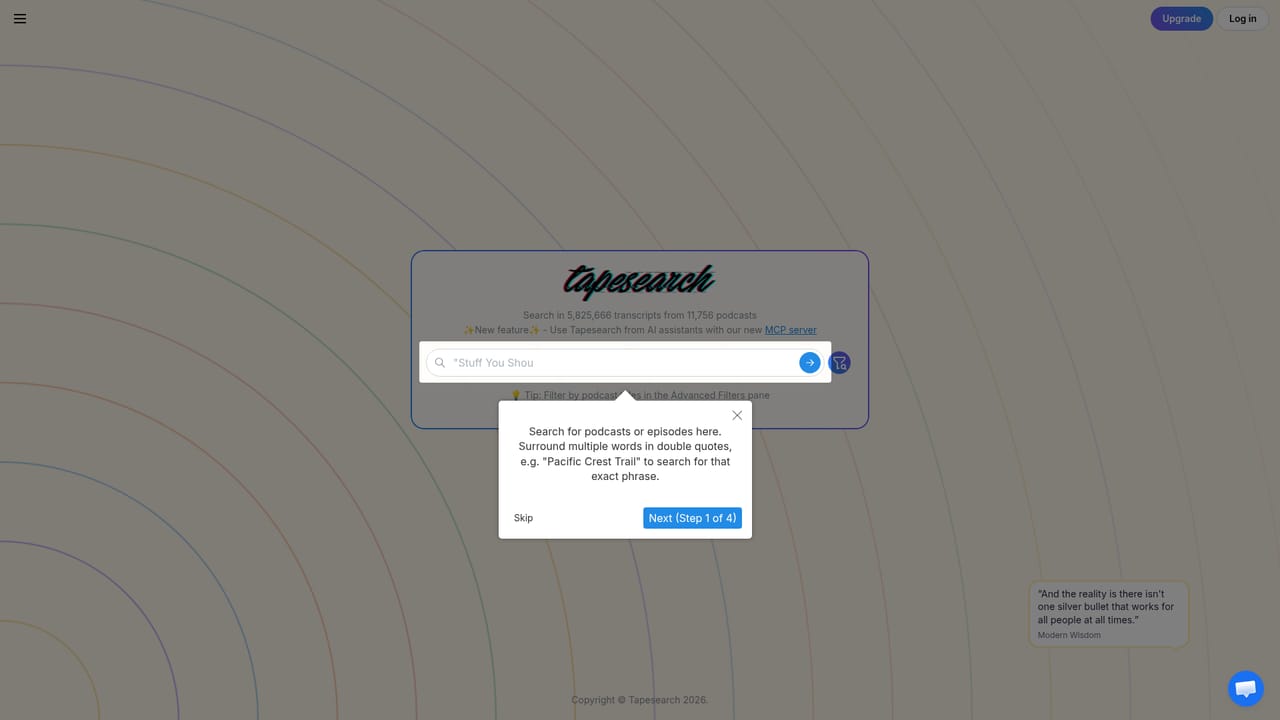
Screenshot of Tapesearch, Search podcast transcripts and jump straight to the moment that matters

What is Tapesearch?

Tapesearch is an AI search tool that searches podcast transcripts and jump straight to the moment that matters. A podcast transcript search engine covering millions of episodes, with timestamp jump links, AI chat over conversations, keyword alerts, downloadable transcripts and an API plus MCP server for assistants.

Tapesearch is a search engine built on a large open database of podcast transcripts, currently holding more than five million transcribed episodes. Instead of listening through hours of audio to find a single remark, you type a phrase and get back the exact episode and timestamp where it was spoken. The index leans on the most popular shows by Apple Podcasts rating volume, with the stated long term aim of widening coverage. Transcripts are refreshed on a daily cycle starting at midnight UTC, and shows that publish through the Podping notification system are typically transcribed within minutes. The product serves two fairly different audiences. Curious listeners, journalists and academics use the search interface to pull timestamped quotes, read instead of listen, and download transcripts as TXT, SRT, VTT or JSON. Market researchers, brand teams and open source intelligence analysts lean on alerting and trend charting to watch how often a keyword, brand or advertising pattern surfaces across thousands of conversations. Podcasters use the same index to mine their own back catalogue and to publish transcripts for discoverability and accessibility. Beyond the web interface, Tapesearch exposes search and transcript download endpoints through an API, and hosts an MCP server so assistants such as Claude can query the database without any local installation. Chat style querying lets you ask questions across multiple shows and receive consolidated answers rather than a list of links. Accuracy is worth setting expectations around. The transcription model handles ordinary speech well but slips on names, rapid delivery and speech layered over music, and long silent or musical stretches can push timestamps slightly out of sync. Dynamic ad insertion is another source of drift, since the spot you hear may not match the one captured at transcription time. Paywalled and exclusive shows, Spotify among them, are not yet indexed. Against general podcast players and manual transcript reading, Tapesearch competes on speed of retrieval and on the API and alerting layer rather than on playback.

How do you use Tapesearch?

  1. 1Run a first keyword search
    Open the search page and enter a phrase, brand name or quote you expect to have been spoken. Results point to the episode and the point in the recording where the match occurs.
    Tapesearch — Run a first keyword search
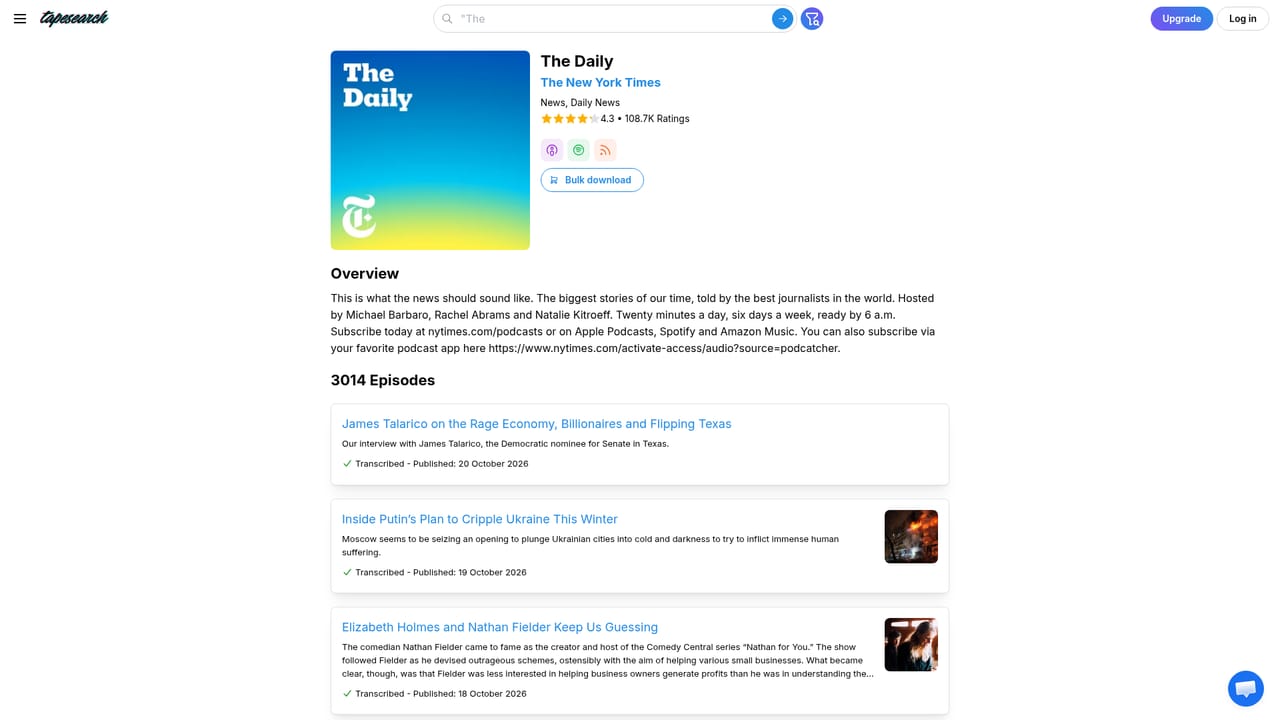
  2. 2Check a show page before relying on coverage
    Browse an indexed podcast page to see how episodes and transcripts are presented for that series. Doing this early tells you whether your target shows are in the database.
    Tapesearch — Check a show page before relying on coverage
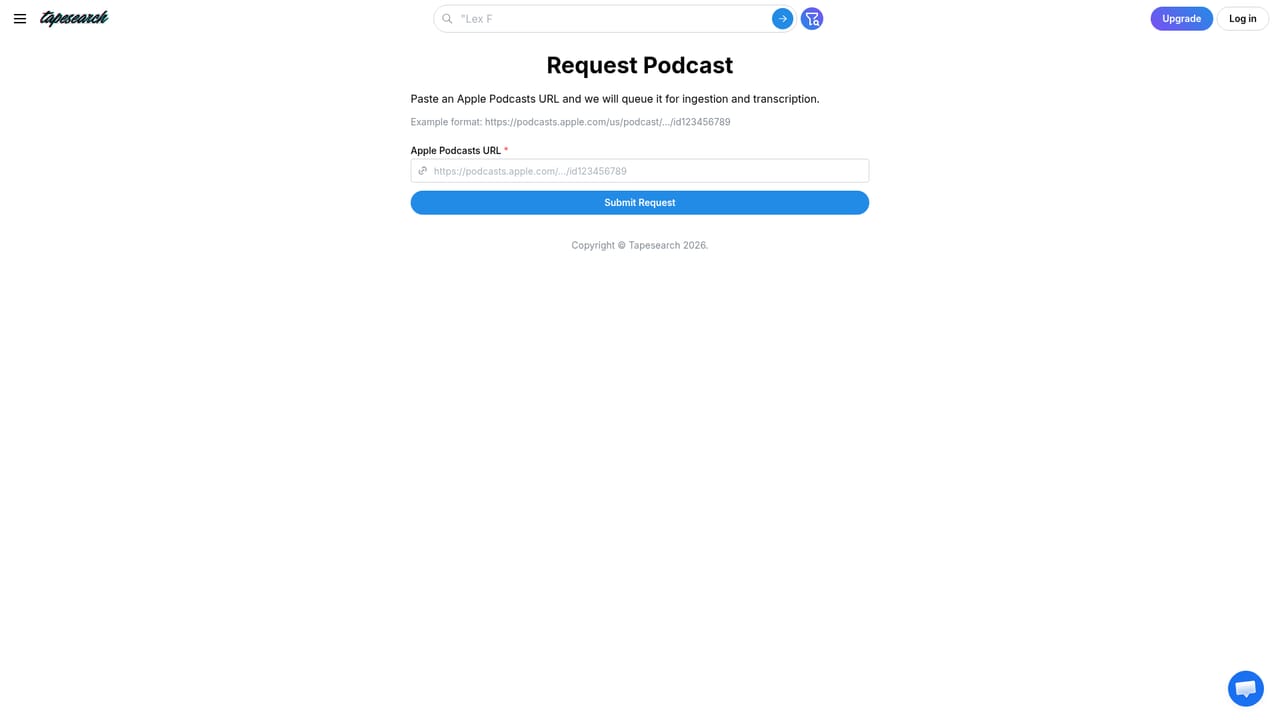
  3. 3Request missing podcasts
    If a show you need is absent, submit it through the request page. Requests from subscribers are prioritised, so log one after upgrading rather than before.
    Tapesearch — Request missing podcasts
  4. 4Pick a plan and start downloading transcripts
    Choose Pro for search filters, AI chat and transcript downloads in TXT, SRT, VTT or JSON, or Insights if you need up to 50 alerts and trend charts with exportable data.
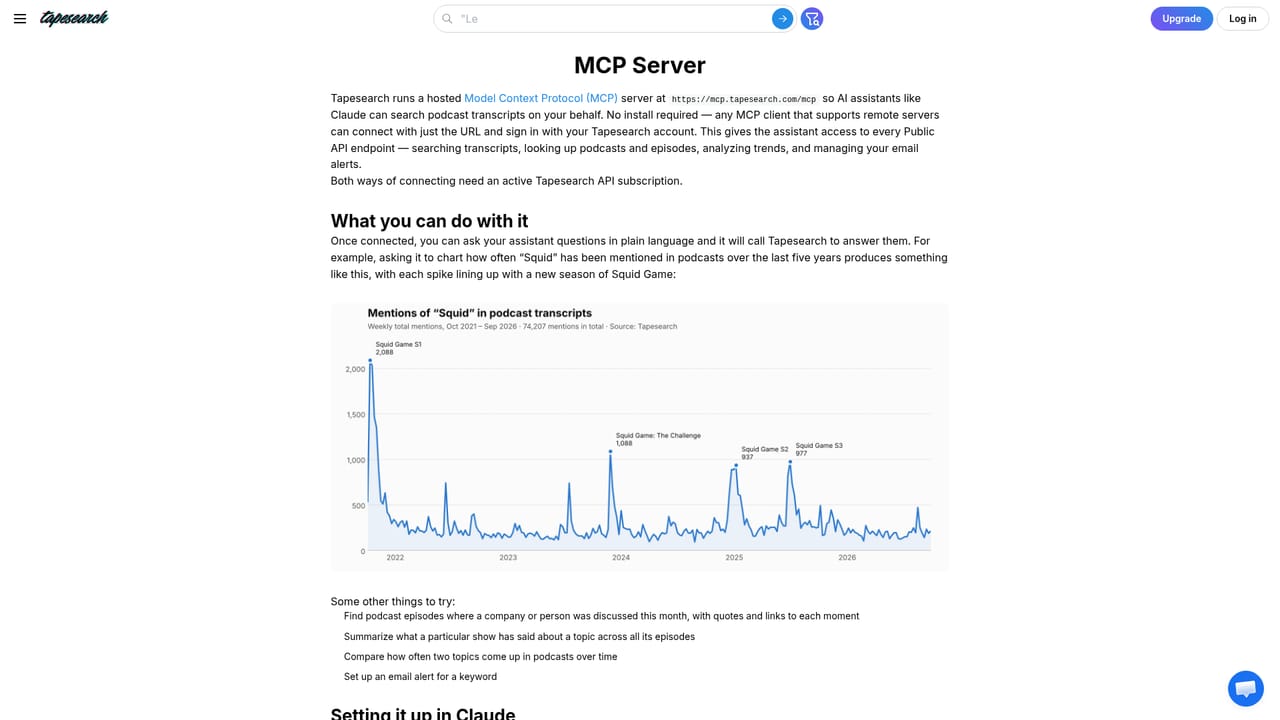
  5. 5Connect an AI assistant through MCP
    On the API plan, point Claude or another MCP capable assistant at the hosted server so it can query transcripts and pull evidence directly. The setup notes live in the MCP documentation.
    Tapesearch — Connect an AI assistant through MCP

Pros and cons

Pros

  • Searches millions of indexed transcripts and links directly to the matching timestamp in the audioAI
  • Downloadable transcripts in TXT, SRT, VTT and JSON, which suits clipping, subtitling and research workflowsAI
  • Keyword alerts arrive within hours of a mention, useful for brand and ad monitoringAI
  • Hosted MCP server and API endpoints let AI assistants query the database without local setupAI
  • Daily refresh keeps the index reasonably current, with Podping shows transcribed in minutesAI

Cons

  • Only popular shows ranked by Apple Podcasts ratings are covered for now, so niche and small podcasts are often missingAI
  • Paywalled and exclusive catalogues such as Spotify are not indexed at allAI
  • Transcription errors cluster around names, fast speech and speech over music, and timestamps can drift on long musical or silent passagesAI
  • Dynamic ad insertion means the audio you hear may differ from the transcript, shifting timestamps by secondsAI
  • Alert volume is tiered from two emails upward, so serious monitoring requires the higher priced planAI

How much does Tapesearch cost?

Pricing

Three tiers billed monthly or yearly, with yearly billing giving two months free. Pro is $17 per month or $200 per year, Insights is $31 per month or $370 per year, and API Access is $60 per month or $720 per year. Alert allowances rise with each tier.

Learn more

Support

A chat box on the site handles questions and podcast requests, with priority given to subscribers. Transcript quality issues can be reported so a different model is tried.

Learn more

Integrations

A hosted MCP server works with Claude and other MCP capable assistants, and API endpoints cover search and transcript download for custom builds.

Learn more

Features

Transcript search with timestamp jump links, AI chat across multiple episodes, keyword alerts within hours of a mention, trend charts with downloadable data, and transcript downloads in TXT, SRT, VTT and JSON. API access and a hosted MCP server support assistants and large scale analysis.

Frequently asked questions about Tapesearch

  • How much does Tapesearch cost?
    Three tiers billed monthly or yearly, with yearly billing giving two months free. Pro is $17 per month or $200 per year, Insights is $31 per month or $370 per year, and API Access is $60 per month or $720 per year. Alert allowances rise with each tier.
  • Does Tapesearch have an API?
    Yes, Tapesearch offers an API.
  • How do you use Tapesearch?
    The walkthrough on this page covers 5 steps: 1. Run a first keyword search 2. Check a show page before relying on coverage 3. Request missing podcasts 4. Pick a plan and start downloading transcripts 5. Connect an AI assistant through MCP.
  • What platforms does Tapesearch support?
    Tapesearch is available on Web App.
  • What does Tapesearch integrate with?
    A hosted MCP server works with Claude and other MCP capable assistants, and API endpoints cover search and transcript download for custom builds.
  • What are the limitations of Tapesearch?
    Only popular shows ranked by Apple Podcasts ratings are covered for now, so niche and small podcasts are often missing. Paywalled and exclusive catalogues such as Spotify are not indexed at all. Transcription errors cluster around names, fast speech and speech over music, and timestamps can drift on long musical or silent passages.

Status

StatusActive
Views0
Outbound clicks0
Added10/21/2026

Platforms

Web App

Pricing

SubscriptionPaid