The Path is an AI therapy and coaching app that challenges cognitive distortions, remembers user history across sessions and sends proactive check-ins. It offers 11 AI therapist personalities and is co-founded with Tony Robbins. It is not a licensed medical provider.
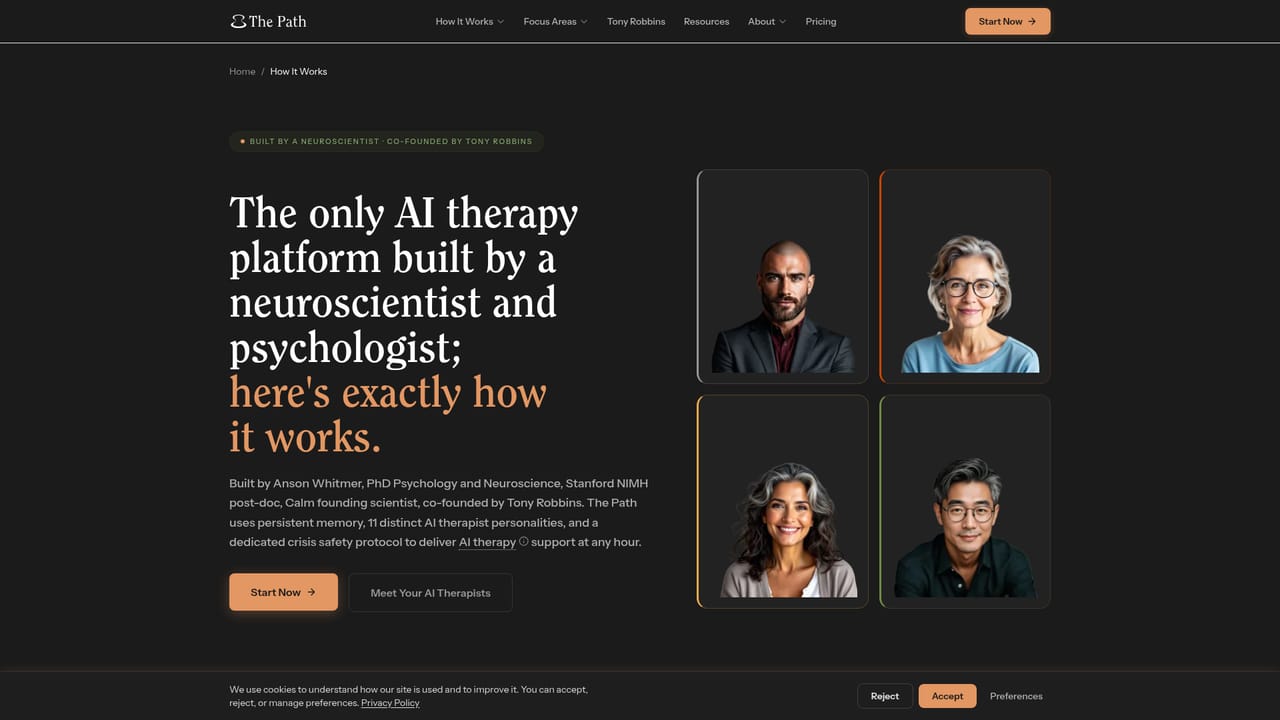
The Path is an AI therapy and coaching app that positions itself against engagement-driven chat tools. Its pitch is that sessions should be measured by the progress a person makes, so conversations are time-boxed, the AI pushes back on stuck thinking, and the product tries to name patterns such as catastrophizing or all-or-nothing framing instead of simply validating the user. The company describes it as built by a neuroscientist and co-founded with Tony Robbins, whose State, Story, Strategy and 6 Human Needs frameworks are built into each session.
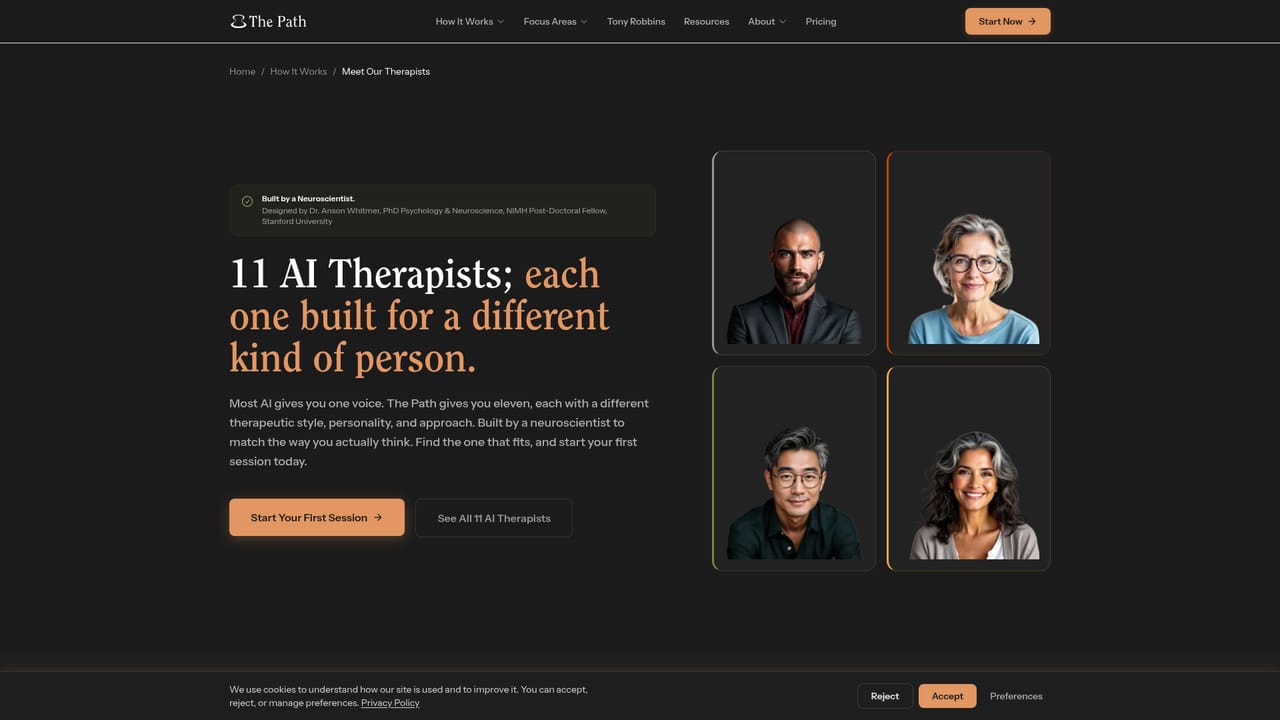
In practice, a new user picks one of 11 AI therapist personalities, which differ in tone and style (for example direct and accountable, warm and reflective, or results-focused), then starts a first session within minutes. Early questions build a personal profile, and the app carries forward history, goals and patterns so later sessions can be more specific. Methods cited include CBT, ACT, solution-focused brief therapy and motivational interviewing, plus behavioral coaching frameworks. Between sessions, customizable proactive check-ins can arrive before important events or during difficult stretches, alongside daily challenges such as thought journals and values work, and session summaries that feed the next conversation. The site also lists 24/7 access, crisis escalation and session-length limits.
The audience is adults who want structured self-reflection and accountability without waiting weeks for an appointment or dealing with scheduling and insurance paperwork. It sits between general-purpose chatbots, which the site says spend far less compute per session, and human therapy, which offers licensed clinical care. The Path states plainly that it is software, not a licensed medical provider, does not diagnose or treat conditions, and does not replace professional clinical care. That framing makes it better suited to coaching-style support and habit change than to clinical treatment. Among alternatives, it competes with wellness companions and journaling assistants, and differentiates on memory, pushback and proactive outreach.