Support
Support runs through an inquiry form on the contact page, which is how demos, adoption questions and partnership requests are handled. No help centre or documentation portal is published.
Learn moreAI beauty profiling that turns customer taste into retail performance

Twinit is an image analysis tool. Enterprise beauty tech platform that profiles customer skin, color and aesthetic taste, simulates makeup with AR, and feeds the results into personalization and retail analytics.
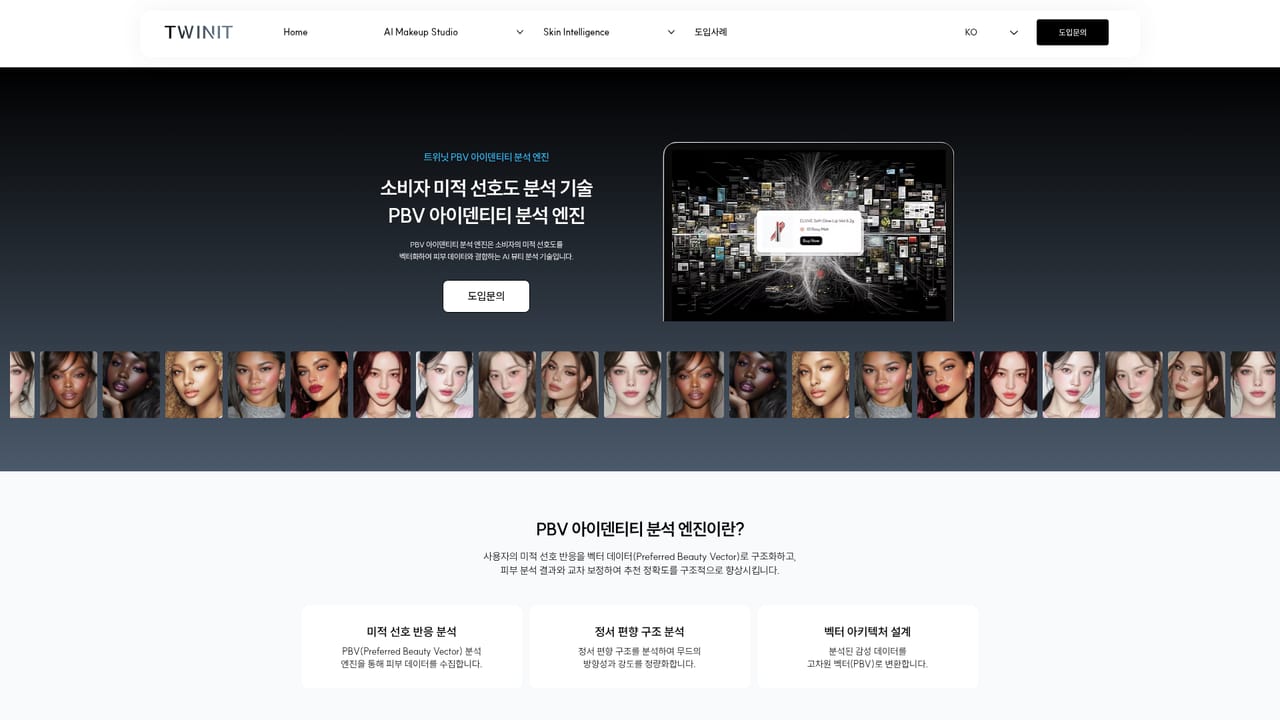
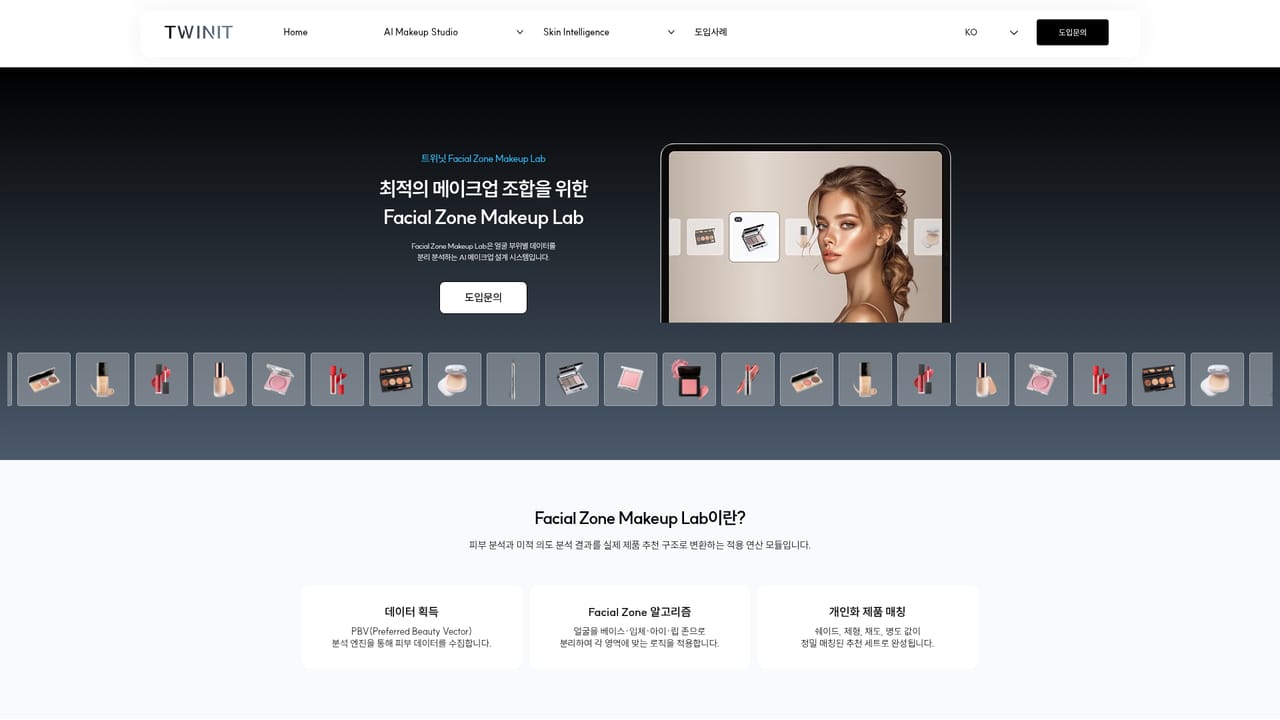
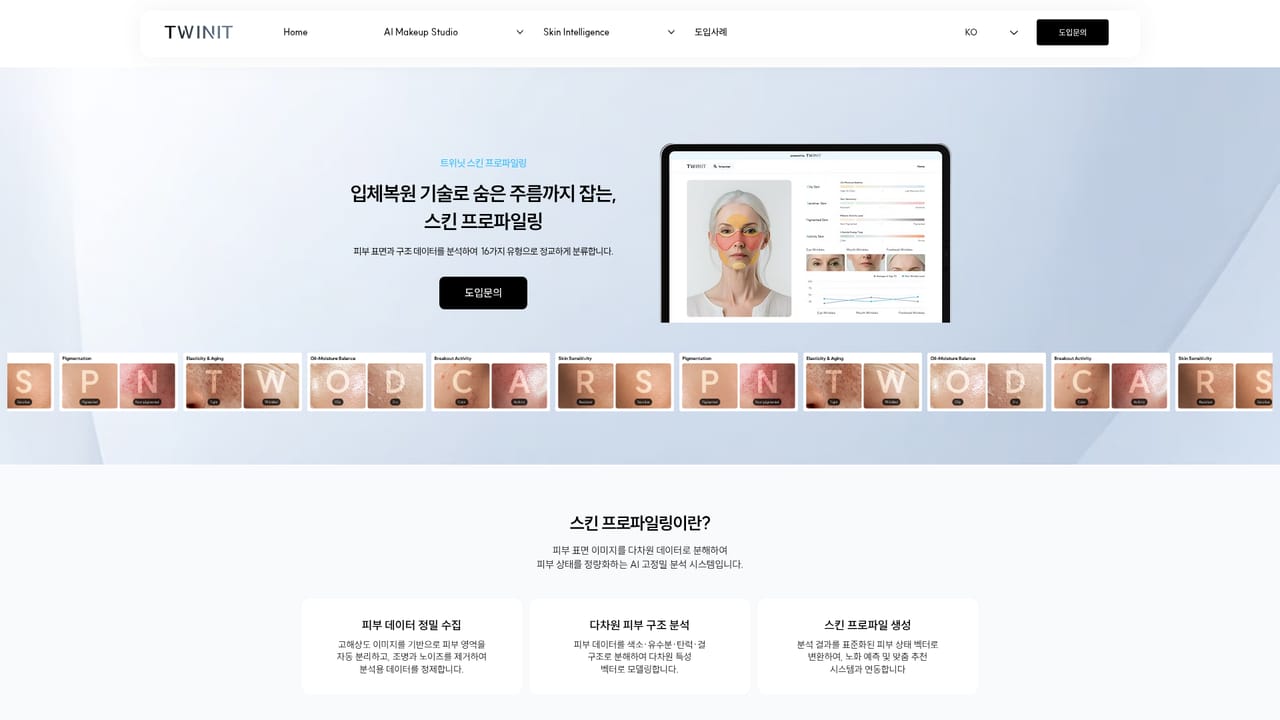
Twinit is a beauty tech platform built around a single proposition: customer preferences can be measured, profiled and used to sell more effectively. The company describes itself as a Beauty Tech provider whose AI profiling is trained on multi ethnic, global taste data drawn from 86 countries. Rather than a consumer app for trying on lipstick, Twinit is positioned as a business facing solution: a makeup studio, a skin intelligence engine and an analytics layer that beauty brands, retailers and clinics can fold into their own customer journeys. The product family splits into several named engines. PBV identity analysis profiles aesthetic preference, and the AI personal color profiling agent reads a customer's color direction. A facial zone makeup lab and a real texture AR simulation handle the simulation side, letting a shopper see makeup rendered against realistic skin rather than a flat filter. Skin profiling and a customized skincare tutorial agent cover the care side, while an aging preview agent projects how skin may change over time. A separate Face Tech layer, described as AI 3D Balance, generates digital human representations from a face. In practice Twinit is a customer engagement and merchandising tool. A brand deploys a profiling or simulation touchpoint, collects the resulting preference and skin data, and uses the beauty analytics layer to connect online and offline product reactions to personalized recommendations. The vendor cites an Olive Young deployment that lifted purchase conversion by 14 percent, plus rollouts in retail chains, a pharmacy style beauty zone in medical aesthetics, and airport and department store installations. Partnerships with Samsung Electronics at CES 2026 and government trade delegations point to an enterprise and export oriented sales motion. That places Twinit closer to in store retail tech and CRM than to consumer beauty apps. Adoption is consultative rather than self serve, and the value depends on a brand having a channel where profiling can meet a transaction.
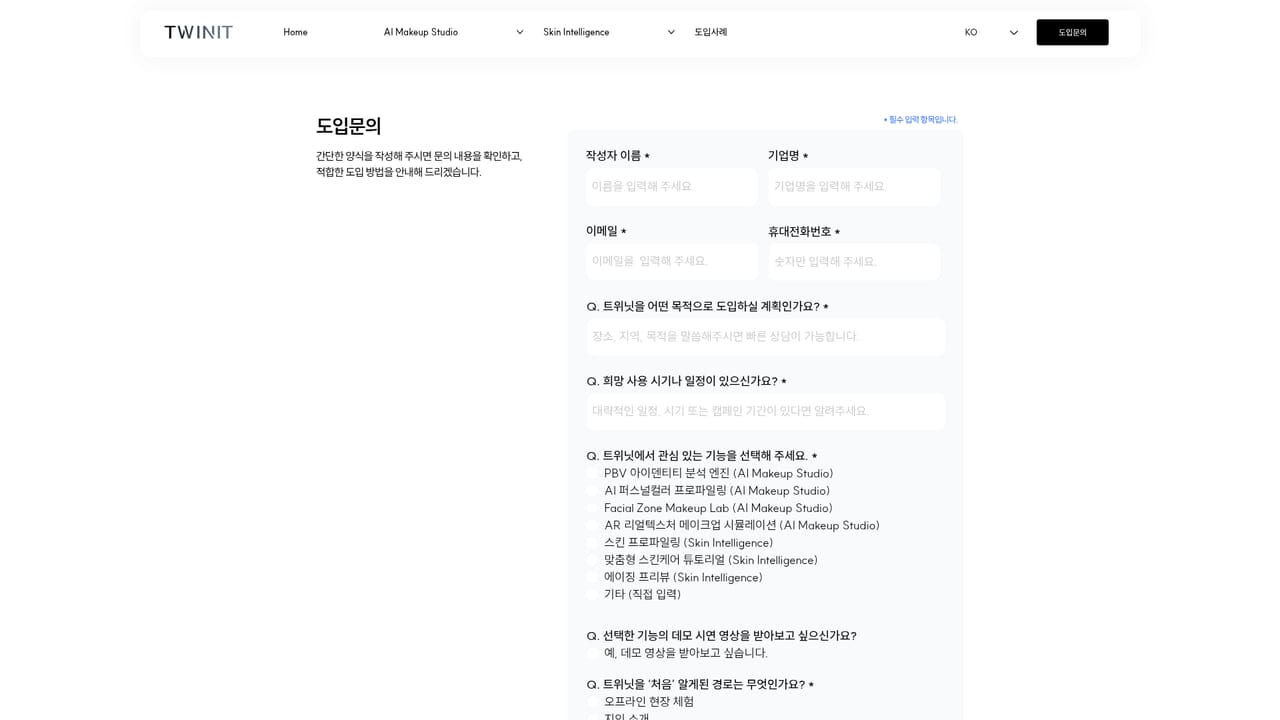
Support runs through an inquiry form on the contact page, which is how demos, adoption questions and partnership requests are handled. No help centre or documentation portal is published.
Learn morePBV identity and aesthetic taste analysis, AI personal color profiling, a facial zone makeup lab, real texture AR simulation, time series skin profiling, a customized skincare tutorial agent, an aging preview agent, and AI 3D Balance digital human face tech. A beauty analytics layer consolidates online and offline product reaction data into personalized recommendations.
Learn more AI Angels400+ customizable AI girlfriends for NSFW chat, voice calls, and roleplay
 Candy AIExperience the future of companionship with AI friends who chat, role-play, and connect with you on a human level.
 ourdream.aiA vast AI roleplay platform with millions of characters for chat, images, video and voiceAI Angels400+ customizable AI girlfriends for NSFW chat, voice calls, and roleplayCandy AIExperience the future of companionship with AI friends who chat, role-play, and connect with you on a human level.ourdream.aiA vast AI roleplay platform with millions of characters for chat, images, video and voice


