Zillow

Search homes, compare Zestimate values and find local agents

Beginner
Screenshot of Zillow, Search homes, compare Zestimate values and find local agents

What is Zillow?

Zillow is a life assistance tool that searches homes, compare Zestimate values and find local agents. A consumer real estate marketplace for searching for-sale and rental listings, comparing home value estimates, checking local market insights and connecting with agents and financing options.

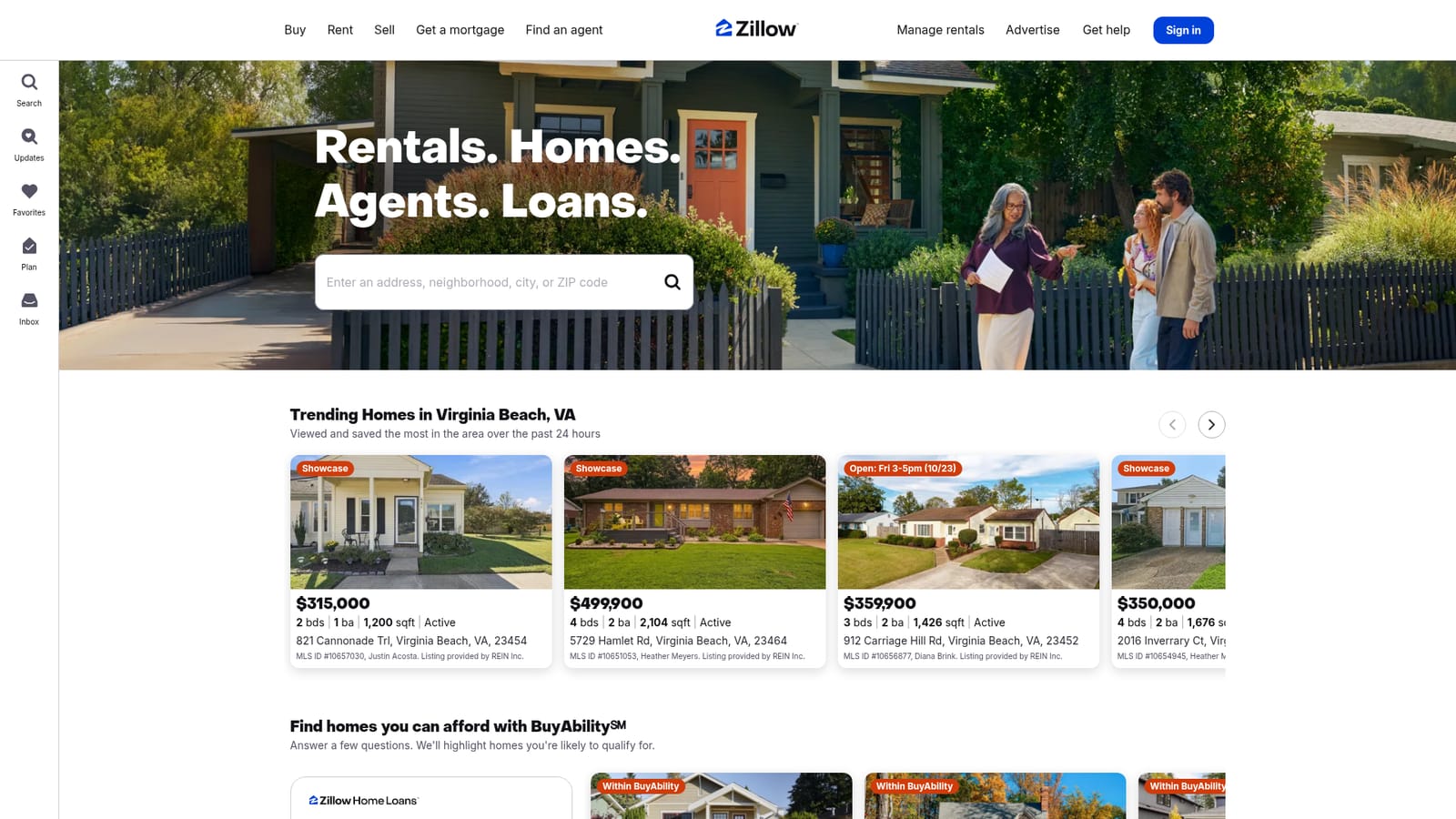
Zillow is a real estate marketplace built around search. The site combines for-sale listings, rentals, home value estimates and professional connections in one place, and the homepage positions it around four jobs: rent a home, buy a home, sell a home, and finance a purchase. Listings carry the details buyers usually ask about first, including price, bedroom and bathroom counts, square footage, listing status and the MLS ID, with the listing agent named alongside the brokerage that supplied the data. The discovery layer does most of the work. A trending homes module surfaces the properties viewed and saved most in a given area over the previous 24 hours, while a Selling Soon module flags homes likely to sell within the next month based on list date, price and property details. Both are tuned by location and by the searches, saved homes and filters a visitor has already used, so two people searching the same city can see different results. Dedicated city pages, such as the Austin, Chicago or Virginia Beach hubs, give each metro its own browsable entry point, and a region insights page extends that to market level context. The financing and transaction side is where Zillow goes beyond a listings board. BuyAbility is a short questionnaire that estimates a target home price and monthly payment, then highlights homes a buyer is likely to qualify for. For sellers, the site lays out the available paths to a sale rather than pushing a single route, and it points toward local agents for a cost breakdown before listing. This is consumer software first. Buyers, renters and sellers are the primary audience, with agents and lenders using it as a lead channel. It suits anyone researching a market or a specific address. Anyone needing authoritative valuations, off market inventory or deep investment analytics will still want a brokerage, an appraiser or a dedicated data service alongside it.

How do you use Zillow?

  1. 1Start with a city page or the full home browse
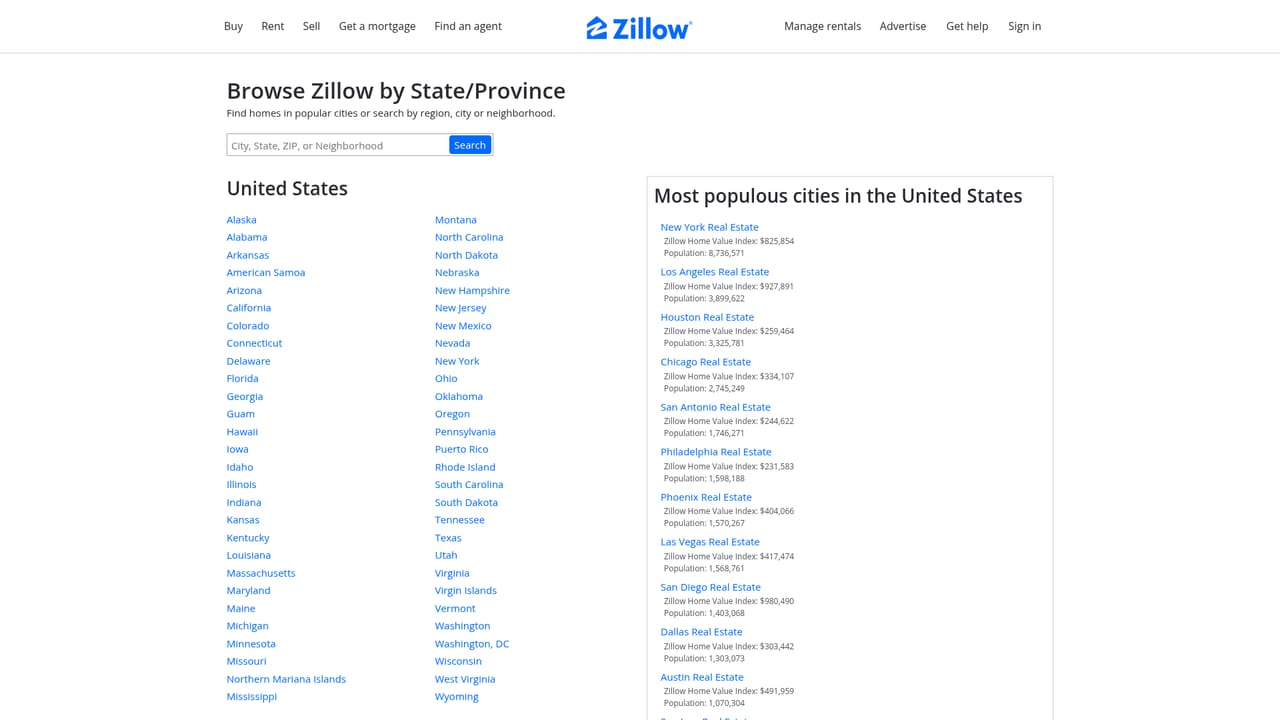
    Pick a metro hub such as Austin or Chicago, or open the browse all homes index if no city is chosen yet. Filter by price, bedrooms and property type from there.
    Zillow — Start with a city page or the full home browse
  2. 2Review trending and Selling Soon shortlists
    The homepage surfaces homes that are being viewed and saved most in the area, plus properties likely to sell within a month based on list date, price and details. Use these as a starting shortlist rather than a complete inventory.
    Zillow — Review trending and Selling Soon shortlists
  3. 3Open individual listings and read the data fields
    Each listing page shows price, bedroom and bathroom counts, square footage, status, MLS ID, the listing agent and the brokerage. Check open house times and 3D tour availability where listed.
    Zillow — Open individual listings and read the data fields
  4. 4Run BuyAbility before touring
    Answer the affordability questionnaire to get a target home price, target monthly payment and an estimated rate. The results highlight listings you are likely to qualify for, which helps set a realistic price band.
  5. 5Check region insights for market context
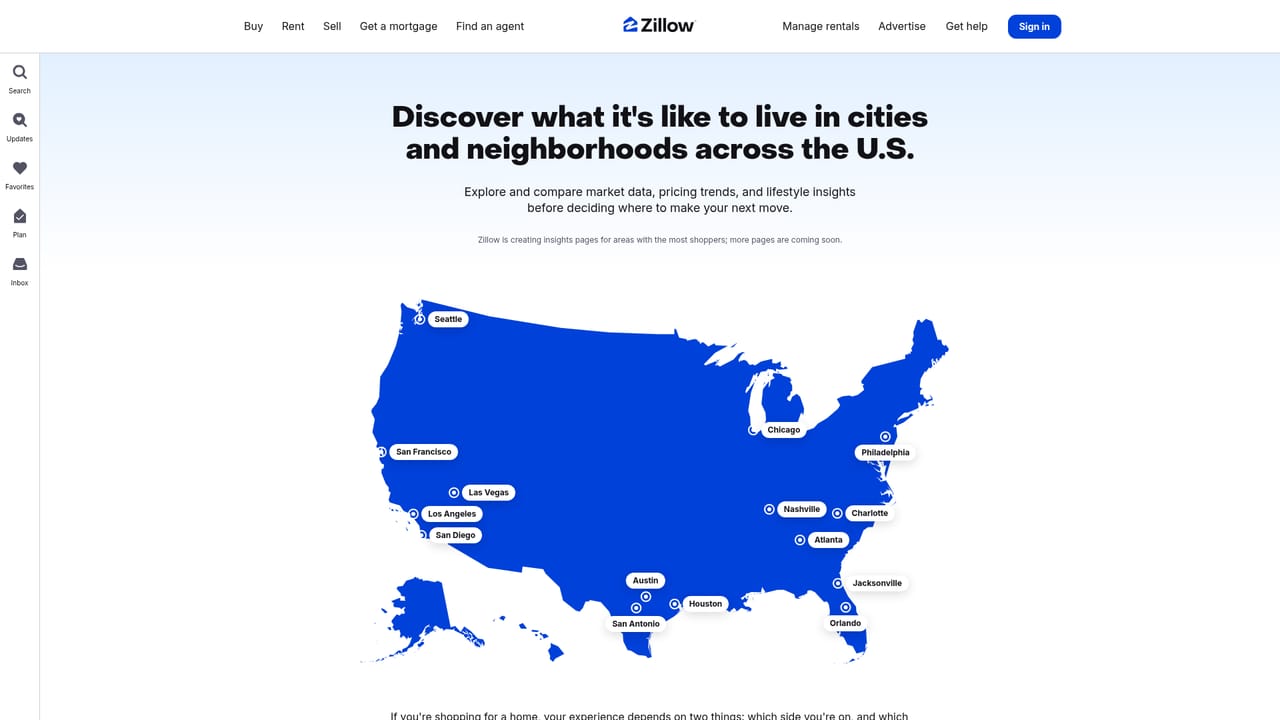
    Use the region insights page to compare area level trends before making an offer or setting a list price, so a single listing is read against the wider market rather than in isolation.
    Zillow — Check region insights for market context
  6. 6Connect with an agent or lender
    For a purchase, request a cost breakdown from a local agent. For a sale, review the available selling paths before choosing one. Expect follow up contact once an inquiry is submitted.

Pros and cons

Pros

  • Combines for-sale listings, rentals and home value estimates in a single search experienceAI
  • Trending and Selling Soon modules turn raw inventory into a shortlist worth reviewingAI
  • BuyAbility estimates a target price and payment before a buyer starts touringAI
  • City level pages and region insights give useful market context by metroAI
  • Listing pages expose MLS IDs, listing agents and the brokerage that supplied the dataAI

Cons

  • Home value estimates are automated and can drift from what an appraiser or offer would supportAI
  • Recommendations are shaped by past searches, which can narrow results rather than widen themAI
  • Coverage is uneven outside the United States despite a handful of Canadian city pagesAI
  • BuyAbility output is an indication of affordability, not a mortgage preapprovalAI
  • Agent connections route inquiries into a lead pipeline, so expect follow up contactAI

How much does Zillow cost?

Features

For-sale and rental search across millions of listings, dedicated city pages, automatic home value estimates (Zestimate), trending and Selling Soon recommendations tuned to search activity, open house and 3D tour flags, MLS IDs with listing agent and brokerage attribution, BuyAbility affordability estimates, region insights, and agent and loan connections.

Learn more

Frequently asked questions about Zillow

  • How do you use Zillow?
    The walkthrough on this page covers 6 steps: 1. Start with a city page or the full home browse 2. Review trending and Selling Soon shortlists 3. Open individual listings and read the data fields 4. Run BuyAbility before touring 5. Check region insights for market context 6. Connect with an agent or lender.
  • What platforms does Zillow support?
    Zillow is available on Web App, iOS and Android.
  • What are the limitations of Zillow?
    Home value estimates are automated and can drift from what an appraiser or offer would support. Recommendations are shaped by past searches, which can narrow results rather than widen them. Coverage is uneven outside the United States despite a handful of Canadian city pages.

Status

StatusActive
Views0
Outbound clicks0
Added10/22/2026

Platforms

Web AppiOSAndroid

Pricing

Free