Support
The Trust Center answers privacy, consent and data retention questions in published wording, and the demo form has a support or training option for existing districts.
Learn moreAn AI reading tutor that listens to students read aloud and flags where they struggle.

Amira is a district-adopted AI reading tutor and screener. It listens to students read aloud, maps decoding errors in real time, and hands teachers evidence to guide instruction and tutoring.
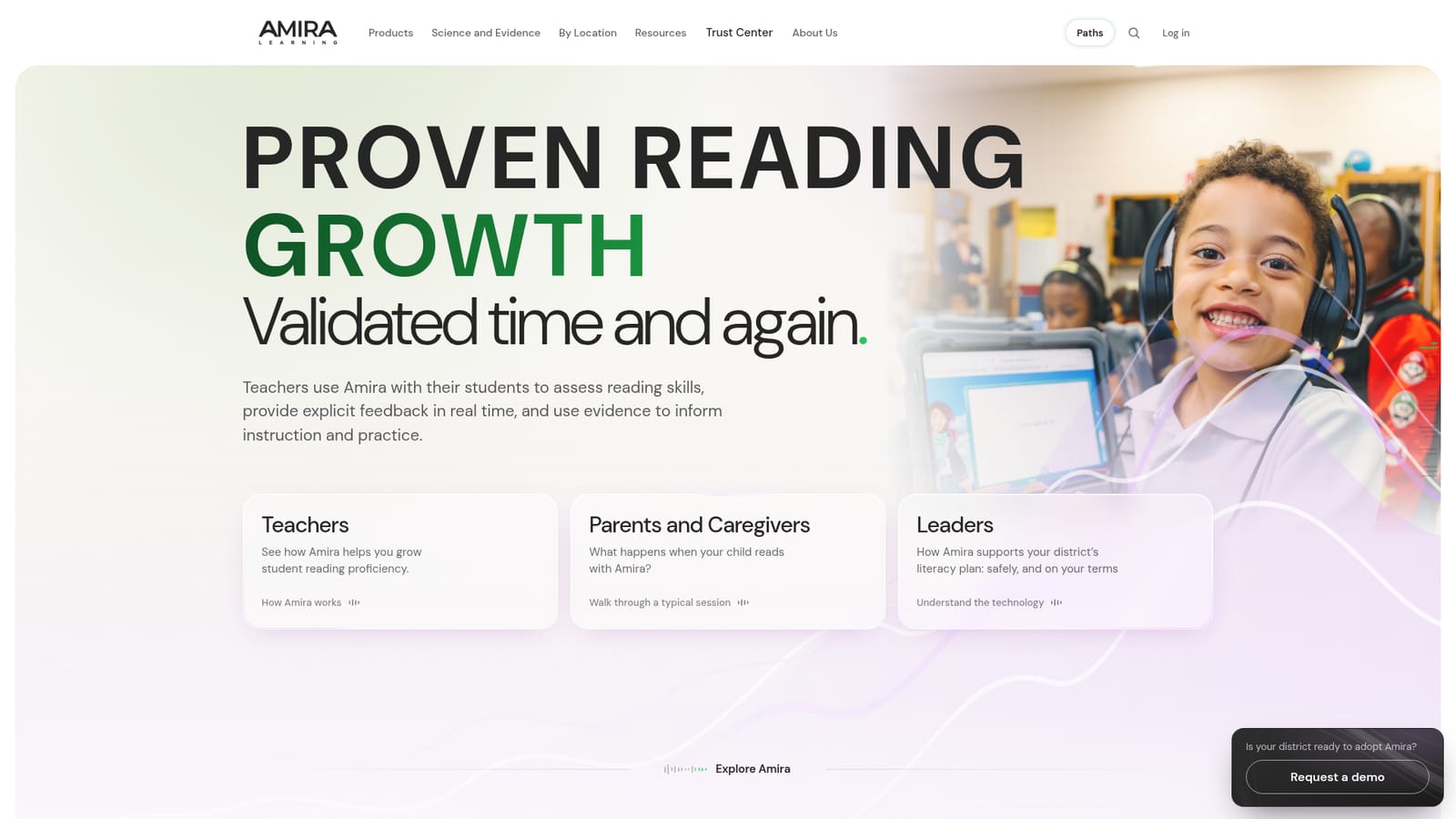
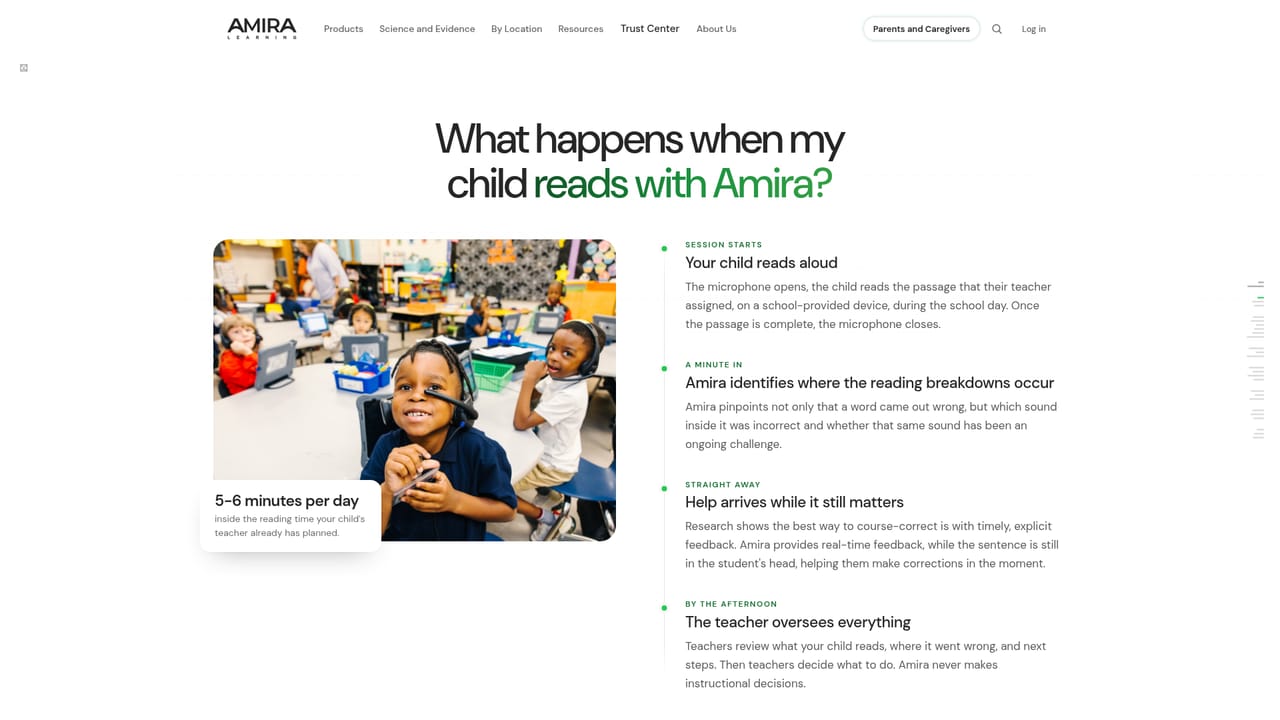
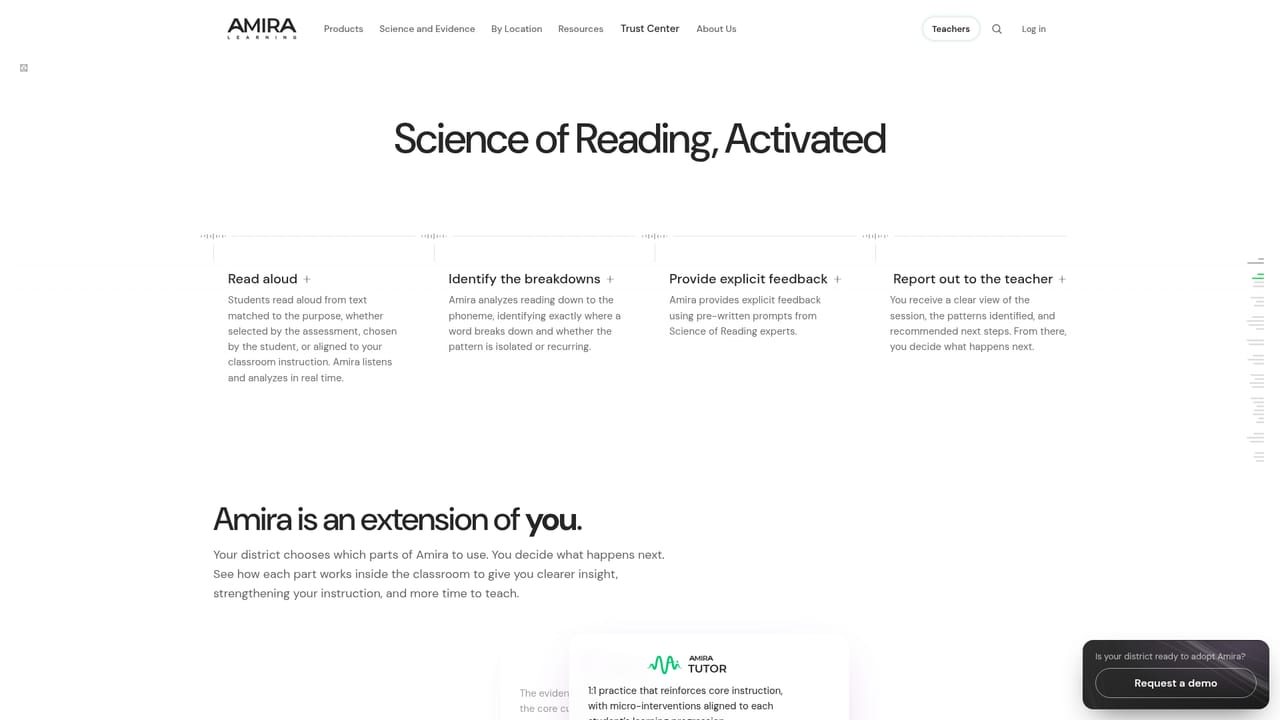
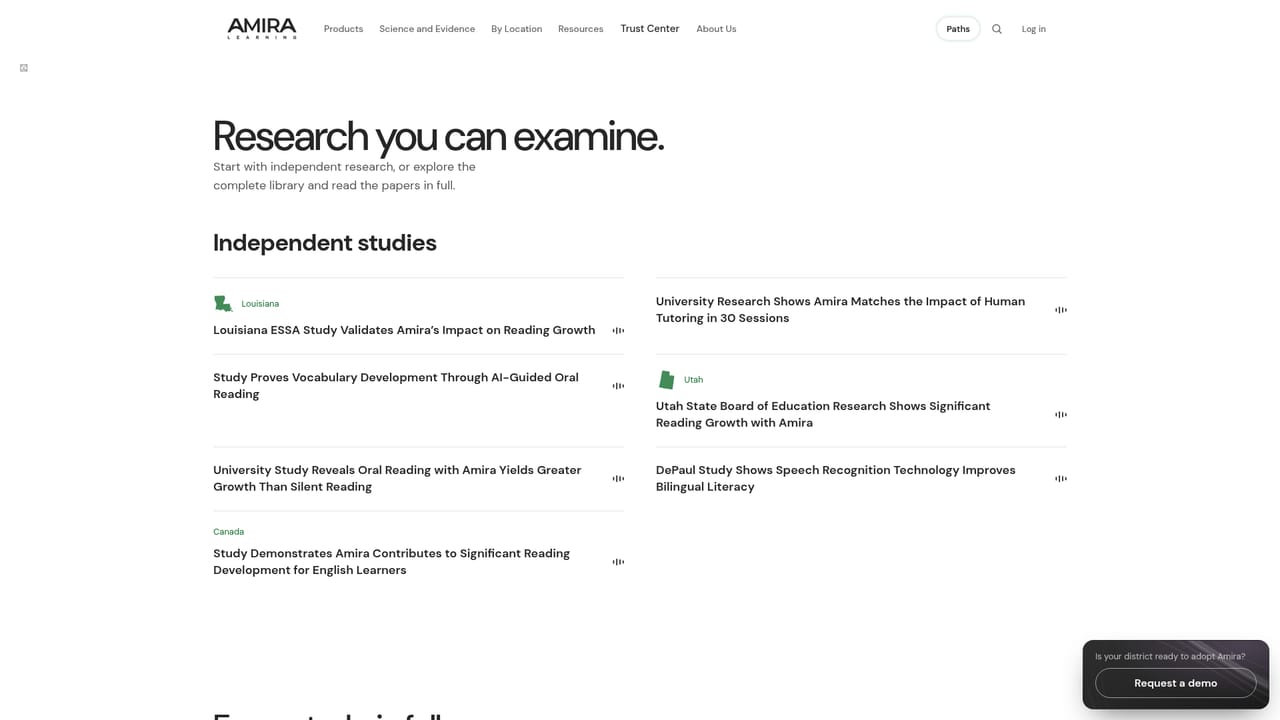
Amira is an AI reading assessment and tutoring system for K-12 literacy. It grew out of Project LISTEN at Carnegie Mellon University, a long running research effort built around a reading tutor that listened to children read aloud. In the classroom, students read passages aloud while Amira analyses their decoding: which words were read correctly, which were skipped or changed, and where the reader faltered. Teachers then use that evidence to shape instruction and practice. The product bundles three pieces into one literacy system: assessment, differentiated instruction aligned to a district's core curriculum, and individualized tutoring. The design is deliberately narrow. Amira listens for how a child reads the given words, not for meaning. It cannot hold a conversation, interpret comprehension, or monitor the room. Before a session the microphone is off, it activates only while the student reads, and it closes when the passage ends. No voiceprint or other biometric identifier is produced from a student's voice. By default audio recordings are not retained unless a district opts into retention, and the Trust Center documents the consent and privacy model in the publisher's own wording. The practical audience is school and district leadership, literacy coaches, and classroom teachers rather than individual families. Amira is adopted through districts, so a parent cannot simply sign up: the site routes caregivers to their school office. Leaders evaluating the platform get a body of independent evidence, with studies from Columbia University, Carnegie Mellon, the University of British Columbia, DePaul and state education agencies reporting growth measured in additional weeks versus control groups. Amira is positioned against human tutoring rather than against consumer reading apps, and one Columbia study reports comparable impact after 30 sessions. Alternatives split into two camps: human tutoring, which is costly and hard to scale, and general purpose AI chat tools, which can discuss a text but do not measure decoding. Amira sits in between as a measurement layer that keeps the educator in charge of the decision.
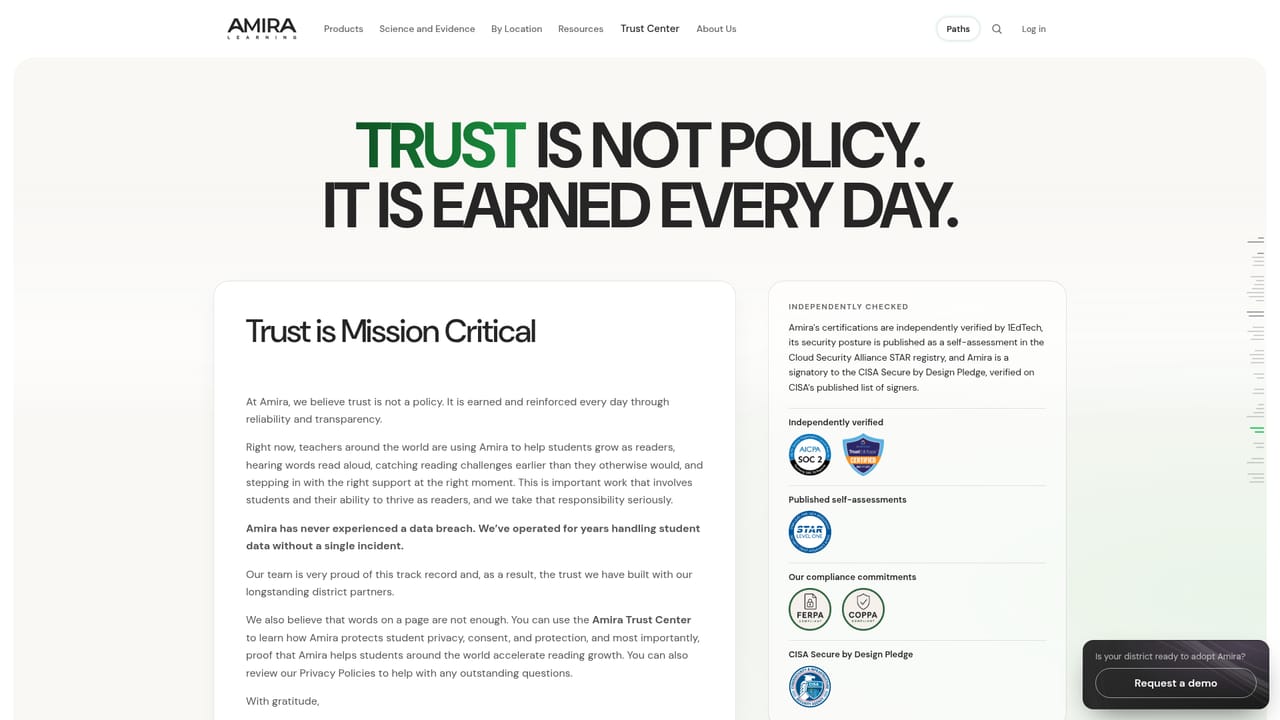
The Trust Center answers privacy, consent and data retention questions in published wording, and the demo form has a support or training option for existing districts.
Learn moreReading assessment that analyses decoding in real time, differentiated instruction aligned to a district's core curriculum, individualized tutoring, and a reading screener approved in 40+ states and top-rated by NCII. Audio is processed only during reading and is not retained by default, and no biometric identifier is created from a student's voice.
Learn more AI Angels400+ customizable AI girlfriends for NSFW chat, voice calls, and roleplay
 Candy AIExperience the future of companionship with AI friends who chat, role-play, and connect with you on a human level.
 ourdream.aiA vast AI roleplay platform with millions of characters for chat, images, video and voiceAI Angels400+ customizable AI girlfriends for NSFW chat, voice calls, and roleplayCandy AIExperience the future of companionship with AI friends who chat, role-play, and connect with you on a human level.ourdream.aiA vast AI roleplay platform with millions of characters for chat, images, video and voice


