APIMart is an API finder tool. A unified, OpenAI-compatible API gateway that gives developers one account, key and billing balance for 190+ chat, image and video models from OpenAI, Anthropic, Google, ByteDance and others, with health-aware routing and a shared console for logs and cost tracking.
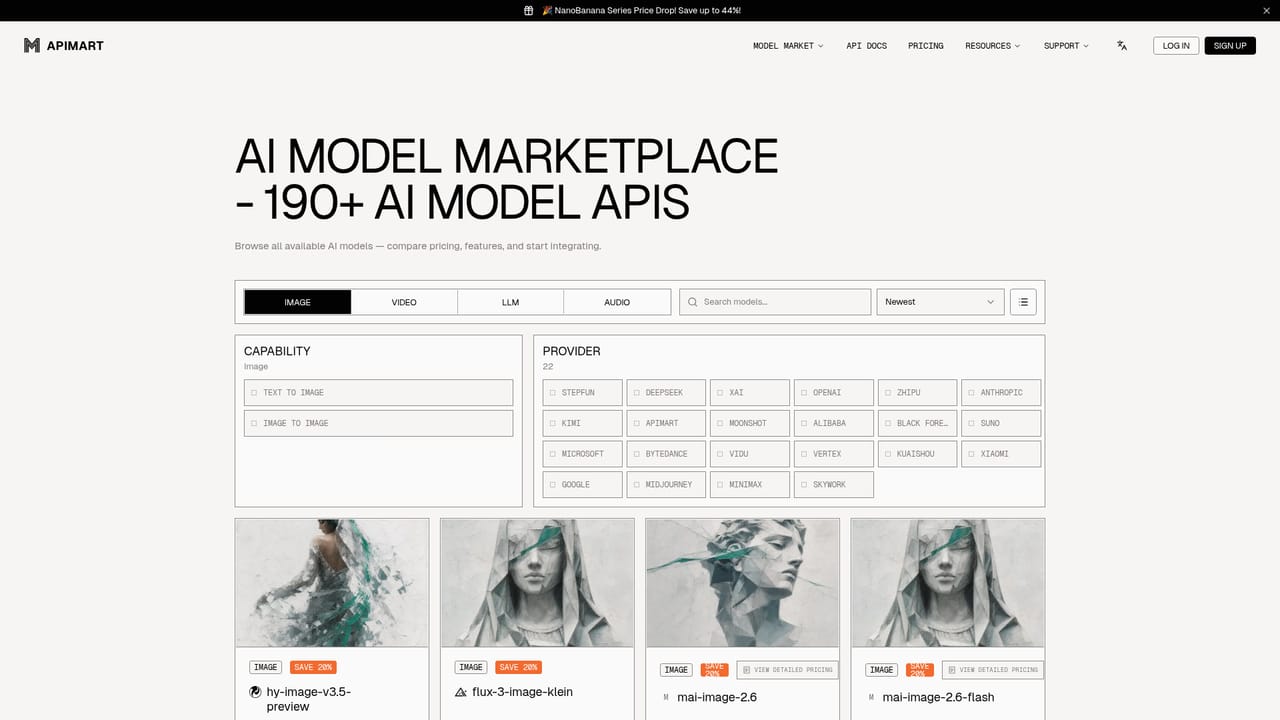
APIMart is an API gateway that places more than 190 AI models behind a single OpenAI-compatible endpoint. Instead of holding separate accounts with OpenAI, Anthropic, Google, ByteDance, Alibaba, MiniMax, xAI and Black Forest Labs, a team connects once and reaches chat, image, video and multimodal models through the same request format. Model families named on the site include Gemini, Claude, GPT-Image, Nano Banana, Seedream, FLUX 3, Veo, Kling, MiniMax H3, Wan 3.0 and Grok Imagine.
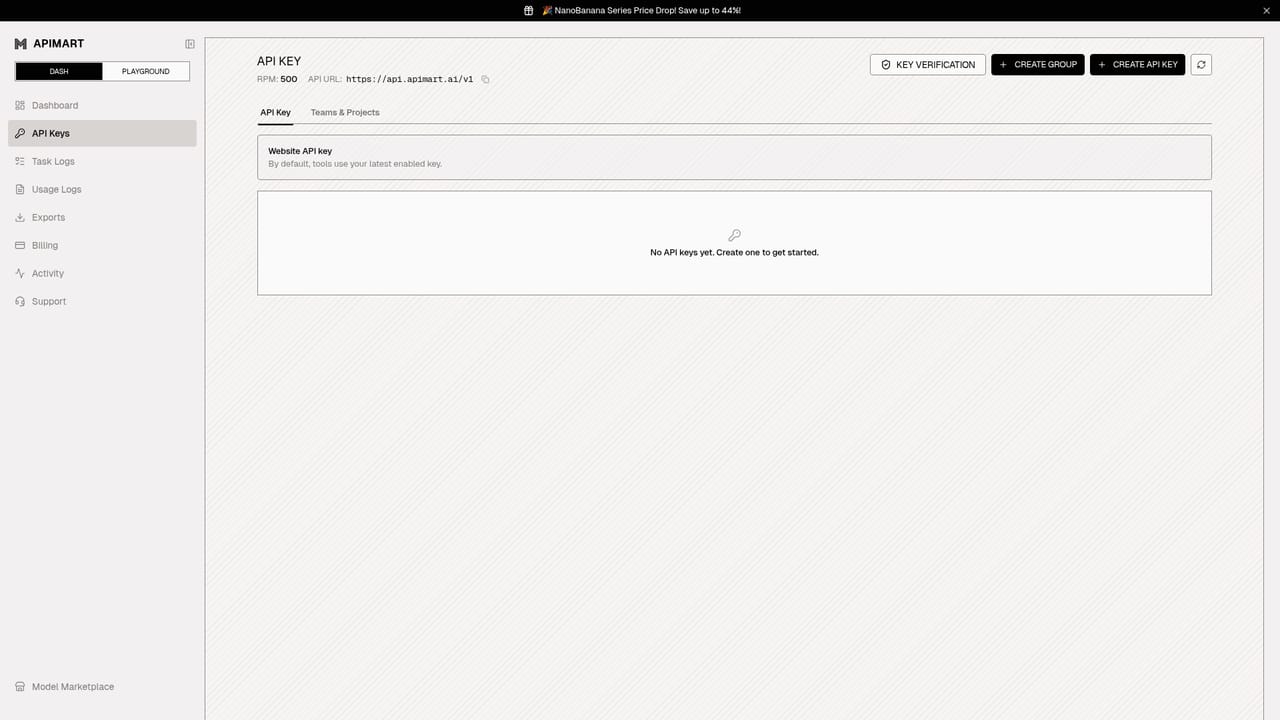
The product is aimed at developers and product teams who are shipping AI features and care about the cost and reliability of each call. Keys, credits, routing and logs live in one console, and credits are shared across model families so a balance is not stranded in a single vendor account. The gateway advertises health-aware routing across providers, which means a request can be sent to a working route when a vendor is degraded. Pricing on the model pages is quoted per image, per second of video, or per million tokens for chat, with a stated discount against official list prices and pay-only-for-successful-requests billing.
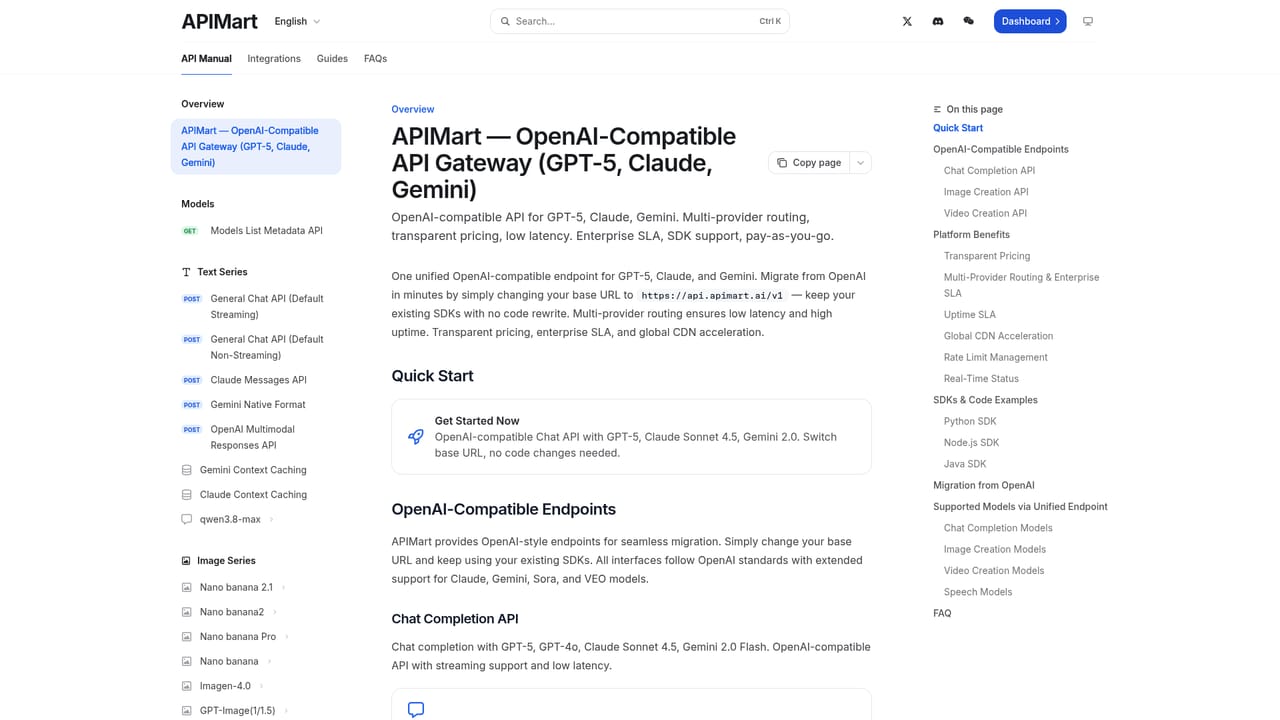
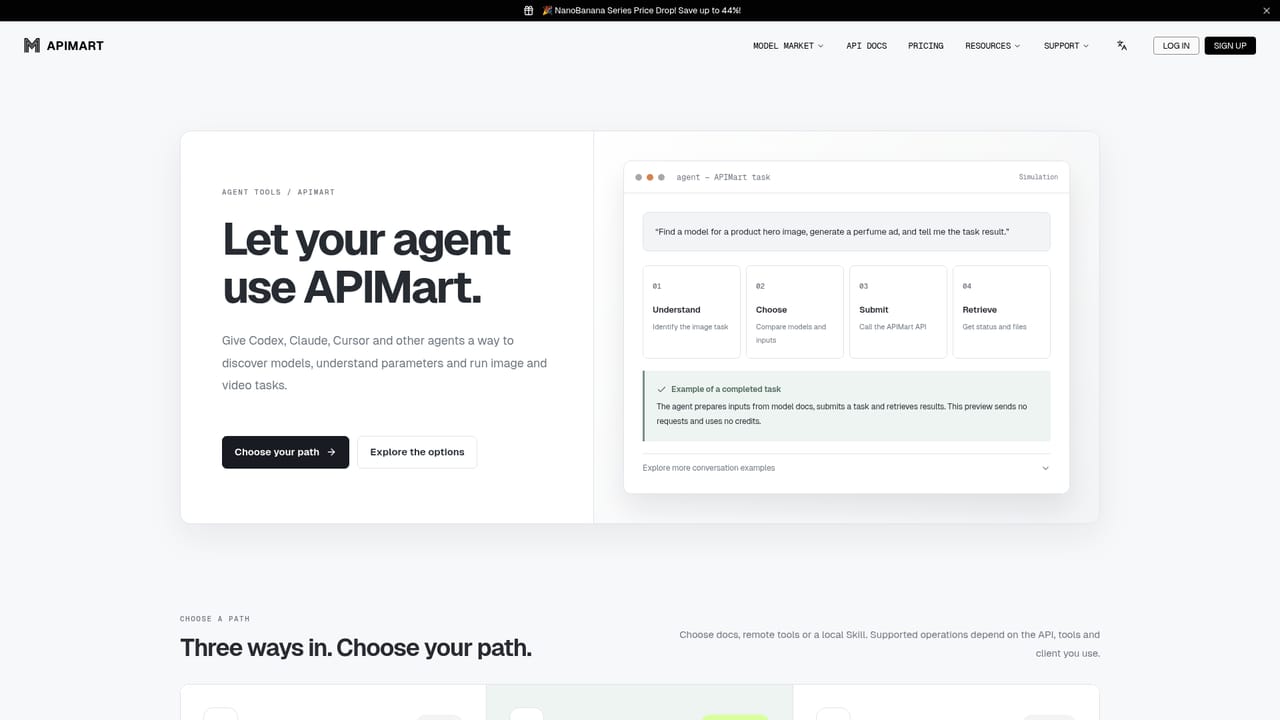
Adoption is deliberately low friction. Because the interface mirrors OpenAI, existing SDK code generally needs a base URL and key change rather than a rewrite, and a playground is available for testing image and video prompts before wiring anything up. APIMart also publishes an llms.txt index that can be pasted into coding agents such as Codex, Claude or Cursor, so an assistant can answer questions about endpoints and parameters on the developer's behalf.
Where it fits: this is infrastructure, not an end-user creative suite. It competes with going direct to each model vendor and with other aggregation gateways. The trade-off is familiar for any middle layer. You gain consolidation, one invoice and easier model swapping, and you accept dependence on an intermediary for uptime, pricing changes and access to the newest releases.