Support
Documentation and an API reference are published, and a demo booking link is available on the homepage for a direct walkthrough.
Learn moreThe record for every vehicle, decoded, priced and recall-checked.

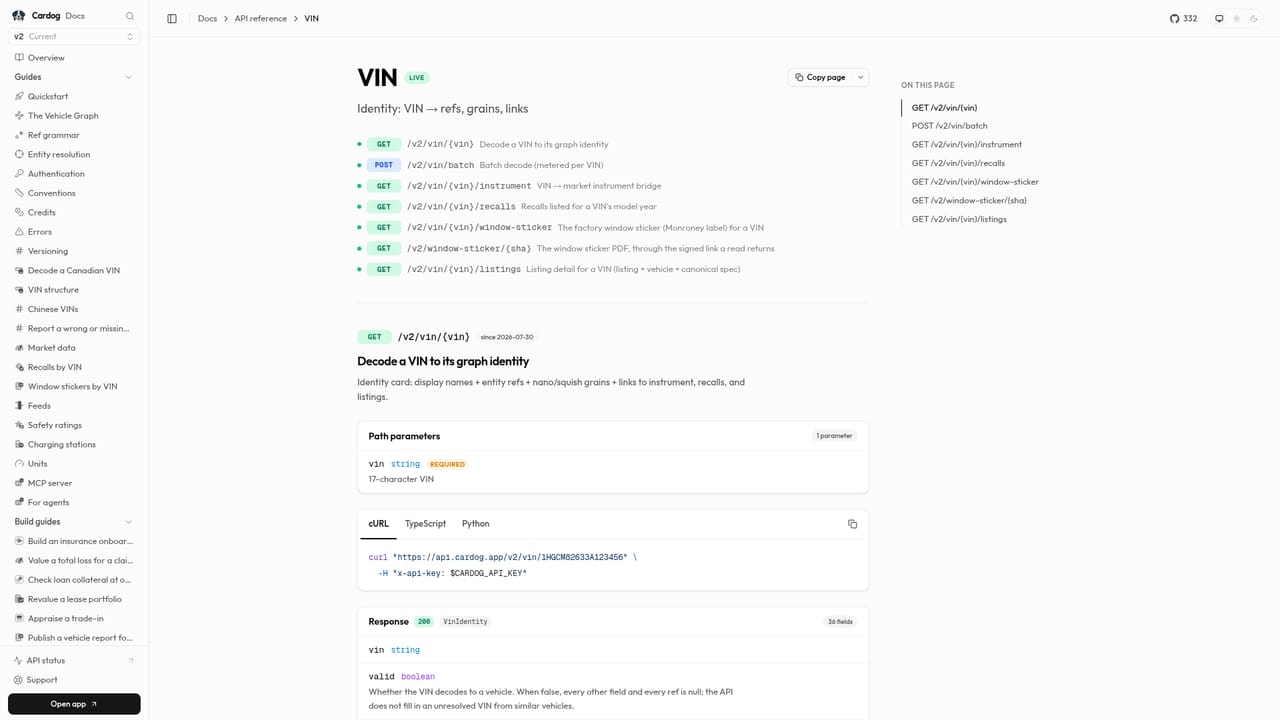
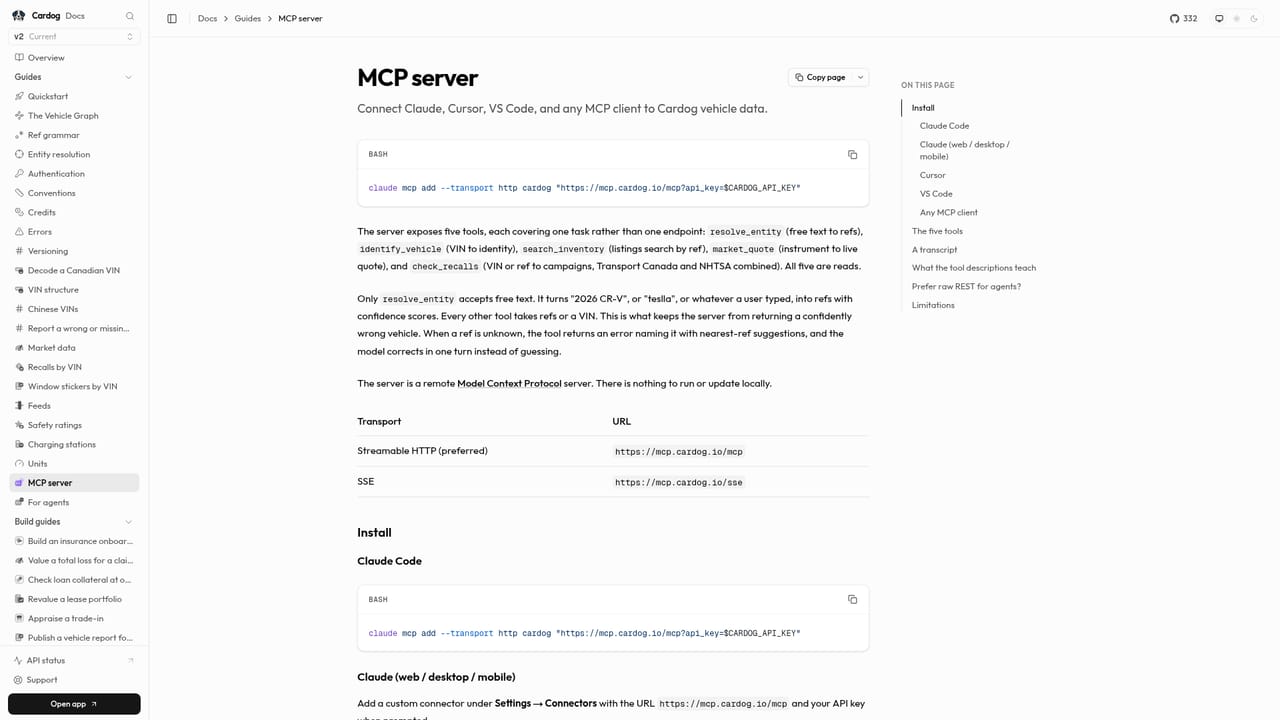
Cardog turns a VIN into a sourced vehicle record: decoded build, live market pricing and model year recalls, delivered through a REST API, SDKs, batch files, an MCP server for agents and embeddable widgets. Built for insurers, lenders, fleets, dealers and government desks.
Cardog is a vehicle data platform built around the VIN. Send seventeen characters and it returns the build of a specific car (year, make, model, trim, body, drive, engine and assembly plant), a market quote drawn from live listings, and the recall campaigns listed for that model year. Each field carries its source and the day it was read, and when no source covers a field the record says so rather than filling the gap with a guess. That transparency is the product's central design choice, and it shapes how the output reads in practice. The platform ships as seven products under one API key: identity (VIN decoding), market (median and middle half asking prices from listings seen in the last 30 days), recalls (Transport Canada and NHTSA campaigns joined to model years), files (batch VIN lists returned as filled rows), battery (state of health and cell group voltages read at the diagnostic port), an MCP server for agent tool calls, and embeddable widgets for dealer sites and vehicle pages. The demo scenarios show how the data lands on real screens: an insurance quote form, a registration counter, a loan collateral step, a fleet roster, a dealer trade desk and a manufacturer's trim breakdown. The tool is aimed at organisations that handle cars at scale rather than at individual shoppers. Insurance, government registries and customs, lending, fleet, dealer, and manufacturer desks each get a documented workflow. Developers reach it through REST with TypeScript and Python SDKs, spreadsheets can be uploaded as files and feeds, and agents call it over MCP. Among alternatives it sits closer to a data infrastructure layer than to a consumer car shopping app; the comparison is with building a VIN pipeline in house or stitching together separate decode, pricing and recall vendors.
Documentation and an API reference are published, and a demo booking link is available on the homepage for a direct walkthrough.
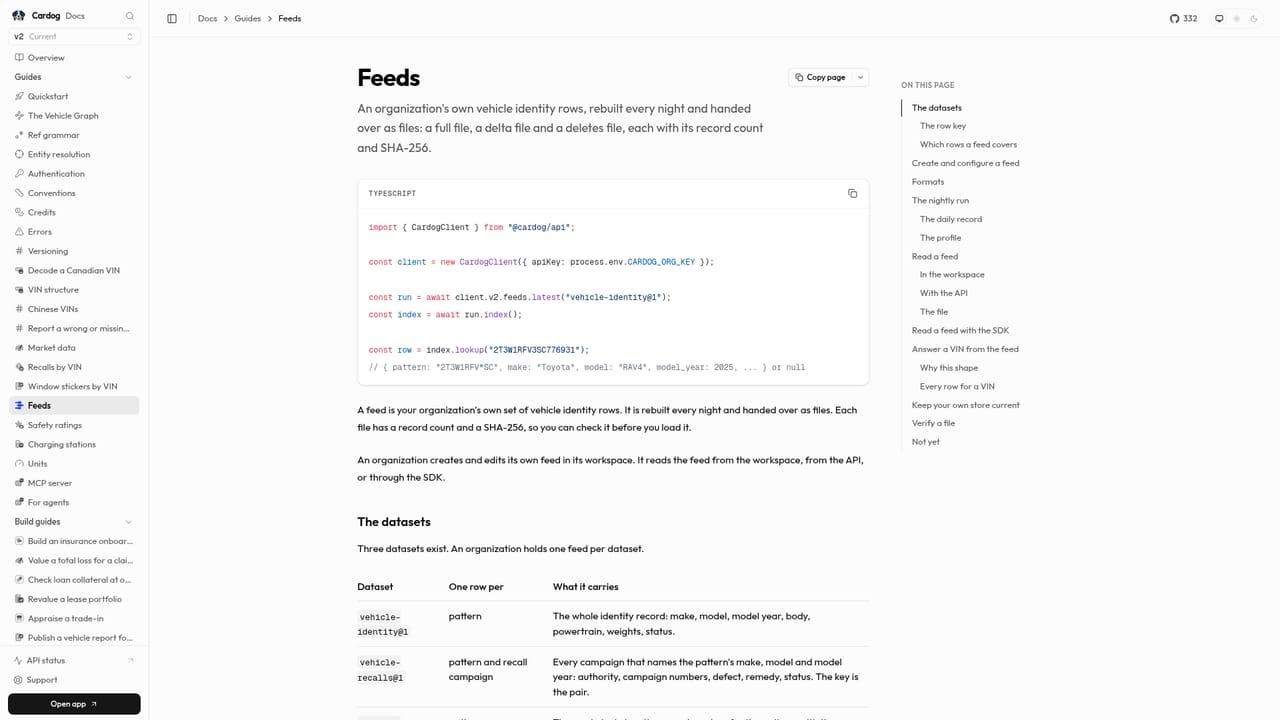
Learn moreOffers a REST API with TypeScript and Python SDKs, CSV and feed uploads for batch work, an MCP server for agent assistants, and embeds for dealer websites and vehicle pages.
Learn moreSeven products on one key: VIN identity with per field sourcing, market quotes (median, middle half, live count, as of date), Transport Canada and NHTSA recalls joined to model years, batch file fills, battery state of health with cell group voltages, an MCP server for agents, and embeddable listing cards and vehicle pages. Access runs through REST with TypeScript and Python SDKs.
Learn more AI Angels400+ customizable AI girlfriends for NSFW chat, voice calls, and roleplay
 Candy AIExperience the future of companionship with AI friends who chat, role-play, and connect with you on a human level.
 ourdream.aiA vast AI roleplay platform with millions of characters for chat, images, video and voiceAI Angels400+ customizable AI girlfriends for NSFW chat, voice calls, and roleplayCandy AIExperience the future of companionship with AI friends who chat, role-play, and connect with you on a human level.ourdream.aiA vast AI roleplay platform with millions of characters for chat, images, video and voice


