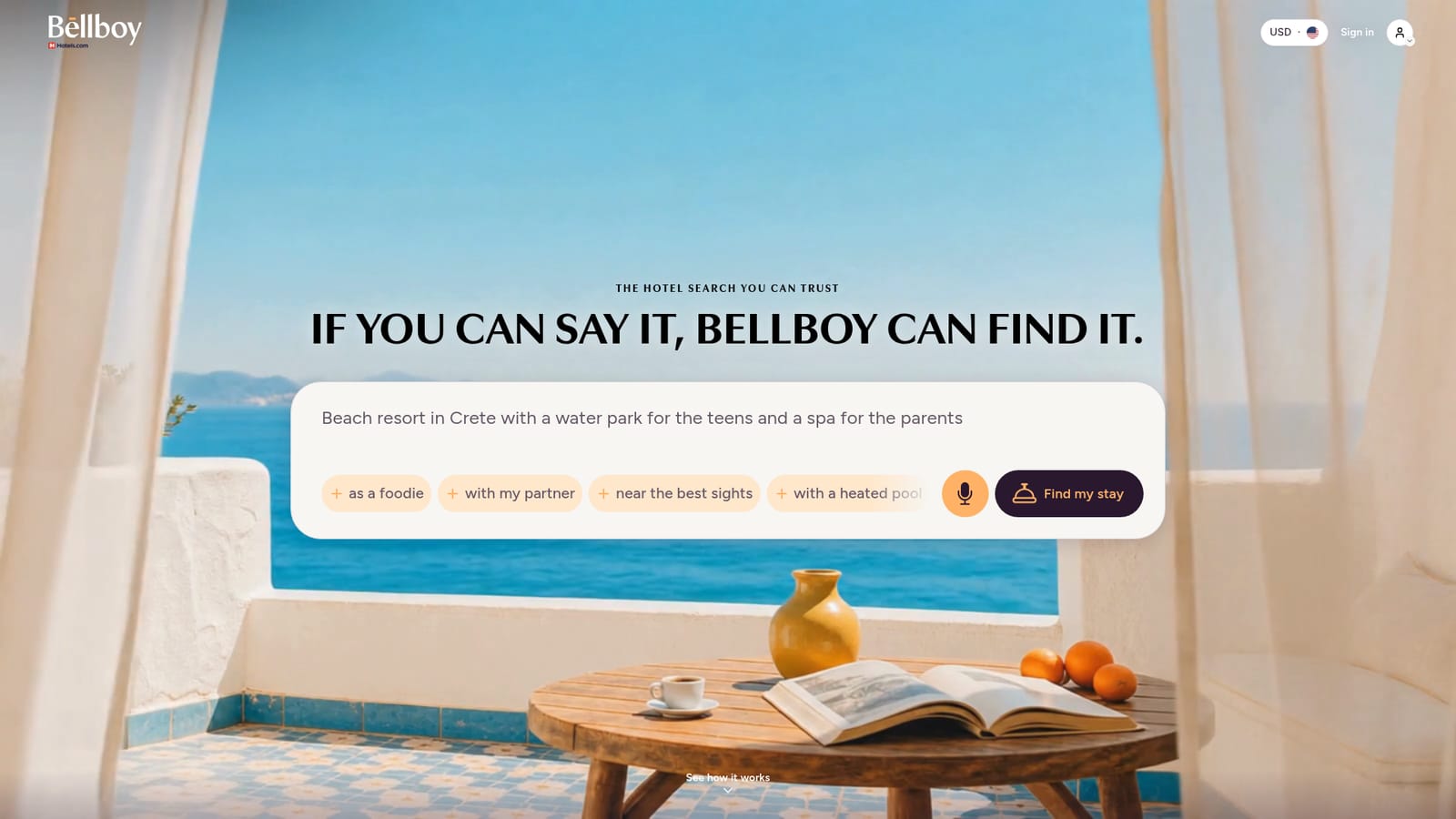
Bellboy is an AI hotel search that turns plain-language requests like "romantic Lisbon rooftop under €200" into real filters, then returns ranked stays with match scores, live prices and a short explanation of why each fits.
Bellboy is an AI-powered hotel search engine built around natural language. Instead of ticking filter boxes for star rating, neighbourhood and amenities, a traveller types or speaks a sentence such as "romantic Lisbon rooftop under €200" or "Grindelwald chalets for the mountain terrace because we don't ski". The system converts that wording into real search filters and returns stays that match the intent, with live prices shown alongside.
Each result is presented as a card with a percentage match score, a review rating and review count, the location within the destination, a short list of standout features, and practical details such as breakfast, half board or free cancellation. A notable element is the "Why it fits your search" line, which explains in a sentence why a specific property suits the request, for example pointing out that every room faces west for sunset. Room type, bed configuration, nightly rate and total price for the stay are listed directly on the card.
The product is aimed at leisure travellers who know the feeling they want from a trip but not the exact hotel, including couples, families travelling with parents, and people planning around a particular view, pool or atmosphere. Search can also be started by voice, as the interface includes a microphone input, and suggested phrases like "as a foodie", "with my partner" or "with a heated pool" help users phrase a first query.
According to the site, the recommendations draw on more than 3.6 million places to stay worldwide, over 500 million analysed guest reviews and more than 300 signals behind each suggestion. In the landscape of travel tools, Bellboy sits between traditional booking marketplaces that rely on filter panels and general chat assistants that can describe hotels but lack live inventory. Its focus is narrower: turning a loosely worded wish into a ranked shortlist with real availability and pricing, which makes it a research and discovery tool for the early, decision-heavy stage of trip planning.