What these tools do
Text conversation analysis tools take conversational text and turn it into a report. The input varies: a dating chat, a sales call transcript, a customer interview, a YouTube comment section, a survey answered in natural language. The output is usually a summary, a sentiment score, a topic breakdown or a set of next actions. These tools replace the manual reread and the spreadsheet where someone pastes quotes and counts them by hand. They suit sales teams reviewing calls, product researchers working through interviews, creators reading their comment sections and individuals trying to understand a personal exchange.
How to choose one
Start with the input format. Tools built for meeting audio will not ingest a YouTube comment thread, and a comment miner will not transcribe a call. Check whether the tool wants a pasted transcript, a file upload, a connected account or a live recording.
Then look at the output. Some tools return a general summary, others score sentiment and conversational balance, others link each claim back to the moment it was said. If the point is evidence (a quote you can replay), prioritize the tools that anchor claims to source clips.
Consider whether the conversation is real or simulated. Interview and survey tools work on conversations that happened; synthetic audience tools generate the conversation to begin with. Finally, weigh pricing against volume: freemium plans suit occasional analysis chat sessions, subscriptions make sense once you process conversations weekly.
Notable tools
ChatVisor reads dating texts and turns them into advice plus a suggested next move. Freemium with a subscription tier, web app.
TMate summarizes meetings into action items within minutes of the call ending. Subscription with a free trial, web app.
Mosaic AI Chat Analyzer produces reports on chats covering sentiment, conversational balance and compatibility. Freemium, web app.
Comment2Content mines YouTube comments with the goal of outlining the next video. Freemium and subscription tiers, web app.
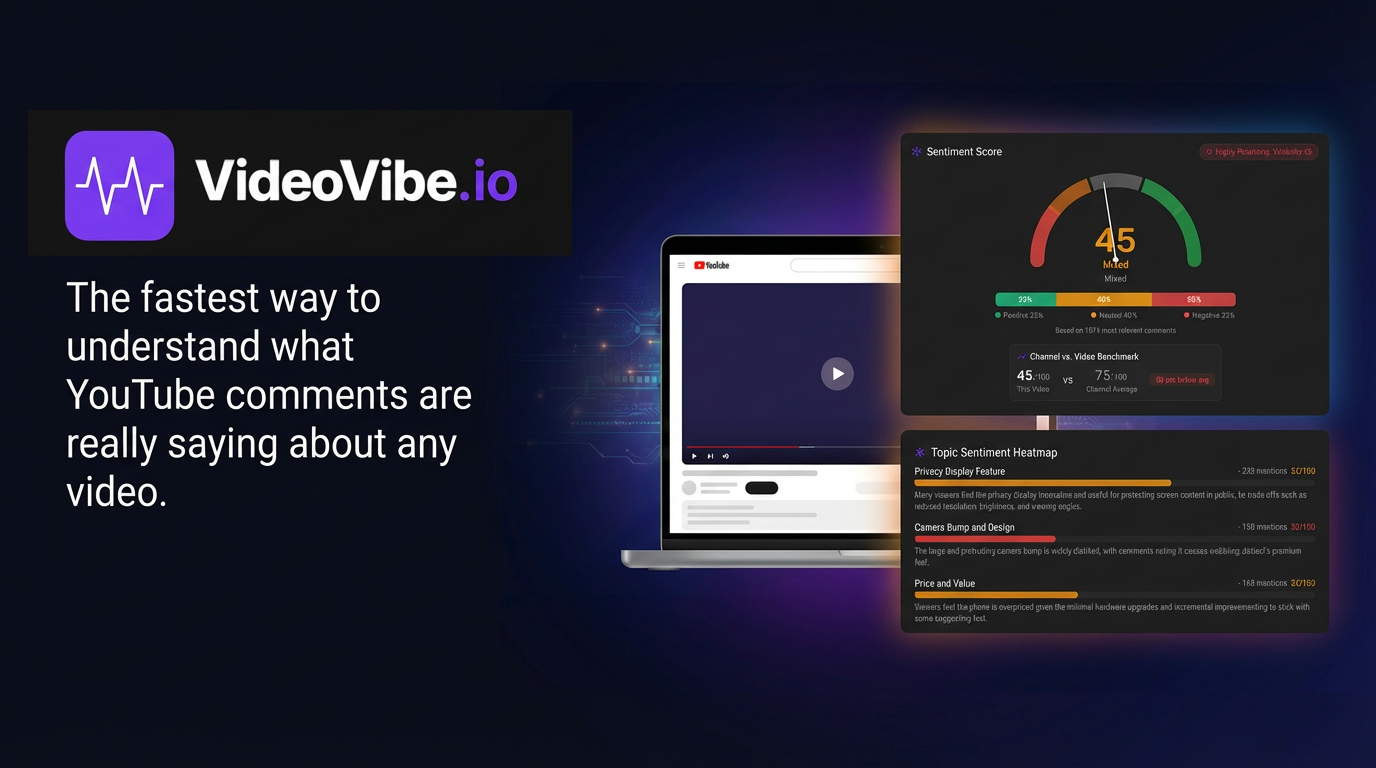
VideoVibe.io turns any YouTube comment section into a sentiment and topic report. Freemium and subscription tiers, web app.
User Evaluation runs AI-moderated customer interviews and ties every claim to its source clip. Freemium and paid plans, web app.
Common questions
What is text conversation analysis?
It is the practice of running conversational text through a tool that returns structure: sentiment, topics, balance, compatibility or action items. The source can be a one to one chat, a group thread, a meeting transcript or a public comment section. The value is speed and consistency, since a tool applies the same reading to every conversation instead of a fresh human impression each time.
How does analysis chat work in practice?
Most tools ask you to paste a transcript, upload a file or connect an account, then they return a report or let you ask follow up questions about the conversation. The better ones cite the specific line or clip behind each conclusion, which is what makes the output usable in a meeting or a research deck. Check what happens to the data after upload before you put anything sensitive in.
Can these tools handle more than one conversation at a time?
Yes, that is where the category earns its keep. Comment miners and interview tools are built for volume, grouping themes across many threads rather than reading one. Single chat analyzers tend to focus on depth for one exchange. Match the tool to whether your problem is one important conversation or a hundred ordinary ones.
When to look elsewhere
If your real question is about structure inside the data rather than meaning, look at Pattern Recognition. If you need to test how a market or audience responds before holding the conversation at all, Minds and Parliant.AI sit near election and audience simulation work, and Election Simulation covers that territory.