What these tools do
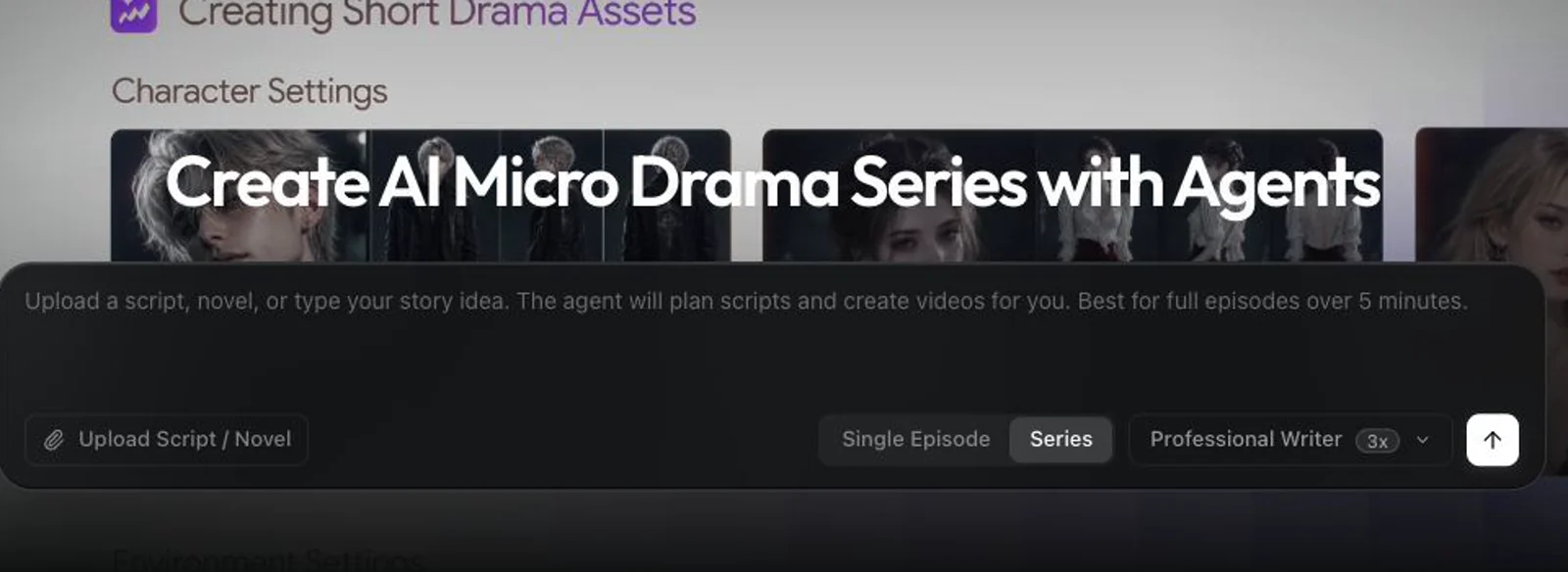
A TV show generator takes a premise, usually a sentence or a short brief, and moves it toward watchable video. Depending on the tool, that means drafting episode scripts, defining a cast, generating shots and assembling a cut. The work once split across a writers room, a camera crew and an editor is compressed into one interface.
The audience is broad. Writers use these tools to test whether a premise holds up across episodes. Producers and marketers use them to mock up a pilot or a sponsored series before committing budget. Independent creators use them to make serialized short video without hiring anyone. The output is a draft, not a broadcast-ready master, and the useful skill is knowing what to rewrite by hand.
How to choose one
The first question is whether the tool writes, shoots or both. If the goal is a scripted concept to pitch, a tool that emphasizes writing and structure matters more than footage quality. If the goal is finished video, judge the shooting and cutting pipeline instead.
Second, check how much control the tool exposes. A generator that fixes the cast from episode one helps continuity across a series. One that regenerates freely is better for one-off experiments. Look at whether you can edit an individual shot or scene without rebuilding the whole episode, because that granularity decides how much time fixing costs.
Third, weigh platform and price. Web apps suit fast drafts and collaboration. A Windows option makes sense if you want local files and long-form assembly. Free tiers let you test the look and pacing before paying, and paid tiers usually buy longer output, cleaner footage or commercial rights.
Fourth, match the length. A tool built for short serialized video is a poor fit for a 40 minute episode, and a film-oriented system may be overkill for a 30 second sketch.
Notable tools
PAI from Utopai Studios is a director-first AI system that takes film and series projects from script to finished footage. It suits people who want to stay in a directorial role while the system handles production steps.
Movie Maker Studio turns a written idea into a finished ad, show or film on your PC. The Windows option and local workflow appeal to creators who want files they control and longer assembled projects.
Scenes AI describes itself as an AI director that writes, casts, shoots and cuts serialized short video. It is the most natural starting point for episodic short content where continuity of cast and story matters.
Common questions
What is a tv show generator?
It is software that takes a premise and produces parts of a show, from script and cast through generated footage and an edited episode. The better tools keep a consistent cast and story across episodes rather than producing unrelated clips. Treat the result as a working draft to review.
Can a show generator replace a writers room?
Not for a finished production. These tools are strong at first drafts, structure and visual mockups, and they shorten the path from idea to something watchable. Character logic, pacing and jokes still need a human pass, especially across a full season.
What should I try first?
Start with a one page premise and a single episode. Test the free tier of one tool, check whether the cast stays consistent and whether you can edit one shot without rebuilding the episode. Then decide whether to pay or switch tools.
When to look elsewhere
If you already know the show and want something to watch, the TV Show Recommendation category under the same hub fits better. If the need is a specific clip rather than a whole episode, try Finding Movie Clips.