Free trial
Twilio offers a free trial for new accounts, typically with initial credits to test products. Specific trial terms for Conversational AI are not detailed on the homepage.
Learn moreUnify customer conversations across channels with persistent AI context
Own Conversational AI by Twilio? Verify ownership to get a dofollow link

Conversational AI by Twilio is an AI chat bot tool. Twilio Conversations provides building blocks for conversational AI that maintains context across voice, messaging, and chat. It connects AI and human agents with persistent memory, real-time intelligence, and low-latency voice relay, while allowing teams to bring their own LLMs and avoid vendor lock-in.
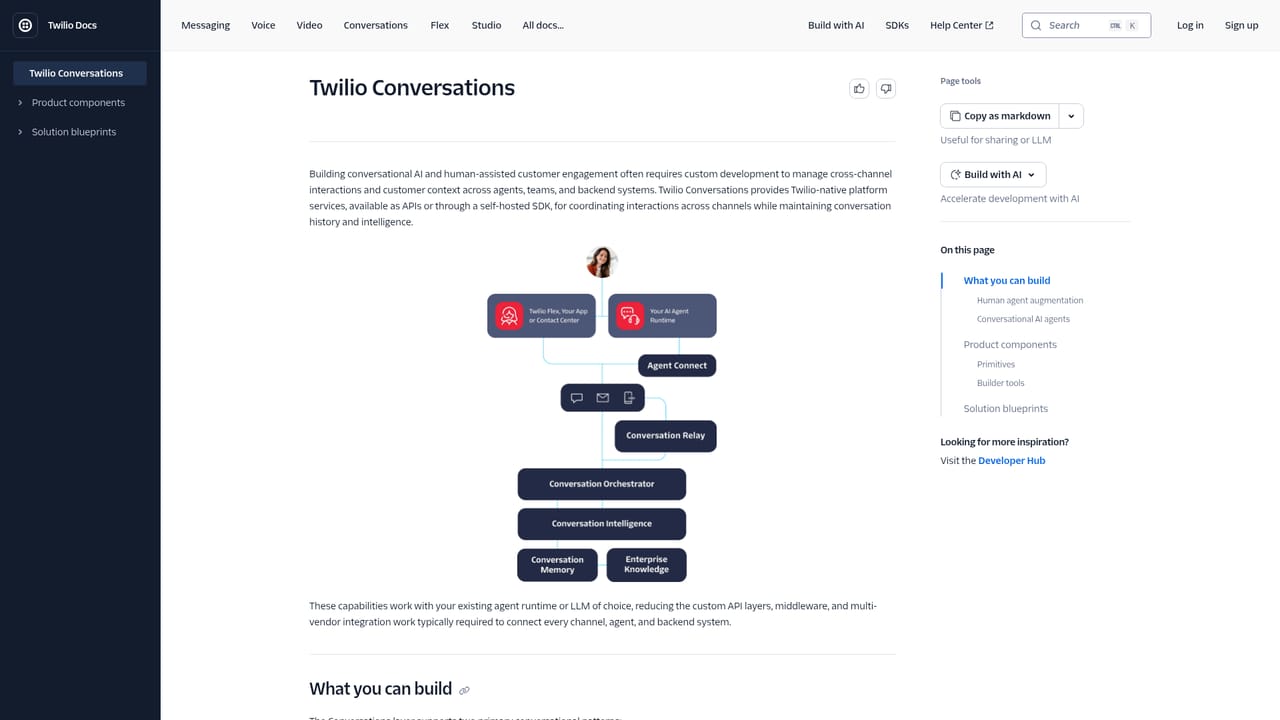
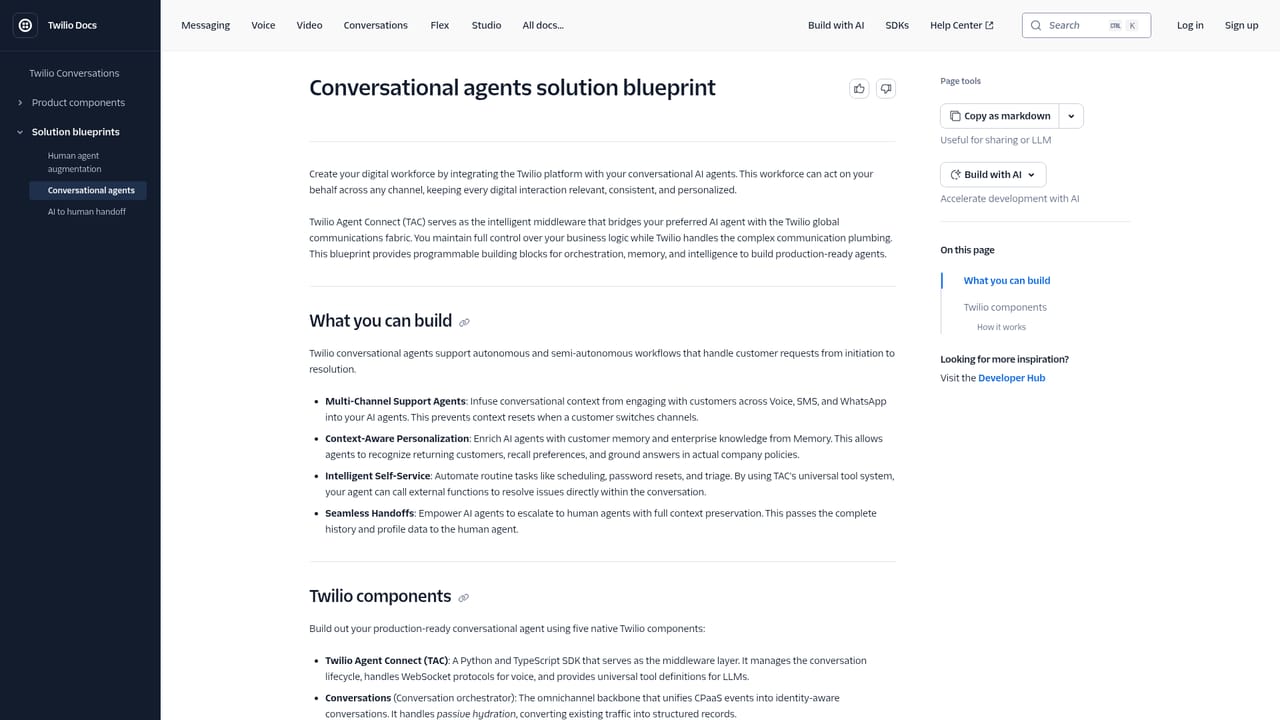
Twilio Conversations is a platform for building conversational AI that keeps context across every customer touchpoint. Instead of treating each text, chat, or call as an isolated event, it links them into a single thread tied to a resolved customer identity. The goal is to eliminate the repetition and frustration that come from disconnected systems, whether the interaction is handled by a human agent or an AI agent. The platform is built from several modular components. Conversation Orchestrator manages journeys across voice, SMS, WhatsApp, and chat, carrying context through handoffs. Conversation Memory stores a persistent customer profile so both AI and human agents have shared history in real time. Conversation Intelligence applies generative AI to analyze live conversations for intent, sentiment, and churn risk, enabling in-the-moment actions. Conversation Relay delivers low-latency voice AI with natural turn-taking and barge-in support. Agent Connect, an open-source SDK, bridges external AI agents (such as OpenAI, Bedrock, or LangChain) to Twilio channels without glue code. This toolset is aimed at development teams and customer experience architects who want to embed AI into existing contact center or engagement workflows without a full rebuild. It is AI-neutral by design, meaning teams can bring their own LLMs and integrate with their data, avoiding vendor lock-in. The platform supports both fully automated AI agents and human agent augmentation, where real-time summaries and next-best actions are surfaced during live interactions. In practice, a business might use Twilio Conversations to route an inbound SMS to an AI agent that can access past purchase history, then escalate to a human with full context if needed. Competing products often force a choice between rigid black-box solutions and DIY builds that lack unified context. Twilio positions itself as the connective layer that fuses interactions into continuous relationships, backed by its existing communications infrastructure and compliance posture.
Twilio offers a free trial for new accounts, typically with initial credits to test products. Specific trial terms for Conversational AI are not detailed on the homepage.
Learn moreSupport options are not specified on the homepage. Twilio provides help through sales contact and likely has documentation and support resources.
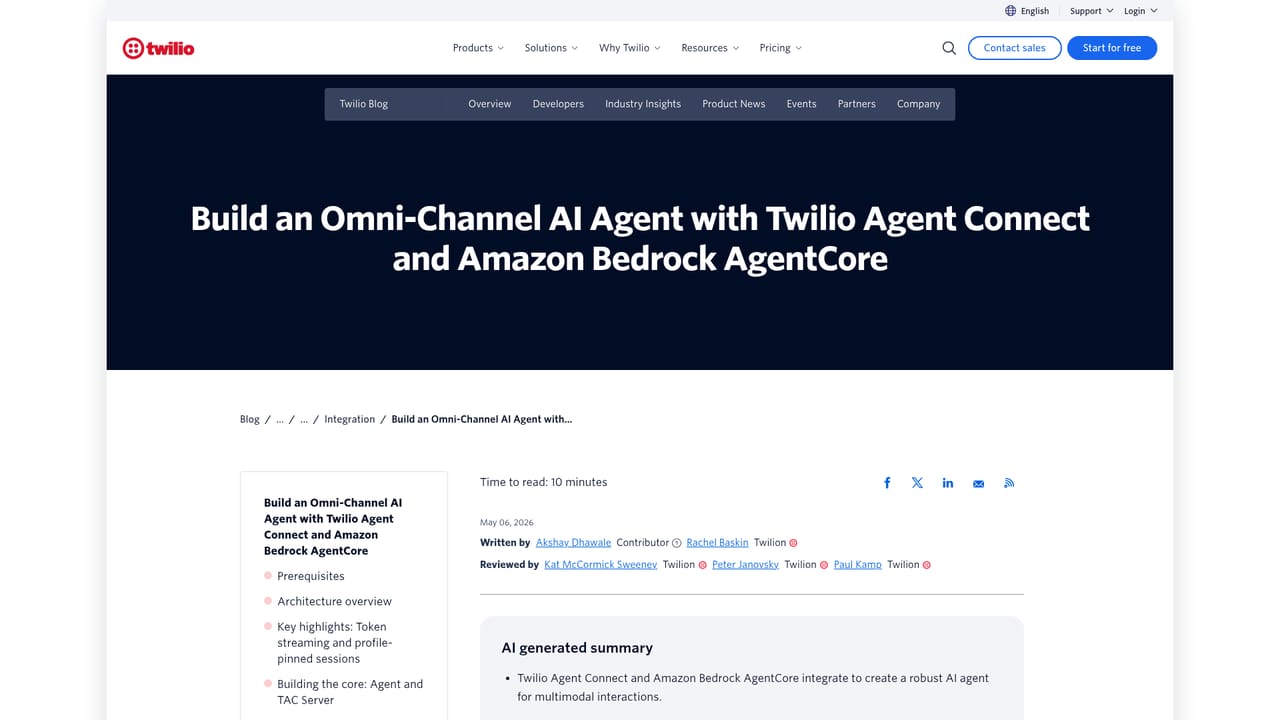
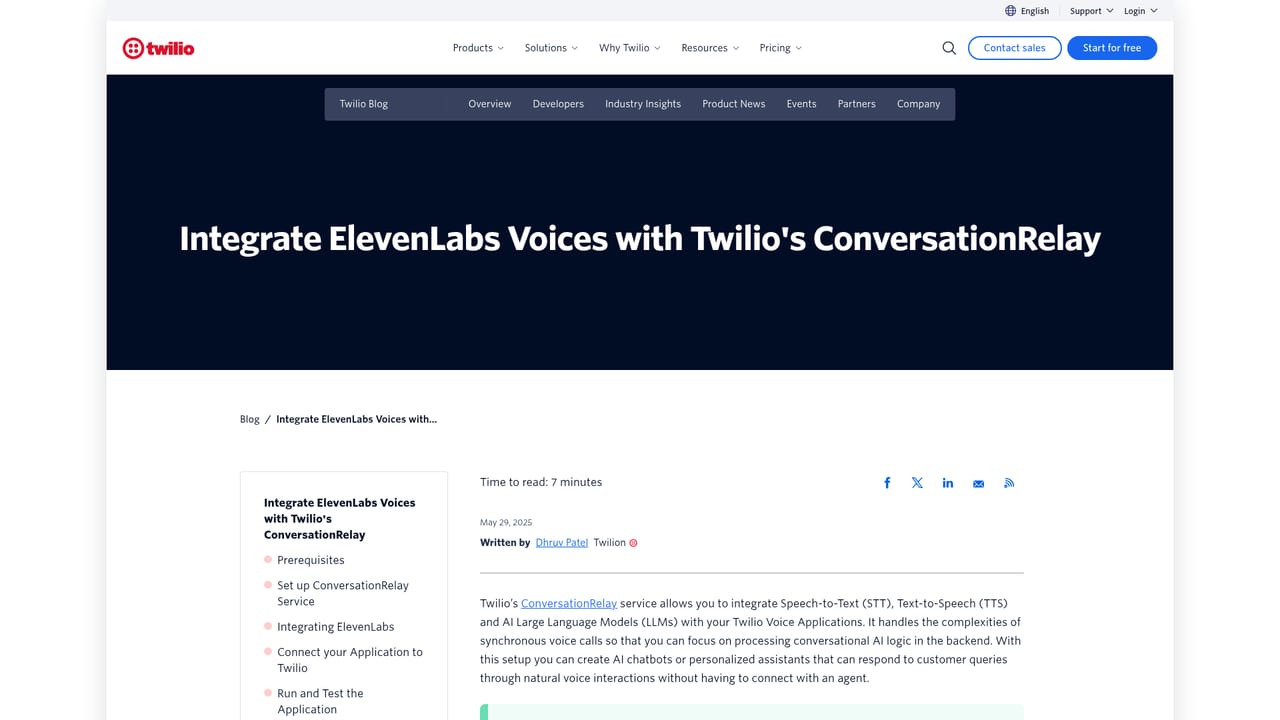
Learn moreIntegrates with AI providers such as AWS, Microsoft, OpenAI, Anthropic, Deepgram, and ElevenLabs. Agent Connect allows bringing your own AI agents and connecting them to Twilio Voice and Messaging without glue code.
Learn moreKey components include Conversation Orchestrator for cross-channel coordination, Conversation Memory for persistent customer context, Conversation Intelligence for real-time intent and sentiment analysis, Conversation Relay for low-latency voice AI, and Agent Connect for integrating external AI agents. The platform supports AI agents, human agent assist, intelligent self-service, and connected conversations.
Learn more AI Angels400+ customizable AI girlfriends for NSFW chat, voice calls, and roleplay
 Candy AIExperience the future of companionship with AI friends who chat, role-play, and connect with you on a human level.
 ourdream.aiA vast AI roleplay platform with millions of characters for chat, images, video and voiceAI Angels400+ customizable AI girlfriends for NSFW chat, voice calls, and roleplayCandy AIExperience the future of companionship with AI friends who chat, role-play, and connect with you on a human level.ourdream.aiA vast AI roleplay platform with millions of characters for chat, images, video and voice


