Support
Contact options, demo booking, and a working session where Faros is run against your own organization to identify the best models for your codebase.
Learn moreToken engineering that ties AI coding spend to shipped work

Faros is a token engineering platform that attributes AI coding spend to shipped commits and pull requests, routes each task to the best value model using evals built from your own code history, and enforces approved routes and budgets through a model router.
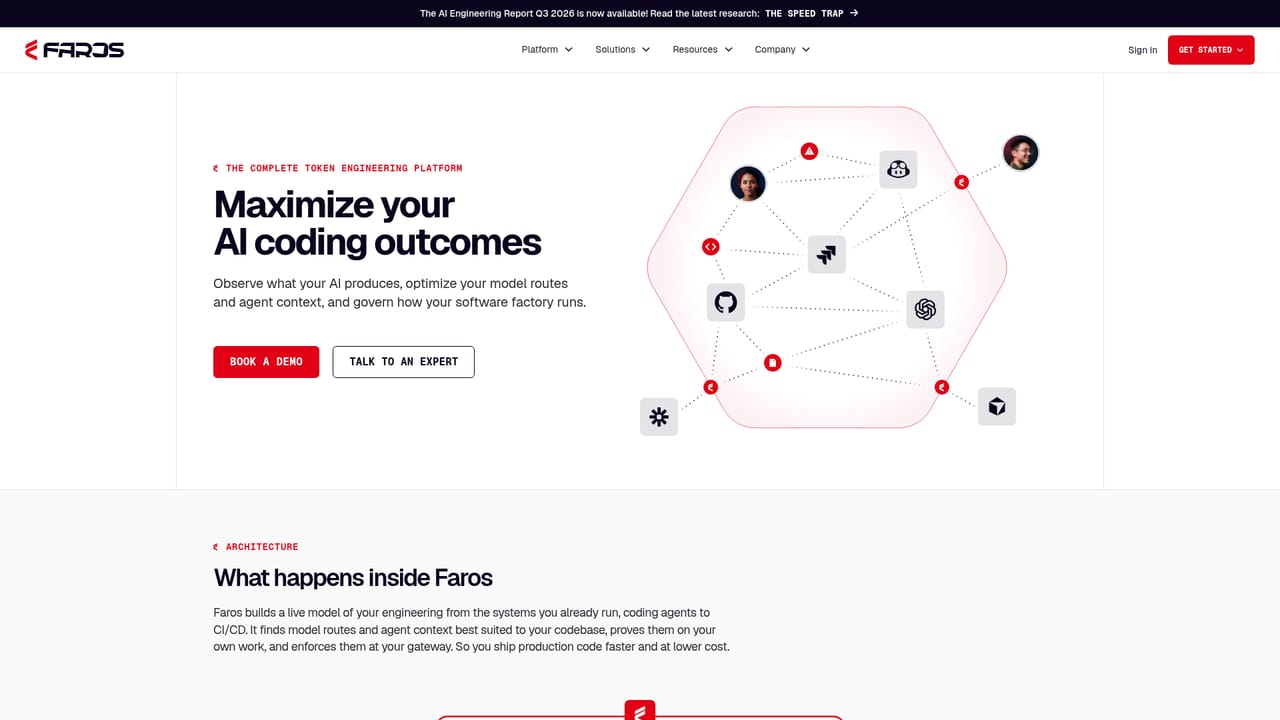
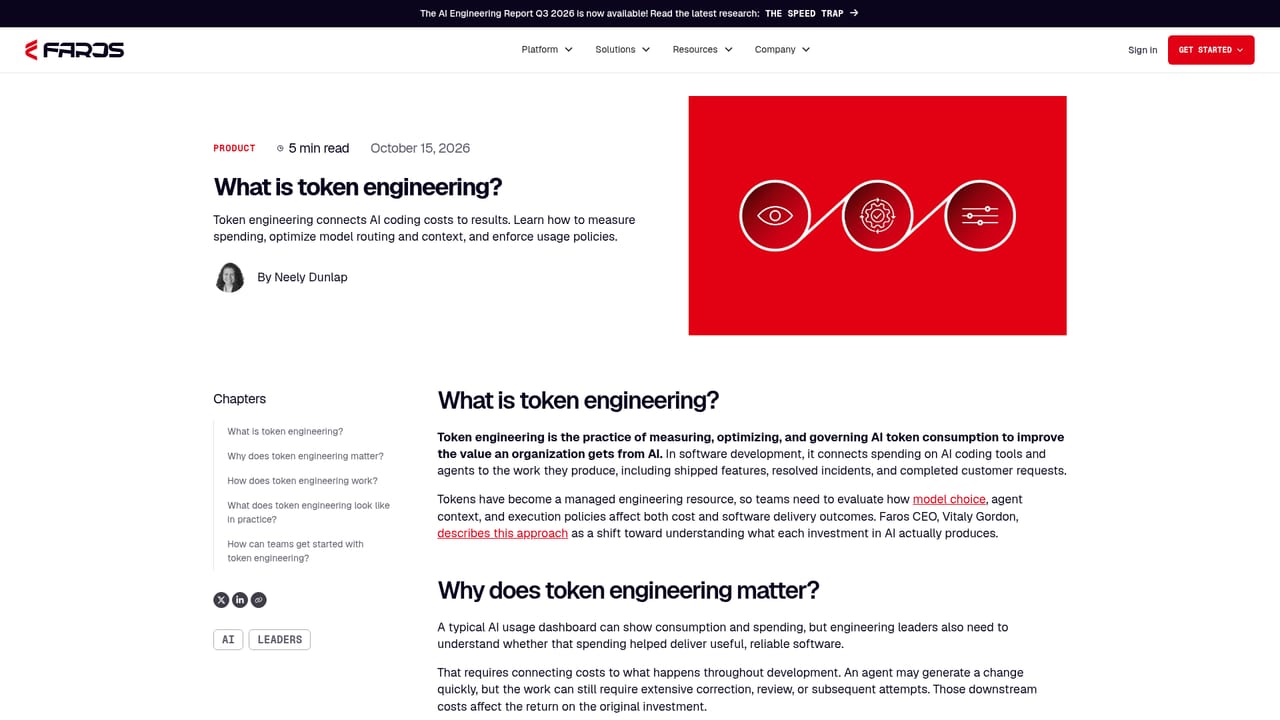
Faros is a token engineering platform for organizations running fleets of AI coding agents. Rather than treating model usage as an unmetered utility, it builds a live, reconciled model of how tokens move from a coding session through commits and pull requests to a verified outcome. Engineering leaders and platform teams use it to answer a question most AI budgets cannot: which of this spend actually shipped something. The system works in three connected layers. Observability joins agent sessions, commits, and pull requests into an engineering graph so token usage can be attributed to real work. Optimization runs a proprietary evaluation engine, called a time machine, that replays merged pull requests against alternative model routes mined from your own code history, showing which models deliver acceptable quality at a lower price for your specific tasks. Governance then enforces the approved routes, budget controls, and compliance policies through a model router, either the vendor's or one you already operate. In practice, a team connects its coding agents, harnesses, and engineering systems, then reviews where spend is going and where it is wasted on oversized models, retry loops, and work that never merges. The routing decisions are validated on the organization's own code rather than on generic benchmarks, and a policy layer keeps teams inside approved models and budgets with full audit trails. Faros also publishes research on the operational side of AI adoption, including a report on review gaps, QA bottlenecks, and rising incident volume as development accelerates. Faros competes less with coding assistants themselves and more with generic AI cost dashboards and observability suites. Its pitch is that per-token savings are misleading unless measured against verified engineering outcomes, and that routing policy should be derived from your codebase. That makes it a fit for engineering organizations large enough to have real AI spend, multiple teams, and a reason to prove return on it.
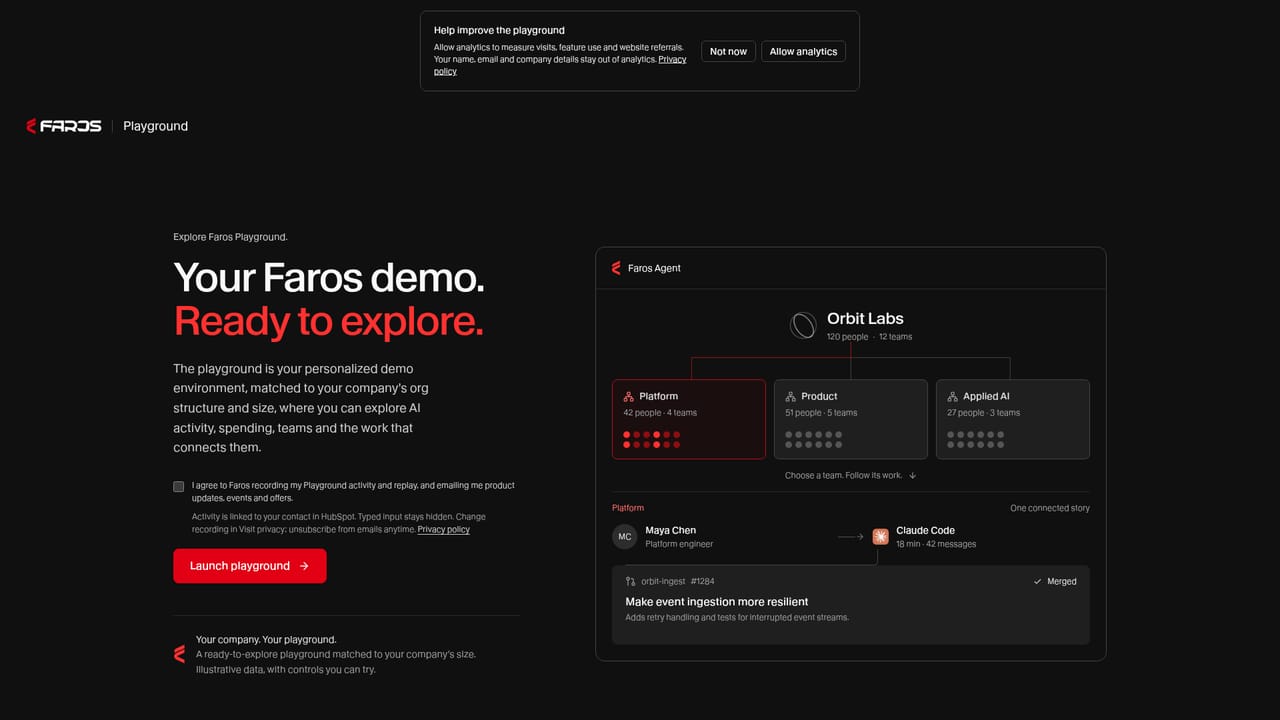
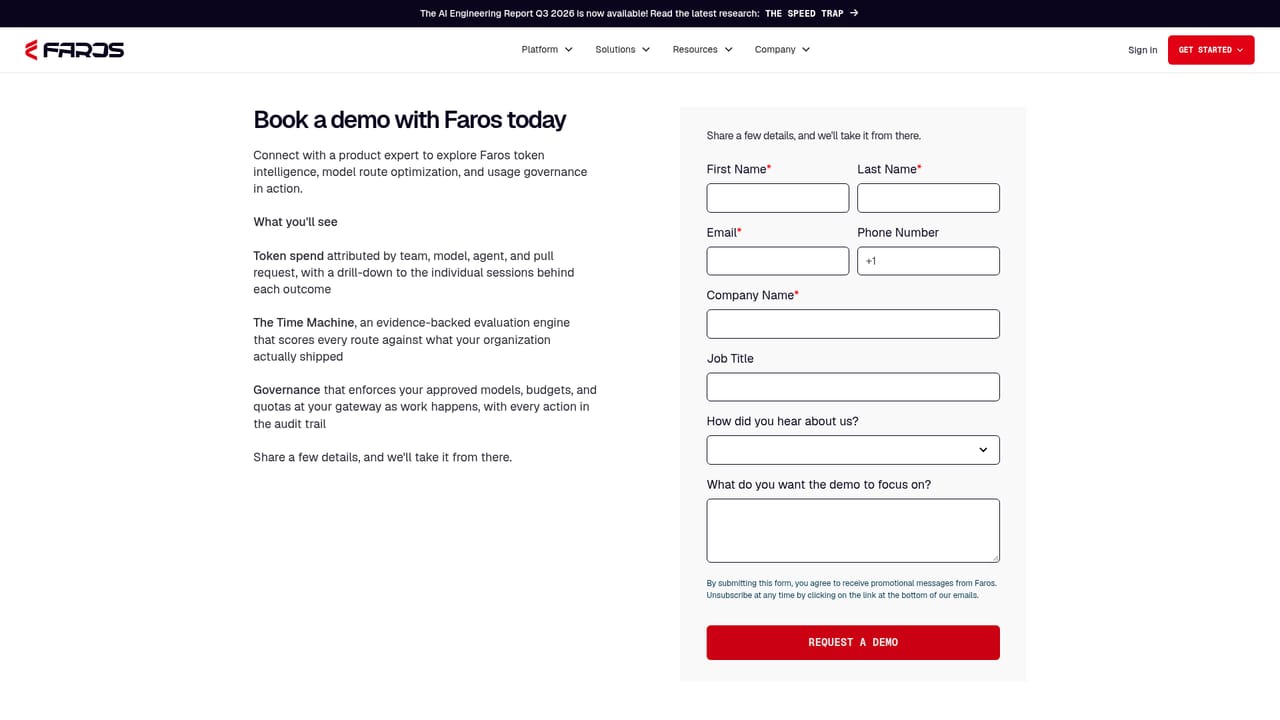
Contact options, demo booking, and a working session where Faros is run against your own organization to identify the best models for your codebase.
Learn moreFaros connects to AI coding agents, agent harnesses, and engineering systems, and can enforce policy through either its own model router or an existing one.
Three layers in one system: observability that joins agent sessions, commits, and pull requests into a live engineering graph; optimization that replays merged pull requests to find model routes with the best price and performance for your code; and governance that enforces approved routes, budget controls, and compliance policies through a model router, alongside token waste, velocity, churn, and audit reporting.
Learn more AI Angels400+ customizable AI girlfriends for NSFW chat, voice calls, and roleplay
 Candy AIExperience the future of companionship with AI friends who chat, role-play, and connect with you on a human level.
 ourdream.aiA vast AI roleplay platform with millions of characters for chat, images, video and voiceAI Angels400+ customizable AI girlfriends for NSFW chat, voice calls, and roleplayCandy AIExperience the future of companionship with AI friends who chat, role-play, and connect with you on a human level.ourdream.aiA vast AI roleplay platform with millions of characters for chat, images, video and voice


