Free trial
Free accounts include 1,000 credits per month with no card required, enough to test prompts, code execution, live view and persistent profiles.
Learn moreA live browser your agent can log into, click through, and extract from
Own Firecrawl Interact? Verify ownership to get a dofollow link

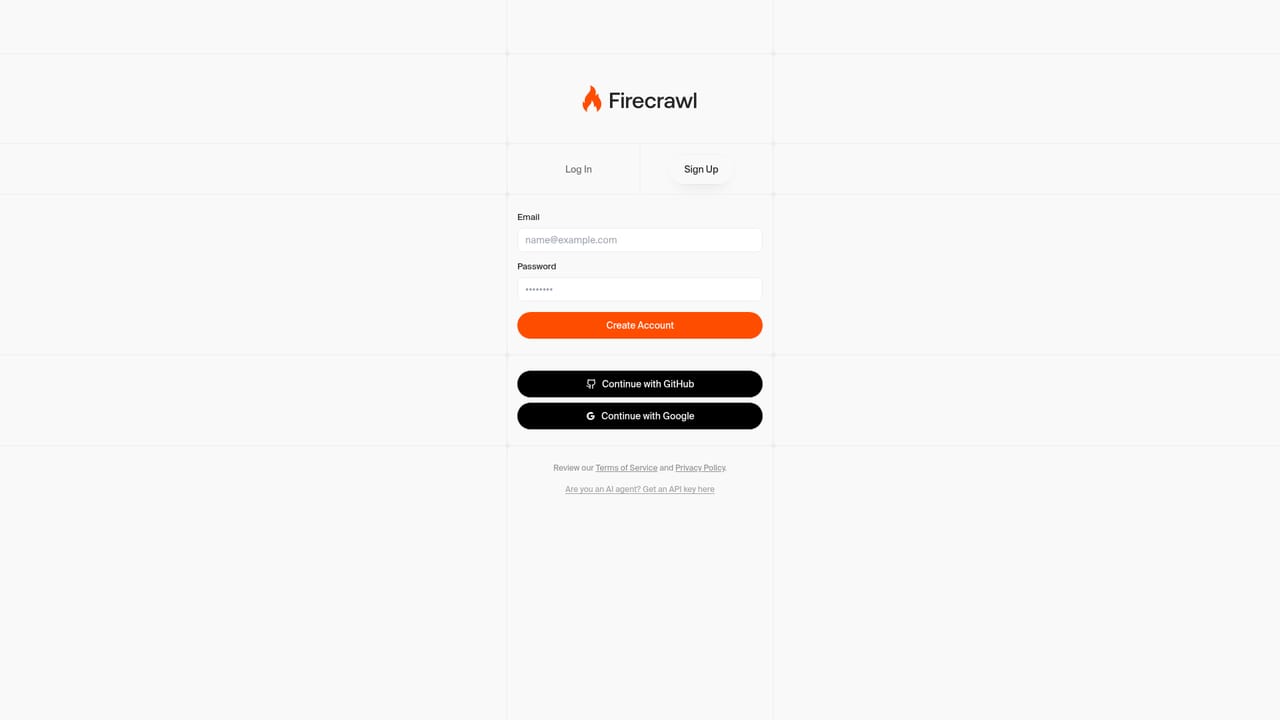
Firecrawl Interact is an AI search tool. Firecrawl Interact gives AI agents a persistent live browser: log in, click, type, scroll and extract gated content using plain English prompts or Playwright code, with saved auth profiles, a watchable live view and a CDP endpoint for your own tooling.
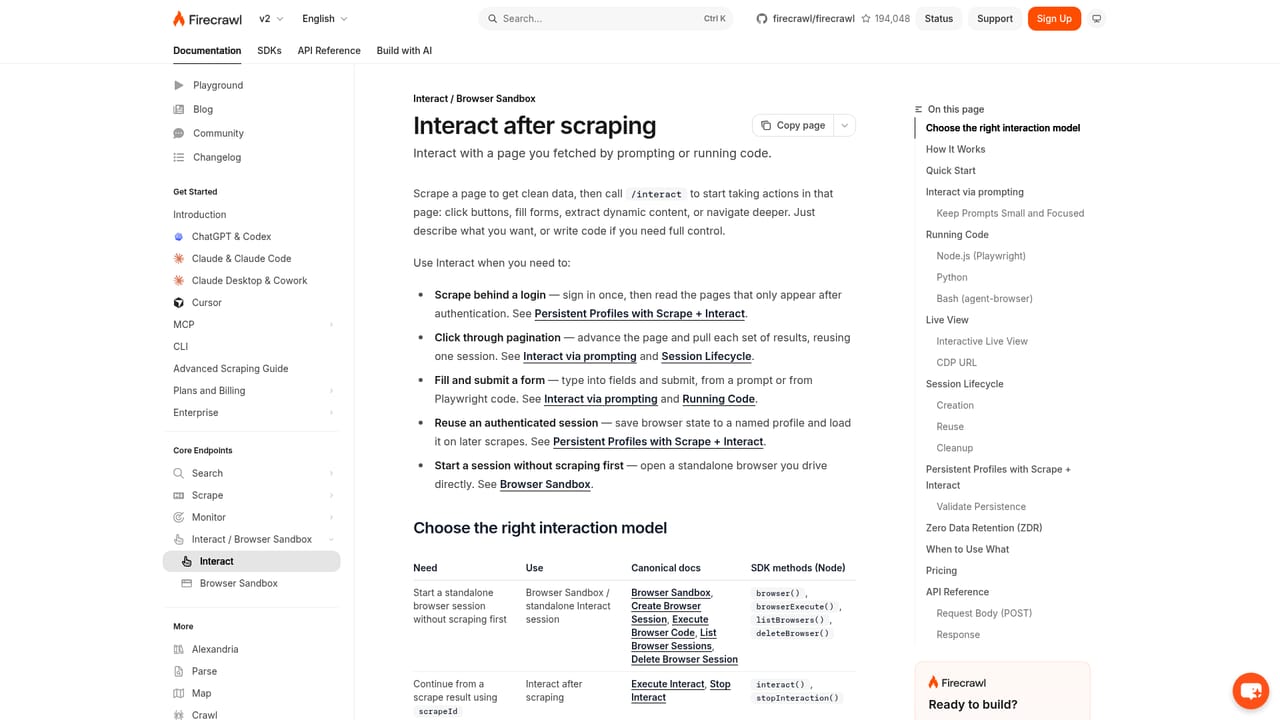
Firecrawl Interact is the browser automation layer of the Firecrawl web data platform. Where the standard scrape endpoint reads a page and returns markdown or structured data in a single call, Interact keeps an actual Chrome session running so an agent can log in, fill fields, click, scroll, paginate, and pull content that only appears after the page has been acted on. Any existing scrape job can be promoted into a live session using its job ID. Control happens two ways. A prompt in plain English tells the session what to do, with no selectors to write, which suits exploratory flows and agents that decide their next step at runtime. When a task needs to run identically every time, you can pass Playwright code in Node or Python, or agent-browser commands in Bash, against the same session. Sessions are stateful between calls, and cookies, localStorage and session data can be stored to a named profile so a login is paid once rather than on every run. Each session exposes a stream URL, with both a read-only liveViewUrl and an interactive liveViewUrl, so a human can watch or take over for login steps. A raw Chrome DevTools Protocol URL lets teams attach Playwright, Puppeteer or any CDP client. The tool targets engineering teams building agents that reach gated dashboards, customer portals, and multi-step checkout or search flows. Firecrawl publishes integration stories with Lovable, Zapier, Replit and Gamma, and ships MCP, CLI and skill-based onboarding for Claude Code, Cursor, Windsurf and similar harnesses. Against general browser agents it is narrower but more controllable: persistent auth, code execution and a live view are first-class. Sessions expire after 10 minutes total or 5 minutes idle, so workflows must be stopped deliberately.
Free accounts include 1,000 credits per month with no card required, enough to test prompts, code execution, live view and persistent profiles.
Learn moreInteract bills 2 credits per session minute, prorated by the second, or 7 credits per session minute for prompt-based actions; the underlying scrape is 1 credit. Plans run from a free 1,000-credit tier to Hobby at $16/month, Standard at $83/month, Growth at $333/month and Scale at $599/month, billed yearly, plus custom Enterprise.
Learn moreSupport tiers scale with the plan: basic support on Hobby, standard on Standard, priority on Growth and Scale, and dedicated support with an SLA plus SSO and advanced security on Enterprise.
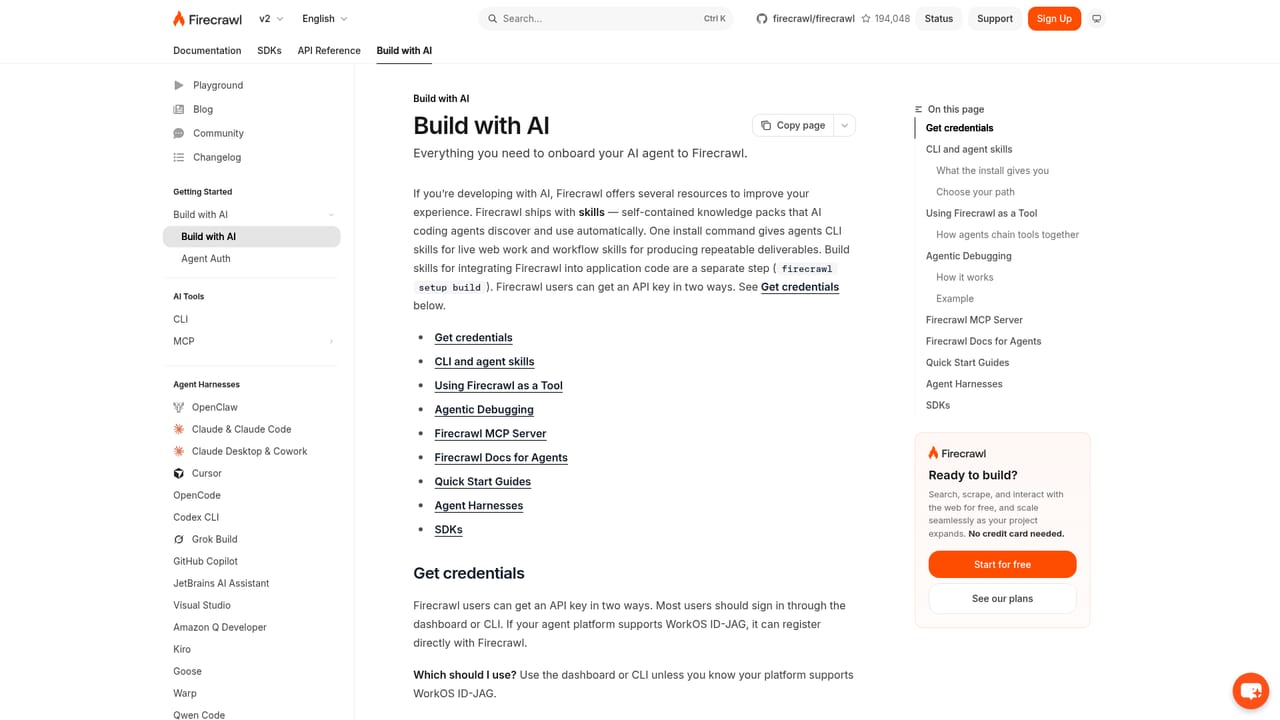
Learn moreOnboarding is available through MCP, CLI and skills for harnesses such as Claude Code, Cursor and Windsurf, plus a raw CDP URL for Playwright, Puppeteer or any CDP client. Firecrawl is also sold via AWS Marketplace and Google Cloud Marketplace.
Learn moreLive browser control for logging in, filling forms, clicking, scrolling and reaching gated data. Sessions stay open between calls, auth persists through named profiles, and control comes from plain English prompts, Playwright code in Node or Python, agent-browser Bash commands, or an external CDP client. Every session returns watchable and interactive live view URLs.
Learn more AI Angels400+ customizable AI girlfriends for NSFW chat, voice calls, and roleplay
 Candy AIExperience the future of companionship with AI friends who chat, role-play, and connect with you on a human level.
 ourdream.aiA vast AI roleplay platform with millions of characters for chat, images, video and voiceAI Angels400+ customizable AI girlfriends for NSFW chat, voice calls, and roleplayCandy AIExperience the future of companionship with AI friends who chat, role-play, and connect with you on a human level.ourdream.aiA vast AI roleplay platform with millions of characters for chat, images, video and voice


