Free trial
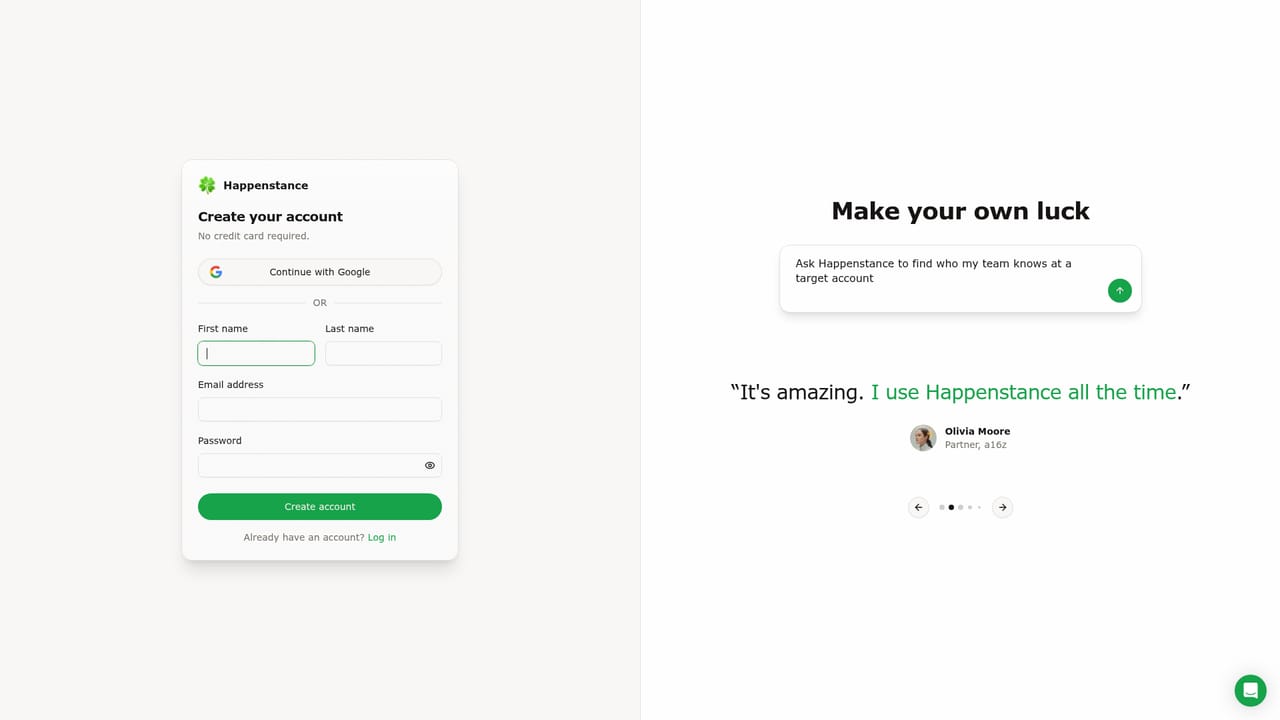
Free search is available from the homepage signup, with no card mentioned. No separate time limited trial is described.
Learn moreSearch your extended network with AI and find a warm path to anyone

Happenstance is an AI search tool that searches your extended network with AI and find a warm path to anyone. AI network search that connects Gmail, LinkedIn, Twitter, Calendar and other accounts, maps who you know, and returns ranked people with the mutual connection who can introduce you.
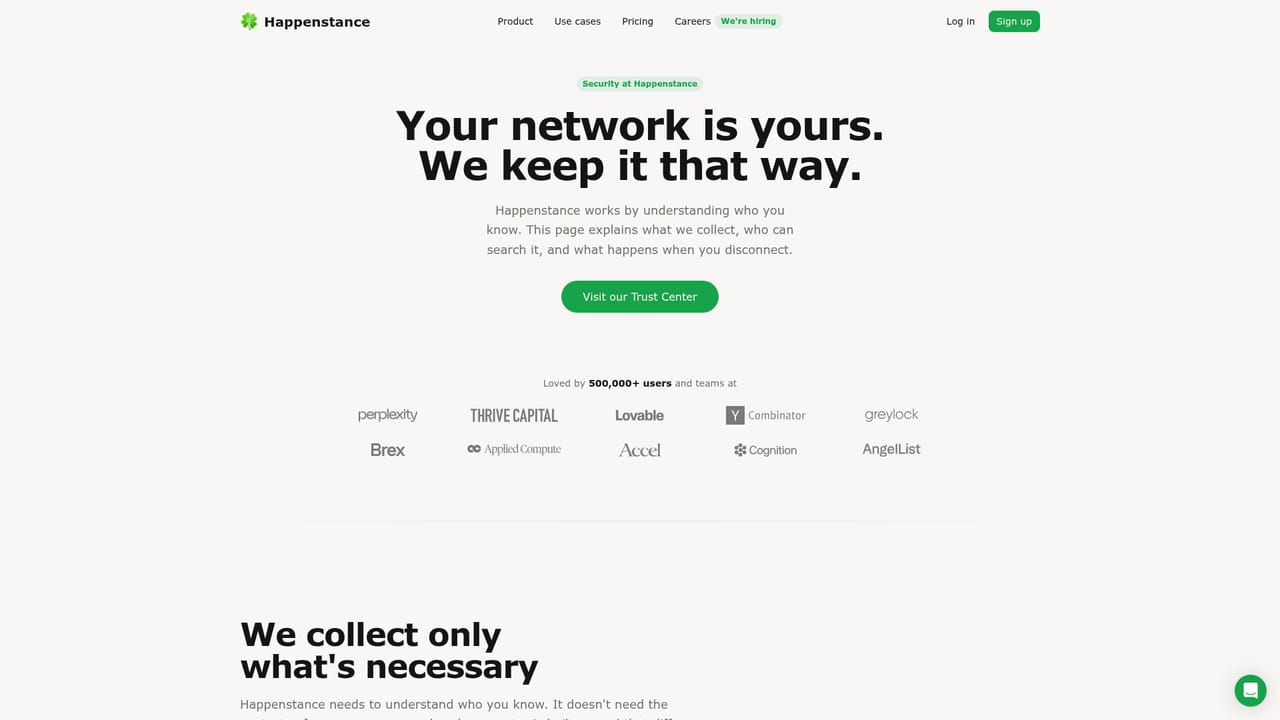
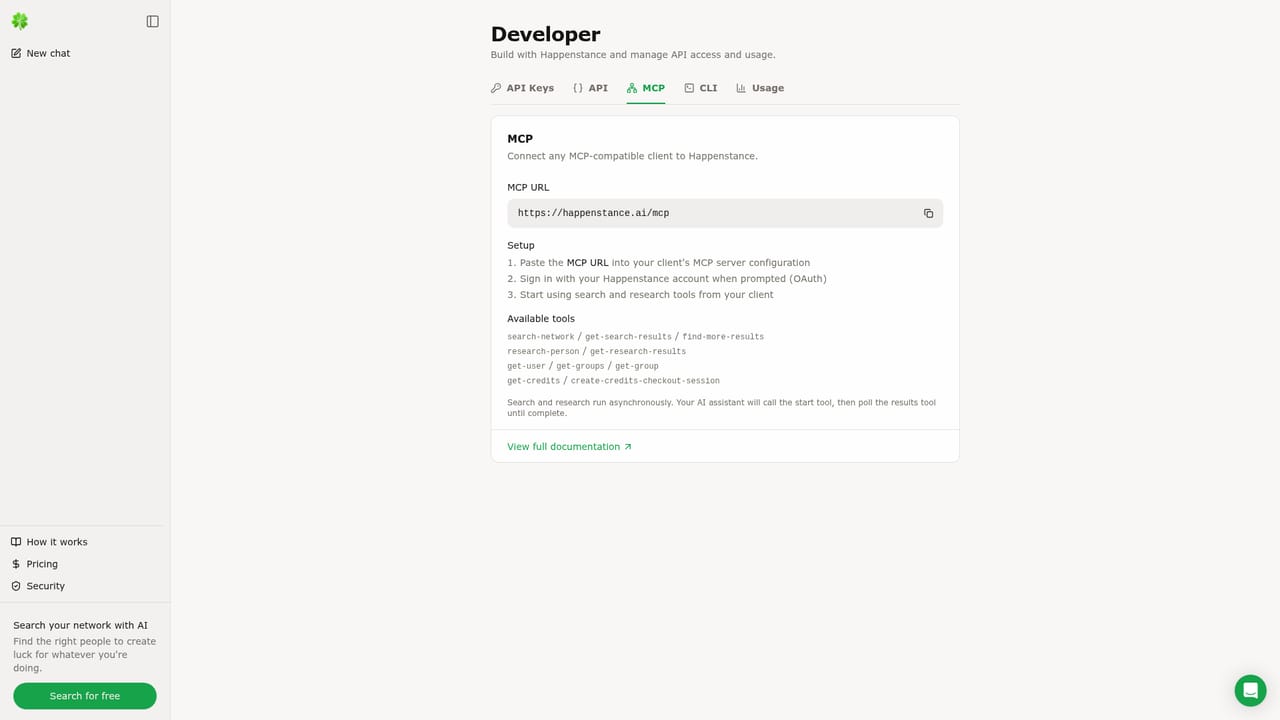
Happenstance is an AI search layer for your professional network. You connect the accounts where your relationships actually live (Gmail, Google Contacts, Google Calendar, LinkedIn, Twitter, Instagram and Outlook all appear on the site) and the product builds a ranked map of who you know and how well you know them. From there you search in plain language for people by role, company, background or interest, and results come back ordered by strength of fit with the mutual connections who can introduce you. The intended audience is broad but transactional: sales teams hunting for a route into an account, recruiters sourcing candidates outside the usual pipeline, founders raising money, and job seekers who want an introduction rather than a cold application. Results are shown in a table of person, thinking and mutuals, where the thinking column gives a short AI written rationale for the match and the mutuals column names the people who form the path in. Happenstance can go a step further and draft the intro request itself, addressed to your strongest mutual, which you edit and send. The network compounds. Friends and groups can be added so a search reaches your networks' networks, and connected accounts can contribute thousands of edges on their own; the site shows examples where Twitter, LinkedIn and Calendar supply most of the map. Happenstance also runs inside ChatGPT, Claude, Claude Code and OpenClaw through MCP, and exposes an API plus a command line client (installed via Homebrew) for developers who want search inside their own tools. The privacy model matters when comparing it with scrapers and open source intelligence toolkits. Public visibility is opt in by default, with a constellation of named contacts that can be switched off whenever, data is not used to train models, and the company cites SOC 2 compliance and DTI Trust Level 2. Free search is available without a card, and there is an iPhone app question in the FAQ, though pricing tiers beyond the free entry point are not spelled out on the homepage.
Free search is available from the homepage signup, with no card mentioned. No separate time limited trial is described.
Learn moreThe homepage offers free search with no card and says the product is used by 500,000 plus professionals, but it does not publish tier names, seat prices or usage limits. Check the signup flow for the current paid options.
Learn moreThe homepage FAQ covers product, search, networks, the iPhone app, security and the API, and points to a security page for data handling. No direct email or chat support channel is stated.
Learn moreConnects Gmail, Google Contacts, Google Calendar, LinkedIn, Twitter, Instagram and Outlook, and plugs into ChatGPT, Claude, Claude Code and OpenClaw via MCP. An HTTP API and a Homebrew installed CLI cover custom builds.
Learn moreNetwork mapping from connected accounts, plain language people search with ranked results, AI rationale per match, mutual connection paths, drafted intro requests that can be sent to your strongest mutual, friends and groups for searching your networks' networks, MCP connectors for ChatGPT, Claude, Claude Code and OpenClaw, an API and a command line client, plus opt in public profiles and SOC 2 compliance.
 AI Angels400+ customizable AI girlfriends for NSFW chat, voice calls, and roleplay
 Candy AIExperience the future of companionship with AI friends who chat, role-play, and connect with you on a human level.
 ourdream.aiA vast AI roleplay platform with millions of characters for chat, images, video and voiceAI Angels400+ customizable AI girlfriends for NSFW chat, voice calls, and roleplayCandy AIExperience the future of companionship with AI friends who chat, role-play, and connect with you on a human level.ourdream.aiA vast AI roleplay platform with millions of characters for chat, images, video and voice


