Hebbia

AI research and deal workbench built for finance professionals

Intermediate
Screenshot of Hebbia, AI research and deal workbench built for finance professionals

What is Hebbia?

Hebbia is an AI research platform for finance, legal and consulting teams. It answers questions across filings, transcripts and internal documents, builds comparison matrices across companies, and publishes analysis for whole deal teams, with sources attached to each result and connections to market data providers.

Hebbia is an AI research and analysis platform aimed squarely at the finance and professional services world. The homepage positions it as institutional intelligence for investors, bankers, lawyers, consultants and large corporates, with logos from asset managers, investment banks, law firms and Fortune 500 companies. Rather than a general chatbot, the product is organised around the documents and data that these teams already work with: filings, transcripts, presentations, spreadsheets and internal deal files. The core workflow runs through matrices. A matrix is a grid of questions across a set of companies, and each cell holds the sourced answer: revenue, growth, valuation multiples, leverage, credit ratings, shareholder registers, leadership changes or market chatter. Behind each answer sit the source documents, so analysts can check where a figure came from. Hebbia also describes an agent called Max, framed as a new top bucket analyst, and a publishing layer that turns individual analysis into shared, firm-wide work across deal teams and projects. In practice a team would load a project with its documents, connect external data sources, then build matrices or ask questions across the whole set at once. Outputs can be exported into PowerPoint slides and tables, which fits the way pitch books and committee materials are actually assembled. The homepage also gives a notable caveat: some matrix rows state that a figure was not fully extractable from the available filing excerpts, which is a useful signal that the tool reports gaps rather than smoothing over them. It competes with general purpose assistants and with research tools bundled into financial data terminals. Its differentiator is the combination of licensed data connections, document level sourcing and collaborative project structure. Pricing is not published, and access starts with a demo request, so this is an enterprise sale rather than self-serve software. If you are a beginner, start with a demo request and a single project loaded with a handful of documents, then let the team's own files set the pace before scaling.

How do you use Hebbia?

  1. 1Request a demo
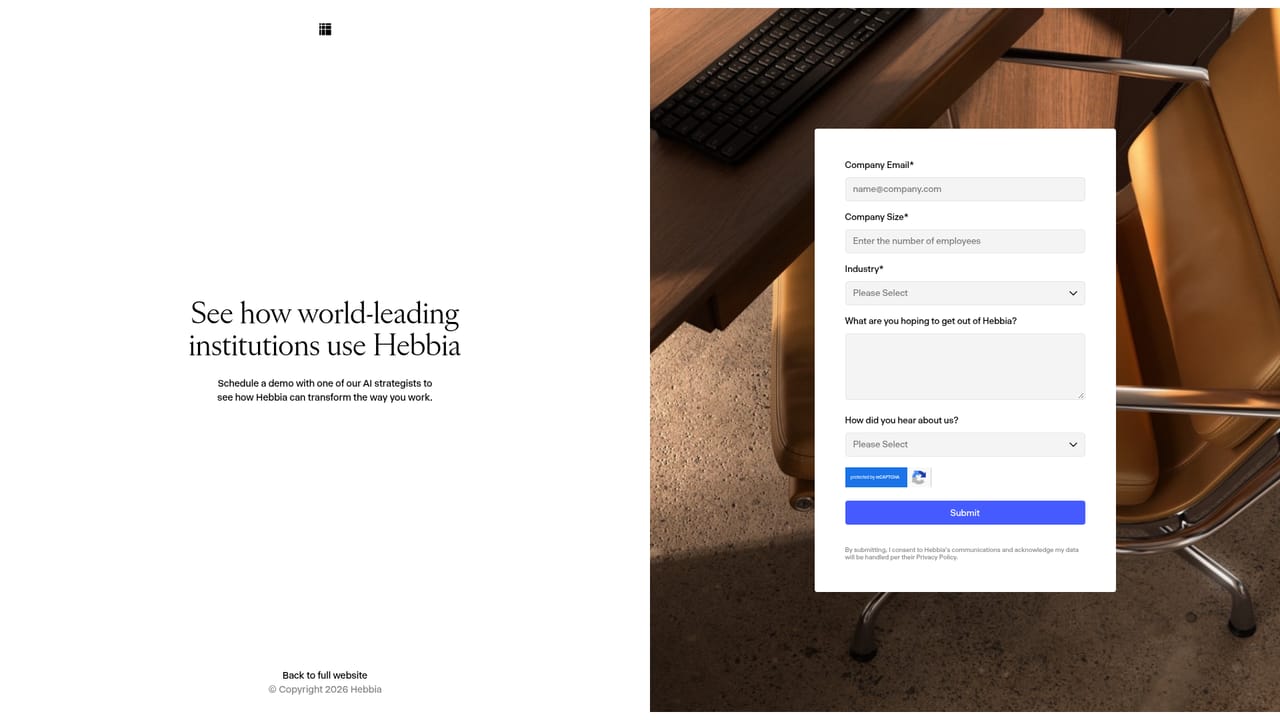
    Start on the demo page and submit your details. Access is arranged through the sales team rather than an instant signup.
    Hebbia — Request a demo
  2. 2Load a project with documents
    Create a project and bring in the filings, transcripts, presentations and spreadsheets relevant to the deal or research question.
  3. 3Connect data sources
    Link external providers and storage such as SEC filings, market data, or your own document repositories so the project has the context it needs.
  4. 4Build a matrix
    Define the companies as rows and the questions as columns, then let the platform fill the grid with sourced answers.
  5. 5Review sources and publish
    Check the underlying documents for each cell, correct where needed, then publish the work so the wider deal team can reuse it.
  6. 6Check fit for your team
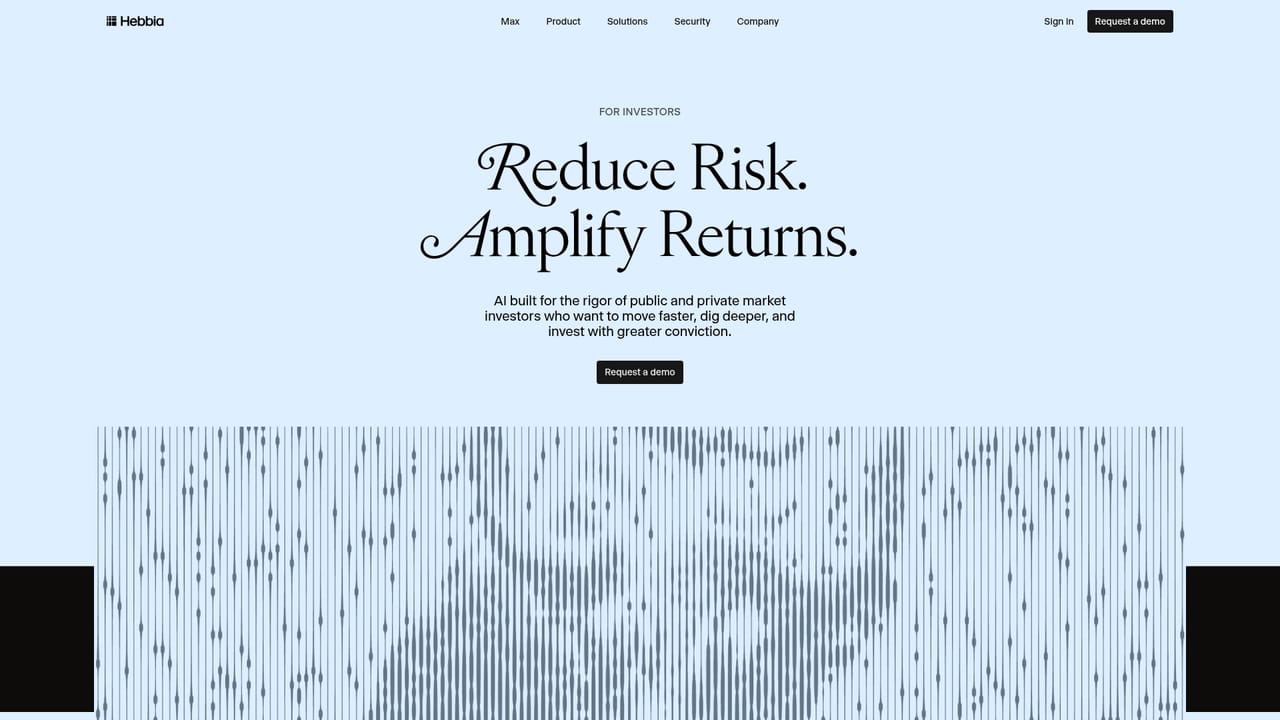
    Review the industry pages to see how the platform is framed for investing, banking, professional services or corporate finance.
    Hebbia — Check fit for your team

Pros and cons

Pros

  • Answers are tied back to source documents, which suits diligence and review workAI
  • Matrix format compares many companies across the same questions in one gridAI
  • Connections to major financial data providers, filings and storage systemsAI
  • Designed for shared deal team work, not just individual promptingAI

Cons

  • No public pricing and no self-serve signup, so evaluation requires a sales processAI
  • Built around finance and legal workflows, with little value for general tasksAI
  • Matrix answers can flag data that is not extractable from the filings providedAI
  • Homepage marketing gives no detail on model choice, data retention or security postureAI

How much does Hebbia cost?

Integrations

Connects to SEC, European, UK, Australian and NZ filings, earnings transcripts, FactSet, S&P Capital IQ, PitchBook, Preqin, Fitch, ICE and EMMA, plus SharePoint, OneDrive, Box, Dropbox, Egnyte, AWS, Snowflake, Databricks, Salesforce and DealCloud.

Features

Matrices that answer the same set of questions across many companies, source linked results, an agent called Max, collaborative projects with publishing across deal teams, plus PowerPoint and table outputs built from documents and financial data.

Frequently asked questions about Hebbia

  • How do you use Hebbia?
    The walkthrough on this page covers 6 steps: 1. Request a demo 2. Load a project with documents 3. Connect data sources 4. Build a matrix 5. Review sources and publish 6. Check fit for your team.
  • What platforms does Hebbia support?
    Hebbia is available on Web App.
  • What does Hebbia integrate with?
    Connects to SEC, European, UK, Australian and NZ filings, earnings transcripts, FactSet, S&P Capital IQ, PitchBook, Preqin, Fitch, ICE and EMMA, plus SharePoint, OneDrive, Box, Dropbox, Egnyte, AWS, Snowflake, Databricks, Salesforce and DealCloud.
  • What are the limitations of Hebbia?
    No public pricing and no self-serve signup, so evaluation requires a sales process. Built around finance and legal workflows, with little value for general tasks. Matrix answers can flag data that is not extractable from the filings provided.

Status

StatusActive
Views0
Outbound clicks0
Added10/21/2026

Platforms

Web App

Pricing

Paid