HiddenLayer

End-to-end security for AI models, pipelines and agents

Advanced
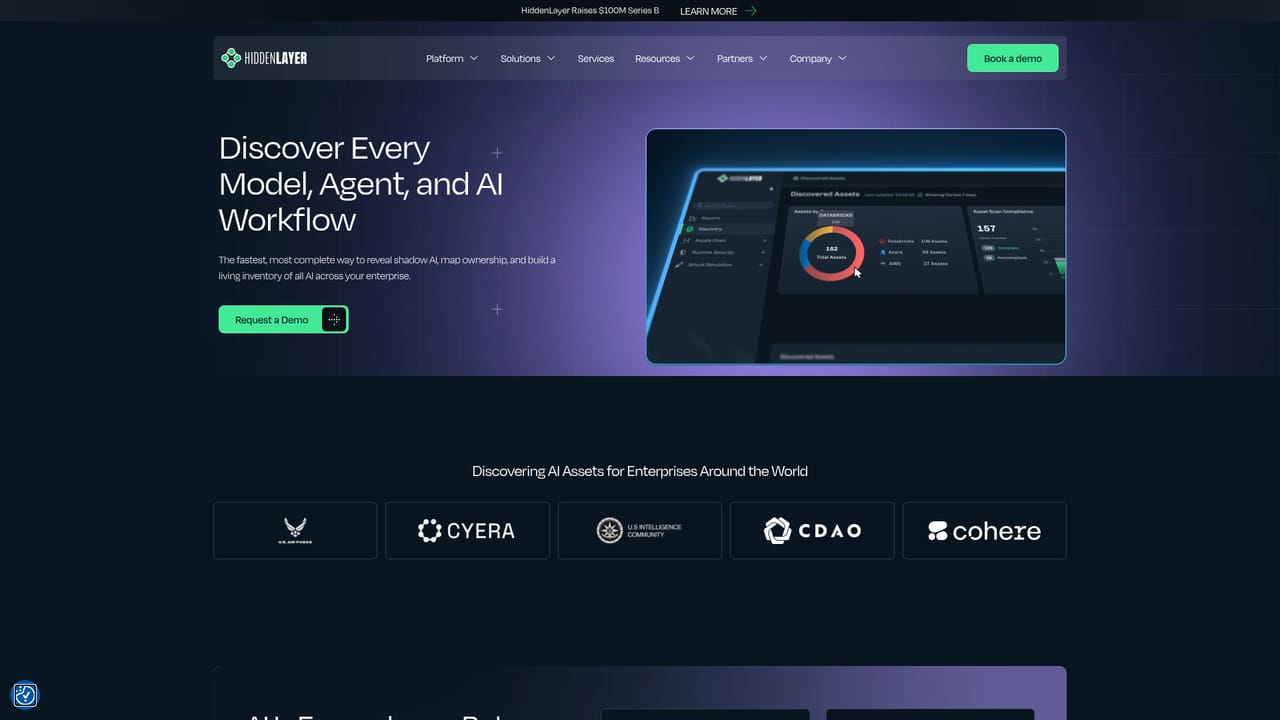
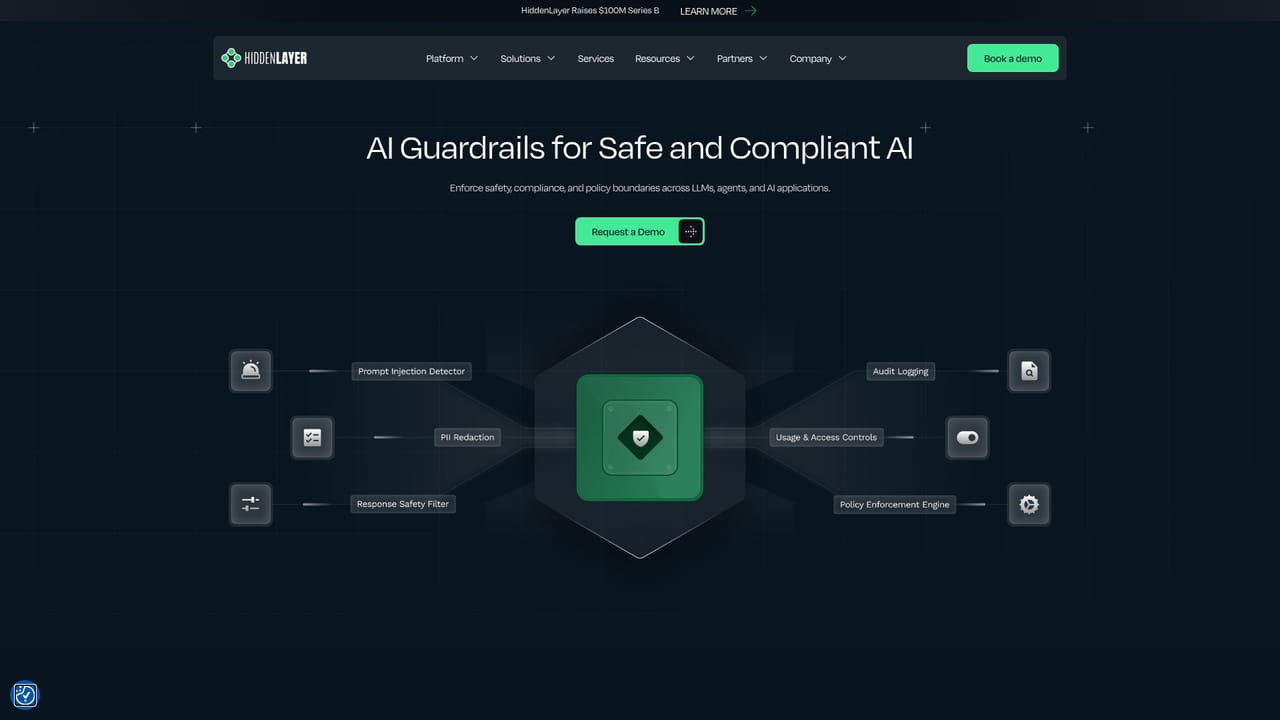
Screenshot of HiddenLayer, End-to-end security for AI models, pipelines and agents

What is HiddenLayer?

HiddenLayer is a cybersecurity tool. Enterprise AI security platform covering model discovery, supply chain scanning, runtime defense and continuous attack simulation. Agentless and model agnostic, aimed at CISOs and security teams protecting models, pipelines and agentic systems in production.

HiddenLayer is an AI security platform built for the risks that come with models, pipelines and agentic systems rather than for conventional software. Its core position is that AI threats differ enough from legacy attack patterns that retrofitted cybersecurity tools leave gaps, so the product addresses discovery, supply chain validation, runtime defense and adversarial testing as connected layers. The platform is organized around four pillars. AI Discovery builds a continuous inventory of models and workflows across an environment, including shadow AI deployments that teams did not formally register. AI Supply Chain Security validates model integrity before deployment, checking for malware, backdoors, vulnerabilities and unknown components. AI Runtime Security watches live traffic and behavior in production, aiming to detect and respond to attacks without degrading performance. AI Attack Simulation runs continuous adversarial testing so weaknesses surface before attackers find them. Use cases map onto the same stack. Model scanning covers pre-deployment inspection, red teaming provides ongoing adversarial evaluation, AI guardrails enforce policy-aligned behavior across applications and business units, and the agentic and MCP security line targets prompt injection, unsafe tool use and harmful autonomous actions. The vendor stresses that deployment is agentless and model agnostic, requires no training data, and does not demand access to weights, prompts or customer data, which matters for regulated industries hesitant to expose intellectual property to a security vendor. This is enterprise software aimed at CISOs, security engineering teams and AI platform owners at large organizations, not at individual developers or small teams. Compared with general cloud security suites that have added AI modules, HiddenLayer's differentiator is depth across the full AI lifecycle, from artifact scanning before release to behavioral monitoring after it. Buyers should expect a procurement and integration project rather than self-serve signup, and should confirm fit for their own model architectures during evaluation.

How do you use HiddenLayer?

  1. 1Review the platform pillars
    Start on the platform page and read the four sections (Discovery, Supply Chain Security, Runtime Security, Attack Simulation) to map each one to a gap in your current AI deployment.
    HiddenLayer — Review the platform pillars
  2. 2Inventory your AI assets
    Use the AI Discovery capability to build a living inventory of models and workflows across environments, including shadow AI that was never formally registered. This baseline determines what later scanning and monitoring can protect.
  3. 3Scan models before deployment
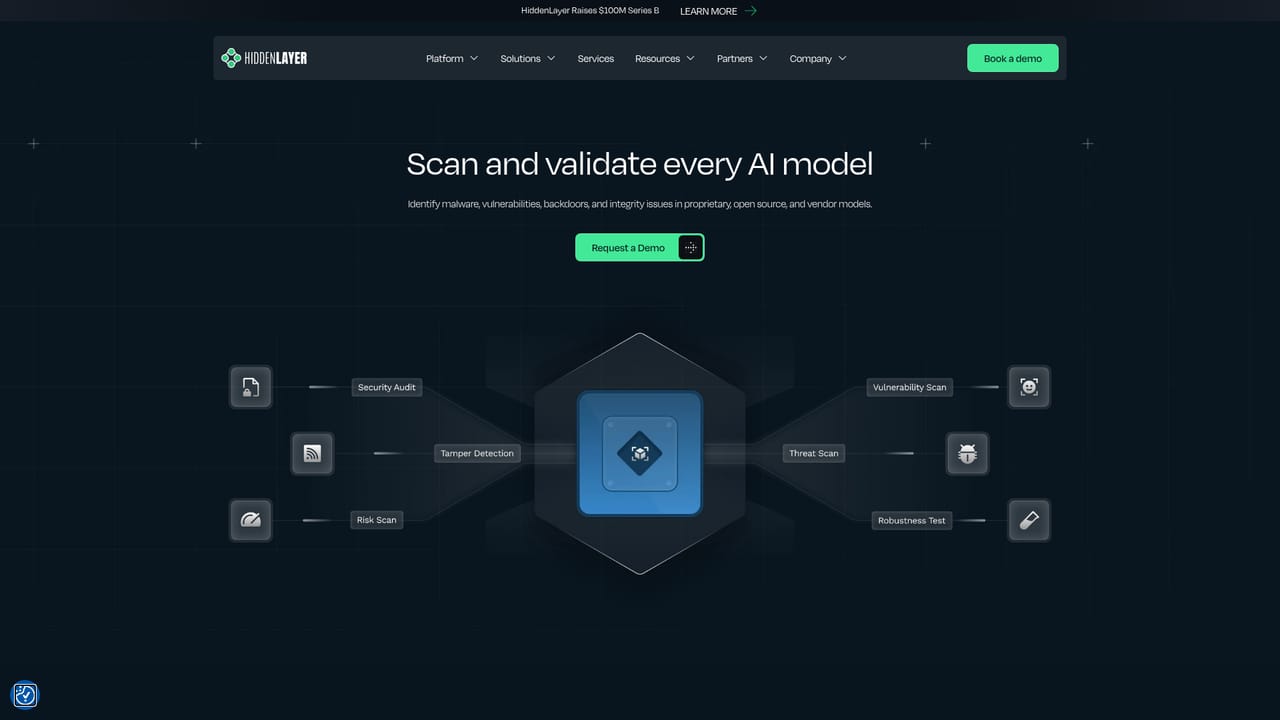
    Run model scanning on artifacts before they reach production, checking for malware, vulnerabilities, backdoors and unknown components. Review findings with the team that owns each model.
    HiddenLayer — Scan models before deployment
  4. 4Test systems with attack simulation
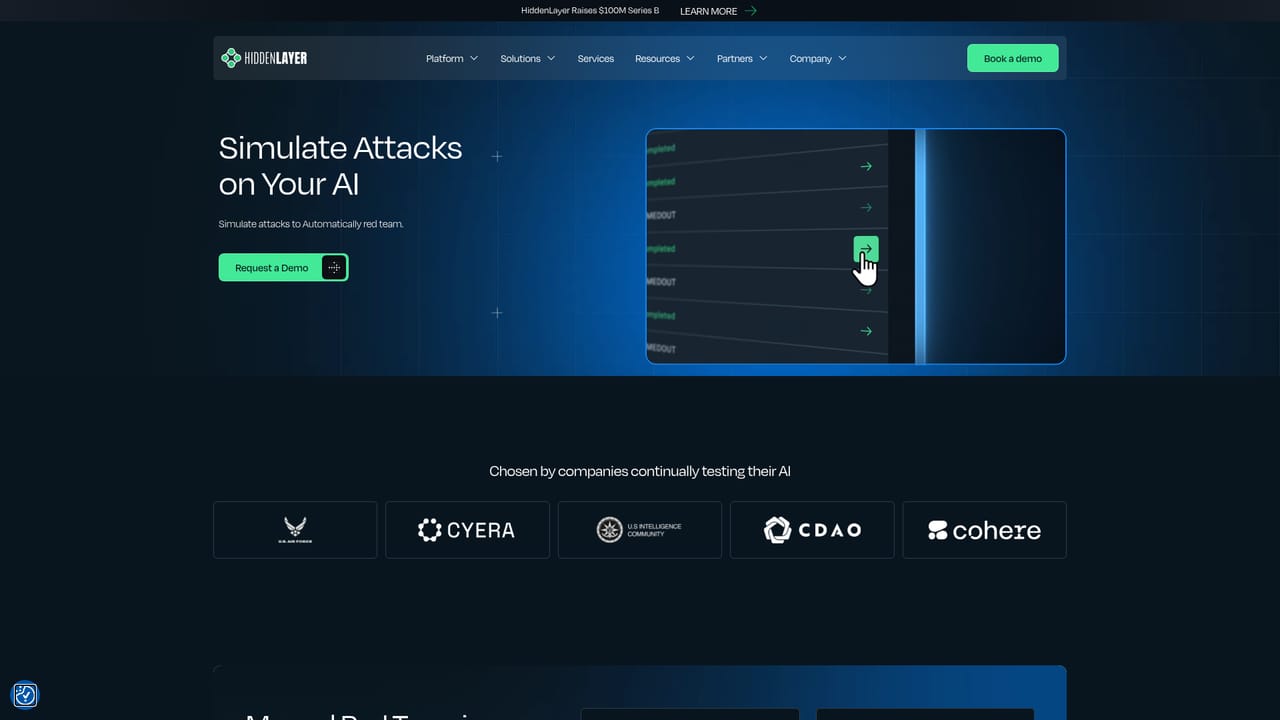
    Set up continuous attack simulation and red teaming against representative AI systems so weaknesses appear during controlled testing rather than in production incidents.
    HiddenLayer — Test systems with attack simulation
  5. 5Turn on runtime defense and guardrails
    Deploy runtime detection and policy guardrails for production applications and agents, including checks for prompt injection and unsafe tool use in MCP based systems.
    HiddenLayer — Turn on runtime defense and guardrails
  6. 6Stay current on the threat landscape
    Use the vendor's published threat reports and research to adjust detection priorities and brief security leadership on AI specific risks.

Pros and cons

Pros

  • Covers the full AI lifecycle in one platform: discovery, pre-deployment scanning, runtime defense and attack simulationAI
  • Agentless and model agnostic design avoids exposing model weights, prompts or customer training dataAI
  • Separate use-case tracks for model scanning, red teaming, guardrails and agentic or MCP securityAI
  • Discovery specifically targets shadow AI and untracked deployments, a commonly cited enterprise blind spotAI
  • Vendor cites deployments in large enterprises and public endorsements from CISOs and security leadersAI

Cons

  • No published pricing, free tier or self-serve signup, so evaluation requires a sales processAI
  • Agentic and MCP security coverage is new territory and buyers should verify depth against their own agent frameworksAI
  • Claims about detection quality and performance impact are vendor stated and need independent validation in a proof of conceptAI
  • Value depends on broad deployment across an organization, which makes it a poor fit for small teams or single-model projectsAI
  • Homepage marketing lacks technical specifics on supported model formats and deployment topologiesAI

How much does HiddenLayer cost?

Features

Four connected pillars: AI Discovery for continuous inventory including shadow AI, AI Supply Chain Security for pre-deployment integrity and component validation, AI Runtime Security for detecting and responding to live attacks without performance loss, and AI Attack Simulation for continuous adversarial testing. Use-case tracks add model scanning, red teaming, AI guardrails and agentic or MCP security.

Learn more

Frequently asked questions about HiddenLayer

  • How do you use HiddenLayer?
    The walkthrough on this page covers 6 steps: 1. Review the platform pillars 2. Inventory your AI assets 3. Scan models before deployment 4. Test systems with attack simulation 5. Turn on runtime defense and guardrails 6. Stay current on the threat landscape.
  • What platforms does HiddenLayer support?
    HiddenLayer is available on Web App.
  • What are the limitations of HiddenLayer?
    No published pricing, free tier or self-serve signup, so evaluation requires a sales process. Agentic and MCP security coverage is new territory and buyers should verify depth against their own agent frameworks. Claims about detection quality and performance impact are vendor stated and need independent validation in a proof of concept.

Status

StatusActive
Views0
Outbound clicks0
Added10/21/2026

Platforms

Web App

Pricing

Paid