Support
Support runs through a demo request and contact page rather than self-serve documentation. The homepage highlights enterprise readiness with SOC 2 compliance and granular access control.
Learn moreAI-first PIM that enriches product data, writes copy and edits catalog images
Own Hypotenuse AI? Verify ownership to get a dofollow link

Hypotenuse AI is a bulk image generator tool. An AI-first product experience management platform for ecommerce. It enriches and standardizes catalog data, bulk writes on-brand product copy, improves product imagery and tracks search and AI visibility across marketplaces and storefronts.
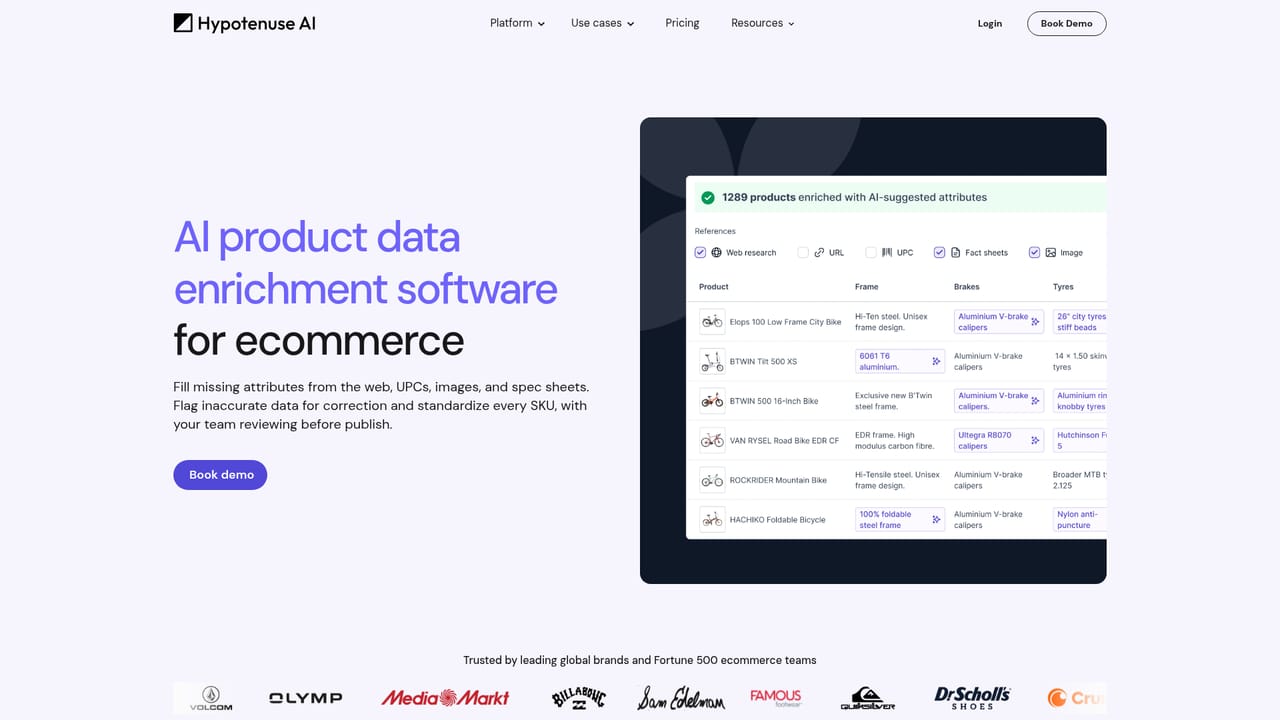
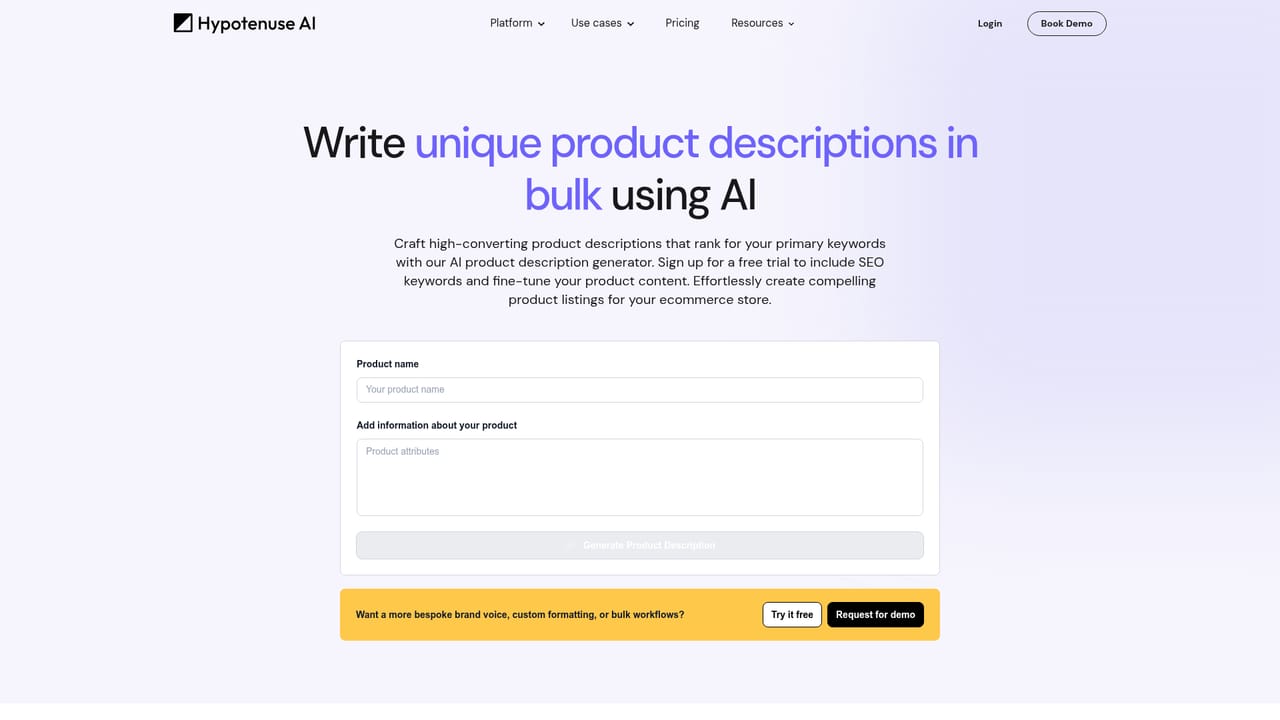
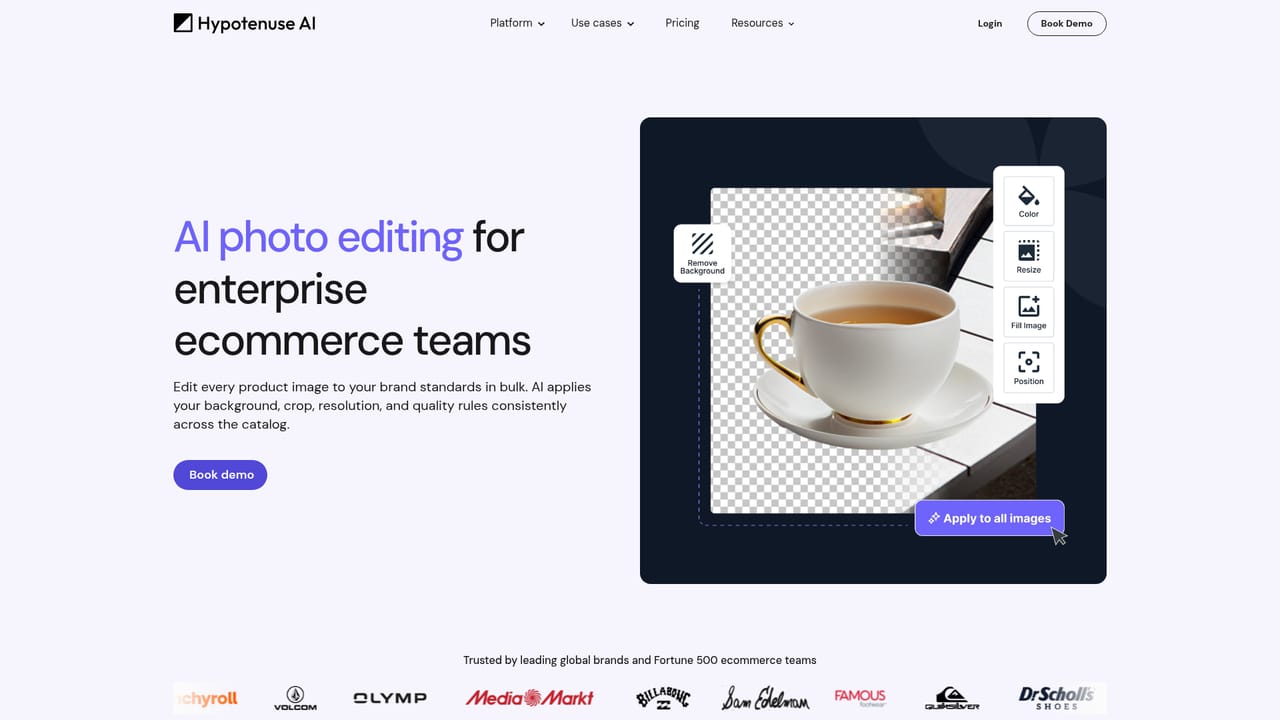
Hypotenuse AI is an AI-first product experience management platform aimed at ecommerce teams rather than general writers. Its center is a centralized repository that holds product attributes, and from there the system fills in missing fields, standardizes inconsistent values, tags and categorizes items, and extracts attributes from product images. The pitch is that a catalog with holes and mismatched specs undermines every downstream channel, so enrichment comes first and content generation builds on the cleaned record. On the writing side, the platform bulk generates titles and product descriptions in a bespoke brand voice, guides output toward SEO best practices, and produces localized versions for different markets. A separate image workflow raises resolution, crops and frames products, sharpens detail, and places items into realistic lifestyle backgrounds so the catalog looks consistent across listings. Monitoring tools track ranking, suggest keywords and check content against guidelines, with the stated goal of surfacing products in both classic search and AI assistants such as ChatGPT, Gemini and Perplexity. The product is built for enterprise retail: Fortune 500 style catalogs, marketplace sellers and brands managing thousands of SKUs across Shopify, Amazon, Walmart and similar systems. Integrations connect to commerce platforms, marketplaces and PIM systems such as Akeneo, Salsify and Stibo without custom coding, and the vendor emphasizes SOC 2 compliance, granular access control and team workflows. Compared with standalone AI copywriting tools, Hypotenuse AI is heavier and more operational: it assumes you want governed product data, not just a paragraph generator. Smaller merchants may find the surrounding PIM machinery exceeds what they need.
Support runs through a demo request and contact page rather than self-serve documentation. The homepage highlights enterprise readiness with SOC 2 compliance and granular access control.
Learn moreConnects to commerce platforms and marketplaces including Shopify, WooCommerce, BigCommerce, Wix, Webflow, WordPress, Amazon, Walmart and Target, plus PIM systems such as Akeneo, Salsify, Stibo and Plytix, with no coding required.
Product data enrichment and standardization in a centralized PIM repository, including attribute extraction from images and auto-tagging. Bulk generation of SEO-oriented titles and descriptions in a bespoke brand voice with localized output. AI image enhancement covering upscaling, cropping, cleanup and lifestyle backgrounds. Performance monitoring with ranking tracking, keyword suggestions and guideline checks, plus integrations with commerce platforms, marketplaces and PIM systems.
Learn more AI Angels400+ customizable AI girlfriends for NSFW chat, voice calls, and roleplay
 Candy AIExperience the future of companionship with AI friends who chat, role-play, and connect with you on a human level.
 ourdream.aiA vast AI roleplay platform with millions of characters for chat, images, video and voiceAI Angels400+ customizable AI girlfriends for NSFW chat, voice calls, and roleplayCandy AIExperience the future of companionship with AI friends who chat, role-play, and connect with you on a human level.ourdream.aiA vast AI roleplay platform with millions of characters for chat, images, video and voice


