Integrations
Contact center integrations are documented, including Five9 for call routing and telephony. The site frames Hyro as connecting to existing systems rather than replacing them.
Learn moreAgentic care communications for health systems and their patients

Hyro is an AI chat bot tool. Hyro sells Agentic Care Communications to health systems: AI agents for patient chat, call routing and workflow automation across phone, web and text, with healthcare guardrails and contact center integrations.
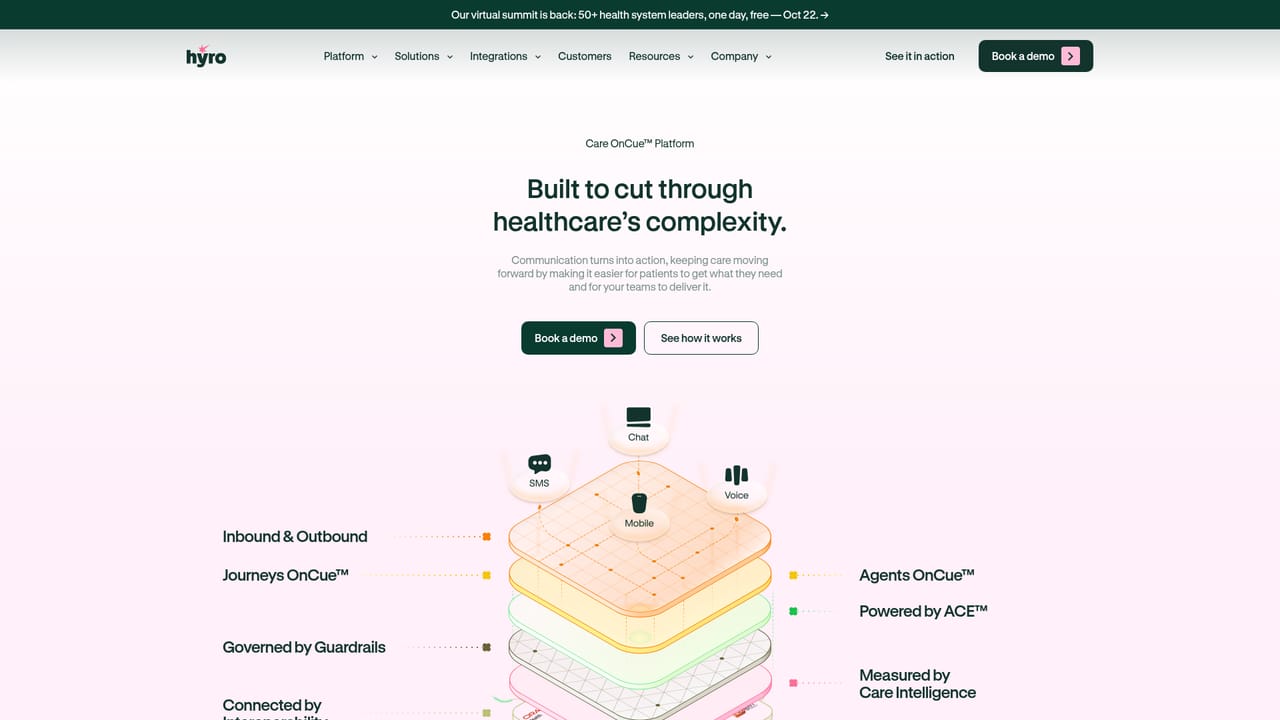
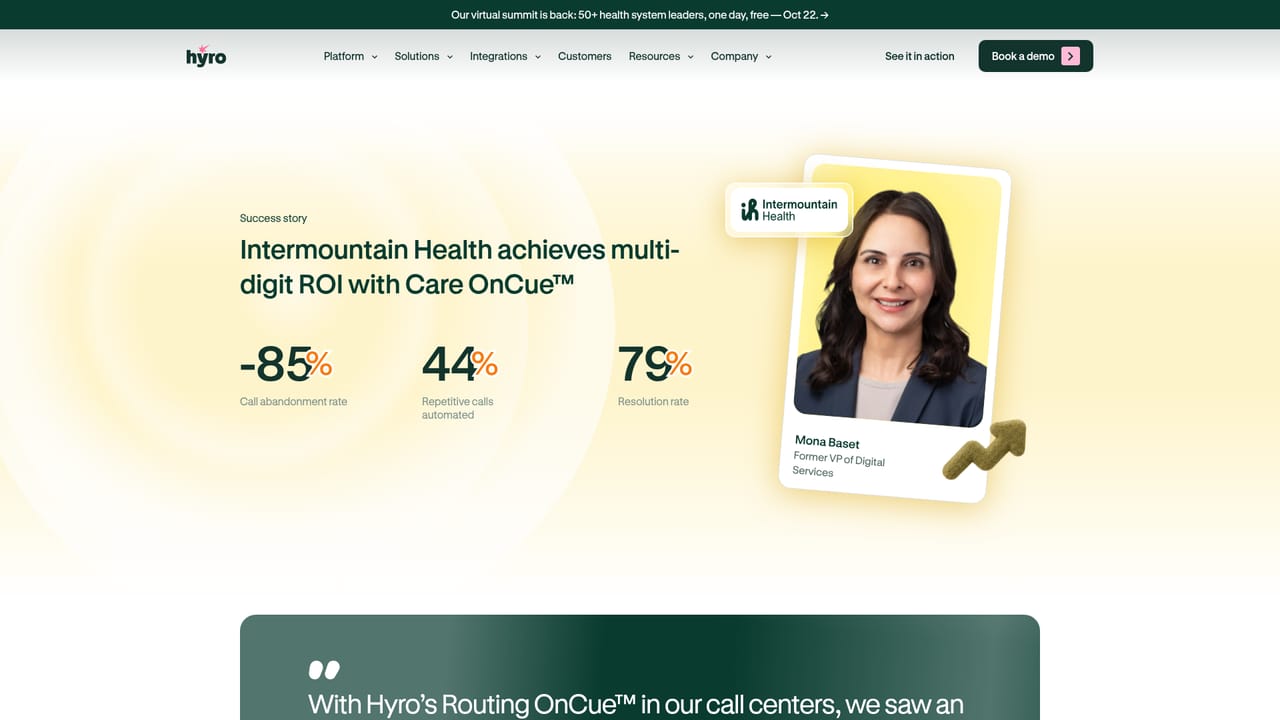
Hyro is an enterprise AI platform for healthcare organizations, positioned around what the company calls Agentic Care Communications and branded Care OnCue. Rather than selling a generic chatbot, it supplies a set of agents that handle patient and staff conversations across phone, web and text channels. The company reports deployments reaching 2,500 hospitals, clinics and facilities and serving 30 million patients, which places it firmly in the health system market rather than the small clinic or solo practice segment. The product breaks into named components. Chat OnCue handles web conversations, Routing OnCue manages call center traffic, and Agents OnCue automate repetitive workflows such as call coverage and appointment management. A separate platform layer covers care intelligence and healthcare AI guardrails, and the company maintains integrations with contact center software such as Five9. In practice, a health system points Hyro at its existing physician directory, scheduling and phone systems, then lets the agents answer common questions, route callers and book appointments without a human on the line. Published customer results include a 47 percent lift in online bookings at Weill Cornell Medicine, an 85 percent drop in call abandonment at Intermountain Health, and roughly 4,000 staff hours saved per month at Inova Health. Buyers are hospital systems, medical groups and clinic networks with high inbound call volume and legacy digital front doors. The economics are pitched at that scale: Baptist Health cites $1M in savings within three months, and Prisma Health reports an 80 percent chat resolution rate. Implementation timelines quoted by customers run to around 90 days, which is fast for healthcare IT but still a project, not a signup. Against general purpose assistants and older healthcare chatbots, Hyro differentiates on clinical context, guardrails and prebuilt integrations rather than raw model quality. Small organizations will find it oversized and will not find public self-serve pricing.
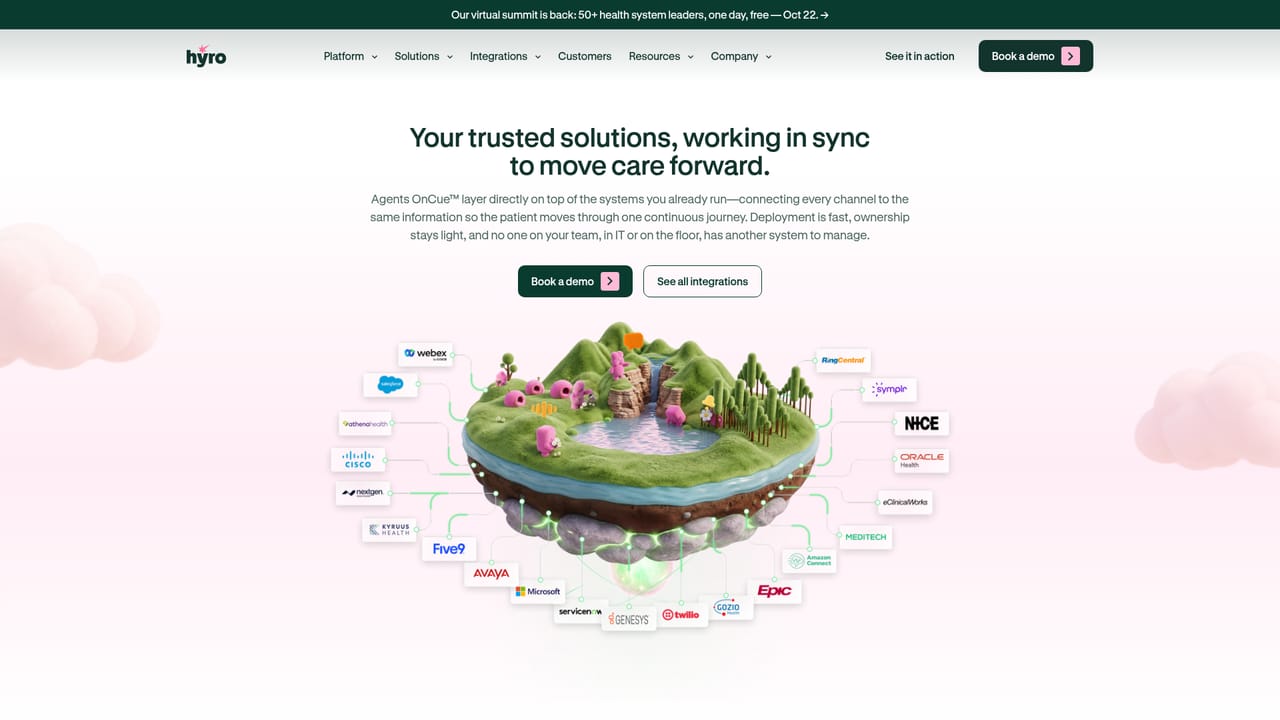
Contact center integrations are documented, including Five9 for call routing and telephony. The site frames Hyro as connecting to existing systems rather than replacing them.
Learn moreChat OnCue for web conversations, Routing OnCue for call center traffic, and Agents OnCue for workflow automation such as appointment management and call coverage. A platform layer adds care intelligence and healthcare AI guardrails, with integrations into contact center software including Five9.
Learn more AI Angels400+ customizable AI girlfriends for NSFW chat, voice calls, and roleplay
 Candy AIExperience the future of companionship with AI friends who chat, role-play, and connect with you on a human level.
 ourdream.aiA vast AI roleplay platform with millions of characters for chat, images, video and voiceAI Angels400+ customizable AI girlfriends for NSFW chat, voice calls, and roleplayCandy AIExperience the future of companionship with AI friends who chat, role-play, and connect with you on a human level.ourdream.aiA vast AI roleplay platform with millions of characters for chat, images, video and voice


