Free trial
The homepage links to a free start in 5 minutes via the app, but does not state trial length or terms.
Learn moreTrace, test, route and govern every LLM call in your company

LangWatch is an AI simulation generator tool. Agent observability and evaluation platform for AI platform teams: simulated users, red teaming, LLM judges, OnlineTracing via OpenTelemetry, an AI gateway with budgets, and a governance layer with self-hosting and ISO 27001.
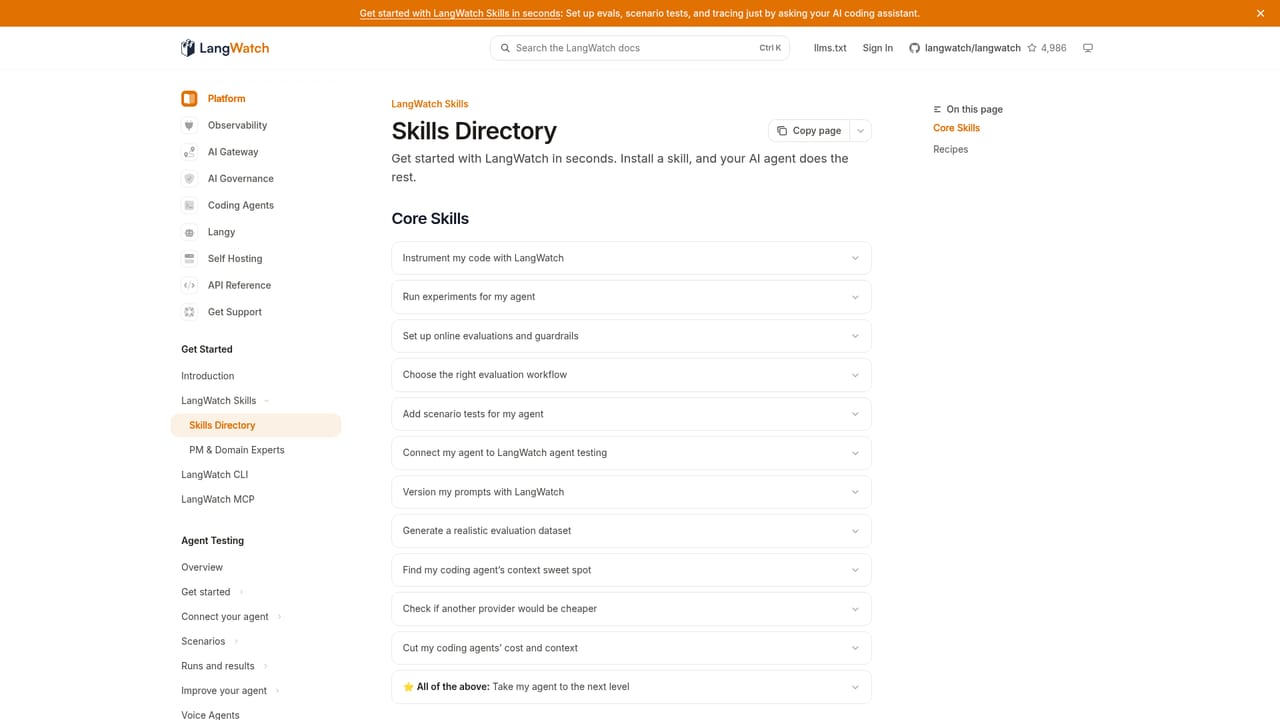
LangWatch is an observability and evaluation platform aimed at AI platform teams rather than solo builders. It sits over the LLM calls your company makes, whether those come from agents your engineers wrote, coding assistants like Claude Code and Codex, or providers routed through its gateway. The homepage frames the problem plainly: an agent can reach the same goal by a hundred different paths, and manual testing only covers a handful of them before something breaks in front of a customer. The product is organized in three layers. Simulate spins up simulated users in text and voice that push your agent turn after turn, with scenarios written in plain language (including from inside Claude Code), red teaming runs to probe for jailbreaks and unsafe tool calls, and a judge agent reads the full trace before returning a verdict with its reasoning attached. Evaluate scores outputs and whole conversations with LLM judges, custom code or full workflows, available both from a Jupyter notebook and from a shared UI, plus pairwise comparisons and multimodal scoring for images. Observe covers tracing itself: OpenTelemetry native with GenAI spec support, waterfall and flame graph views, topic clustering, custom metrics graphs and plain language search across large trace volumes. Two adjacent pieces round it out. The AI gateway routes OpenAI, Anthropic, Google, Bedrock, Mistral and others through one endpoint with per-person and per-team budgets, and an agent called Langy turns a product manager's written goal into a test plan, runs the scenarios, scores them and drafts prompt revisions as pull requests. This is a serious tool for teams with real production traffic and compliance questions, not a first experiment. It deploys self-hosted via Docker or Kubernetes, hybrid, or as managed cloud with EU, US, UK and APAC regions, and carries ISO 27001 and GDPR claims. Compared with Langfuse, which one customer explicitly migrated from, LangWatch leans harder on simulation and collaboration.

The homepage links to a free start in 5 minutes via the app, but does not state trial length or terms.
Learn moreDemo booking with a solutions engineer and a self-hosting guide are linked from the homepage. A trust center covers certifications and compliance documentation.
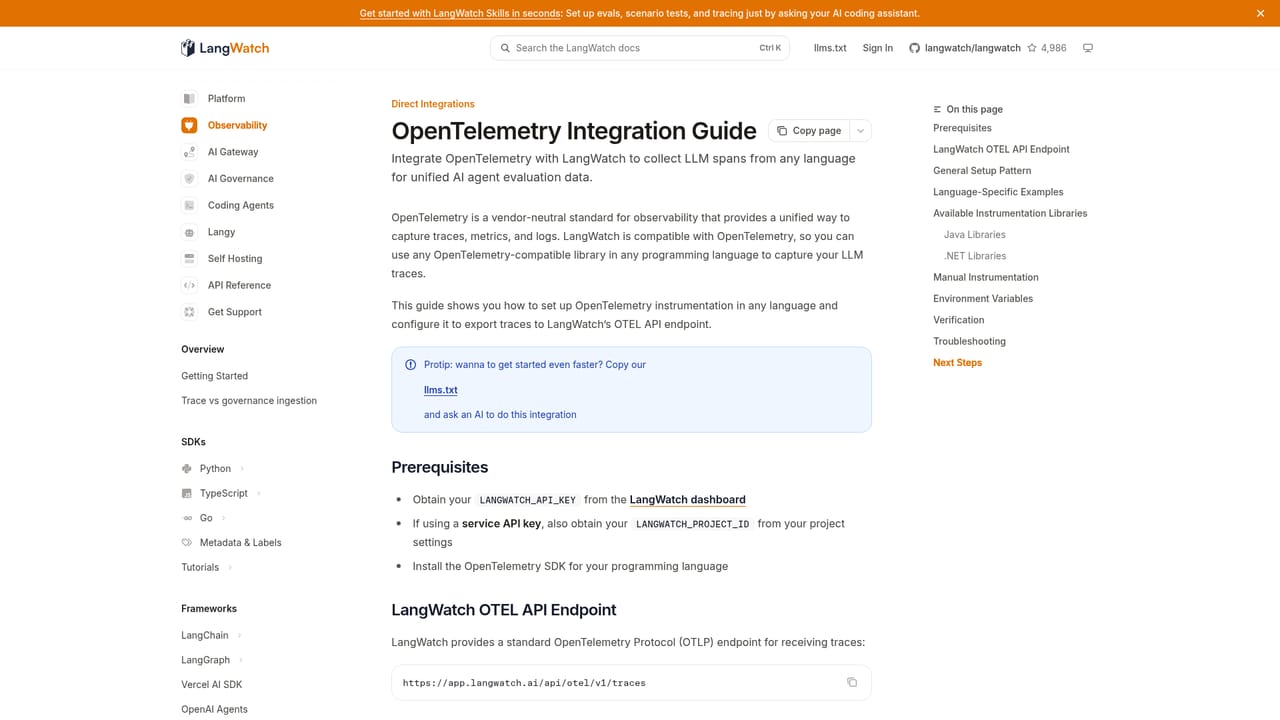
Learn morePython and TypeScript SDKs plus plain OpenTelemetry, with LangChain, LangGraph, CrewAI, Mastra, Pydantic AI, Vercel AI SDK and n8n. Coding agents Claude Code, Codex, Copilot and opencode via one command. Gateway covers OpenAI, Anthropic, Google, Bedrock, Azure, Mistral, Groq, DeepSeek and Vertex AI.
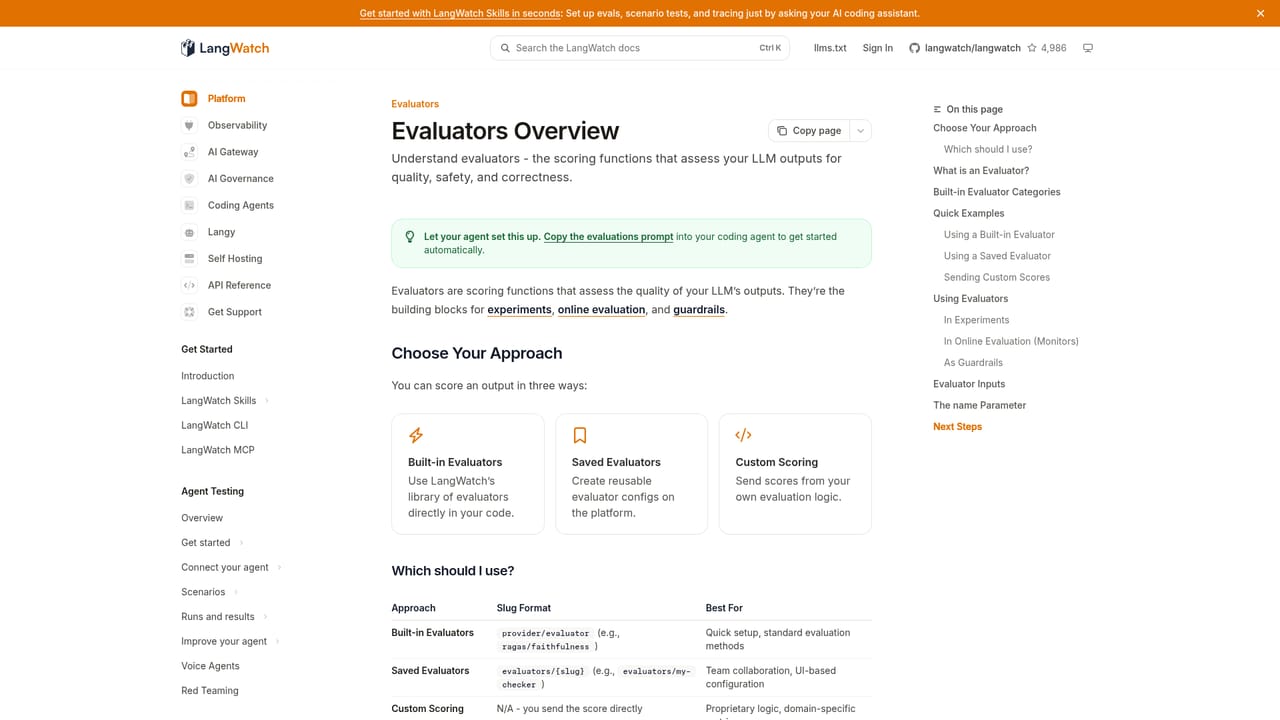
Learn moreSimulated text and voice users, scenarios written in plain language, red teaming for jailbreaks and unsafe tool calls, a judge agent with trace reasoning, LLM-as-judge and code evaluators, offline and online evaluation, pairwise and multimodal scoring, OpenTelemetry native tracing, waterfall and flame graph views, topic clustering, custom metric graphs, an AI gateway with per-person and per-team budgets, and governance controls including RBAC, SSO, SCIM and audit logs to SIEM.
Learn more AI Angels400+ customizable AI girlfriends for NSFW chat, voice calls, and roleplay
 Candy AIExperience the future of companionship with AI friends who chat, role-play, and connect with you on a human level.
 ourdream.aiA vast AI roleplay platform with millions of characters for chat, images, video and voiceAI Angels400+ customizable AI girlfriends for NSFW chat, voice calls, and roleplayCandy AIExperience the future of companionship with AI friends who chat, role-play, and connect with you on a human level.ourdream.aiA vast AI roleplay platform with millions of characters for chat, images, video and voice


