LumeFlow AI

One prompt box for dozens of AI video and image models

Beginner
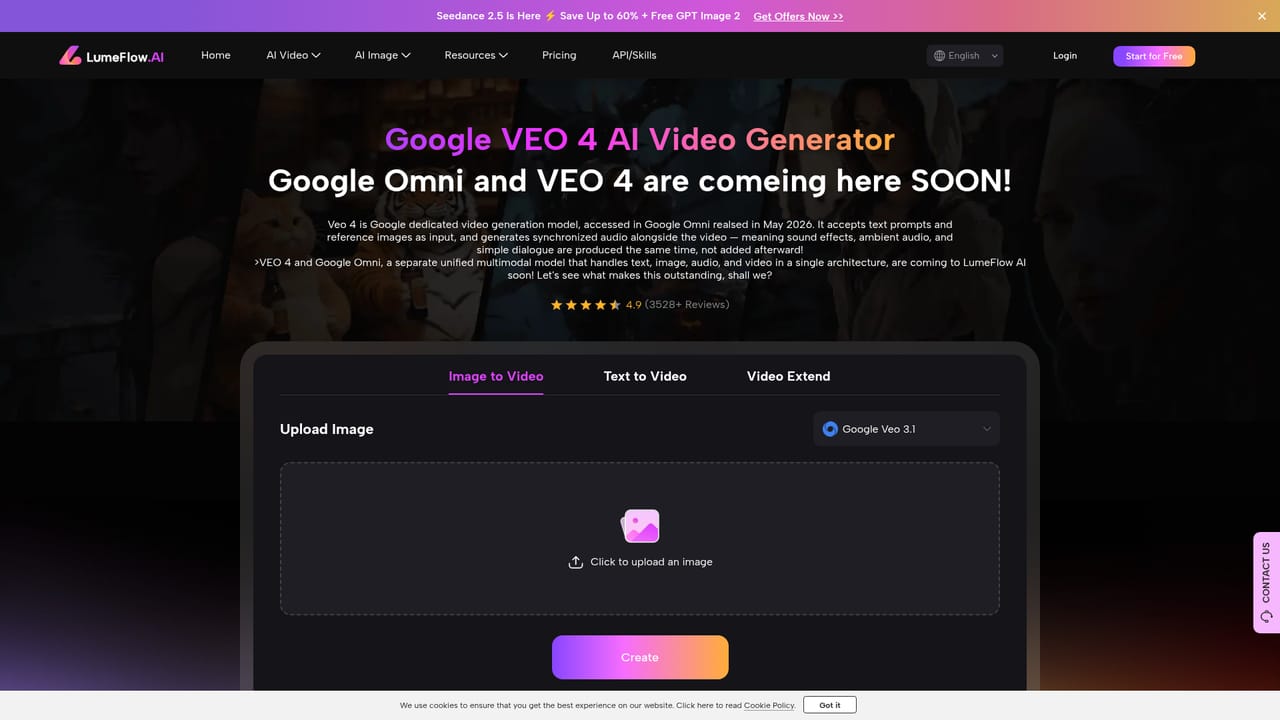
Screenshot of LumeFlow AI, One prompt box for dozens of AI video and image models

What is LumeFlow AI?

LumeFlow AI is a web platform that gathers many AI video and image models, including Seedance, Kling, Sora 2, Veo 3.1 and Nano Banana, behind one prompt interface with text-to-video, image-to-video, lip sync and effects tools.

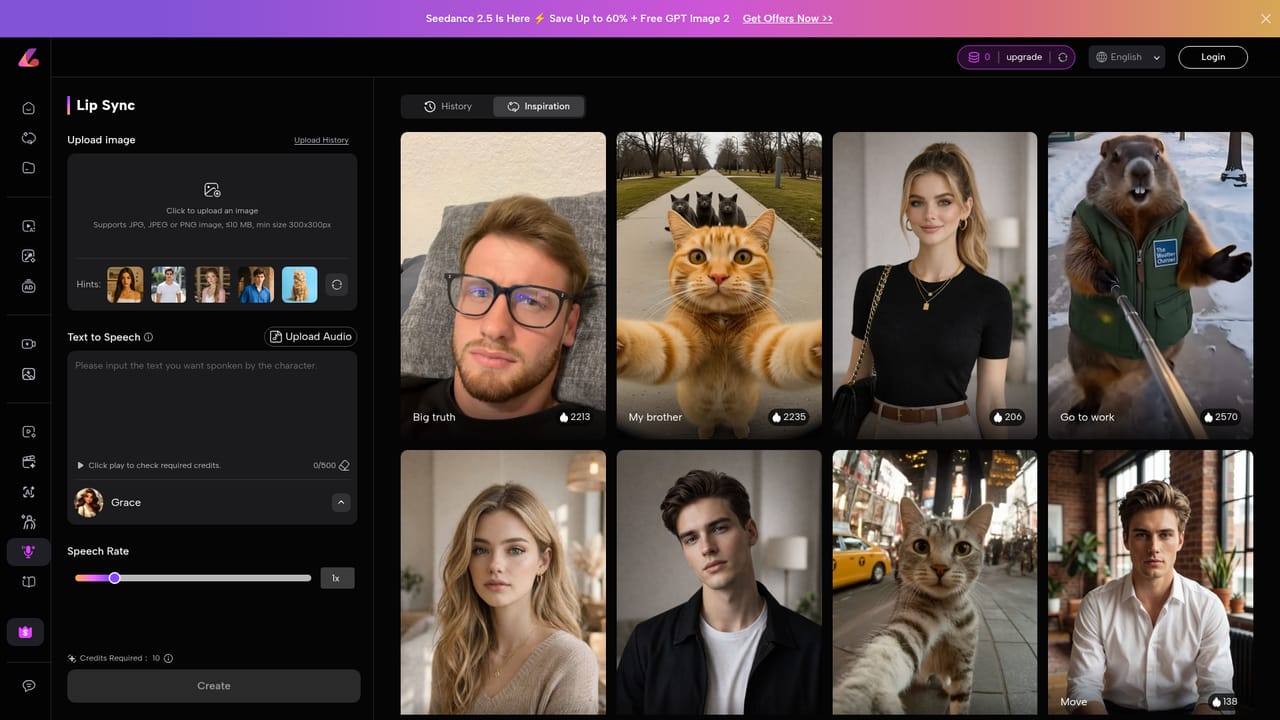
LumeFlow AI is a browser-based creation hub that puts many generative models behind a single prompt box. Instead of keeping separate accounts for each video or image engine, users choose a mode (image to video, text to video or AI image) and then pick a model from a long list. The video lineup includes Seedance 2.5, Happy Horse, Kling, Wan, Pixverse, Hailuo, Sora 2, Vidu, Google Veo 3.1 and the platform's own LumeFlow model, each with a dedicated landing page on the site. The image side follows the same pattern, listing ChatGPT Image 2.5, Nano Banana 2, Nano Banana, Flux Kontext Max and Pro, Seedream 4.0 and Kling 01. Around the core generators sit task tools such as mimic motion, lip sync, video effects and one-click image effects (a JoJo manga style, group shot, text removal and similar presets). Separate pages target common jobs: movie trailers, animation, dance clips, video ads, Instagram Reels, YouTube videos and UGC-style footage. In practice, a session starts with a description of up to 5,000 characters, optionally paired with an uploaded reference image. The user selects a model, submits, and receives a generated clip or picture. The sample prompts shown on the homepage are long and specific, covering camera angle, lighting, mood and aspect ratio, which suggests that output quality depends heavily on how carefully the prompt is written. The site markets itself to people with no editing background, so marketers, social media creators, small businesses and hobbyists are the clearest audience. Among alternatives, LumeFlow AI competes with other multi-model aggregators more than with single-engine apps. Its value is trying several engines from one place and one account, not fine control over a timeline. Anyone who needs frame-accurate editing will still want a separate video editor for finishing work.
How do you use LumeFlow AI?

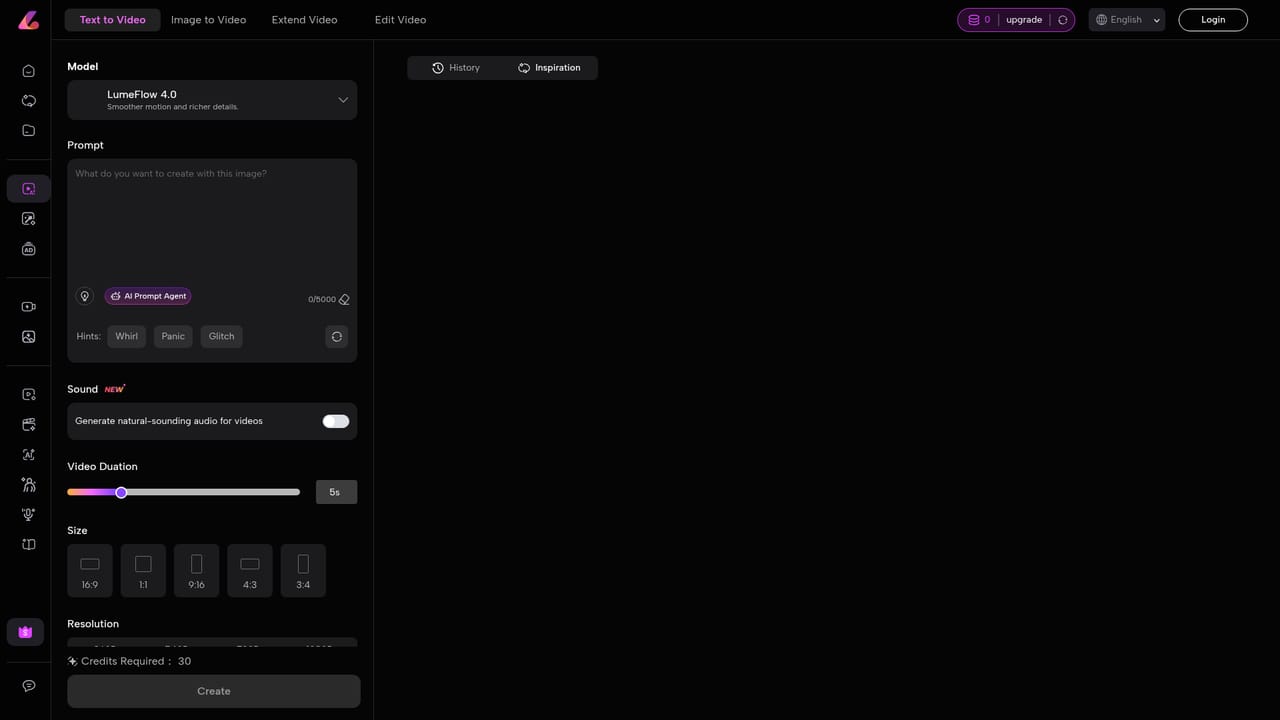
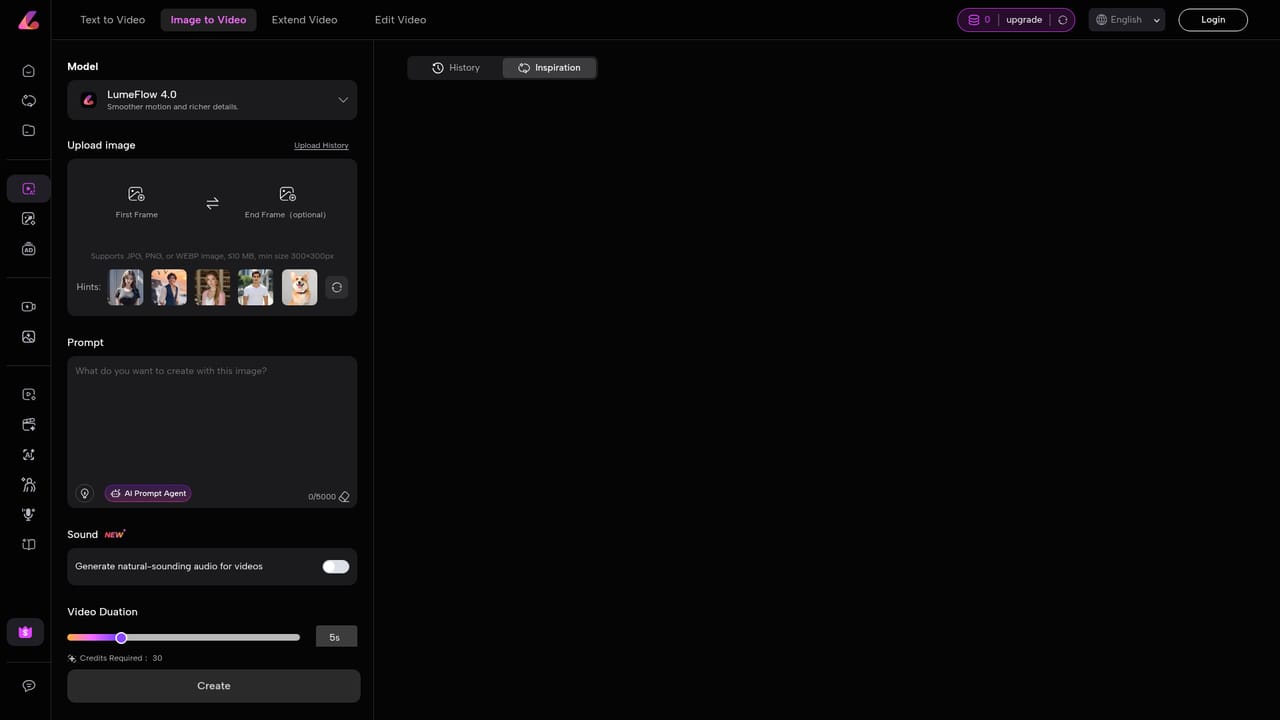
  1. 1Choose a generation mode
    Open the video generator and pick between image to video and text to video. Use the AI image tab instead if the project starts with a still.
    LumeFlow AI — Choose a generation mode
  2. 2Write or upload your input
    Type a description of up to 5,000 characters, naming the subject, camera angle, lighting and aspect ratio. For image to video, upload a reference picture first.
    LumeFlow AI — Write or upload your input
  3. 3Select a model
    Pick an engine such as Seedance 2.5, Kling, Veo 3.1 or LumeFlow AI. Each model has its own page that describes its strengths.
    LumeFlow AI — Select a model
  4. 4Generate and review the result
    Submit the prompt and check the output for motion, character consistency and mood. Adjust the wording and rerun, or switch models, if it misses.
  5. 5Try effects and finishing tools
    Apply lip sync, mimic motion or a preset image effect to extend the result. Export the clip for use in ads, Reels or YouTube.
    LumeFlow AI — Try effects and finishing tools

Pros and cons

Pros

  • Many video engines (Seedance, Kling, Sora 2, Veo 3.1, Wan, Hailuo and more) are reachable from one accountAI
  • Covers both video and image generation, so a project can start with a picture and end as a clipAI
  • Extra tools such as lip sync, mimic motion and preset image effects go beyond plain promptingAI
  • Use-case pages for ads, Reels, YouTube and UGC videos give newcomers a clear starting pointAI
  • Marketed to people with no editing skills, and the homepage promotes a free startAI

Cons

  • Pricing, credit costs and generation limits are not shown on the homepage, so real cost per clip is unclearAI
  • Results depend on long, detailed prompts, as the sample prompts show, which raises the learning curveAI
  • Not a timeline editor, so trimming, sequencing and finishing need a separate video toolAI
  • Model availability and quality vary by engine, and it is hard to know which suits a task without testingAI
  • No API, integrations or support options are described on the homepageAI

How much does LumeFlow AI cost?

Free trial

The page description says to start free today, but the homepage does not explain the free allowance or its limits.

Learn more

Pricing

The homepage does not list prices or plan details. Its meta description invites visitors to start free, and a separate pricing page exists on the site.

Learn more

Features

Text-to-video, image-to-video, text-to-image and image-to-image generation across many models, plus mimic motion, lip sync, AI video effects, preset image effects such as text removal, and use-case pages for ads, Reels, trailers and UGC.

Learn more

Frequently asked questions about LumeFlow AI

  • How much does LumeFlow AI cost?
    The homepage does not list prices or plan details. Its meta description invites visitors to start free, and a separate pricing page exists on the site.
  • Does LumeFlow AI offer a free trial?
    The page description says to start free today, but the homepage does not explain the free allowance or its limits.
  • How do you use LumeFlow AI?
    The walkthrough on this page covers 5 steps: 1. Choose a generation mode 2. Write or upload your input 3. Select a model 4. Generate and review the result 5. Try effects and finishing tools.
  • What platforms does LumeFlow AI support?
    LumeFlow AI is available on Web App.
  • What are the limitations of LumeFlow AI?
    Pricing, credit costs and generation limits are not shown on the homepage, so real cost per clip is unclear. Results depend on long, detailed prompts, as the sample prompts show, which raises the learning curve. Not a timeline editor, so trimming, sequencing and finishing need a separate video tool.

Status

StatusActive
Views0
Outbound clicks0
Added10/18/2026

Platforms

Web App

Pricing

Freemium