MiR Autonomous Mobile Robots

Autonomous mobile robots that move pallets and carts through warehouses and factories

Intermediate
Screenshot of MiR Autonomous Mobile Robots, Autonomous mobile robots that move pallets and carts through warehouses

What is MiR Autonomous Mobile Robots?

MiR Autonomous Mobile Robots is a productivity tool. MiR makes autonomous mobile robots for internal transport in logistics and manufacturing, with payload options from 250 kg to a 1200 kg pallet jack, onboard safety scanners, top modules and central fleet management.

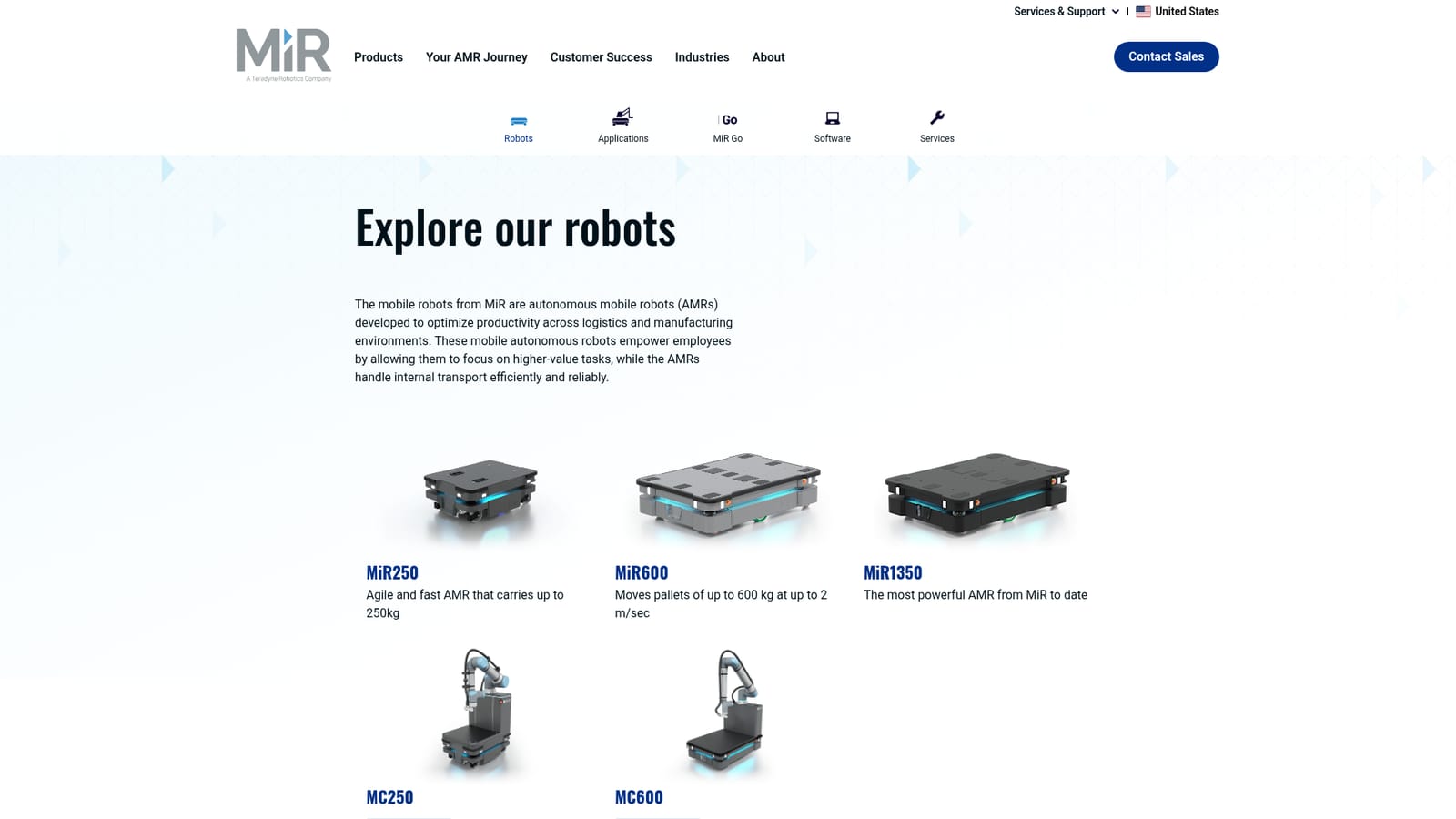
MiR Autonomous Mobile Robots is a family of self-driving transport robots built for internal logistics in factories and warehouses. The lineup runs from the compact MiR250, which carries up to 250 kg, through the MiR600 that moves pallets of up to 600 kg at up to 2 m/sec, to the MiR1350, described as the most powerful AMR from MiR to date. A separate MiR1200 Pallet Jack handles pallet loads of up to 1200 kg. Top modules such as the MC250 and MC600 are marked MiR Go Approved, so the same base platform can be adapted for shelf carrying, hooking and similar transport jobs. The design goal is straightforward: the robots absorb repetitive internal transport so staff can spend time on higher-value work. Safety is handled with front and rear laser scanners giving a 360 degree field of vision, protective fields that resize with the robot's speed, emergency stop buttons on both robots and compatible top modules, and signal lights that show turning, reversing and forward movement like a car's indicators. The company states compliance with relevant safety standards and obstacle avoidance that reroutes around people rather than forcing a stop. In practice, deployment is pitched at operations without robotics engineers. Robots are programmed through intuitive interfaces, the company stresses that no advanced technical skills are required, and the compact chassis is meant to work in narrow aisles and elevators. MiR Fleet provides central configuration and coordination across multiple units, and MiR Go covers third-party top modules. Published case studies from Cummins, DENSO and Faurecia show the platform in automotive settings. It suits logistics and manufacturing teams planning their first AMR fleet. Alternatives include fixed conveyor automation, which is cheaper per unit but far harder to reroute, and competing AMR vendors that may offer deeper integration with a specific warehouse management stack. MiR competes on flexibility and a broad payload range rather than on raw speed: buyers with very heavy loads or unusual rack interfaces should compare the 1350 and Pallet Jack against specialist pallet-handling robots before committing.

How do you use MiR Autonomous Mobile Robots?

  1. 1Compare the robot models
    Review the payload and speed figures for the MiR250, MiR600, MiR1350 and MiR1200 Pallet Jack to shortlist the units that match the loads and routes in your facility.
    MiR Autonomous Mobile Robots — Compare the robot models
  2. 2Check top modules for your transport task
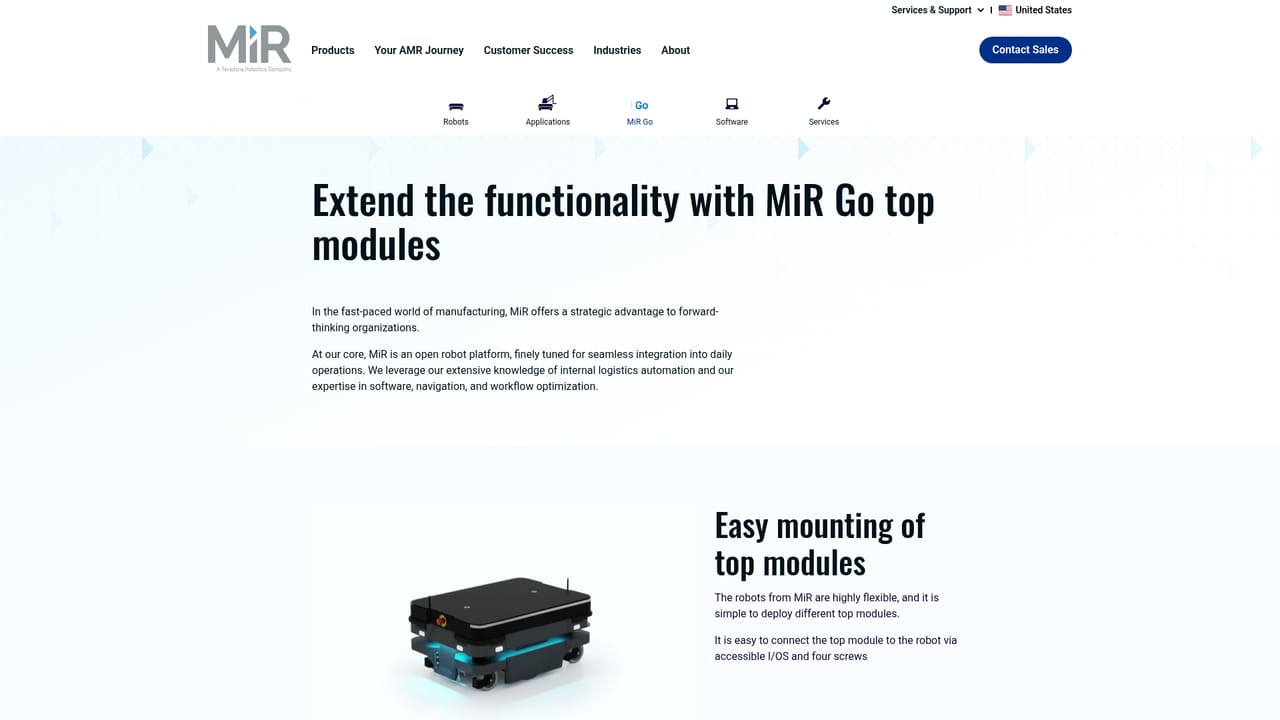
    Use the MiR Go catalogue to see approved accessories such as the MC250 and MC600, which determine whether the robot carries shelves, carts or pallets.
    MiR Autonomous Mobile Robots — Check top modules for your transport task
  3. 3Review the software layer
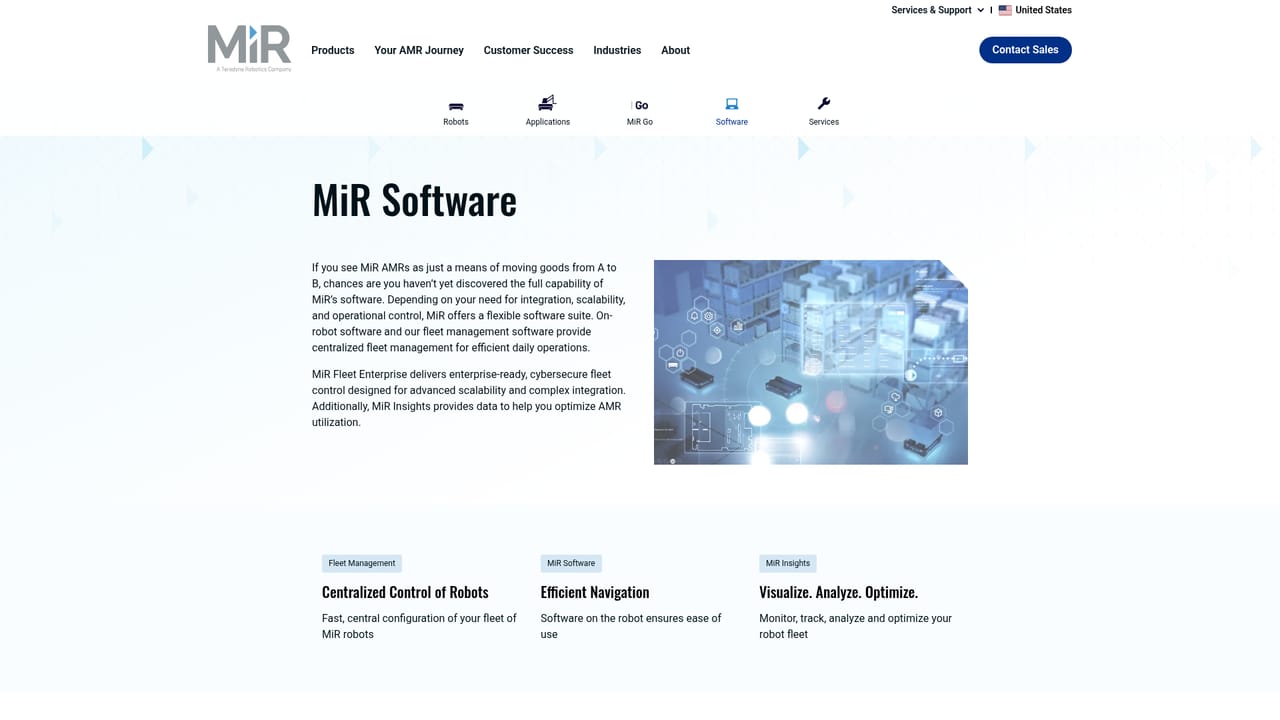
    Look at the software page to understand how robots are programmed and how MiR Fleet coordinates several units across pickup and delivery points.
    MiR Autonomous Mobile Robots — Review the software layer
  4. 4Read comparable deployments
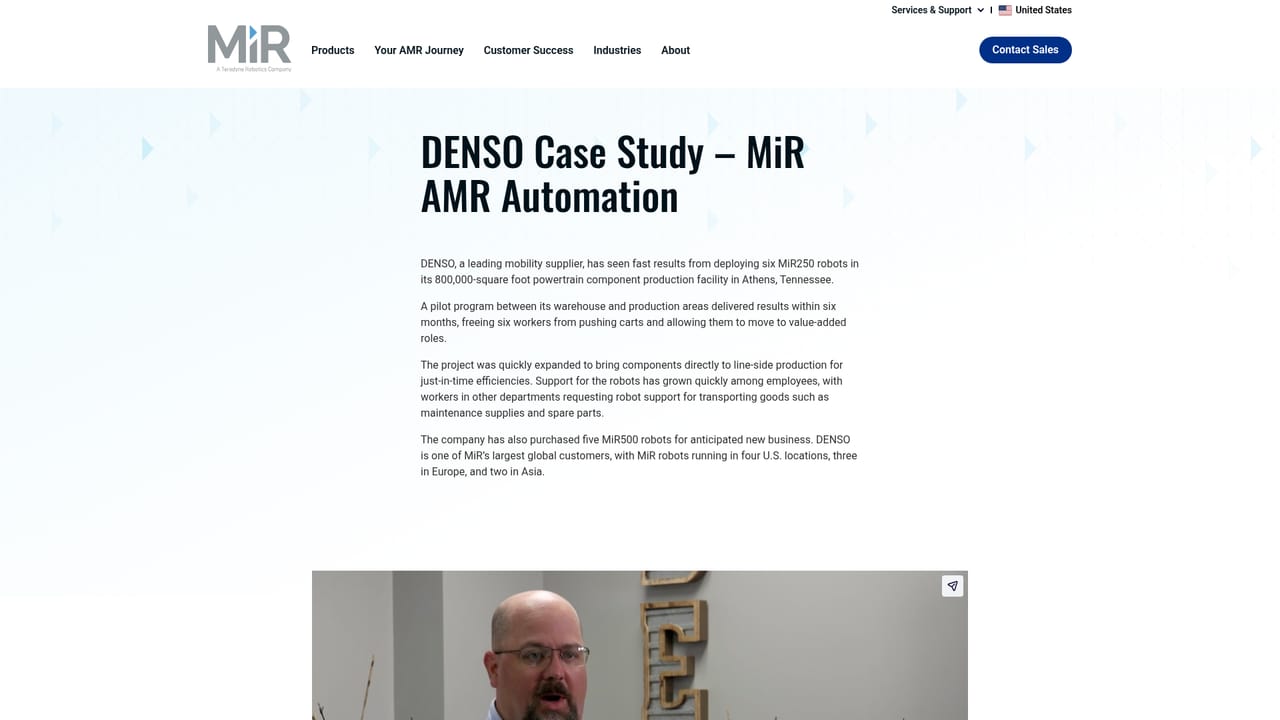
    Study the Cummins, DENSO and Faurecia case studies to see how automotive operations structured their AMR rollout and which models they combined.
    MiR Autonomous Mobile Robots — Read comparable deployments
  5. 5Run an ROI estimate and request a quote
    Use the ROI calculator on the robots page to model payback for a chosen model, then submit the form to speak with an expert or request a quote.

Pros and cons

Pros

  • Payload range spans 250 kg, 600 kg, 1350 kg and a 1200 kg pallet jack, so one vendor can cover several transport jobsAI
  • 360 degree safety laser scanners, speed-dependent protective fields and emergency stop buttons address the human-safety question directlyAI
  • Open platform with MiR Go Approved top modules allows the base robot to be repurposed for different handling tasksAI
  • Programming is presented as interface-driven with no advanced technical skills requiredAI
  • Compact footprint is designed for narrow aisles and elevators where fixed automation strugglesAI

Cons

  • No public pricing anywhere on the product pages, so budgeting requires a quote through the distributor networkAI
  • Sold through distributors and partners rather than direct, which adds a layer between buyer and vendorAI
  • Fleet-wide coordination depends on MiR Fleet, and the pages do not detail how it connects to external warehouse or ERP systemsAI
  • Smaller unit, the MiR250, tops out at 250 kg, so heavy pallet work forces a jump to larger and costlier modelsAI
  • Deployment still requires site mapping, safety assessment and workflow design, so the no-skills-required pitch covers programming more than rolloutAI

How much does MiR Autonomous Mobile Robots cost?

Features

Safety laser scanners with a 360 degree field of vision, protective fields that adjust to speed, front and rear emergency stop buttons, signal lights for turning and reversing, personnel detection, top modules approved through the MiR Go programme, fast central configuration of multiple robots with MiR Fleet, and support for multiple pickup and delivery points in dynamic environments.

Learn more

Frequently asked questions about MiR Autonomous Mobile Robots

  • How do you use MiR Autonomous Mobile Robots?
    The walkthrough on this page covers 5 steps: 1. Compare the robot models 2. Check top modules for your transport task 3. Review the software layer 4. Read comparable deployments 5. Run an ROI estimate and request a quote.
  • What platforms does MiR Autonomous Mobile Robots support?
    MiR Autonomous Mobile Robots is available on Web App.
  • What are the limitations of MiR Autonomous Mobile Robots?
    No public pricing anywhere on the product pages, so budgeting requires a quote through the distributor network. Sold through distributors and partners rather than direct, which adds a layer between buyer and vendor. Fleet-wide coordination depends on MiR Fleet, and the pages do not detail how it connects to external warehouse or ERP systems.

Status

StatusActive
Views0
Outbound clicks0
Added10/21/2026

Platforms

Web App

Pricing

Paid

Categories