Outfindo

Consumer research that powers product pages and buying guides AI agents can read

Intermediate
Screenshot of Outfindo, Consumer research that powers product pages and buying guides AI agents can read

What is Outfindo?

Outfindo turns sourced consumer research into product page content, interactive buying guides and structured data that AI shopping agents can reason with. Built for retailers and brands in considered-purchase categories where shoppers need help choosing between many similar SKUs.

Outfindo is a consumer research and commerce content platform for retailers and brands. It builds what the company calls a reasoning layer: a structured body of knowledge about how shoppers in a given category actually decide. That layer is assembled by sweeping articles, customer reviews and forum discussions for a chosen category, cleaning the noise out in stages, grouping the remaining voices into recurring themes, and ranking roughly 200 insights across four categories with a strength score computed against the full corpus. Every number in a report links back to the review, forum post or article it came from, so claims can be audited rather than taken on trust. The research is then applied on three surfaces. Product Data writes decision-grade copy for each SKU in a catalogue, explaining what a product is for, who it fits and how it compares, in a form shoppers can read and AI agents can parse. Product Guides are short interactive questionnaires on the retailer's own site that ask the questions that actually split a category and narrow a large grid to a few fitting products. The research itself is also sold standalone to teams working on assortment, filters, category trees and messaging, and the company cites Allwyn as an enterprise buyer. The pitch targets the shift toward AI-assisted shopping. A model asked for a recommendation will produce one whether or not it has good data, and Outfindo's argument is that the retailer's own catalogue is often too thin to be the source. Content grounded in sourced consumer language is the counter. The vendor reports roughly one month payback on its largest deployment, 2x or better conversion in deliberation categories such as white goods, electronics and bikes, and claims of 30x faster and 5x cheaper research than traditional methods in a head to head benchmark. Who it suits: mid to large e-commerce operations with deep catalogues where buyers struggle to self-serve, especially considered purchases with real trade-offs. It sits closer to research agencies and PIM/content enrichment than to a chatbot builder, and buyers should expect a sales-led onboarding rather than self-serve signup at scale.

How do you use Outfindo?

  1. 1Review a real research output
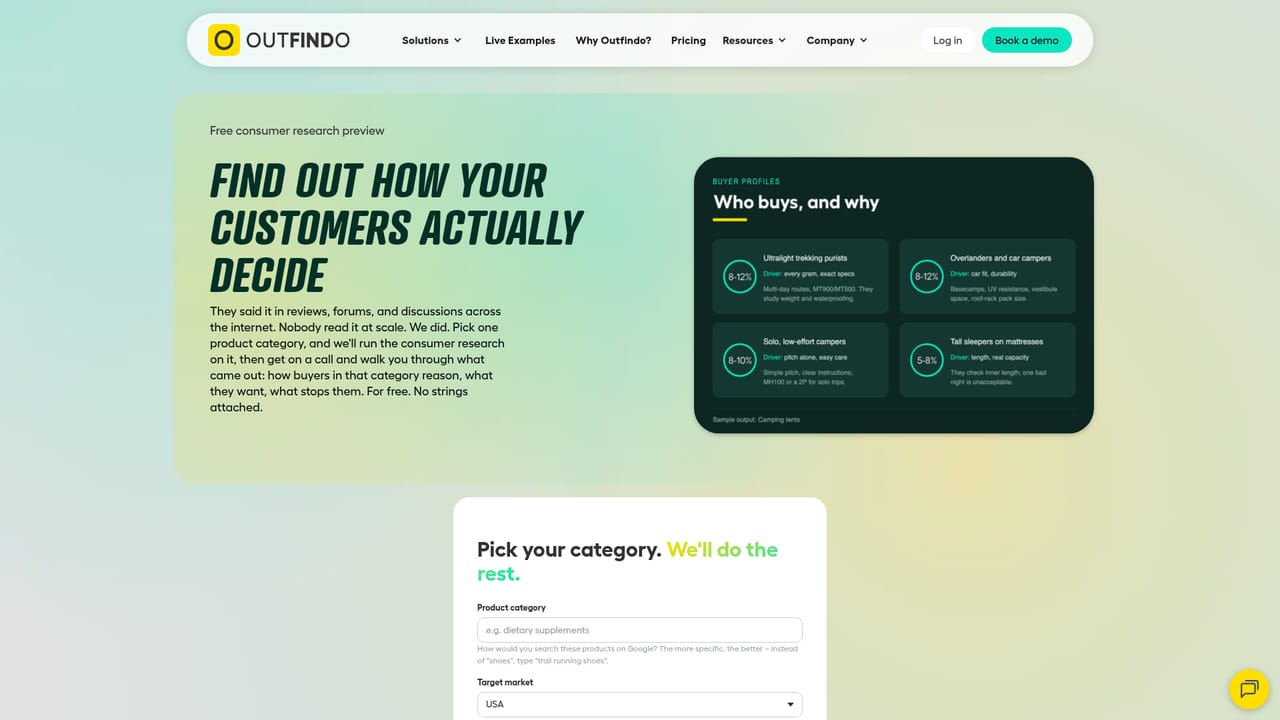
    Open the free research preview to see how a finished report is structured: buyer profiles, goals, decision drivers and the source audit trail behind each insight.
    Outfindo — Review a real research output
  2. 2Book a demo with the team
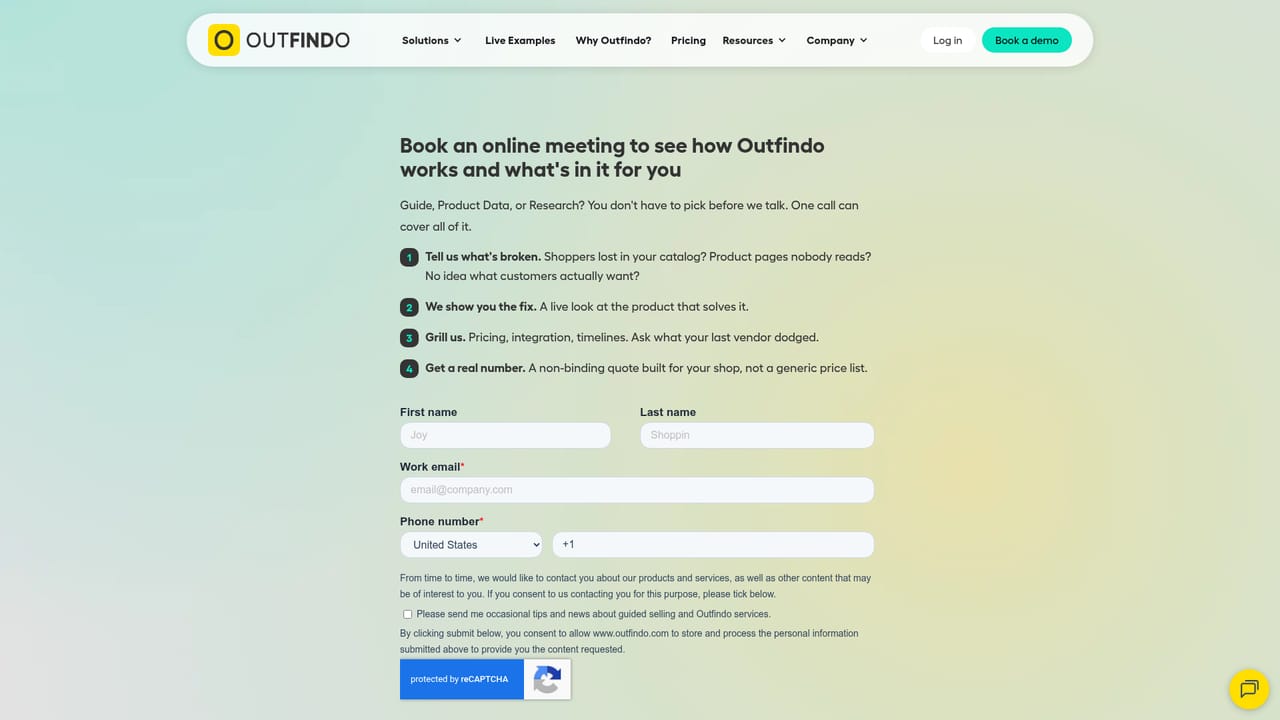
    Walk through your category with Outfindo so the fit is checked before any commitment. This is where scope, catalogue size and the surfaces you want are discussed.
    Outfindo — Book a demo with the team
  3. 3Create an account
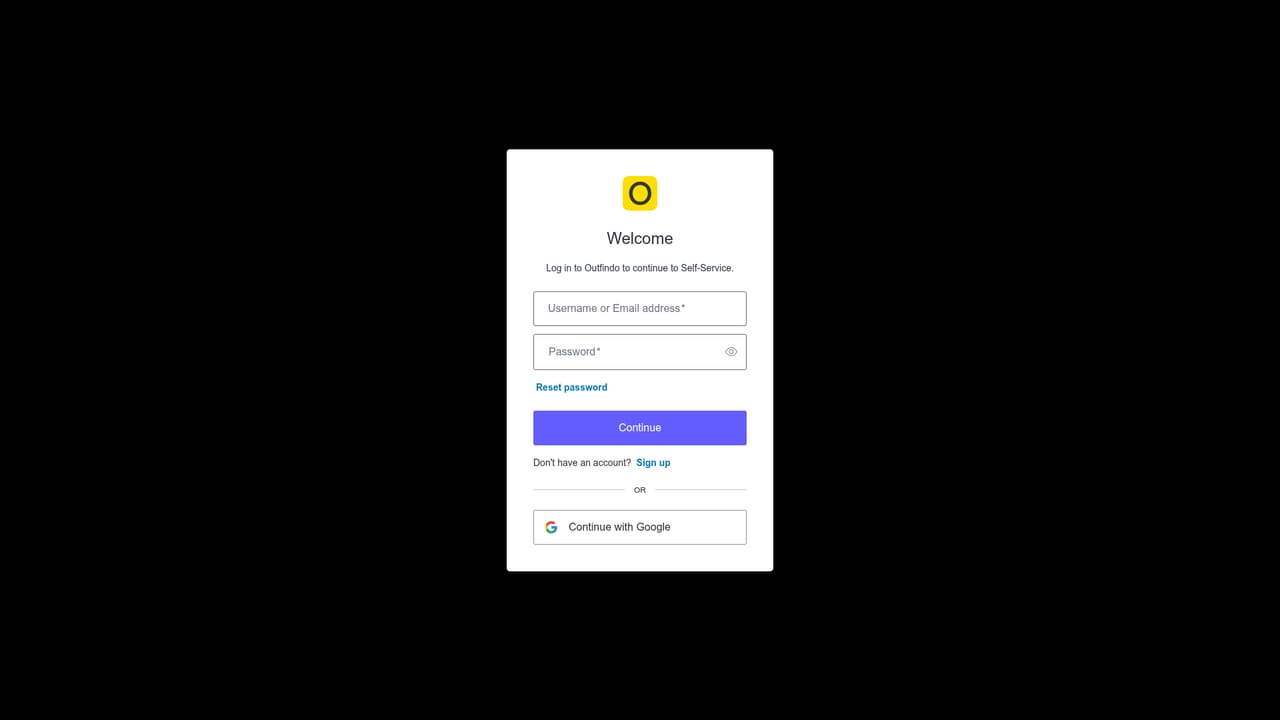
    Sign up for the Outfindo app, which is where research runs, product content and guides are managed once access is provisioned.
    Outfindo — Create an account
  4. 4Request a free data sample
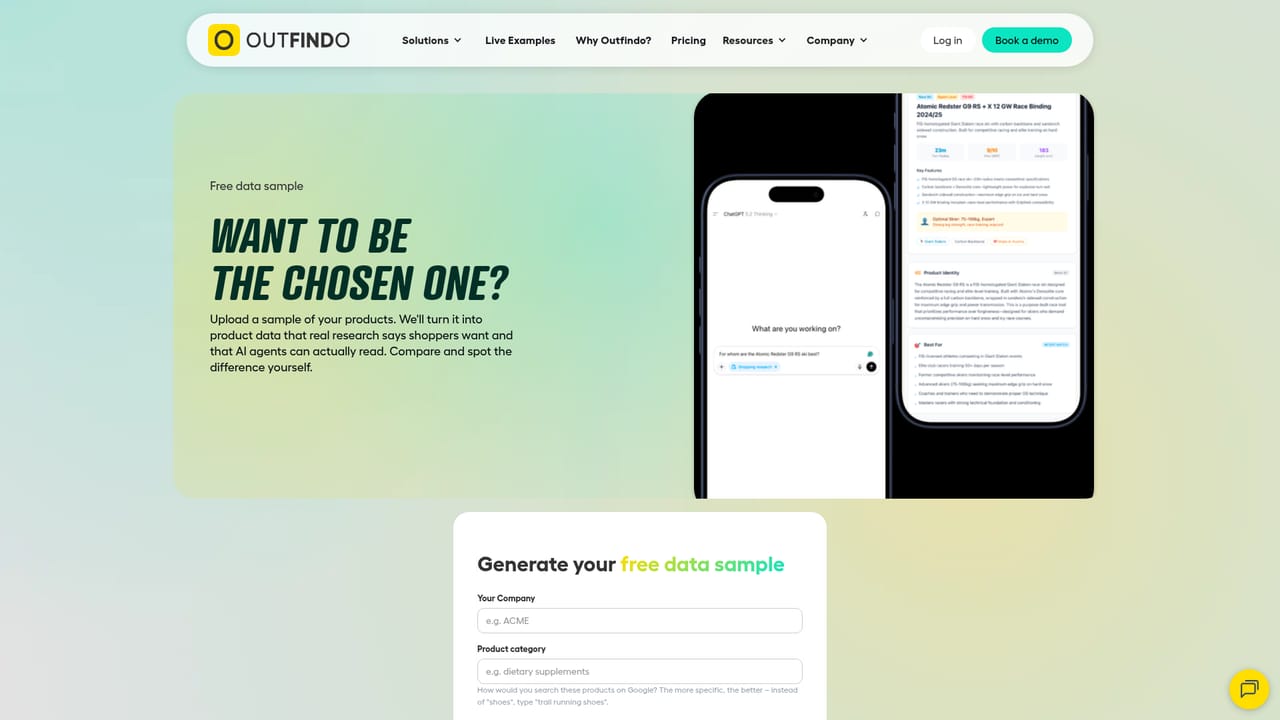
    Get sample product data written for real SKUs to judge tone, depth and the machine-readable payload before commissioning a full catalogue run.
    Outfindo — Request a free data sample
  5. 5Deploy product content and guides
    Publish the enriched product data and the interactive guide on your own storefront, then measure guided shoppers against a holdout group.

Pros and cons

Pros

  • Research is traceable: each insight carries a strength score and links back to the underlying reviews, forums and articlesAI
  • Every product claim is verified per SKU against a real source, which reduces the hallucination risk that plain LLM copywriting carriesAI
  • Output is machine-readable as well as human-readable, aimed at getting products cited inside AI shopping answersAI
  • Guides are built from observed buyer decision patterns rather than a generic quiz templateAI
  • Vendor reports 2x or better conversion in deliberation categories and about one month payback on its largest deploymentAI

Cons

  • No pricing, plan tiers or packaging are published on the homepage, so budgeting requires a sales conversationAI
  • Evidence for the performance claims (conversion lift, payback, 30x faster research) is vendor-reported and not independently verifiable from the public siteAI
  • Built for catalogue-scale retail; small shops with a handful of SKUs will get little from category-level researchAI
  • Content quality depends on how much genuine consumer discussion exists in a category, which is thin for niche or brand new product typesAI
  • Implementation appears to involve demos and onboarding rather than a pure self-serve flowAI

How much does Outfindo cost?

Features

Category research from articles, reviews and forum voices, with about 200 ranked insights per run and a source audit trail. Product Data writes per-SKU decision content that is human and machine readable. Product Guides run short on-site questionnaires built from real buyer decisions. Inventory benchmarking shows catalogue versus market demand.

Learn more

Frequently asked questions about Outfindo

  • How do you use Outfindo?
    The walkthrough on this page covers 5 steps: 1. Review a real research output 2. Book a demo with the team 3. Create an account 4. Request a free data sample 5. Deploy product content and guides.
  • What platforms does Outfindo support?
    Outfindo is available on Web App.
  • What are the limitations of Outfindo?
    No pricing, plan tiers or packaging are published on the homepage, so budgeting requires a sales conversation. Evidence for the performance claims (conversion lift, payback, 30x faster research) is vendor-reported and not independently verifiable from the public site. Built for catalogue-scale retail; small shops with a handful of SKUs will get little from category-level research.

Status

StatusActive
Views0
Outbound clicks0
Added10/21/2026

Platforms

Web App

Pricing

Free TrialPaid