Pricing
No prices are published. The site describes two tracks, Platform Access for investment teams and API Integration for technology teams, with both priced through Contact Sales. A public tier for individuals is not mentioned.
Learn moreExplainable AI research and portfolio analytics for institutional investors

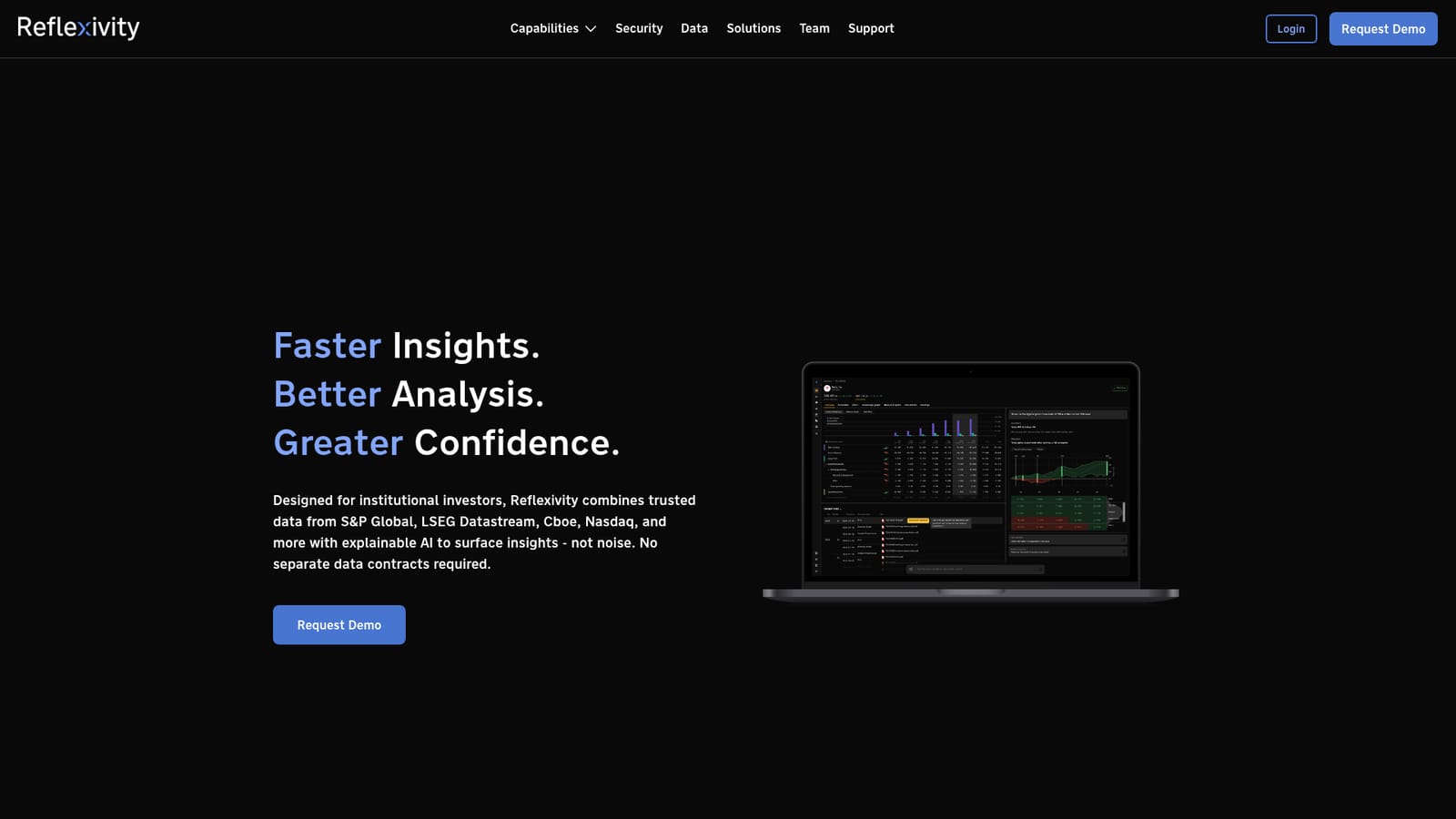
Reflexivity is an AI search tool. An AI research and analytics platform for institutional investors, combining licensed data from LSEG, S&P Global, Cboe and others with an explainable agent for deep research, document analysis, portfolio insights and scenario modelling.
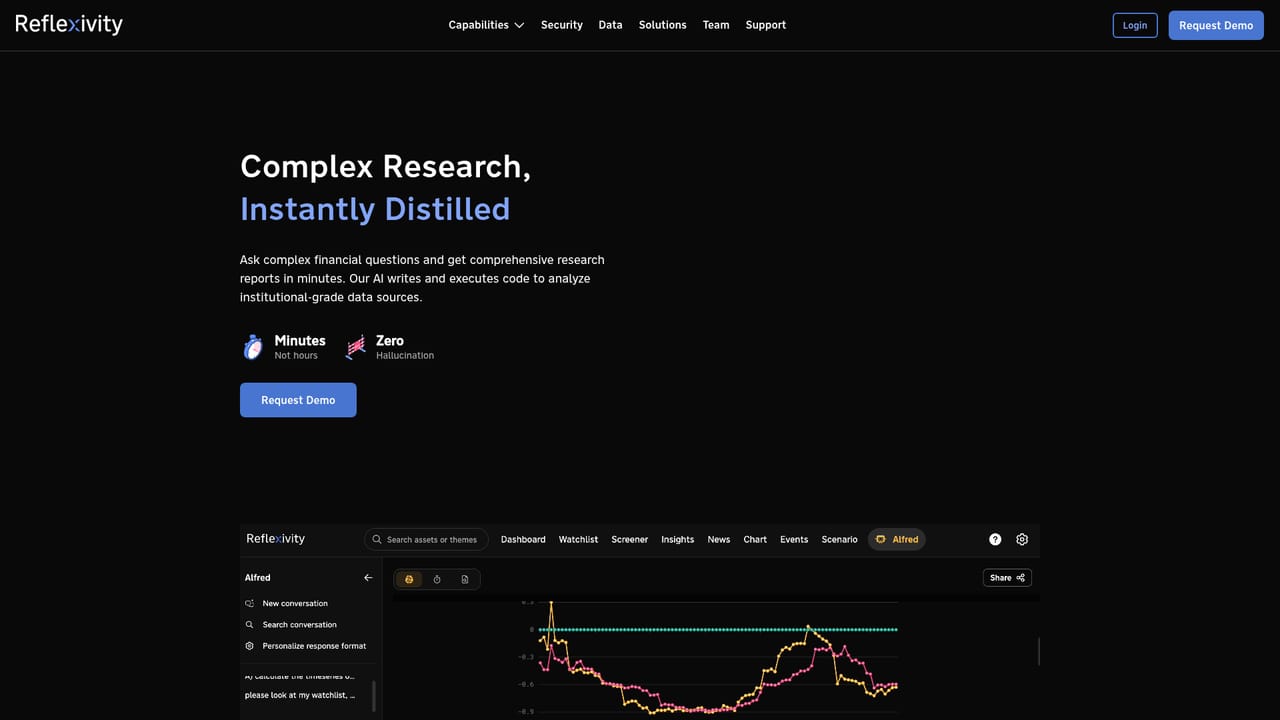
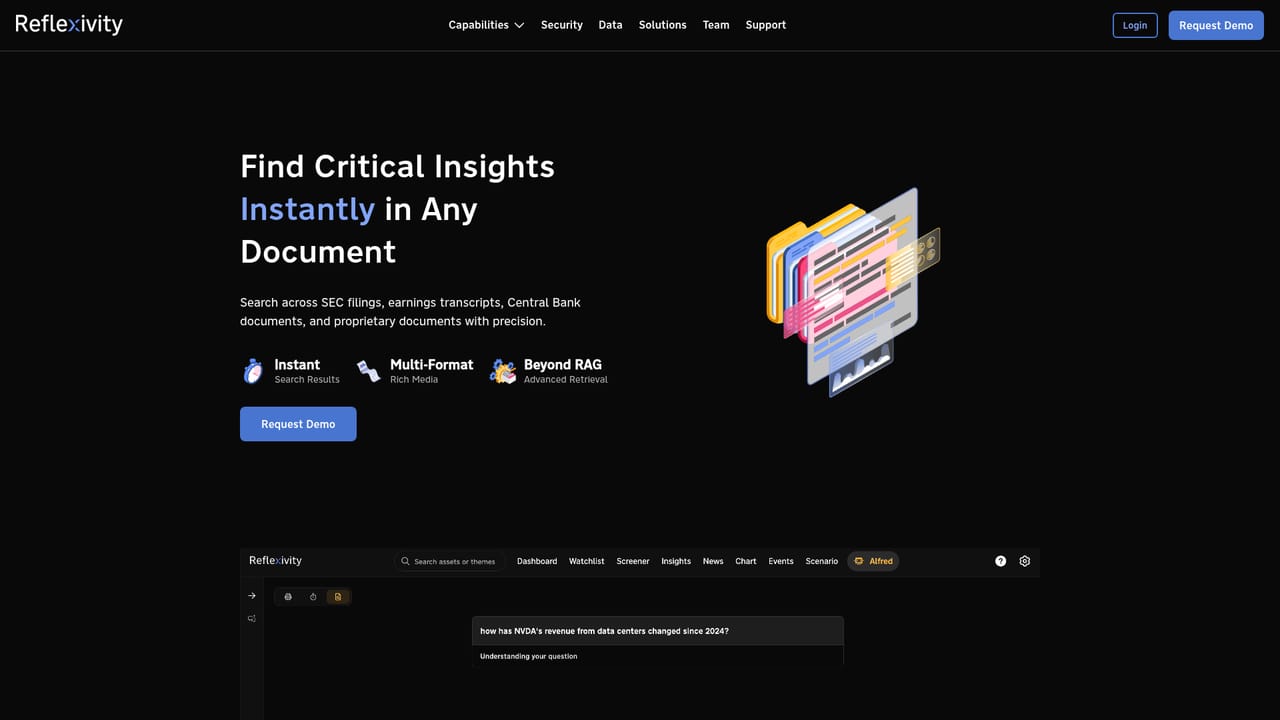
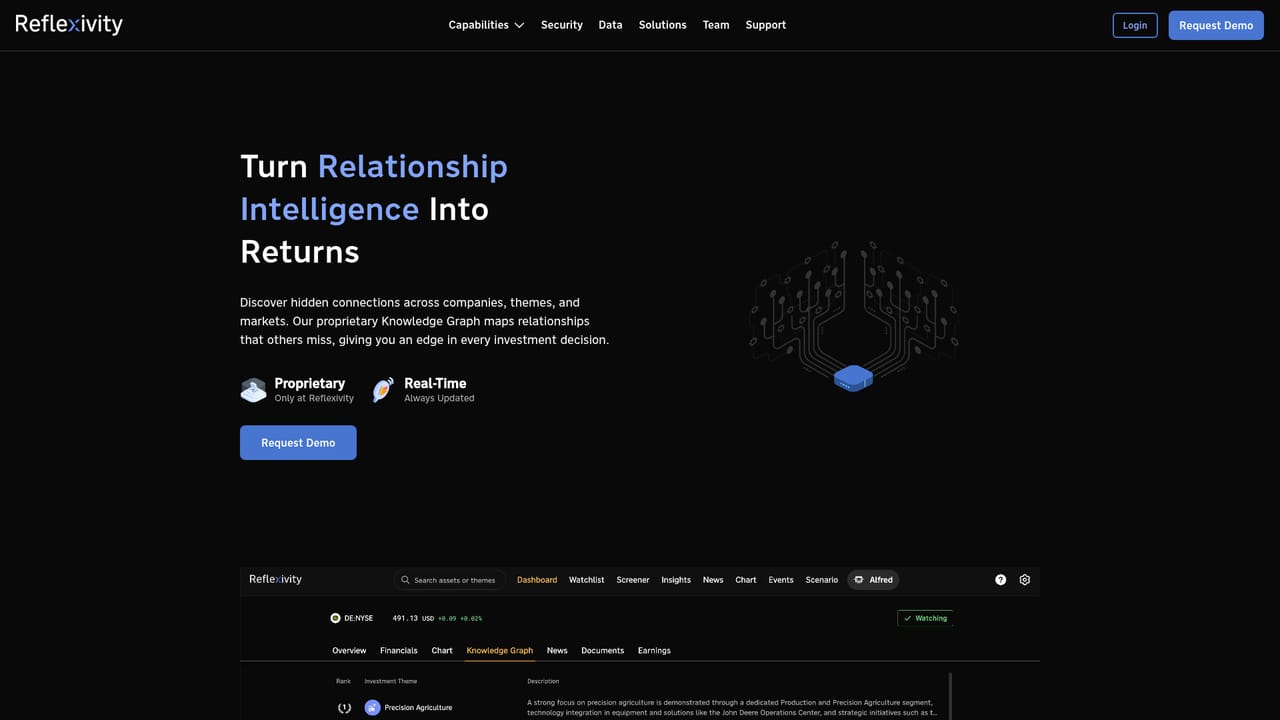
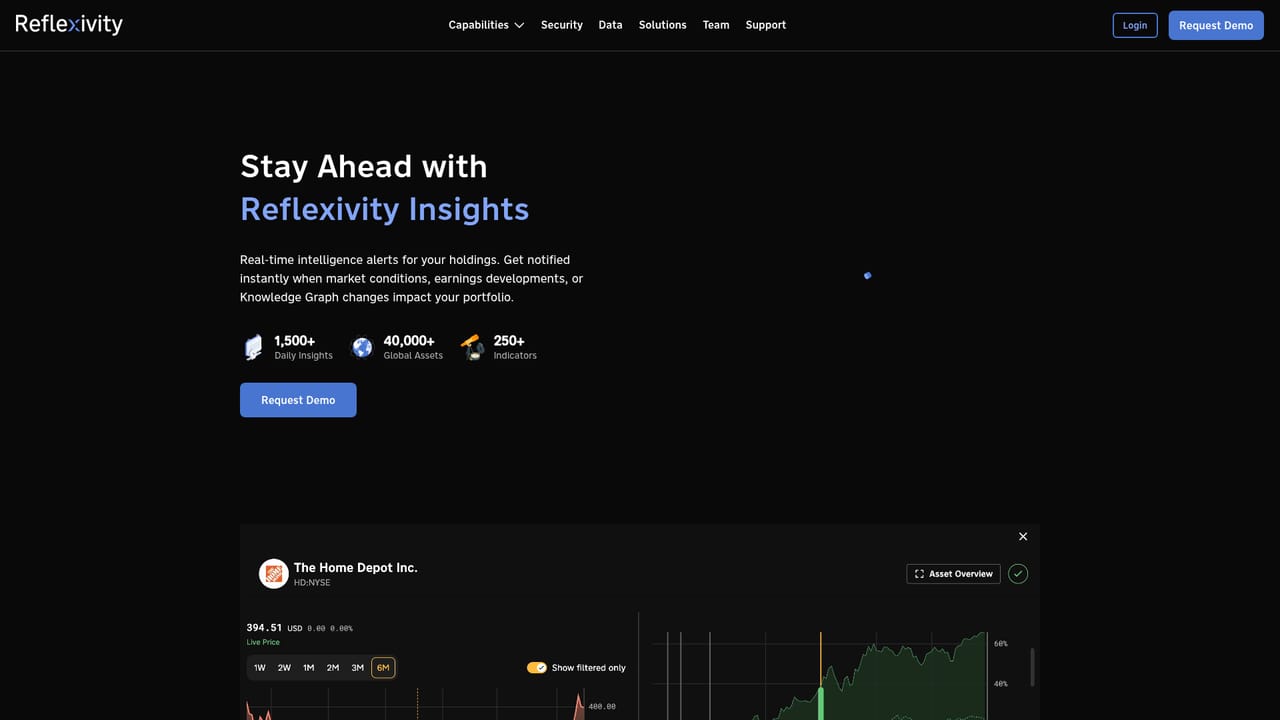
Reflexivity is an investment analysis platform that pairs licensed market data with an AI agent built for institutional research workflows. Rather than bolting a chatbot onto a data feed, it gives the agent tools: it writes and runs code to answer financial questions, pulls from connected document stores, and traces every output back to a named source. The pitch is aimed squarely at professional investors who need defensible answers, not plausible-sounding guesses. The feature set splits into six workflows. Deep Research handles autonomous analysis of complex financial questions. Document Intelligence applies OCR and NLP to SEC filings, earnings transcripts and investor presentations at volume. Portfolio Insights covers performance, risk metrics and exposure, while Scenario Analysis stress tests holdings against modelled market outcomes. Smart Screening scans for opportunities using market patterns, government trades and sentiment, and the Knowledge Graph maps relationships between companies, themes and events. Data comes from established vendors rather than scraped sources: LSEG Datastream for market metrics, analyst estimates, macro and positioning data; S&P Global for financial statements, key developments and transcripts; Cboe for real-time prices; EDGAR and Quartr for filings and presentations; Dow Jones, MT Newswires and Benzinga for news; FRED, World Bank and IMF for global macro; Polymarket for prediction markets. The company states no separate data contracts are needed, since access is bundled into the platform. Compliance features are unusually specific for this category: SOC 2 Type 2 audits, per-client data isolation with encryption and no persistent client storage, dedicated compute kept apart from public AI models, and a full audit trail with quality ratings attached to each insight. The system is also designed to flag when data is missing or uncertain instead of filling gaps. That positioning narrows the audience. Reflexivity targets funds, family offices and institutional research desks rather than retail traders or casual analysts. It competes with terminal-based research add-ons and general LLM assistants, and its differentiators are data provenance and auditability rather than breadth of creative or general-purpose AI tasks.
No prices are published. The site describes two tracks, Platform Access for investment teams and API Integration for technology teams, with both priced through Contact Sales. A public tier for individuals is not mentioned.
Learn moreA RESTful API track covers custom model deployment, white-label options and real-time data feeds for technology teams. Data inputs include LSEG Datastream, S&P Global, Cboe, Nasdaq, EDGAR, Quartr, Benzinga and Polymarket.
Learn moreSix modules: Deep Research (an agent that writes and runs code for financial analysis), Knowledge Graph for connected company and theme relationships, Portfolio Insights for performance and risk metrics, Scenario Analysis for stress testing, Document Intelligence for SEC filings and transcripts via OCR and NLP, and Smart Screening for pattern, government trade and sentiment scanning.
Learn more AI Angels400+ customizable AI girlfriends for NSFW chat, voice calls, and roleplay
 Candy AIExperience the future of companionship with AI friends who chat, role-play, and connect with you on a human level.
 ourdream.aiA vast AI roleplay platform with millions of characters for chat, images, video and voiceAI Angels400+ customizable AI girlfriends for NSFW chat, voice calls, and roleplayCandy AIExperience the future of companionship with AI friends who chat, role-play, and connect with you on a human level.ourdream.aiA vast AI roleplay platform with millions of characters for chat, images, video and voice


