Free trial
A free trial of SAS Viya, the platform that hosts the SAS AI capabilities, is available through an online request form. Access is arranged with SAS rather than granted instantly.
Learn moreEnterprise AI platform for governed, decision-ready analytics

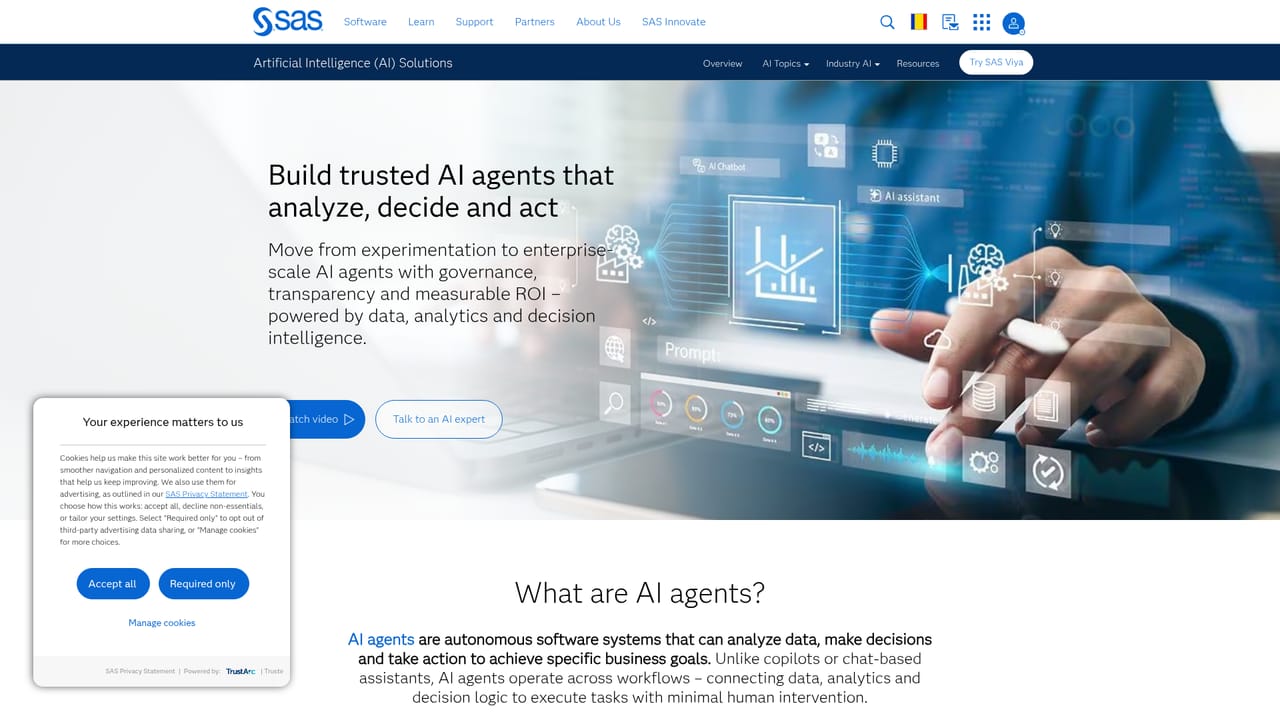
SAS AI is the artificial intelligence layer of the SAS Viya platform, combining agentic AI, generative AI, machine learning and advanced analytics under one governance framework. It targets regulated enterprises that need explainable, auditable decisions, with MCP-based interoperability and packaged industry models.
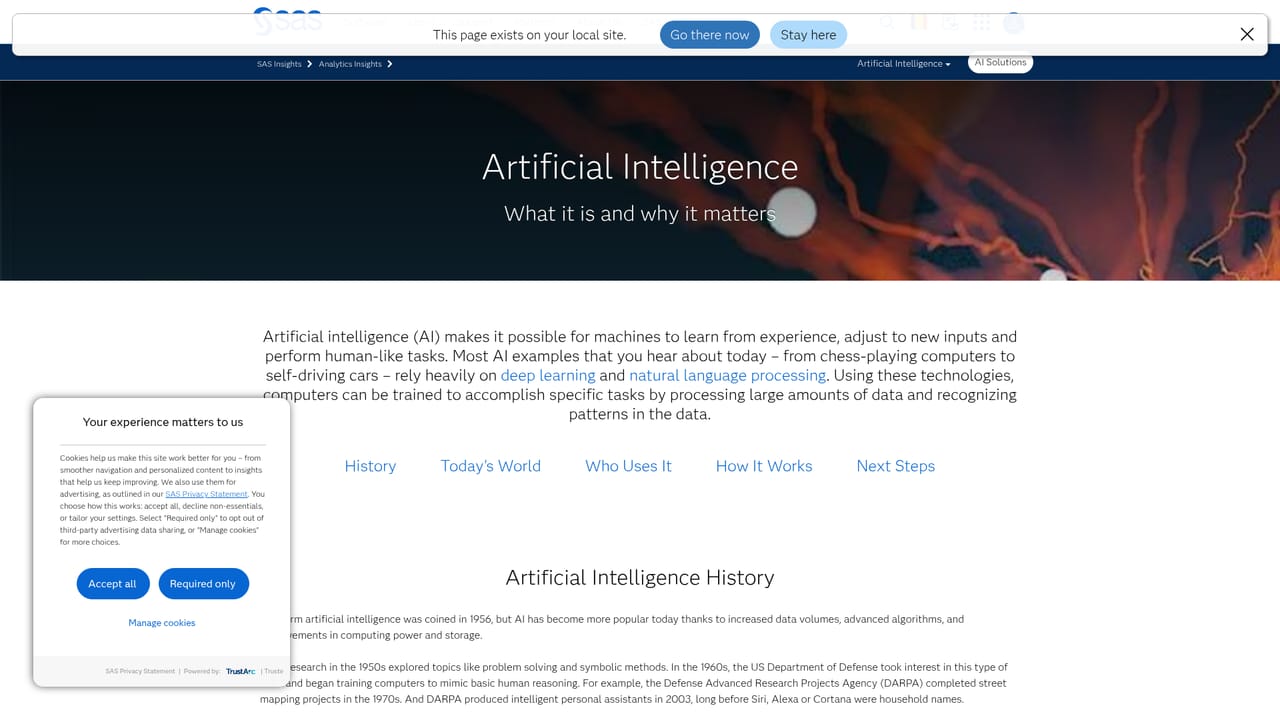
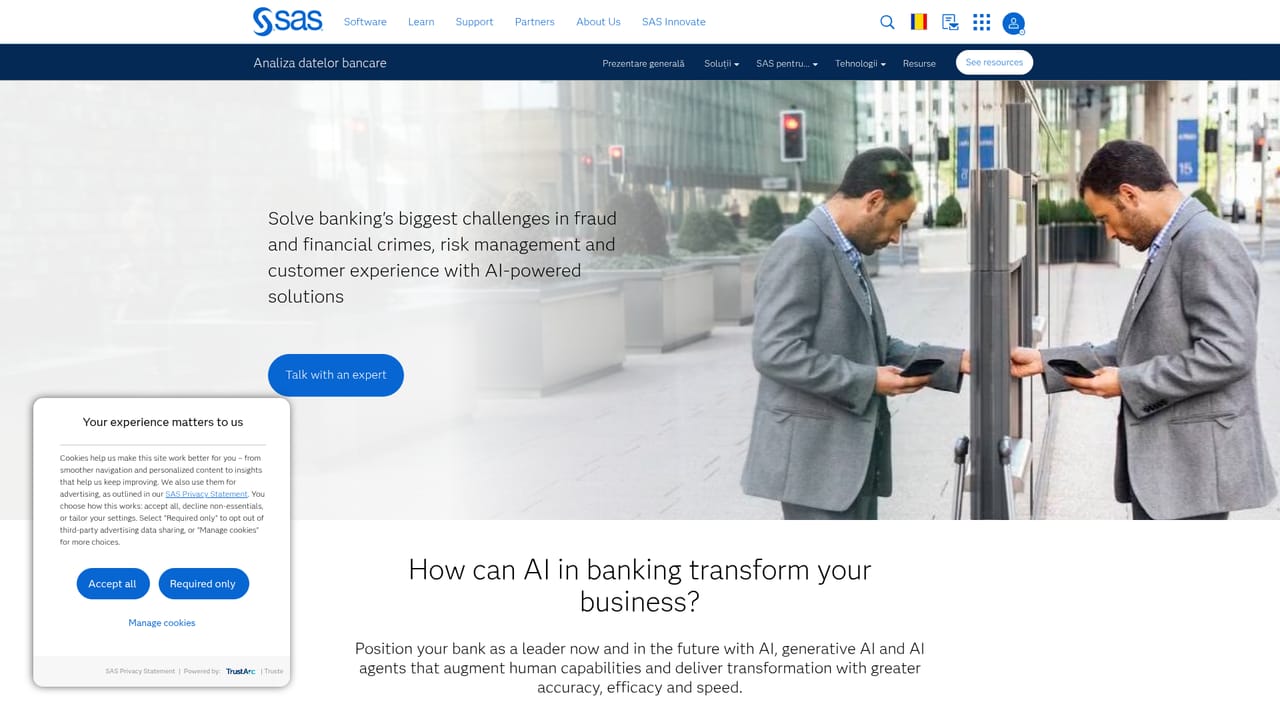
SAS AI is the artificial intelligence layer of the SAS Viya platform, aimed at organisations that need to move beyond experimental pilots into decisions they can defend. Its central idea is composite AI: agentic AI, generative AI, machine learning, optimization and advanced analytics are orchestrated on one platform rather than bolted together from separate vendors. That means a team can choose the method suited to a problem, whether that is a forecasting model, a large language model or an autonomous agent, without leaving a single governed environment. In practice the platform covers a full life cycle. SAS AI agents reason over structured and unstructured data, over models and over analytical results, while SAS Viya Copilot provides assistance across data preparation and model building. Governance is woven in rather than added later: data quality checks, bias and PII remediation, adversarial testing, model validation, ongoing monitoring and audit trails are all described as part of the process. Deployment is handled through AIOps tooling for continuous evaluation, observability and orchestration, so models and agents can move from experimentation into production under supervision. Openness is a stated design goal. Third-party agents can reach SAS capabilities through Model Context Protocol, and packaged industry models cover sectors such as banking, insurance, health care, government, manufacturing, telecom and retail. Vendor-published Futurum Group studies claim 30x faster task completion and 86 percent cloud cost savings against competing platforms, and a productivity figure of 4.6x; these are supplier claims rather than independent benchmarks. Named customers include Georgia-Pacific, Ulta Beauty, Reynolds Community College and Shawbrook Bank. The tool is built for data science teams, analytics leaders and risk or compliance functions in regulated industries, not for casual users wanting a chat assistant. Buyers comparing it with cloud-native machine learning suites should weigh the governance depth and the MCP interoperability against the commercial model: SAS sells through price quotes and trials rather than published self-serve tiers, and the platform assumes analytical staff who can operate serious modelling workflows.
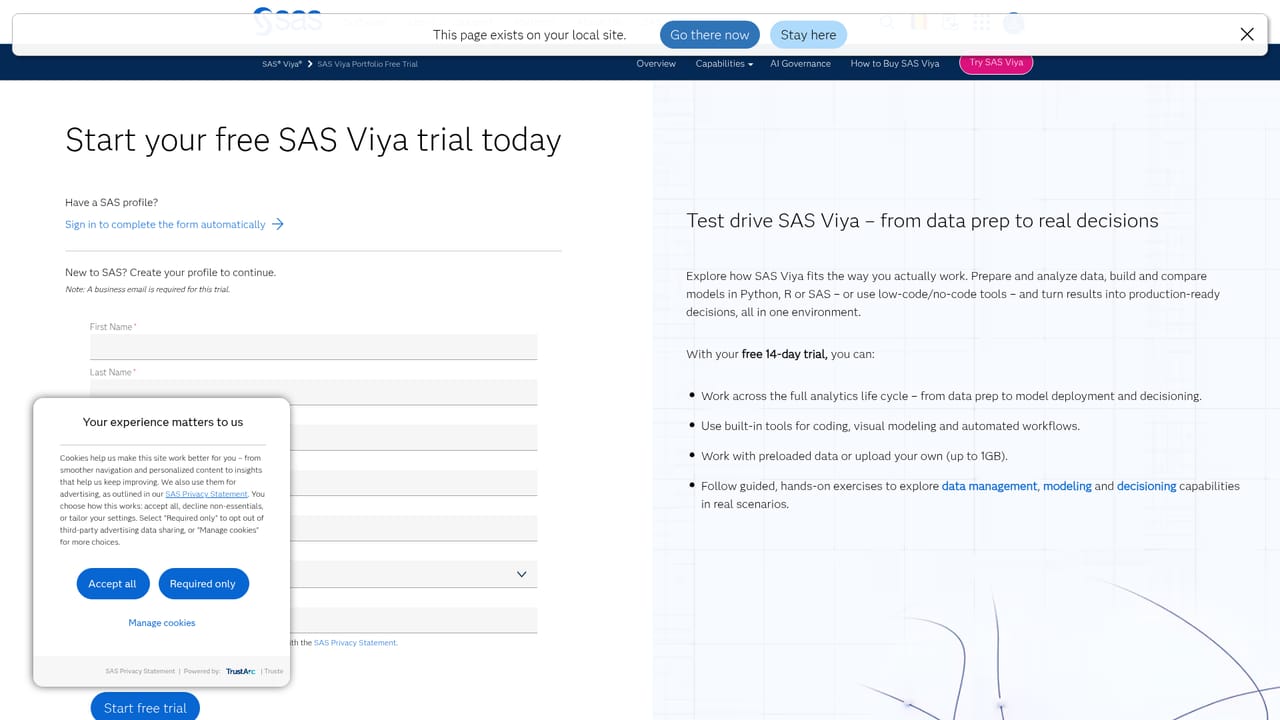
A free trial of SAS Viya, the platform that hosts the SAS AI capabilities, is available through an online request form. Access is arranged with SAS rather than granted instantly.
Learn moreSAS supports open, interoperable ecosystems. Agents built with third-party tools can access SAS AI capabilities through Model Context Protocol, and AI can be deployed across customer environments while keeping a governed foundation.
Learn moreCore capabilities include agentic AI for reasoning agents, generative AI orchestration with model choice, end-to-end AI governance, AIOps for production monitoring, packaged industry models and AI decisioning. SAS Viya Copilot assists across the data and AI life cycle, and governance covers data quality, bias and PII remediation, adversarial testing and model validation.
Learn more AI Angels400+ customizable AI girlfriends for NSFW chat, voice calls, and roleplay
 Candy AIExperience the future of companionship with AI friends who chat, role-play, and connect with you on a human level.
 ourdream.aiA vast AI roleplay platform with millions of characters for chat, images, video and voiceAI Angels400+ customizable AI girlfriends for NSFW chat, voice calls, and roleplayCandy AIExperience the future of companionship with AI friends who chat, role-play, and connect with you on a human level.ourdream.aiA vast AI roleplay platform with millions of characters for chat, images, video and voice


