Support
Support runs through a contact page and a scheduled demo booking flow with the sales team, rather than a self-serve help centre or documentation portal.
Learn moreReal people answering real questions as interactive video conversations

StoryFile converts filmed interviews into interactive video conversations for museums, institutions and family legacies. Visitors ask questions by voice and get authentic recorded answers in real time, with AI indexing connecting each response to conversational pathways. A demo-led, production-heavy alternative to generative ghost avatars.
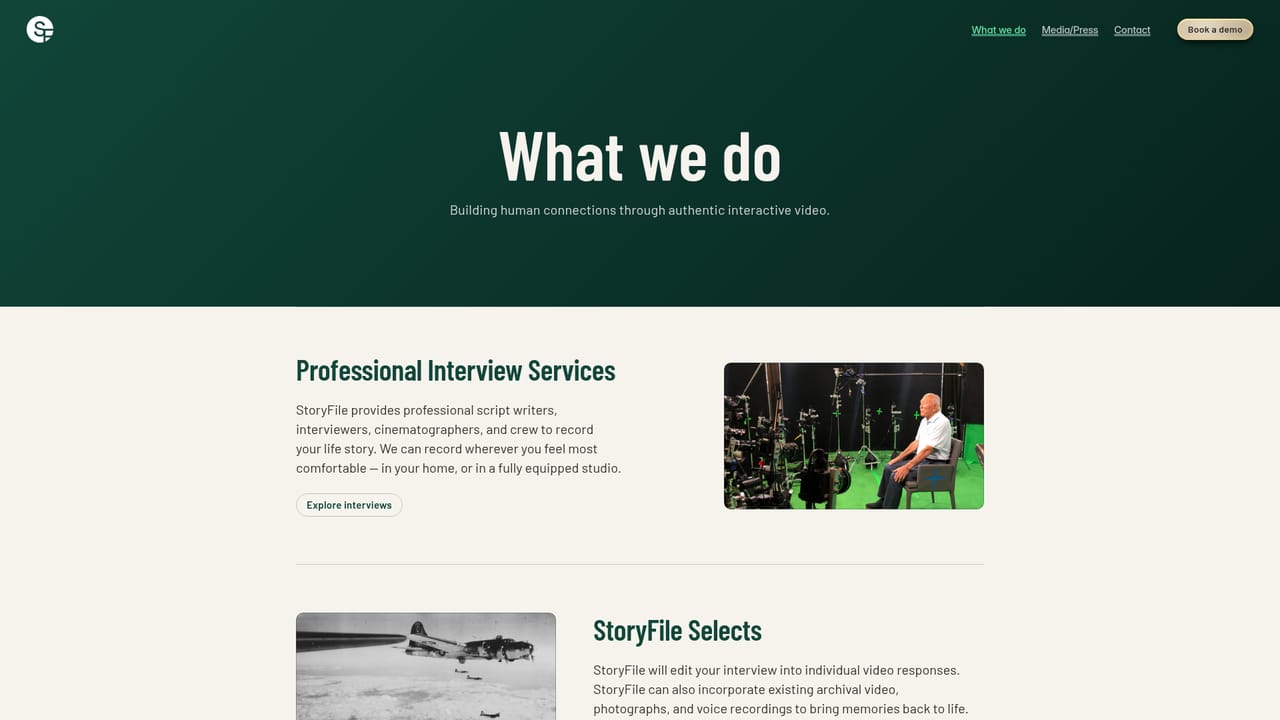
StoryFile turns filmed interviews into interactive video experiences where visitors ask questions out loud and receive genuine recorded answers in response. Rather than generating a synthetic character that improvises, the platform works from a professionally filmed session in which a subject answers hundreds of prepared questions. Those answers are then indexed so each one can be matched to the questions people actually ask, producing a conversation that feels spontaneous while staying anchored to what the person really said. The process runs in three stages. A cinematic interview is recorded, capturing a large bank of thoughtful responses. StoryFile then applies AI indexing to link each answer to natural conversational pathways. At runtime, visitors speak a question into a microphone or pick from suggested hints, and the system returns the closest authentic video reply in real time. The company positions this deliberately against generative ghost avatars, arguing that captured testimony carries more emotional integrity than a fabricated persona. The product is built for institutions rather than individuals. Museums and cultural organizations use it to keep firsthand history accessible, with deployments such as the National WWII Museum's Voices from the Front and an installation at the Japanese American National Museum featuring George Takei. A separate legacies track lets families record a loved one so relatives can ask questions later. StoryFile also offers HoloGlass, a 3D display that presents these digital humans in physical space, sold as premium hardware pairing. StoryFile competes with interactive avatar and digital twin vendors, but differentiates on fidelity to the source person and on museum-grade production values. The tradeoffs are real: this is a sales-led, demo-first product with no visible self-serve path, and the quality ceiling is set by how well the original interview was designed.
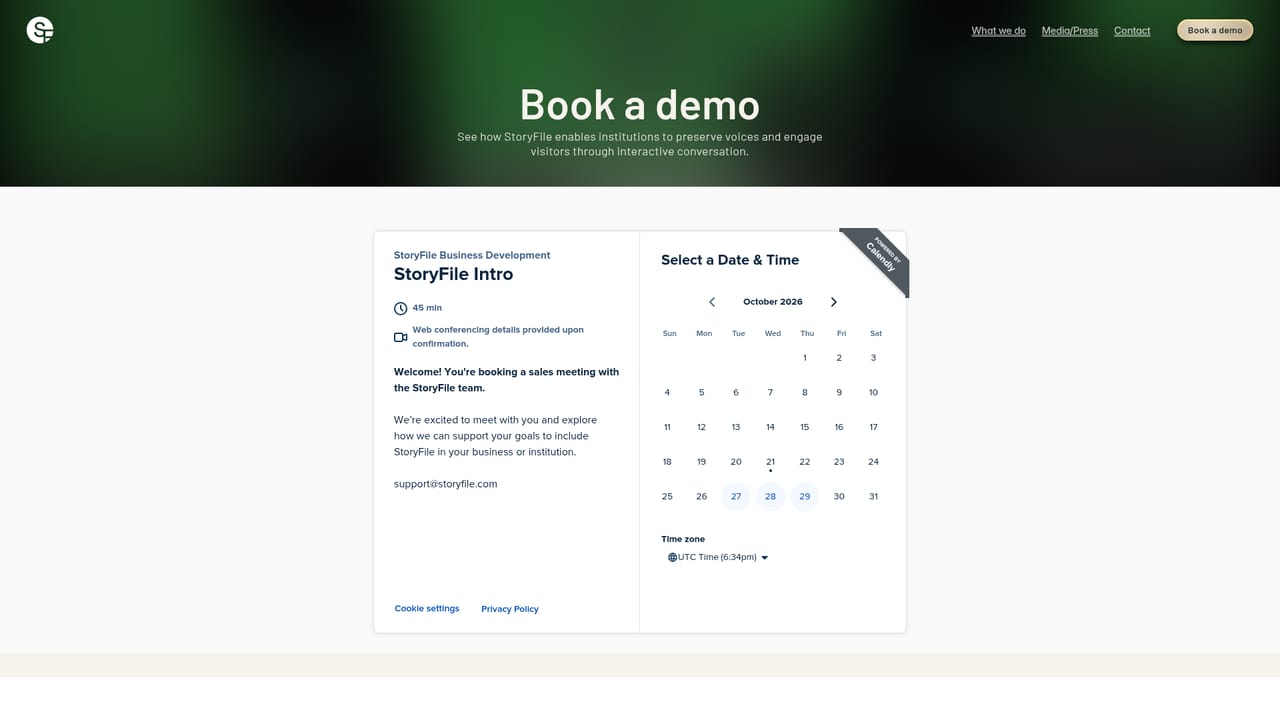
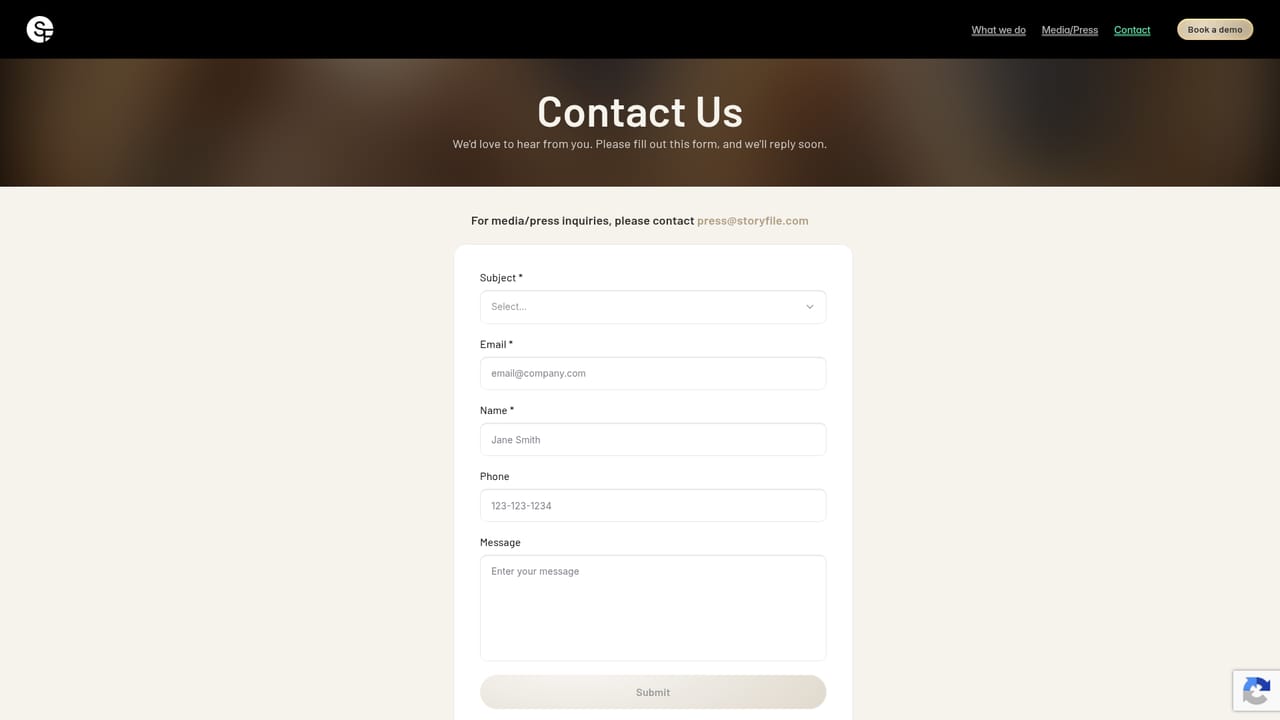
Support runs through a contact page and a scheduled demo booking flow with the sales team, rather than a self-serve help centre or documentation portal.
Learn moreCore capabilities include cinematic interview recording, AI indexing that maps answers to conversational pathways, and real-time voice interaction where visitors hold a button to talk or select hints. Answers are drawn from genuine interview footage rather than generated. Premium HoloGlass hardware presents digital humans as a 3D display in physical space. Solutions split between institutions and family legacies.
Learn more AI Angels400+ customizable AI girlfriends for NSFW chat, voice calls, and roleplay
 Candy AIExperience the future of companionship with AI friends who chat, role-play, and connect with you on a human level.
 ourdream.aiA vast AI roleplay platform with millions of characters for chat, images, video and voiceAI Angels400+ customizable AI girlfriends for NSFW chat, voice calls, and roleplayCandy AIExperience the future of companionship with AI friends who chat, role-play, and connect with you on a human level.ourdream.aiA vast AI roleplay platform with millions of characters for chat, images, video and voice